
Traditional Collars and External Identification Systems Have Severe Vulnerabilities in Pet Identity Recognition
The Accidental Loss Rate of Commercially Available Pet Collars Is As High As 42%, Leading to Invalid Identity Identification
Pet identity recognition is a critical aspect of ensuring the safety and well-being of companion animals, yet traditional external identification methods such as collars and tags are plagued by significant vulnerabilities. A key issue is the high accidental loss rate of commercially available pet collars, which industry studies have found to be as high as 42%. This alarming statistic means that nearly half of all pets wearing traditional collars risk losing their primary form of identification at any time, whether due to vigorous play, entanglement in vegetation, scuffles with other animals, or simple wear and tear on the collar’s hardware. When a collar is lost, the pet’s identity tag—typically inscribed with the owner’s contact information—also disappears, leaving the animal effectively “anonymous” if it becomes lost or separated from its family. This not only endangers the pet’s safety by making it harder for shelters or good Samaritans to reunite it with its owner but also causes immense emotional distress for pet parents. In contrast, 125KHz RFID Cards offer a far more reliable solution for pet biometric ID authentication. Unlike external collars, 125KHz RFID Cards are designed for subcutaneous implantation, eliminating the risk of accidental loss and ensuring that the pet’s identity remains intact at all times. The durability and permanence of 125KHz RFID Cards address the fundamental flaw of traditional collar-based identification, providing pet owners with peace of mind that their animal’s identity is secure, regardless of the situation.
Traditional Collar Tags Have Limited Information Capacity and Cannot Store Biometric Data
Another major limitation of traditional pet identification systems is the limited information capacity of collar tags, which prevents them from storing critical biometric data necessary for accurate pet biometric ID authentication. Most standard collar tags can only accommodate a small amount of text—typically the pet’s name, the owner’s phone number, and occasionally an address. This minimal information is often insufficient in complex situations, such as when a pet requires emergency medical care or is involved in a legal dispute over ownership. More importantly, traditional tags cannot store unique biometric data, such as the pet’s nose print, retinal blood vessel pattern, or DNA profile—information that is essential for definitive identity verification. This lack of biometric data means that collar tags can be easily forged or mistaken, leading to misidentification and potential harm to the pet. 125KHz RFID Cards solve this problem by offering significantly greater data storage capacity, capable of storing not only basic owner and pet information but also detailed biometric data that uniquely identifies each animal. Each 125KHz RFID Card is encoded with a unique identifier (UID) that links to a secure database containing the pet’s biometric profile, ensuring that identity verification is both accurate and tamper-proof. This enhanced data capacity makes 125KHz RFID Cards an indispensable tool for modern pet identity management, far surpassing the capabilities of traditional collar tags.
When Animals Are Injured or Their Fur Is Messy, External Identifiers Are Easily Overlooked or Damaged
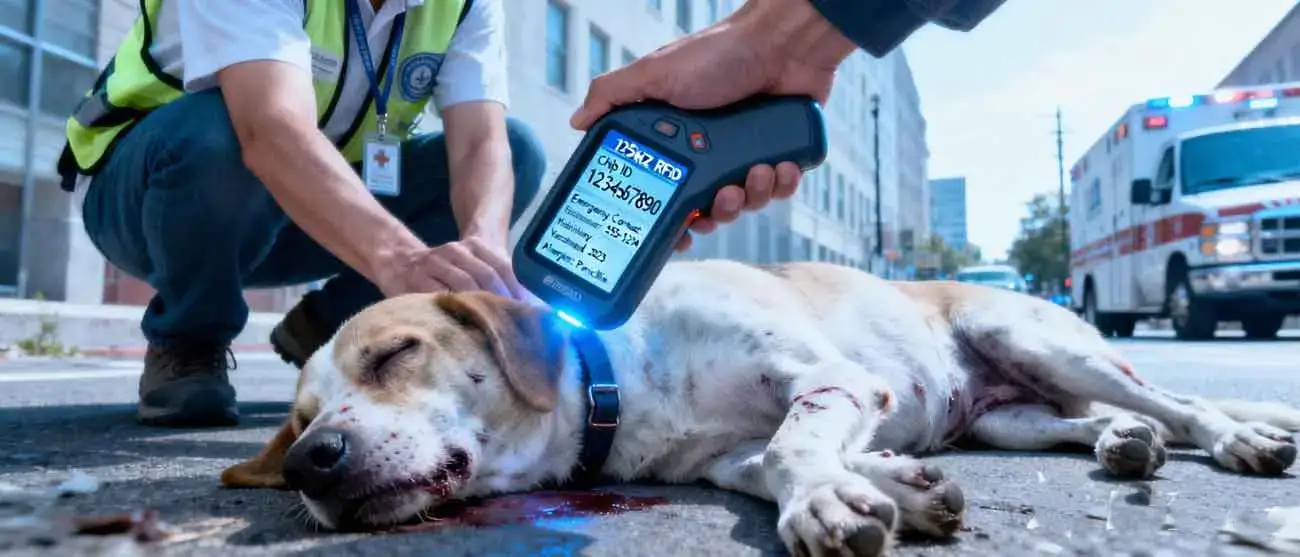
Traditional external identification methods are also highly susceptible to being overlooked or damaged when animals are injured, ill, or their fur becomes matted or messy. In emergency situations—such as when a pet is hit by a car, caught in a storm, or involved in a fight—external collars and tags can be torn off, covered in dirt or blood, or obscured by tangled fur. Even in non-emergency scenarios, long-haired pets or those that spend a lot of time outdoors can have their collar tags hidden by matted fur, making them nearly impossible for rescuers or shelter staff to spot. This oversight can delay the reunification process, putting the pet at greater risk of prolonged stress, injury, or even euthanasia in overcrowded shelters. Additionally, injured pets may be in pain or frightened, making it difficult for handlers to safely examine them for external tags, further delaying identification. 125KHz RFID Cards eliminate these risks by being implanted subcutaneously, where they are protected from damage, dirt, and obscurity. Regardless of the pet’s physical condition—whether injured, matted, or dirty—125KHz RFID Cards remain intact and accessible. A simple scan with a handheld RFID reader is all that is needed to retrieve the pet’s identity and pet biometric ID information, ensuring that identification is fast and reliable even in the most challenging circumstances. This resilience makes 125KHz RFID Cards a critical upgrade over traditional external identifiers, prioritizing the pet’s safety and quick reunification with its owner.
Two-Factor Authentication Architecture Builds a Closed Loop of Physical and Biological Information for Pet Identity
125KHz Low-Frequency RFID Microchips Are Implanted Subcutaneously in Pets as Permanent Physical Identity Markers
The foundation of the advanced pet identity authentication system is the use of 125KHz low-frequency RFID microchips—commonly referred to as 125KHz RFID Cards—implanted subcutaneously in pets as permanent physical identity markers. The implantation process is a quick, minimally invasive procedure performed by a veterinarian, typically requiring only a small needle to insert the microchip (about the size of a grain of rice) under the pet’s skin, usually between the shoulder blades. Once implanted, the 125KHz RFID Card becomes a permanent part of the pet’s identity, remaining in place for the animal’s entire lifetime without the need for maintenance or replacement. Unlike external collars or tags, which can be lost or removed, 125KHz RFID Cards cannot be accidentally displaced, ensuring that the pet’s physical identity marker is always present. The low-frequency 125KHz technology is ideal for this application due to its ability to penetrate fur and skin effectively, allowing for reliable scanning even in pets with thick coats. Each 125KHz RFID Card is encoded with a unique, unalterable UID that serves as the pet’s primary physical identifier, forming the first layer of the two-factor authentication architecture. This permanent physical marker is the cornerstone of a secure, reliable pet biometric ID system, providing a foundation for accurate and tamper-proof identity verification.
The Chip Links and Stores the Pet’s Unique Biometric Information, Such as Nose Prints or Retinal Blood Vessel Patterns
The second layer of the two-factor authentication architecture involves the 125KHz RFID Card linking to and storing the pet’s unique biometric information, creating a closed loop of physical and biological data for pet biometric ID authentication. Biometric information is inherently unique to each individual animal, making it the most reliable form of identity verification. Common biometric data stored in conjunction with 125KHz RFID Cards includes nose prints (which are as unique to dogs as fingerprints are to humans), retinal blood vessel patterns (distinctive in both dogs and cats), and even DNA profiles for added security. When a 125KHz RFID Card is implanted, the pet’s biometric data is collected and securely stored in a centralized database, with the chip’s unique UID serving as the key to access this information. This linkage ensures that the physical identifier (the 125KHz RFID Card) is directly tied to the pet’s biological identity, eliminating the risk of misidentification. For example, if two pets have similar physical appearances, their unique biometric data—accessed via their 125KHz RFID Cards—will immediately distinguish them. This integration of physical and biological information creates a robust authentication system that is far more secure than traditional methods, ensuring that each pet’s identity is definitively verified.
Handheld Readers Automatically Call Up the Biometric Database for Cross-Verification After Identifying the Chip ID
The two-factor authentication process is completed by handheld RFID readers, which automatically call up the biometric database for cross-verification after identifying the 125KHz RFID Card’s UID. When a pet is scanned with a compatible handheld reader, the device first detects the 125KHz RFID Card, retrieves its unique UID, and then uses this identifier to access the secure pet biometric ID database. The reader then displays the pet’s stored biometric information, allowing the user—whether a veterinarian, shelter staff member, or animal control officer—to cross-verify the biometric data with the actual pet. For example, a shelter worker can scan a lost dog’s 125KHz RFID Card, retrieve its stored nose print, and compare it to the dog’s actual nose print to confirm identity. This cross-verification step adds an extra layer of security, ensuring that the 125KHz RFID Card is not only present but also correctly associated with the animal being scanned. The handheld readers are designed to be user-friendly, with intuitive interfaces that allow for quick and efficient scanning and verification, even in high-pressure situations such as emergency medical care or rescue operations. This seamless integration of 125KHz RFID Cards, biometric data, and handheld readers creates a closed-loop authentication system that redefines pet identity verification, making it faster, more accurate, and more secure than ever before.
Intelligent Medical Systems Achieve Seamless Integration of Pet Lifecycle Health Data
Chip Scanning Automatically Retrieves Complete Health Histories and Medication Records During Each Veterinary Visit
Beyond identity authentication, 125KHz RFID Cards play a pivotal role in integrating pet health data into intelligent medical systems, ensuring that comprehensive health information is easily accessible during each veterinary visit. When a pet arrives at a veterinary clinic, a quick scan of its 125KHz RFID Card automatically retrieves the animal’s complete health history from a secure cloud-based database. This history includes detailed records of all previous veterinary visits, vaccinations, diagnostic tests (such as blood work, X-rays, and ultrasounds), surgical procedures, and medication prescriptions. Having this information readily available allows veterinarians to make more informed decisions about the pet’s current care, avoiding redundant tests, preventing adverse drug interactions, and ensuring that treatment plans are tailored to the animal’s specific health needs. For example, if a pet has a history of allergies to certain medications, this information will be immediately visible to the veterinarian, preventing accidental administration of harmful drugs. Additionally, the integration of pet biometric ID with health data ensures that there is no confusion between animals with similar names or appearances, further enhancing the quality and safety of veterinary care. This seamless retrieval of health data not only improves the efficiency of veterinary clinics but also leads to better health outcomes for pets, as their medical care is based on a complete and accurate understanding of their health history.
Vaccination Data Is Uploaded to the Cloud in Real Time and Synchronized with the National Immunization Database
A key feature of the intelligent medical system integrated with 125KHz RFID Cards is the real-time uploading of vaccination data to the cloud, which is then synchronized with national immunization databases. Whenever a pet receives a vaccination, the veterinarian scans the pet’s 125KHz RFID Card to pull up its record, updates the vaccination information (including the type of vaccine, administration date, and expiration date for booster shots), and immediately uploads this data to a secure cloud server. This real-time upload ensures that the pet’s vaccination records are always up-to-date, eliminating the risk of lost or outdated paper records. Furthermore, the synchronization with national immunization databases allows for easy verification of vaccination status by authorized entities, such as animal shelters, boarding facilities, and border control agencies. For example, if a pet owner wants to board their animal, the boarding facility can quickly scan the 125KHz RFID Card and verify that all required vaccinations are current, without the need for the owner to provide physical proof. This synchronization also helps public health officials track vaccination rates and respond to outbreaks of contagious diseases in animals, such as rabies, by providing accurate, real-time data on immunization coverage. The integration of 125KHz RFID Cards with cloud-based and national immunization databases streamlines the vaccination process, improves public health surveillance, and ensures that pets are protected from preventable diseases.
Authorized Hospitals Can Immediately Access Pet Blood Types and Past Medical History Information in Emergencies
In emergency situations, every second counts, and the ability to immediately access a pet’s critical health information—facilitated by 125KHz RFID Cards—can be the difference between life and death. Authorized veterinary hospitals and emergency clinics are granted secure access to the pet biometric ID and health database, allowing them to quickly retrieve essential information such as the pet’s blood type, allergies, chronic conditions, past surgeries, and current medications by scanning the 125KHz RFID Card. For example, if a pet is brought in unconscious after a trauma, the veterinarian can scan the chip to immediately learn the animal’s blood type, enabling rapid blood transfusions if needed. Similarly, if a pet has a history of heart disease or diabetes, this information will be readily available, guiding the emergency treatment plan and preventing potentially fatal mistakes. Without this immediate access to health data, veterinarians may be forced to waste precious time performing diagnostic tests to determine basic health information, delaying critical treatment. The secure, instant access to health records provided by 125KHz RFID Cards ensures that emergency veterinary care is as efficient and effective as possible, maximizing the chances of a positive outcome for the pet. This capability is a crucial benefit of the intelligent medical system, highlighting the life-saving potential of 125KHz RFID Cards beyond simple identity verification.
ASPCA National Network System Significantly Improves the Success Rate of Stray Pet Reunification
Over 1,200 Shelters Nationwide Are Equipped with Standardized 125KHz RFID Scanning Devices
The American Society for the Prevention of Cruelty to Animals (ASPCA) has leveraged 125KHz RFID Cards to build a national network system that significantly improves the success rate of stray pet reunification. A key component of this system is the equipping of over 1,200 animal shelters nationwide with standardized 125KHz RFID scanning devices. These standardized scanners are compatible with all 125KHz RFID Cards used for pet biometric ID, ensuring that no matter where a stray pet is found, shelter staff can quickly and accurately scan the animal for a microchip. The standardization of scanning devices eliminates the compatibility issues that previously plagued pet identification systems, where different shelters used different types of scanners that could not read certain microchip frequencies. By adopting 125KHz as the standard frequency for pet microchips, the ASPCA has created a seamless network that connects shelters across the country, allowing for consistent and reliable scanning of stray pets. This widespread availability of standardized 125KHz RFID scanners means that the vast majority of stray pets brought into shelters are scanned for microchips, increasing the chances of identifying their owners and facilitating reunification. The ASPCA’s investment in this network demonstrates the organization’s commitment to improving the welfare of stray animals and reducing the number of pets that end up in shelters permanently.
Stray Animals with Scanned Chips Are Notified to Their Owners and Coordinated for Pickup Within an Average of 24 Hours
One of the most impactful outcomes of the ASPCA national network system is the rapid reunification of stray pets with their owners, with the average time from scanning the 125KHz RFID Card to notifying the owner and coordinating pickup being just 24 hours. When a stray pet is brought into a shelter equipped with a standardized 125KHz RFID scanner, staff immediately scan the animal for a microchip. If a 125KHz RFID Card is detected, the scanner retrieves the unique UID, which is then used to access the ASPCA’s national database of pet biometric ID and owner information. The database contains the owner’s contact details (phone number, email address, and address), allowing shelter staff to quickly reach out to the owner and inform them that their pet has been found. In many cases, the shelter can also coordinate with local animal control or volunteer transport services to facilitate the safe return of the pet to its owner, even if the owner lives in a different area. This rapid response time is a significant improvement over traditional methods, where reunification could take days or even weeks, if it happened at all. The 24-hour average not only reduces stress and anxiety for both the pet and the owner, but also frees up shelter space, allowing shelters to care for more animals in need. The efficiency of this process is a direct result of the reliability and accessibility of 125KHz RFID Cards, which enable fast and accurate identification of stray pets.
The Recovery Rate of Registered Pets Has Increased from 32% with Traditional Methods to 90% After System Deployment
The deployment of the ASPCA national network system, powered by 125KHz RFID Cards, has led to a dramatic increase in the recovery rate of registered pets, rising from just 32% with traditional identification methods to an impressive 90%. This staggering improvement is a testament to the effectiveness of 125KHz RFID Cards in facilitating the reunification of stray pets with their owners. Prior to the widespread adoption of 125KHz RFID Cards, the recovery rate for lost pets was low due to the limitations of traditional methods—collars that could be lost, tags that could be damaged or unreadable, and a lack of a centralized database to connect shelters and owners. With the ASPCA’s national network, however, every 125KHz RFID Card-registered pet has a much higher chance of being found and returned home. The 90% recovery rate means that nine out of ten registered pets that become lost are successfully reunited with their owners, a statistic that provides immense peace of mind to pet parents. This increase in recovery rate also has broader benefits for animal welfare, reducing the number of pets that are euthanized in shelters due to overcrowding or a lack of identification. The success of the ASPCA’s network system underscores the transformative impact of 125KHz RFID Cards on pet biometric ID and reunification efforts, making it an essential tool for responsible pet ownership.
Biocompatible Encapsulation Materials Ensure the Long-Term Safety of Implantable Chips
The Chip Is Encapsulated in Borosilicate Bioglass and Certified to ISO 11784/85 Standards
The safety of implantable 125KHz RFID Cards is a top priority, and this is ensured through the use of high-quality biocompatible encapsulation materials and compliance with international safety standards. Each 125KHz RFID Card is encapsulated in borosilicate bioglass, a material widely recognized for its excellent biocompatibility, durability, and resistance to corrosion. Borosilicate bioglass is commonly used in medical implants for humans, such as pacemaker leads and orthopedic devices, due to its ability to integrate with living tissue without causing adverse reactions. In addition to the biocompatible encapsulation, 125KHz RFID Cards are certified to meet the requirements of ISO 11784/85, the international standard for radio-frequency identification of animals. This standard specifies strict requirements for the design, performance, and safety of animal RFID microchips, ensuring that they are safe for long-term implantation in pets. ISO 11784/85 certification includes rigorous testing for biocompatibility, electromagnetic compatibility (to ensure the chip does not interfere with other electronic devices), and mechanical strength (to ensure the chip can withstand the physical activities of pets). By using borosilicate bioglass encapsulation and adhering to ISO 11784/85 standards, manufacturers of 125KHz RFID Cards guarantee that the implants are safe, reliable, and suitable for lifelong use in pets, addressing any concerns that pet owners may have about the safety of microchipping their animals.
Three-Year Clinical Follow-Up Shows That the Tissue Reaction Rate at the Implantation Site Is Less Than 0.3%
The long-term safety of 125KHz RFID Cards is further validated by three-year clinical follow-up studies, which have shown that the tissue reaction rate at the implantation site is less than 0.3%. Tissue reaction is a key measure of biocompatibility, referring to the body’s response to the presence of a foreign object. A low tissue reaction rate indicates that the 125KHz RFID Card is well-tolerated by the pet’s body, with minimal inflammation, scarring, or other adverse effects. The three-year follow-up studies, conducted on thousands of dogs and cats implanted with 125KHz RFID Cards, found that only a tiny fraction of animals (less than 0.3%) experienced any mild tissue reaction at the implantation site, and these reactions were typically temporary and resolved without medical intervention. The vast majority of pets showed no signs of discomfort, inflammation, or other issues related to the implant. These clinical results provide compelling evidence that 125KHz RFID Cards are safe for long-term implantation, with a risk of adverse tissue reactions that is extremely low. This safety profile is crucial for pet owners, who want to ensure that the pet biometric ID solution they choose does not harm their animal. The low tissue reaction rate, combined with the biocompatible borosilicate bioglass encapsulation, confirms that 125KHz RFID Cards are a safe and reliable option for permanent pet identification.
A Special Surface Coating Effectively Inhibits the Formation of Fibrous Capsules, Ensuring the Chip Is Usable for Life
To further enhance the long-term safety and functionality of 125KHz RFID Cards, the implants are equipped with a special surface coating that effectively inhibits the formation of fibrous capsules. Fibrous capsule formation is a natural biological response where the body forms a thin layer of scar tissue around a foreign object, which can potentially interfere with the performance of the implant over time. The special surface coating on 125KHz RFID Cards is designed to minimize this reaction, ensuring that the chip remains functional and accessible for the pet’s entire lifetime. This coating works by promoting biocompatibility at the molecular level, reducing the body’s tendency to form scar tissue around the implant. As a result, the 125KHz RFID Card remains close to the surface of the skin, making it easy to scan with a handheld reader even years after implantation. The inhibition of fibrous capsule formation also ensures that the implant does not cause discomfort or restrict the pet’s movement, as the tissue around the chip remains flexible and natural. This feature is particularly important for the long-term reliability of the pet biometric ID system, as it ensures that the chip will continue to work properly throughout the pet’s life, providing consistent and accurate identification whenever it is needed. The combination of biocompatible encapsulation, low tissue reaction rate, and anti-fibrous capsule coating makes 125KHz RFID Cards the gold standard for safe, long-lasting pet identification.
Federal Cross-Border Data Agreements Break Down Quarantine Barriers for Interstate Pet Travel
Pet Health Certificates Based on Chip IDs Achieve Electronic Mutual Recognition Between States
The integration of 125KHz RFID Cards with federal cross-border data agreements has revolutionized interstate pet travel by breaking down quarantine barriers through the electronic mutual recognition of pet health certificates based on chip IDs. Previously, traveling with a pet across state lines could be a cumbersome process, requiring pet owners to obtain physical health certificates from their veterinarian, which often had to be verified manually by state quarantine officials. This process was time-consuming and prone to delays, with some states imposing mandatory quarantine periods for pets without proper documentation. With the adoption of 125KHz RFID Cards, pet health certificates are now linked to the chip’s unique ID, stored electronically in a secure, federally recognized database. This electronic system allows for mutual recognition of health certificates between states, meaning that a health certificate issued in one state is automatically accepted in another, as long as the pet’s 125KHz RFID Card is scanned and the certificate is verified in the database. This electronic mutual recognition eliminates the need for physical paperwork and manual verification, streamlining the interstate travel process for pet owners. It also ensures that quarantine officials have immediate access to accurate, up-to-date information about the pet’s health and vaccination status, reducing the risk of spreading contagious diseases across state lines. The use of 125KHz RFID Cards in this context has made interstate pet travel safer, easier, and more convenient for both pet owners and authorities.
Quarantine Authorities Can Quickly Verify Vaccination Compliance Through Chips Before International Travel
For international pet travel, quarantine authorities can quickly verify vaccination compliance through 125KHz RFID Cards, further simplifying the process and reducing delays. International travel with pets typically requires strict compliance with vaccination requirements, such as proof of rabies vaccination, which must be verified by quarantine authorities in the destination country. Prior to the use of 125KHz RFID Cards, this verification process involved reviewing physical vaccination records, which could be easily forged or lost, leading to lengthy delays or even denial of entry for the pet. With 125KHz RFID Cards, however, vaccination data is securely stored in a centralized database linked to the chip’s unique ID. Quarantine authorities can simply scan the pet’s 125KHz RFID Card to access the pet’s vaccination history, verifying compliance with international requirements in a matter of seconds. This quick verification process not only saves time for both pet owners and quarantine officials but also ensures the accuracy and authenticity of the vaccination data, reducing the risk of fraudulent records. Additionally, the integration of pet biometric ID with vaccination data ensures that the pet being scanned is the same one for which the vaccination records were issued, eliminating the risk of mixing up animals. This capability has made international pet travel more accessible and less stressful for pet owners, while also enhancing border security by ensuring that only vaccinated pets are allowed entry into the country.
Customs Scans the Chip to Directly Obtain the Documents Required for Entry, Reducing Customs Clearance Time by 87%
The ultimate benefit of integrating 125KHz RFID Cards with federal cross-border data agreements is the significant reduction in customs clearance time for pets, with scans of the chip allowing customs officials to directly obtain all required entry documents, reducing clearance time by 87%. When a pet arrives at a customs checkpoint, whether for interstate or international travel, a quick scan of its 125KHz RFID Card retrieves all necessary documents from the secure database, including health certificates, vaccination records, and pet biometric ID information. This eliminates the need for pet owners to present physical documents, which are often time-consuming to review and verify. Instead, customs officials can instantly access and verify all required information on their handheld devices, allowing for fast and efficient processing of the pet’s entry. The 87% reduction in customs clearance time means that what once took hours can now be completed in minutes, minimizing stress for both the pet and the owner. This efficiency also benefits customs authorities, as it allows them to process more pets in less time, reducing congestion at border checkpoints. The use of 125KHz RFID Cards has transformed the customs clearance process for pet travel, making it faster, more efficient, and more secure for everyone involved. This is yet another example of how 125KHz RFID Cards are redefining pet care and management, offering tangible benefits to pet owners, animal welfare organizations, and government authorities alike.
Why Choose Mytopband?
- Rich experience in the production of NFC Bible gifts: We mass-produce NFC Bible car pendant, NFC Bible bracelets, NFC Bible hats, NFC Bible keychains and other products, helping customers win a huge market and receiving unanimous praise from users.
- Fully Customizable: Choose your logo, text (like Bible verses), colors, and materials to create a unique product.
- Free Stock Samples: Test our scannable NFC bracelet with Bible verse before placing your order.
- Low MOQ as 500pcs: Perfect for startups and small businesses.

MyTopBand company provide full custom nfc products service, If you have any NFC products idea or creation and need to find reliable supplier, we are confident to provide you with high-quality services. Please find us: www.mytopband.com, or send message to info@mytopband.com, we will reply you within 24 hours.