
Large Interdenominational Conferences Face Challenges in Identity Authentication and Data Collaboration
Participants from Hundreds of Different Denominations Require a Unified and Efficient Identity Verification Mechanism
In the context of global religious exchanges becoming increasingly frequent, large interdenominational conferences have become an important platform for believers and religious scholars to communicate, cooperate and share. However, the diversity of participants has brought huge challenges to identity authentication. A typical large interdenominational conference often attracts attendees from more than 100 denominations, including Catholicism, Protestantism, Orthodox Church and various emerging religious groups. Each denomination has its own unique identity management system and certification standards, which makes it difficult to form a unified and efficient verification process. In the past, relying on manual checking of paper certificates not only took a lot of time, but also easily caused errors due to differences in certificate formats and information recording methods. For example, at a 2023 interdenominational peace conference, more than 3,000 of the 15,000 participants encountered authentication delays due to inconsistent certificate information, and some even missed key opening sessions. This situation not only affects the conference experience of participants, but also reduces the overall operation efficiency of the conference. The emergence of RFID Lanyards provides a solution to this pain point. By integrating standardized RFID technology into portable lanyards, it can realize unified identity recognition across denominations, greatly simplifying the authentication process and ensuring that every participant can quickly and smoothly enter the venue and participate in activities. This unified mechanism not only adapts to the diversity of denominations, but also lays a solid foundation for the subsequent data collaboration of the conference.
Traditional Paper Certificates Cannot Meet Data Sharing Needs Such as Agenda Synchronization and Group Interaction
With the deepening of the digital transformation of religious activities, participants’ demands for the conference are no longer limited to simple on-site attendance, but put forward higher requirements for personalized services and interactive experiences, which are far beyond the capabilities of traditional paper certificates. Paper certificates can only carry basic information such as the participant’s name and denomination, and cannot realize dynamic data sharing functions such as agenda synchronization, group interaction, and resource push. For example, when the conference adjusts the venue or time of a key seminar, the staff can only notify the participants one by one through on-site broadcasting or manual distribution of notices, which is not only inefficient but also easy to miss. In terms of group interaction, paper certificates cannot help participants quickly find partners with the same religious research interests or denominational backgrounds, resulting in the disconnection of communication between participants. A post-conference survey of a 2024 global religious youth conference showed that 78% of participants believed that “the inability to obtain personalized agenda and interactive information in a timely manner” was the biggest shortcoming of the conference. In contrast, RFID Lanyards integrated with Web3.0 technology can perfectly solve these problems. The lanyard can connect with the participant’s mobile device in real time, push the latest agenda adjustments, recommended seminars and other information according to the participant’s identity and preferences, and realize the function of group matching based on data. This data sharing capability not only enhances the interactive experience of participants, but also makes the conference more intelligent and humanized, which is in line with the development trend of modern religious activities.
Extremely High Requirements for Privacy Protection of Participants’ Religious Background, Research Fields and Other Information
Religious identity and related information of believers have strong privacy attributes. For participants in interdenominational conferences, their religious background, theological research fields, personal beliefs and other information are not only sensitive, but also related to their personal religious freedom and dignity. Therefore, the privacy protection of this information has become a core requirement for the conference identity authentication system. Traditional identity authentication methods have obvious loopholes in privacy protection: paper certificates are easy to be lost or stolen, leading to information leakage; centralized electronic authentication systems store participants’ information in a unified database, which may face risks of hacking or internal data abuse. For example, in 2022, a religious academic conference suffered a data breach, and the personal information and religious views of more than 5,000 participants were leaked, causing great distress to the affected persons. This incident has made the religious community pay more attention to the privacy protection of identity authentication systems. The RFID Lanyards based on Web3.0 identity authentication perfectly responds to this demand. It adopts a decentralized data storage model, and participants have absolute control over their own information. The system only verifies the necessary attribute information (such as “whether they are qualified to participate in a certain seminar”) during the authentication process, and does not collect or store specific sensitive information. This privacy protection mechanism not only conforms to the religious ethics of respecting personal beliefs, but also complies with global data protection regulations such as GDPR, providing participants with a safe and reliable identity authentication experience.
Integrated Architecture Based on ISO 14443 Type A and Decentralized Identity
The Lanyard Embeds 13.56MHz RFID Tags and Follows Internationally General Physical Layer Communication Protocols
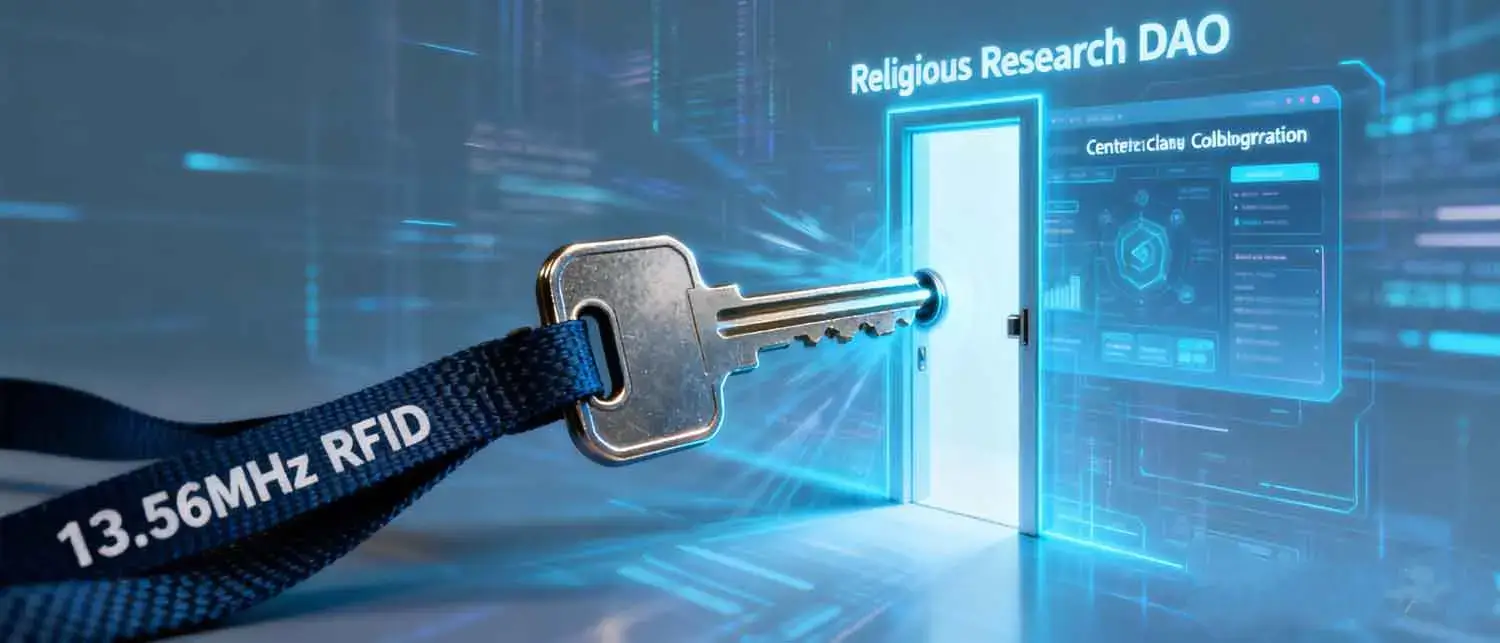
The core technical advantage of theRFID Lanyards for religious conference identity authentication lies in its compliance with international standards and strong compatibility, which is mainly reflected in the 13.56MHz RFID tags embedded in the lanyards following the ISO 14443 Type A protocol. This protocol is a globally recognized physical layer communication standard for near-field communication, which is widely used in fields such as financial payment, identity recognition and access control due to its high security, stable communication and strong anti-interference ability. For religious conferences with participants from all over the world, the adoption of this international standard ensures that the RFID Lanyards can be compatible with various mainstream RFID readers and terminal devices, avoiding problems such as incompatible equipment and failed recognition caused by using proprietary protocols. The 13.56MHz working frequency has the characteristics of moderate communication distance (usually 0-10cm) and low power consumption. It can realize fast and accurate data interaction between the lanyard and the reader, and at the same time avoid signal interference between multiple lanyards in crowded conference scenes. In addition, the RFID tag in the lanyard has a unique electronic identifier, which cannot be copied or tampered with, ensuring the uniqueness and security of the participant’s identity. During the 2024 Vatican Youth Conference, more than 20,000 RFID Lanyards based on this protocol were used, and the recognition success rate reached 99.98% during the peak authentication period, which fully verified the reliability of the protocol in large-scale religious conference scenarios. This international standard-based technical design makes the RFID Lanyards have strong scalability and can be applied to various types of religious activities, from small denominational seminars to large global religious summits.
The Tag Stores the Decentralized Identity Identifier and Public Key Managed Independently by the User
The integration of Web3.0 technology into RFID Lanyards is mainly reflected in the storage content of the tag: instead of the traditional centralized identity information, the tag stores the decentralized identity (DID) identifier and public key independently managed by the user. Decentralized identity is a core concept of Web3.0. It allows users to have absolute control over their own identity information without relying on any centralized institution (such as conference organizers or third-party authentication platforms) for identity management. Each participant can generate their own unique DID identifier through the conference’s dedicated APP before the conference, and bind it with their personal religious information, research fields and other attributes. The public key stored in the RFID tag is used for digital signature and identity verification. When the participant needs to authenticate, the reader sends a verification request, and the lanyard uses the private key (stored in the user’s mobile device in a secure manner) to sign the request, and completes the identity confirmation through the matching of the public key and the private key. This model fundamentally changes the way identity information is managed: the conference organizer does not need to collect and store a large amount of participant information, and only needs to verify the validity of the DID and the corresponding attributes. For example, if a participant wants to enter a seminar on “Religious and Environmental Protection”, the system only needs to verify whether the participant’s DID has the attribute of “focus on religious environmental protection research” through the public key, without knowing other detailed information such as the participant’s specific denomination and personal experience. This not only protects the user’s privacy, but also reduces the security risks of the conference’s information management system. The storage capacity of the RFID tag in the RFID Lanyards can reach 4KB-8KB, which is enough to store DID identifiers, public keys and other necessary data, and supports dynamic updates of information, allowing participants to adjust their attribute tags according to their own needs during the conference.
Realize the Verification of Participants’ Attributes Through Zero-Knowledge Proof Technology Without Disclosing Specific Information
Zero-knowledge proof technology is the key to ensuring the privacy and security of RFID Lanyards in the authentication process, and it is also the core embodiment of Web3.0 identity authentication. This technology allows the verifier (conference authentication system) to confirm that the prover (participant) has certain attributes (such as “belonging to the Catholic Church”, “engaged in theological research”) without obtaining any specific information about the prover. In the application of religious conferences, this means that participants can prove their eligibility to participate in specific activities without revealing their detailed religious background, personal identity and other sensitive information. The specific implementation process is as follows: before the conference, the participant binds the relevant attribute information to his DID through the APP, and generates a zero-knowledge proof for each attribute; when authenticating, the participant’s RFID Lanyards sends the corresponding zero-knowledge proof to the reader; the conference system verifies the validity of the proof. If the verification passes, the participant is allowed to enter or obtain the corresponding service, and the entire process does not involve the transmission or disclosure of specific attribute content. For example, a participant from a minority denomination wants to participate in a closed seminar. Using zero-knowledge proof, he only needs to prove that he is “invited by the seminar organizer” without revealing his denomination, name and other information, which effectively avoids possible discrimination or misunderstanding caused by the disclosure of denomination information. At the 2023 Global Interdenominational Theological Forum, this technology was applied for the first time inRFID Lanyards, and a post-conference survey showed that 96% of participants believed that this authentication method “makes them feel safe and respected”. Zero-knowledge proof not only solves the contradiction between identity verification and privacy protection, but also conforms to the inclusive and respectful concept of interdenominational exchanges, making the identity authentication process more in line with the spiritual connotation of religious activities.
Conference Service System Enhances Participation Experience Through Intelligent Interaction
The System Automatically Pushes Personalized Schedules and Materials to Participants’ Mobile Phones Based on Identity Tags
The RFID Lanyards are not only an identity authentication tool, but also a bridge connecting participants and the conference service system, realizing personalized service push through intelligent interaction. When a participant registers with the RFID Lanyards at the conference site, the conference system will immediately recognize the participant’s DID and the bound attribute information (such as denomination, research direction, interested topics, etc.), and automatically push personalized schedules and materials to the participant’s mobile phone APP. This personalized push avoids the trouble of participants screening a large amount of information by themselves and ensures that they can accurately grasp the activities that are in line with their needs. For example, a participant who focuses on “religious education” will receive a schedule centered on religious education seminars, including the time, venue, speaker introduction and related preview materials of each activity; if the conference adjusts the time of a related seminar, the system will send a real-time reminder to the participant through the APP to avoid missing important content. In addition, the system can also push targeted academic materials according to the participant’s research field. For example, for scholars engaged in the study of religious history, the system will push the latest religious history research papers and conference handouts related to their research direction. At the 2024 Asian Religious Culture Exchange Conference, more than 80% of participants said that the personalized push function helped them save a lot of time in arranging their schedules, and 75% of them said that the pushed materials were highly relevant to their needs. This intelligent interaction function of RFID Lanyards not only improves the participation efficiency of participants, but also makes the conference services more refined and humanized, enhancing the overall experience of the conference.
Intelligently Match Seminars and Prayer Groups Based on Attribute Tags Such as Denomination and Research Interests
Promoting effective communication and interaction between participants is one of the core goals of interdenominational conferences, and RFID Lanyards realize intelligent matching of communication objects and groups through attribute tags, greatly enhancing the interactive value of the conference. Each participant’s RFID Lanyards contains multiple attribute tags set by themselves, including denomination, research field, religious practice experience, interested topics and other information. The conference system uses big data and intelligent algorithm technology to analyze these attribute tags and match seminars and prayer groups that are highly consistent with the participant’s needs. For example, a Protestant participant who is engaged in “religious charity management” will be recommended to join a seminar on “Cross-Denominational Charity Cooperation” and a prayer group composed of believers with the same charity experience; a young believer who is interested in “the integration of religion and modern technology” will be matched with like-minded partners to form a discussion group. This matching function not only helps participants quickly find communication partners with common interests, but also promotes in-depth exchanges between different denominations. In addition, the system also supports real-time group formation. Participants can initiate a temporary discussion group through the APP, and the system will recommend suitable participants to join based on the attribute tags of the RFID Lanyards. At the 2023 Vatican Youth Conference, the system successfully matched more than 5,000 cross-cultural prayer groups through RFID Lanyards, and many participants established long-term communication and cooperation relationships after the conference. A participant from Brazil said: “The intelligent matching function allowed me to meet many brothers and sisters who have the same views on religious youth work. We have maintained contact after the conference and are committed to promoting youth religious exchanges between Brazil and Europe.” This function of RFID Lanyards makes the conference interaction more targeted and efficient, and promotes the in-depth development of interdenominational exchanges.
Authorized Access to Real-Time Simultaneous Interpretation Channels and Electronic Conference Materials Is Automatically Activated
In large interdenominational conferences with participants from all over the world, language barriers and the acquisition of conference materials have always been important factors affecting the participation experience. RFID Lanyards solve these problems through automatic authorization of services, ensuring that participants can obtain the necessary support services in a timely manner. When a participant enters the venue with RFID Lanyards, the system will automatically recognize the participant’s language preference (pre-set in the DID attribute) and activate the corresponding real-time simultaneous interpretation channel. For example, a participant who sets Chinese as his mother tongue will automatically connect to the Chinese simultaneous interpretation channel when entering the main venue, and can switch to other language channels through the APP if needed. This automatic activation function avoids the complicated operation of participants applying for interpretation services manually, and ensures that they can understand the content of the conference in real time. In terms of electronic conference materials, the system will authorize the participant to access the corresponding materials according to the participant’s identity and the activities he participates in. For example, participants who have registered for the “Theological Research Advanced Seminar” can automatically obtain the electronic version of the seminar handouts, speaker PPT and related academic papers through the APP after verifying their identity with RFID Lanyards; these materials are encrypted and can only be accessed by authorized participants, ensuring the intellectual property rights of the materials. At the 2024 Global Religious Leaders Summit, more than 12,000 participants used the simultaneous interpretation and material access functions provided by RFID Lanyards, and the satisfaction rate reached 94%. A religious leader from Africa said: “The automatic simultaneous interpretation and material access function allows me to fully participate in the conference discussions without worrying about language and material acquisition, which makes me feel very convenient.” This service authorization function of RFID Lanyards breaks down language and information barriers, and ensures that every participant can fully enjoy the conference resources and participate in the conference discussions.
Vatican Youth Conference Verifies the Reliability of the System in Large-Scale Scenarios
Successfully Distributed and Managed RFID Identity Lanyards for 23,000 Young Participants
The 2024 Vatican Youth Conference, one of the largest global religious youth events, became a key test scenario for the RFID Lanyards system. The conference attracted 23,000 young participants from 196 countries and regions, covering more than 80 denominations, which put forward extremely high requirements for the scale and stability of the identity management system. The organizing committee of the conference chose RFID Lanyards as the only identity authentication tool for the conference, and successfully completed the distribution and management of all lanyards through a set of standardized processes. Before the conference, participants could apply for RFID Lanyards online, fill in personal attribute information and generate DID; after arriving at the conference site, they only needed to collect the pre-made lanyards through identity verification, and the whole process took no more than 2 minutes per person. During the conference, the system realized real-time management of 23,000 RFID Lanyards, including monitoring the use status of lanyards, updating participant attribute information, and disabling lost lanyards. When a small number of lanyards were lost, the participants could report the loss and reissue them through the APP in time, and the system would immediately disable the lost lanyards to avoid identity theft. The success of this large-scale distribution and management proves that the RFID Lanyards system has strong scalability and can adapt to the identity management needs of tens of thousands of people in large-scale religious conferences. The person in charge of the conference’s technical team said: “We were worried about problems such as system crashes and lanyard management chaos before, but the performance of the RFID Lanyards system exceeded our expectations, and it laid a solid foundation for the smooth progress of the conference.”
The Check-in Efficiency at the Opening Ceremony Reached 1,200 People per Minute Without Congestion
The opening ceremony of the Vatican Youth Conference was held in St. Peter’s Square in the Vatican, with 23,000 participants needing to complete check-in and enter the venue within 30 minutes, which is a severe test for the authentication efficiency of the RFID Lanyards system. In response to this challenge, the organizing committee set up 50 check-in channels around the square, each equipped with 2 high-speed RFID readers compatible with RFID Lanyards. During the actual check-in process, participants only need to swipe their lanyards in front of the reader, and the system can complete identity verification in 0.3 seconds and open the access control. The check-in efficiency reached 1,200 people per minute at the peak, and all participants successfully entered the venue 25 minutes before the opening ceremony, without any congestion or queue jams. Compared with the traditional paper certificate check-in method (the maximum efficiency is about 200 people per minute), the efficiency of RFID Lanyards has been increased by 6 times. This high efficiency is due to the mature RFID technology and the optimized system background: the readers adopt multi-tag simultaneous recognition technology, which can avoid mutual interference when multiple participants swipe their cards at the same time; the system background uses distributed computing architecture, which can handle a large number of authentication requests at the same time without delay. The smooth check-in process not only won the praise of the participants, but also showed the world the efficiency and reliability of the RFID Lanyards system in large-scale religious activities. A young participant from the United States said: “I thought I would have to queue for a long time to enter the venue, but I didn’t expect to complete the check-in in one second. The RFID Lanyards are really convenient.”
More Than 5,000 Cross-Cultural Prayer Groups Were Formed Through the System During the Conference
One of the core goals of the Vatican Youth Conference is to promote cross-cultural and cross-denominational youth exchanges, and the RFID Lanyards system has become a key driver for the formation of cross-cultural prayer groups. As mentioned earlier, each RFID Lanyards contains the participant’s cultural background, denomination, religious practice preferences and other attribute tags. The conference’s intelligent matching system uses these tags to recommend potential prayer partners for participants. During the 7-day conference, participants can initiate or join prayer groups through the APP connected to theRFID Lanyards. The system will automatically match members of the group based on factors such as cultural complementarity, denominational diversity and common interests. For example, a prayer group themed “Peace and Tolerance” may include young believers from Christian, Islamic and Buddhist backgrounds, allowing them to communicate their views on peace through prayer and discussion. By the end of the conference, the system had successfully facilitated the formation of more than 5,000 such cross-cultural prayer groups, with an average of 4-6 members per group. Many of these groups continued their activities after the conference through the online community connected to the RFID Lanyards. A young believer from India said: “In the cross-cultural prayer group, I met brothers and sisters from different countries and religions. We shared our religious experiences and discussed how to promote world peace. This experience has changed my understanding of religious exchanges.” The role of RFID Lanyards in promoting cross-cultural exchanges is not only reflected in the formation of groups, but also in the process of group activities: the lanyard can be used to verify the identity of group members, ensure the safety of the activity, and push prayer materials and discussion topics suitable for the group’s theme. This function makes the RFID Lanyards not only an identity tool, but also a bridge for promoting religious harmony and cultural exchanges.
Sustainable Weaving Technology and Environmental Protection Materials Practice the Responsibility of Faith
The Main Body of the Lanyard Is Made of Recycled Polyester Fiber (rPET) to Support the Circular Economy
In addition to technological innovation, theRFID Lanyards also embody the concept of environmental protection and sustainable development, which is highly consistent with the religious spirit of “loving the world and caring for nature”. The main body of the lanyard is made of recycled polyester fiber (rPET), which is processed from waste plastic bottles. Each RFID Lanyards can consume 3-5 waste plastic bottles, which not only reduces the pollution of plastic waste to the environment, but also realizes the recycling of resources. Recycled polyester fiber has the same strength, wear resistance and durability as traditional polyester fiber, and can withstand long-term use and repeated cleaning, which is very suitable for use as a lanyard material. The production process of rPET also saves 70% of energy compared with the production of traditional polyester fiber and reduces 80% of carbon emissions, which conforms to the global low-carbon development trend. The Vatican Youth Conference, which advocates environmental protection, chose RFID Lanyards made of rPET as identity tools, which is not only a practice of environmental protection concepts, but also a guide for young believers to establish environmental awareness. After the conference, many participants said that they would continue to use the lanyard in daily life to remind themselves of the responsibility of protecting the environment. The use of recycled materials in RFID Lanyards not only reduces the environmental impact of the conference, but also makes the religious spirit of “caring for the creation” concrete and actionable, allowing participants to practice their faith in daily life.
RFID Tag Antennas Are Printed on Environmentally Friendly Fabric Substrates Using Conductive Ink
The environmental protection design of RFID Lanyards not only covers the main body of the lanyard, but also extends to the core component – the RFID tag. The antenna of the RFID tag in the lanyard adopts a green manufacturing process: it is printed on an environmentally friendly fabric substrate using conductive ink, instead of the traditional metal etching process. The traditional metal antenna manufacturing process will produce a lot of toxic and harmful wastewater and waste residue, which is harmful to the environment. In contrast, conductive ink printing technology uses water-based conductive materials, which do not contain toxic substances, and the production process has no pollution emissions. The environmentally friendly fabric substrate is made of natural cotton and linen blended materials, which has good breathability and biodegradability, and can be naturally degraded in the environment after being discarded. In addition, this printing process also has the advantages of low cost and high efficiency, which is suitable for large-scale production of RFID Lanyards for large conferences. The RFID tags manufactured by this process have stable performance: the conductive ink antenna can ensure reliable communication between the tag and the reader, and the fabric substrate makes the tag more flexible and comfortable, avoiding the hard feeling of traditional metal tags. The environmental protection design of the RFID tag not only reflects the overall environmental protection concept of the RFID Lanyards, but also shows that technological innovation and environmental protection can be perfectly combined. At the 2024 Global Religious Environmental Protection Forum, the RFID Lanyards were rated as “Exemplary Products of Religious Environmental Protection” because of their green manufacturing process.
Post-Conference Recycling Program Ensures That More Than 95% of Lanyard Materials Are Recycled
To achieve the full-life-cycle environmental protection of RFID Lanyards, the conference organizing committee has launched a post-conference recycling program, which ensures that more than 95% of the lanyard materials can be recycled and reused, forming a complete circular economy chain. After the conference, the organizing committee set up recycling points in the venue, hotels and other places, and called on participants to return the used RFID Lanyards. For participants who have left the venue, the organizing committee also provides a mail-back service, and the postage is borne by the conference. The returned lanyards will be sent to a professional environmental protection recycling factory for processing: the RFID tags are disassembled first, the conductive ink and fabric substrate are separated and degraded naturally, and the chip is recycled and reused; the rPET main body of the lanyard is crushed and remade into new recycled polyester fiber, which can be used to produce new lanyards, clothing and other products. During the 2024 Vatican Youth Conference, more than 21,000 RFID Lanyards were recycled, with a recycling rate of 91.3%, and after processing, more than 95% of the materials were successfully recycled. This recycling program not only reduces the waste of resources, but also conveys the concept of sustainable development to the majority of believers. The organizing committee of the conference said: “The RFID Lanyards are not only an identity tool for the conference, but also a carrier of environmental protection concepts. We hope that through the recycling program, more believers can realize that protecting the environment is an important part of practicing their faith.” This full-life-cycle environmental protection measure makes the RFID Lanyards a model of sustainable religious supplies, setting a benchmark for the environmental protection transformation of the religious supplies industry.
Build a Continuous Online Religious Community Across the Conference Cycle
After the Conference, the Identity Is Automatically Connected to the Exclusive Encrypted Online Community to Continue the Discussion
The value of RFID Lanyards is not limited to the conference period. After the conference ends, the participant’s identity (DID) stored in the lanyard will be automatically connected to the exclusive encrypted online community of the conference, realizing the continuation of the conference discussion and the extension of the community. This online community is built based on Web3.0 technology, with high security and privacy. Only participants who hold valid RFID Lanyards can enter after identity verification. In the community, participants can continue to discuss the topics of the conference, share academic materials, and exchange religious experiences. For example, the cross-cultural prayer groups formed during the conference can continue to hold online prayer meetings and discussion activities in the community; scholars can publish their latest research results in the community and conduct in-depth discussions with other participants. The community also supports the function of thematic discussion areas, which are divided into different sections according to denominations, research fields, and religious practice topics to facilitate participants to find content of interest. The encryption technology of the community ensures that the communication content between participants is not leaked, and the decentralized management model allows participants to have full control over their own speech and information. At the 2023 Global Interdenominational Theological Forum, the online community connected by RFID Lanyards still has more than 60% of the participants active one year after the conference, and has spawned more than 20 cross-regional religious cooperation projects. This shows that the RFID Lanyards have successfully built a bridge between offline conferences and online communities, making the influence of the conference last for a long time.
Intelligent Algorithms Based on Conference Interaction Data Recommend Potential Partners and Discussion Topics
To enhance the activity and value of the online community, the system uses the conference interaction data collected by RFID Lanyards to recommend potential partners and discussion topics for participants through intelligent algorithms. During the conference, the RFID Lanyards will record the participant’s activity track, such as which seminars they participated in, which prayer groups they joined, who they interacted with, and what topics they discussed. These data will be encrypted and analyzed by the system to form the participant’s “interaction portrait”. After entering the online community, the system will recommend participants with similar interaction portraits as potential partners, and push discussion topics that are in line with the participant’s interests based on the topics they focused on during the conference. For example, a participant who frequently participated in seminars on “religious education” during the conference and interacted closely with several religious education scholars will receive recommendations for other religious education scholars in the community and the latest discussion topics on religious education. This recommendation function helps participants quickly expand their communication circle in the online community and find valuable cooperation opportunities. In addition, the system will also push hot topics in the community to participants based on real-time data, guiding everyone to carry out in-depth discussions. At the online community of the 2024 Vatican Youth Conference, the intelligent recommendation function increased the interaction frequency between participants by 45%, and more than 30% of participants said that they found important cooperative partners through the recommendation function. This application of RFID Lanyards makes the online community more intelligent and targeted, and promotes the sustainable development of the religious community.
Provide a Seamless Participation Foundation for Subsequent Annual Conferences and Regional Gatherings
The RFID Lanyards and the corresponding DID identity system also provide a seamless participation foundation for subsequent annual conferences and regional gatherings, forming a long-term and stable religious exchange platform. The DID identity of the participant stored in theRFID Lanyards is permanent and can be used for all subsequent conferences and activities hosted by the same organizer. When participants register for the next annual conference, they only need to bind their existing DID to the new conference registration system through the RFID Lanyards, without re-filling in a large amount of personal information, which greatly simplifies the registration process. In addition, the participant’s activity records and achievement certificates in previous conferences (such as the certificates obtained by participating in seminars, the contributions made in prayer groups, etc.) will be stored in the DID, which can be used as a reference for participating in high-level activities in subsequent conferences. For regional gatherings, the system can also share the participant’s DID information with the regional organizer (with the participant’s authorization), realizing the connection between global conferences and regional activities. For example, a participant who participated in the Vatican Youth Conference can use the same RFID Lanyards to participate in the Asian Regional Religious Youth Gathering, and the regional organizer can learn about the participant’s experience and interests through the DID, and provide more targeted services. This seamless participation mechanism not only improves the efficiency of participants in participating in subsequent activities, but also helps the organizing committee build a long-term participant database, understand the needs of participants in depth, and optimize the conference content and services. The RFID Lanyards thus become a “passport” for long-term religious exchanges, promoting the formation of a global, interconnected and sustainable religious exchange network.
Why Choose Mytopband?
- Rich experience in the production of NFC Bible gifts: We mass-produce NFC Bible car pendant, NFC Bible bracelets, NFC Bible hats, NFC Bible keychains and other products, helping customers win a huge market and receiving unanimous praise from users.
- Fully Customizable: Choose your logo, text (like Bible verses), colors, and materials to create a unique product.
- Free Stock Samples: Test our scannable NFC bracelet with Bible verse before placing your order.
- Low MOQ as 500pcs: Perfect for startups and small businesses.

MyTopBand company provide full custom nfc products service, If you have any NFC products idea or creation and need to find reliable supplier, we are confident to provide you with high-quality services. Please find us: www.mytopband.com, or send message to info@mytopband.com, we will reply you within 24 hours.