
IoT Devices Face the Dilemma of Communication Distance and Power Consumption
Single Communication Mode Fails to Meet Both Long-Distance Identification and Short-Range Interaction Needs
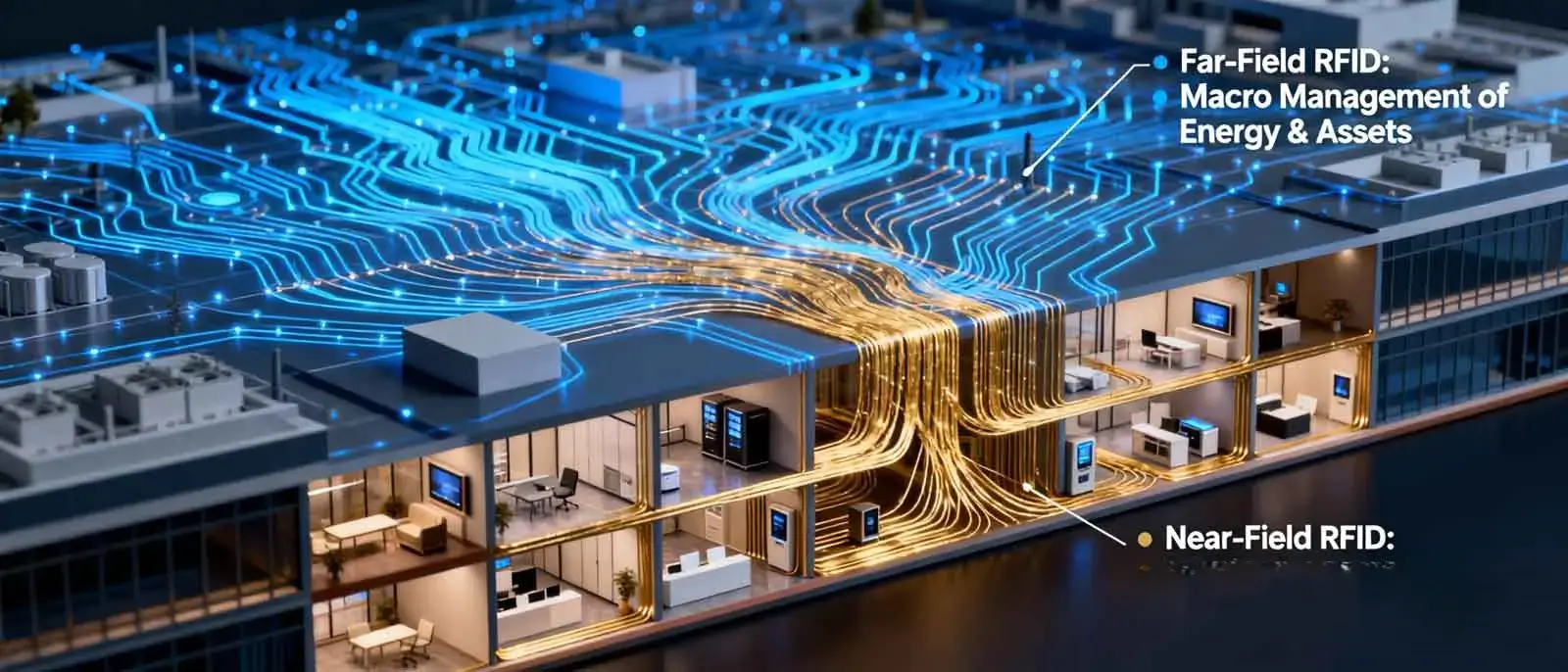
The rapid expansion of the Internet of Things (IoT) has brought unprecedented demands for device communication, yet a core dilemma persists: balancing long-distance identification and short-range interactive capabilities within a single communication mode. Modern IoT scenarios, from retail inventory management to smart logistics tracking and consumer product interaction, require devices to perform two seemingly contradictory tasks simultaneously. On one hand, in large-scale scenarios like warehouse inventory or supermarket shelf monitoring, IoT devices need to identify hundreds of items from a distance to ensure efficient data collection. On the other hand, when consumers interact with products or staff perform on-site operations, devices must support secure, high-bandwidth data exchange at close range. Single-mode communication technologies, however, inherently favor one capability over the other, creating bottlenecks in IoT application expansion. This is where Dual-Mode RFID technology emerges as a transformative solution, effectively resolving this binary conflict by integrating two complementary communication modes. By combining the advantages of long-distance and short-range communication, Dual-Mode RFID not only meets the diverse needs of complex IoT scenarios but also paves the way for a more seamless and efficient IoT communication ecosystem.
Traditional UHF RFID Offers Long Distance but High Power Consumption and No Direct Mobile Phone Interaction
Ultra-High Frequency (UHF) RFID has long been a staple in IoT for long-distance identification, but its inherent limitations have restricted its application scope in modern, consumer-centric IoT ecosystems. Traditional UHF RFID systems typically operate within a range of 3 to 10 meters, enabling efficient large-scale inventory by simultaneously scanning dozens or even hundreds of tags, a capability widely used in warehouses and distribution centers. However, this long-range advantage comes with significant trade-offs. First, UHF RFID tags and readers consume relatively high power, making them less suitable for battery-powered IoT devices that require long-term operation without frequent charging or replacement. For example, a battery-powered UHF RFID sensor tag may only last 6 to 12 months in continuous use, increasing maintenance costs and operational disruptions. Second, and more critically, traditional UHF RFID lacks native compatibility with smartphones, which are the primary interface for consumer interaction and on-site staff operations. To interact with UHF RFID data via a mobile device, additional specialized readers or external attachments are required, adding complexity and cost. This incompatibility severs the link between long-distance asset tracking and direct user interaction, limiting the technology’s value in scenarios where consumer engagement or on-the-go data access is essential. As IoT evolves toward greater user-friendliness and connectivity, these limitations of traditional UHF RFID have become increasingly prominent, creating a demand for more versatile solutions.
Traditional NFC Technology Features Low Power Consumption and Mobile Compatibility but Extremely Short Effective Range
Near Field Communication (NFC) technology, in contrast to UHF RFID, excels in short-range interaction and mobile compatibility but is hamstrung by its extremely limited effective range. Operating within a typical distance of 2 to 10 centimeters, NFC leverages inductive coupling to enable secure, low-power data exchange qualities that have made it ubiquitous in applications like mobile payments and access control. Its greatest strength lies in its native integration with nearly all modern smartphones, allowing users to interact with NFC tags by simply tapping their devices, no additional hardware required. This direct compatibility has made NFC a preferred choice for consumer-facing IoT applications, such as product authentication and interactive marketing. However, the very short communication range that enables its low power consumption also renders it impractical for large-scale identification tasks. In a retail store, for instance, a staff member would need to tap each product individually to complete an inventory check, a process that would take hours for a single shelf, compared to minutes with UHF RFID. Additionally, NFC’s data transfer rate, while sufficient for simple tasks like payment authorization, is relatively limited for transmitting large volumes of data, such as detailed product specifications or real-time sensor readings. These limitations mean that traditional NFC technology can only address a subset of IoT communication needs, leaving the long-distance identification gap unaddressed. The complementary strengths and weaknesses of UHF RFID and NFC have thus created a clear market need for a technology that can unify both capabilities, exactly what Dual-Mode RFID delivers.
Dual-Mode Integration Technology Enables Seamless Connection Between Long and Short-Range Communication
UHF Module Supports Large-Scale Inventory by Identifying Hundreds of Tags Simultaneously Within 10 Meters
The UHF module within Dual-Mode RFID technology retains and enhances the long-distance identification capabilities of traditional UHF RFID, enabling large-scale, efficient inventory management by identifying hundreds of tags simultaneously within a 10-meter range. This module operates on global UHF frequency bands (such as 860-960 MHz) and incorporates advanced anti-collision algorithms that allow it to distinguish between multiple tags even when they are densely packed or moving, an essential feature for dynamic IoT scenarios like conveyor belt tracking or retail shelf monitoring. For example, in a large supermarket, a staff member equipped with a handheld Dual-Mode RFID reader can walk down an aisle and scan all products on both sides of the shelf within seconds, capturing data from hundreds of tags at once. The reader not only records the presence of each product but also extracts additional information such as batch numbers, expiration dates, and stock levels stored in the tag’s memory. This capability reduces inventory time by up to 80% compared to manual counting or single-tag NFC scanning. Beyond retail, the UHF module’s long-range performance is transformative in logistics and warehousing: a fixed Dual-Mode RFID reader installed at a warehouse entrance can automatically scan all tags on a pallet as it passes through, updating inventory records in real time without human intervention. The module’s high read rate, up to 1,200 tags per second, ensures that even high-volume operations, such as peak-season shipping, maintain efficient data collection. By preserving the long-distance, large-scale identification strength of UHF RFID, Dual-Mode RFID provides the foundation for efficient backend operations in complex IoT ecosystems.
NFC Module Supports Secure, High-Bandwidth Data Interaction with Smartphones Within 10 Centimeters
Complementing the UHF module, the NFC module in Dual-Mode RFID technology enables secure, high-bandwidth data interaction with smartphones within a 10-centimeter range, bridging the gap between long-distance tracking and direct user engagement. This module adheres to NFC Forum standards, ensuring compatibility with over 95% of modern smartphones and tablets, and supports two-way data transfer at speeds of up to 424 kbps, sufficient for transmitting detailed product information, user-specific content, or secure authentication data. One of the key advantages of the NFC module is its inherent security: the short communication range minimizes the risk of eavesdropping or data interception, making it ideal for applications like mobile payments, product authentication, and access control. For consumers, this means they can tap their smartphones against a Dual-Mode RFID tag on a product to instantly access a wealth of information, including ingredients, usage instructions, customer reviews, and even traceability data from the manufacturing process. In retail, this interactive capability transforms passive products into active touchpoints: a clothing brand’s Dual-Mode RFID tags can allow customers to tap and view size charts, styling suggestions, or even personalized discount offers based on their purchase history. For staff, the NFC module enables on-site data entry and verification. For example, a store associate can tap a tag to update a product’s price or mark it as “on sale” directly from their smartphone, with the data synchronizing in real time to the backend system. The NFC module’s seamless integration with consumer devices thus unlocks new levels of user engagement and operational flexibility that traditional single-mode technologies cannot match.
Intelligent Mode Switching Algorithm Automatically Selects the Optimal Communication Mode to Balance Performance and Power Consumption
The true innovation of Dual-Mode RFID technology lies in its intelligent mode switching algorithm, which automatically selects the optimal communication mode (UHF or NFC) based on the specific scenario, ensuring a balance between performance, power consumption, and user needs. This algorithm operates on a set of predefined rules and real-time environmental inputs, such as the presence of a smartphone, the distance to the reader, the volume of data to be transmitted, and the power status of the tag. For battery-powered Dual-Mode RFID tags, the algorithm prioritizes low-power operation by default, activating the NFC module only when a smartphone is detected within range (via inductive coupling sensing) and switching to the UHF module only when a UHF reader signal is received. This intelligent power management ensures that battery life is maximized, some battery-powered Dual-Mode RFID tags can operate continuously for 3 to 5 years, a significant improvement over traditional single-mode UHF tags. In active reader scenarios, such as warehouse inventory, the algorithm automatically switches to UHF mode to enable large-scale scanning, then returns to low-power standby once the inventory is complete. For consumer interaction scenarios, when a user taps their smartphone against the tag, the algorithm instantly switches to NFC mode to facilitate secure data transfer, then powers down the NFC module after the interaction is finished. Additionally, the algorithm can be customized for specific industry needs: in healthcare asset tracking, for example, it can prioritize UHF mode for regular inventory checks and switch to NFC mode only when a nurse needs to update the asset’s location or maintenance status via a smartphone. This adaptive capability ensures that Dual-Mode RFID technology delivers optimal performance in every scenario while minimizing unnecessary power consumption.
Impinj Indy R2000 Dual-Mode Chip Architecture Enables Technological Breakthroughs
Single Chip Integrates UHF and NFC Dual RF Frontends, Sharing Baseband Processing Unit
The Impinj Indy R2000 chip architecture represents a pivotal technological breakthrough in Dual-Mode RFID, achieving the integration of UHF and NFC dual radio frequency (RF) frontends within a single chip while sharing a common baseband processing unit. This integration eliminates the need for separate chips for each communication mode, drastically reducing the size, complexity, and cost of Dual-Mode RFID tags and readers. The UHF frontend within the chip supports a wide range of global frequency bands and incorporates advanced signal processing techniques to enhance read range and anti-interference performance, while the NFC frontend complies with ISO 14443 and ISO 15693 standards to ensure full compatibility with consumer devices. By sharing the baseband processing unit, the chip avoids redundant hardware, reducing power consumption and chip area by up to 40% compared to discrete UHF and NFC chip solutions. The baseband unit is designed to handle the unique signal processing requirements of both modes, with dedicated firmware modules for UHF anti-collision scanning and NFC secure data transfer. This shared architecture also enables seamless coordination between the two modes: when the intelligent mode switching algorithm triggers a mode change, the baseband unit transitions between processing UHF and NFC signals without latency, ensuring a smooth user experience. For example, a Dual-Mode RFID tag using the Impinj Indy R2000 chip can be scanned via UHF in a warehouse inventory check and then immediately used for an NFC tap interaction with a consumer’s smartphone, all without any lag or disruption. This single-chip integration is the foundation of the practicality and scalability of Dual-Mode RFID technology, making it feasible for mass deployment across diverse industries.
Innovative Antenna Reuse Technology Reduces Overall Size and Hardware Costs
Complementing its single-chip integration, the Impinj Indy R2000 architecture incorporates innovative antenna reuse technology that further reduces the overall size and hardware costs of Dual-Mode RFID devices. Traditional dual-mode solutions require separate antennas for UHF and NFC, as each mode operates at significantly different frequencies (UHF at 860-960 MHz, NFC at 13.56 MHz) and has distinct impedance requirements. This dual-antenna design increases the physical size of tags and readers, making them unsuitable for small form-factor applications like consumer electronics or jewelry tags, and adds to material and manufacturing costs. The Impinj Indy R2000 addresses this by using a single antenna that can be dynamically tuned to operate efficiently in both frequency bands, controlled by a built-in antenna matching network. The matching network adjusts the antenna’s impedance in real time based on the active communication mode, ensuring optimal signal transmission and reception for both UHF and NFC. For example, when the tag switches to UHF mode, the matching network configures the antenna for the lower impedance required for UHF signals; when switching to NFC mode, it adjusts to the higher impedance needed for 13.56 MHz operation. This antenna reuse technology reduces the tag size by up to 30% compared to dual-antenna designs, making Dual-Mode RFID feasible for applications where space is at a premium. It also cuts hardware costs by eliminating the need for a second antenna and associated components, lowering the total cost of ownership for businesses deploying the technology. In high-volume applications like retail, where millions of tags are used annually, this cost reduction translates to significant savings while maintaining full dual-mode functionality.
Low-Power Design Ensures Battery-Powered Devices Can Operate Continuously for Years
A critical advantage of the Impinj Indy R2000-based Dual-Mode RFID solution is its advanced low-power design, which enables battery-powered devices to operate continuously for years, addressing a major pain point in IoT deployments. The chip incorporates multiple power-saving features that minimize energy consumption without compromising performance. First, it uses a sleep mode that reduces power draw to less than 1 microamp when no communication is active, activating only when a UHF reader signal or NFC smartphone tap is detected. Second, the shared baseband and antenna reuse technologies eliminate redundant power-consuming components, reducing overall energy requirements. Third, the chip’s power management unit dynamically adjusts voltage and clock speeds based on the active mode: in UHF mode, it allocates more power for long-range signal transmission; in NFC mode, it scales back to the minimal power needed for short-range interaction. These design choices have a profound impact on battery life: a typical battery-powered Dual-Mode RFID sensor tag, equipped with a small 3V coin cell battery, can operate continuously for 3 to 5 years, compared to 6 to 12 months for traditional single-mode UHF sensor tags. For businesses, this extended battery life translates to drastically reduced maintenance costs, fewer battery replacements mean less labor time and fewer disruptions to operations. In remote or hard-to-access IoT scenarios, such as industrial equipment monitoring or outdoor asset tracking, this is particularly valuable, as it eliminates the need for frequent site visits. Additionally, the low-power design makes Dual-Mode RFID suitable for disposable or semi-disposable applications, such as pharmaceutical tracking or perishable goods monitoring, where long battery life and low cost are essential. The Impinj Indy R2000’s low-power capabilities thus make Dual-Mode RFID a practical, cost-effective solution for a wide range of battery-powered IoT applications.
Reconstructing the Full-Link Intelligent Retail Experience: From Shelf to Checkout
Smart Shelf Management: UHF Mode Real-Time Monitors Product Inventory and Anti-Theft
In retail, Dual-Mode RFID technology transforms shelf management through its UHF mode, enabling real-time inventory monitoring and anti-theft capabilities that streamline operations and reduce losses. Smart shelves equipped with fixed UHF readers and antennas leverage the long-range scanning capability of Dual-Mode RFID to continuously track the presence and quantity of products on the shelf. Each product is tagged with a Dual-Mode RFID tag, which is scanned by the shelf’s UHF readers at regular intervals (typically every 1 to 5 minutes). The data is transmitted to the retail’s inventory management system in real time, providing accurate, up-to-date stock levels for every SKU. This real-time visibility eliminates the need for manual inventory checks, reducing labor costs and human error. For example, a store can automatically generate restock alerts when a product’s quantity falls below a predefined threshold, ensuring that shelves are always fully stocked and minimizing lost sales due to stockouts. The UHF mode also enhances anti-theft measures: when a product with an active Dual-Mode RFID tag is moved from the shelf without being scanned at checkout, UHF readers at the store’s exit trigger an alarm, alerting staff to potential theft. Unlike traditional EAS (Electronic Article Surveillance) systems, which require separate tags and only detect theft at the exit, Dual-Mode RFID’s anti-theft functionality is integrated with the inventory management system, providing additional context such as which product was stolen and its last known location on the shelf. This integration not only improves theft prevention but also helps retailers analyze theft patterns and optimize shelf layouts to reduce vulnerabilities. By combining real-time inventory and anti-theft capabilities in a single system, Dual-Mode RFID revolutionizes smart shelf management, making retail operations more efficient and secure.
Consumer Interaction: NFC Mode Allows Customers to Access Product Details, Reviews, and Traceability Information via Mobile Phones
The NFC mode of Dual-Mode RFID technology redefines consumer interaction in retail, empowering customers to access rich product information, reviews, and traceability data simply by tapping their smartphones against the product’s tag. This direct, intuitive interaction transforms passive shopping into an engaging, informed experience, driving customer satisfaction and brand loyalty. For example, a customer interested in a bottle of organic wine can tap the Dual-Mode RFID tag on the bottle to instantly pull up a mobile webpage with details such as the wine’s origin, grape variety, tasting notes, certifications (e.g., organic or fair trade), and customer reviews from other shoppers. For food products, the tag can provide expiration dates, storage instructions, and even a complete traceability history, showing where the ingredients were sourced, how the product was manufactured, and its journey through the supply chain. This level of transparency is increasingly important to modern consumers, with a 2023 survey by Nielsen finding that 73% of shoppers are willing to pay more for products with transparent sourcing and manufacturing information. Beyond product information, the NFC mode enables interactive brand experiences: a clothing retailer’s Dual-Mode RFID tags can let customers tap to view styling videos, check size availability in other stores, or add the product to their online wishlist. Some retailers even use the technology to deliver personalized offers. For instance, a customer who frequently buys skincare products might receive a coupon for a complementary moisturizer when they tap a Dual-Mode RFID tag on a facial cleanser. By bridging the gap between physical products and digital content, Dual-Mode RFID’s NFC mode creates a more engaging, personalized shopping experience that meets the expectations of today’s tech-savvy consumers.
Seamless Payment: The Same Tag is Read Again at Checkout to Complete Shopping Cart Item Counting and Fast Payment
Dual-Mode RFID technology enables a seamless payment experience by allowing the same tag used for inventory monitoring and consumer interaction to be read again at checkout, streamlining the process of item counting and payment. This end-to-end integration eliminates the need for separate scanning of each product at the checkout counter, reducing wait times and improving the overall shopping experience. In a Dual-Mode RFID-enabled retail store, customers can simply place their shopping basket or bag on a checkout counter equipped with a UHF reader, which automatically scans all Dual-Mode RFID tags in the basket within seconds. The system instantly identifies each product, retrieves its price, and compiles a complete shopping cart total, displaying it on the checkout screen for the customer to review. This automated scanning eliminates the need for cashiers to scan each item individually, reducing checkout time by up to 40%, a significant benefit during peak shopping periods like holidays or weekends. For self-checkout systems, the process is even more intuitive: customers can place their items on the scanner, and the system automatically counts and prices them, with no need for manual barcode scanning. Once the cart is totaled, the customer can pay using traditional methods (credit card, cash) or, for an even more seamless experience, use the NFC mode of the Dual-Mode RFID tags to complete a contactless payment, tapping their smartphone against the checkout terminal to authorize the transaction. This integration of inventory, interaction, and payment into a single Dual-Mode RFID tag creates a frictionless shopping journey, from the moment the customer picks up a product to the moment they complete their purchase. Retailers benefit from faster checkout speeds, reduced labor costs, and fewer checkout errors, while customers enjoy a more convenient, stress-free shopping experience.
Actual Deployment Verifies the Commercial and Social Value of Dual-Mode Technology
After Deployment by a Large Retailer, Inventory Checking Efficiency Increased by 53%, and Labor Costs Were Significantly Reduced
A large multinational retailer with over 500 stores across Europe recently completed a full-scale deployment of Dual-Mode RFID technology, and the results confirm its transformative commercial value: inventory checking efficiency increased by 53%, and labor costs associated with inventory management were significantly reduced. Prior to implementing Dual-Mode RFID, the retailer relied on a combination of manual counting and periodic UHF RFID scans, which required staff to spend an average of 12 hours per week per store on inventory-related tasks. With Dual-Mode RFID’s UHF mode, fixed readers on smart shelves and handheld readers for backroom inventory automatically collect and update stock data in real time, reducing the weekly inventory workload to just 5.6 hours per store, a 53% reduction in labor time. This efficiency gain translates to substantial cost savings: for the retailer’s 500 stores, the annual labor cost savings from inventory management amount to approximately €2.3 million. Beyond time and cost savings, the accuracy of inventory data also improved dramatically, with stock discrepancies (between system records and actual shelf quantities) falling from 18% to 3%. This improved accuracy has reduced stockouts by 41% and overstocking by 35%, leading to additional revenue gains from increased sales and reduced waste. The retailer’s inventory managers report that the real-time data provided by Dual-Mode RFID has enabled more informed purchasing decisions, with demand forecasting accuracy improving by 27%. These results demonstrate that Dual-Mode RFID technology delivers tangible, measurable value for retailers by optimizing inventory processes and reducing operational costs.
Consumer Participation in Brand Activities Increased by 27% Due to Convenient Interactive Experiences
The consumer-facing NFC capabilities of Dual-Mode RFID technology have also driven significant social and commercial value for the retailer, with consumer participation in brand activities increasing by 27% thanks to the convenient interactive experiences it enables. Prior to the deployment, the retailer’s brand engagement initiatives, such as product sampling, loyalty program sign-ups, and social media sharing, relied on traditional methods like in-store flyers or QR code scanning, which suffered from low participation rates due to their inconvenience. With Dual-Mode RFID, customers can participate in these activities by simply tapping their smartphones against product tags, eliminating the need to search for QR codes or manually enter information. For example, the retailer launched a “Tap to Sample” campaign where customers could tap a Dual-Mode RFID tag on a cosmetic product to request a free sample, which was then delivered to their home address via the retailer’s app. Participation in this campaign was 27% higher than similar QR code-based campaigns, with 42% of participants reporting that the convenience of the tap interaction was the primary reason they participated. Similarly, loyalty program sign-ups increased by 31% when customers could tap to join directly from a product tag, compared to the previous method of filling out a paper form or downloading an app. The retailer also found that customers who interacted with Dual-Mode RFID tags spent 19% more on average than non-interacting customers, as the additional product information and personalized offers influenced their purchasing decisions. These results highlight that Dual-Mode RFID technology not only improves operational efficiency but also strengthens the connection between brands and consumers, driving higher engagement and revenue.
Payment Speed Increased by 40%, Greatly Enhancing Peak-Hour Customer Flow Handling Capacity
The seamless payment capabilities of Dual-Mode RFID have had a profound impact on the retailer’s checkout operations, with payment speed increasing by 40% and peak-hour customer flow handling capacity greatly enhanced. Prior to the deployment, the retailer’s checkout lines during peak hours (such as weekends and holiday sales) were a major pain point, with customers waiting an average of 8 minutes to complete their purchases. This long wait time led to customer dissatisfaction, with 23% of shoppers reporting that they had abandoned their carts due to long checkout lines. After implementing Dual-Mode RFID-enabled checkout systems, the average checkout time was reduced to just 4.8 minutes, a 40% improvement. The automated scanning of Dual-Mode RFID tags eliminates the need for manual scanning of each item, and the integration with NFC payment options allows for faster transaction authorization. During peak periods, the retailer’s checkout lanes can now handle 38% more customers per hour, reducing wait times to under 3 minutes and eliminating cart abandonment due to long lines. Customer satisfaction scores related to checkout experience increased by 52%, with 89% of shoppers reporting that they preferred the Dual-Mode RFID checkout system over traditional barcode scanning. The improved checkout efficiency has also reduced labor costs at the checkout, as each cashier can now handle more transactions per hour, reducing the number of cashiers needed during peak periods by 25%. For the retailer, this means lower operational costs and higher customer retention, as the seamless checkout experience encourages repeat visits. These results confirm that Dual-Mode RFID technology addresses one of the biggest pain points in retail, checkout inefficiency and delivers significant value by improving customer flow and satisfaction.
Dual-Mode RFID Defines New Standards for Ubiquitous IoT
Provides a Unified Technical Foundation for Scenarios Such as Asset Management, Smart Logistics, and Smart Home
Beyond retail, Dual-Mode RFID technology is poised to define new standards for ubiquitous IoT by providing a unified technical foundation for a wide range of scenarios, including asset management, smart logistics, and smart home applications. In asset management, whether for industrial equipment, healthcare devices, or corporate IT assets, Dual-Mode RFID offers a single solution for both long-distance tracking and on-site interaction. For example, a manufacturing plant can use the UHF mode of Dual-Mode RFID to track the location of heavy machinery across the factory floor in real time, while maintenance technicians can use the NFC mode to tap the asset’s tag with their smartphones to access maintenance records, log service activities, or request replacement parts. In smart logistics, Dual-Mode RFID enables end-to-end visibility: UHF readers at shipping ports and distribution centers can scan entire containers of goods at once, while delivery drivers can use NFC to confirm deliveries by tapping the tag with their mobile devices, updating the shipment status in real time. For smart home applications, Dual-Mode RFID tags embedded in household items can be scanned via UHF by a central home hub to monitor inventory (e.g., pantry items) and via NFC by residents to control connected devices. For example, tapping a tag on a lamp to adjust its brightness or a tag on a food container to add it to a shopping list. This unified technical foundation eliminates the need for multiple, incompatible IoT technologies in a single environment, reducing complexity for businesses and consumers alike. By standardizing on Dual-Mode RFID, IoT deployments become more scalable, interoperable, and cost-effective, accelerating the adoption of ubiquitous IoT.
Promotes Autonomous Collaboration and Data Integration Between Devices, Unlocking the Deep Value of IoT Data
Dual-Mode RFID technology goes beyond enabling communication between devices and readers, it promotes autonomous collaboration and data integration between devices themselves, unlocking the deep value of IoT data that was previously inaccessible with single-mode technologies. In traditional IoT systems, data is often siloed within individual devices or applications, with limited sharing between different components of the ecosystem. Dual-Mode RFID’s ability to support both long-distance data collection and short-range device-to-device interaction enables devices to share information and collaborate autonomously to achieve common goals. For example, in a smart warehouse, a pallet of perishable goods equipped with Dual-Mode RFID tags can communicate its temperature data (via NFC) to a nearby environmental sensor, which in turn uses UHF to transmit an alert to the warehouse management system if the temperature exceeds a safe threshold. This autonomous collaboration ensures that issues are detected and addressed quickly, reducing waste and improving efficiency. In healthcare, medical devices with Dual-Mode RFID tags can share patient data with each other. For example, a blood pressure monitor can transmit readings to a patient’s smartwatch via NFC, which then uses UHF to send the data to the hospital’s EHR system. This data integration creates a comprehensive, real-time view of patient health, enabling more accurate diagnoses and personalized treatment plans. Beyond device collaboration, Dual-Mode RFID facilitates the integration of IoT data with other enterprise systems, such as ERP (Enterprise Resource Planning) and CRM (Customer Relationship Management) platforms. By unifying data from long-distance tracking and short-range interaction, businesses can gain deeper insights into their operations. For example, a retailer can correlate inventory data from UHF scans with consumer interaction data from NFC taps to identify which products are generating the most engagement and adjust their marketing strategies accordingly. This ability to unlock the deep value of IoT data is what makes Dual-Mode RFID a transformative technology for the future of IoT.
Accelerates the Seamless Integration of the Physical and Digital Worlds, Building a Truly Connected IoT Ecosystem
Ultimately, Dual-Mode RFID technology is accelerating the seamless integration of the physical and digital worlds, laying the foundation for a truly connected IoT ecosystem where every physical object has a digital identity and can interact with the digital world in meaningful ways. For decades, the IoT has focused on connecting devices to the internet, but Dual-Mode RFID takes this a step further by creating a bidirectional bridge between physical objects and digital systems, enabling not just data collection from the physical world, but also digital action that impacts the physical world. For example, a consumer tapping a Dual-Mode RFID tag on a product (physical action) triggers the delivery of digital content (product information) and can even initiate a physical action (e.g., ordering a replacement). In a smart city, Dual-Mode RFID tags on public transportation vehicles can be scanned via UHF to track their location in real time (digital data collection) and via NFC by passengers to pay for fares (digital action impacting physical access). This seamless integration blurs the lines between the physical and digital worlds, creating a more intuitive, efficient, and responsive ecosystem. It also enables new business models that were previously impossible, such as pay-per-use services for physical assets, where usage is tracked via UHF and payments are processed via NFC, or personalized product experiences that adapt based on a user’s digital profile and physical interactions. As Dual-Mode RFID technology becomes more widespread, it will drive the next phase of IoT evolution, moving beyond connected devices to a truly connected world where physical and digital systems work in harmony. This vision of a fully integrated IoT ecosystem is no longer a distant possibility, it is being realized today through the transformative power of Dual-Mode RFID technology.
Why Choose Mytopband?
- Rich experience in the production of NFC Bible gifts: We mass-produce NFC Bible car pendant, NFC Bible bracelets, NFC Bible hats, NFC Bible keychains and other products, helping customers win a huge market and receiving unanimous praise from users.
- Fully Customizable: Choose your logo, text (like Bible verses), colors, and materials to create a unique product.
- Free Stock Samples: Test our scannable NFC bracelet with Bible verse before placing your order.
- Low MOQ as 500pcs: Perfect for startups and small businesses.

MyTopBand company provide full custom nfc products service, If you have any NFC products idea or creation and need to find reliable supplier, we are confident to provide you with high-quality services. Please find us: www.mytopband.com, or send message to info@mytopband.com, we will reply you within 24 hours.