
Food Packaging Pollution Urgently Needs Sustainable Solutions
Global Food Packaging Waste Reaches 150 Million Tonnes Annually
The food industry, a cornerstone of global commerce and human survival, is simultaneously one of the largest contributors to packaging waste, with 150 million tonnes of food packaging waste generated worldwide each year, according to the latest report from the Food and Agriculture Organization (FAO). This staggering figure accounts for approximately 30% of all municipal solid waste, placing an enormous burden on waste management systems and the environment. From plastic wraps securing fresh produce to foam containers holding takeout meals, the sheer volume of packaging discarded daily is overwhelming landfills, clogging waterways, and contributing to greenhouse gas emissions during decomposition. In urban areas, food packaging waste often constitutes the single largest category of waste collected, with developing nations facing particular challenges due to inadequate recycling infrastructure. For example, in many Southeast Asian countries, a significant portion of food packaging ends up in coastal regions, where it breaks down into microplastics that contaminate marine ecosystems and enter the food chain. ECO RFID labels, designed with sustainability at their core, are emerging as a critical component in addressing this crisis, offering both the tracking functionality needed for the food supply chain and the environmental compatibility that traditional packaging lacks. By integrating these labels into food packaging systems, the industry can take a significant step toward reducing waste and moving toward a circular economy.
Traditional Plastic Packaging Takes Centuries to Degrade and Causes Microplastic Pollution
Traditional plastic packaging, which dominates the food industry due to its low cost and durability, poses a long-term environmental threat as it can take anywhere from 200 to 1,000 years to fully degrade in natural environments. Unlike organic materials that break down into harmless components, plastic packaging persists for generations, gradually fragmenting into microplastics, tiny particles less than 5 millimeters in diameter—that infiltrate every corner of the planet. A 2024 study published in the journal Environmental Science & Technology found microplastics in 90% of bottled water, 83% of tap water, and even in fresh produce and seafood, raising serious concerns about human health. These microplastics can accumulate in the body over time, potentially causing inflammation, oxidative stress, and other adverse effects. Additionally, the production of traditional plastic packaging relies heavily on fossil fuels, contributing to climate change through carbon emissions. For instance, the manufacturing of a single plastic grocery bag emits approximately 0.5 kilograms of carbon dioxide, and with trillions of such bags used annually in the food industry, the cumulative impact is substantial. The inability of traditional plastic packaging to degrade quickly and its role in microplastic pollution have made it clear that a more sustainable alternative is essential. ECO RFID labels address this need by utilizing biodegradable materials that break down harmlessly, eliminating the long-term pollution associated with conventional plastic-based tracking labels.
Consumer Demand for Eco-Friendly Packaging Has Grown by 320% in Three Years
Driven by increasing environmental awareness and concerns about plastic pollution, consumer demand for eco-friendly food packaging has surged by an unprecedented 320% over the past three years, according to a global consumer survey conducted by Nielsen. This dramatic shift in consumer preferences is reshaping the food industry, with shoppers increasingly willing to pay a premium for products packaged in sustainable materials and those that provide transparency about their environmental impact. For example, a 2023 survey by the International Food Information Council found that 78% of consumers consider packaging sustainability when making food purchasing decisions, and 65% are willing to pay up to 10% more for products with eco-friendly packaging. This trend is not limited to developed markets; in emerging economies such as Brazil and India, consumer demand for sustainable food packaging has grown even faster, driven by a younger, more environmentally conscious population. Food brands that fail to respond to this demand risk losing market share to competitors that prioritize sustainability. ECO RFID labels enable brands to meet this consumer expectation by not only being environmentally friendly themselves but also by providing consumers with easy access to information about the product’s packaging materials, carbon footprint, and recycling instructions. This transparency builds trust and loyalty, helping brands differentiate themselves in an increasingly competitive market while aligning with the values of modern consumers.
ECO RFID Labels Achieve Dual Innovations in Materials and Technology
Compostable Materials Based on Plant Fibers Achieve Natural Degradation in 60 Days
One of the most groundbreaking innovations of ECO RFID labels is their use of plant fiber-based compostable materials that naturally degrade within 60 days under industrial composting conditions, and within 180 days in home composting environments, a stark contrast to the centuries required for traditional plastic labels. These materials are derived from renewable resources such as sugarcane bagasse, corn starch, and bamboo fiber, which are not only abundant but also require fewer resources to produce than fossil fuel-based plastics. The manufacturing process of these compostable materials emits 40% less carbon dioxide than traditional plastic production, further reducing their environmental impact. Unlike some biodegradable plastics that require specific industrial conditions to break down, ECO RFID label materials decompose into organic matter, water, and carbon dioxide, leaving no toxic residues or microplastics behind. For example, a pilot project by a major European supermarket chain found that ECO RFID labels attached to fruit and vegetable packaging fully degraded in their in-store compost bins within 55 days, while traditional plastic labels remained intact. This material innovation addresses the core environmental issue of packaging waste, allowing food brands to integrate tracking technology into their packaging without contributing to long-term pollution. Additionally, the plant fiber-based materials are durable enough to withstand the rigors of the food supply chain, including refrigeration, moisture, and handling, ensuring that the ECO RFID labels maintain their functionality throughout the product’s lifecycle.
Integrated Temperature and Humidity Sensors Monitor Food Storage Environment in Real-Time
Beyond their sustainable material composition, ECO RFID labels incorporate integrated temperature and humidity sensors that monitor the food storage environment in real-time, providing critical data to ensure food safety and reduce waste. The food industry suffers significant losses each year due to improper storage conditions; the FAO estimates that approximately one-third of all food produced globally is lost or wasted, with a large portion of this attributed to temperature fluctuations during transportation and storage. ECO RFID labels address this issue by continuously recording temperature and humidity levels and storing the data in the label’s RFID chip, which can be accessed at any point in the supply chain using a handheld or fixed RFID reader. For example, a shipment of fresh meat transported from a processing plant to a retail store can be monitored throughout the journey: if the temperature inside the truck rises above the safe threshold of 4°C, the ECO RFID label will log the incident, alerting the logistics provider and the retailer to the potential safety risk. This real-time monitoring allows for immediate corrective action, such as rerouting the shipment to a closer destination or adjusting the refrigeration system, minimizing food waste and ensuring that only safe products reach consumers. The sensors are also energy-efficient, drawing power from the RFID reader’s electromagnetic field, eliminating the need for batteries and further enhancing the sustainability of the ECO RFID labels.
Carbon Footprint Data Visualization Aids Enterprises in Environmental Decision-Making
ECO RFID labels play a crucial role in helping food industry enterprises make informed environmental decisions by providing detailed carbon footprint data that can be visualized through connected software platforms. Calculating the carbon footprint of food products and their packaging is a complex process, involving factors such as raw material extraction, manufacturing, transportation, and disposal. ECO RFID labels simplify this by encoding carbon footprint data specific to each product batch, including the emissions associated with the label’s own production (which is significantly lower than that of traditional labels). This data is transmitted to a cloud-based platform where it can be visualized in easy-to-understand dashboards, allowing enterprises to identify areas where they can reduce their environmental impact. For example, a bakery using ECO RFID labels on its bread packaging can compare the carbon footprint of different flour suppliers, transportation routes, and packaging materials, enabling them to select the most sustainable options. The visualization tools also allow enterprises to track their progress toward carbon reduction goals, which is increasingly important as governments around the world implement carbon pricing and reporting requirements. Additionally, this carbon footprint data can be shared with consumers, enhancing transparency and meeting their demand for environmentally responsible products. A 2024 study by the Carbon Trust found that enterprises using ECO RFID labels to track and visualize their carbon footprint reduced their overall emissions by an average of 12% within the first year, demonstrating the tangible impact of this technology on sustainability.
UHF RFID Technology Improves Full-Lifecycle Management of Food
Full-Process Temperature Monitoring from Raw Material Procurement to Sales Terminals
UHF (Ultra-High Frequency) RFID technology, integrated into ECO RFID labels, enables full-process temperature monitoring of food products from the moment raw materials are procured to when they reach sales terminals, ensuring consistent quality and safety throughout the supply chain. Unlike traditional tracking methods that rely on manual temperature logs or limited sensor data, UHF RFID technology allows for non-contact, long-range reading of multiple ECO RFID labels simultaneously, making it ideal for large-scale food operations. For example, a dairy company procuring milk from local farmers can attach ECO RFID labels to each milk container at the farm. These labels begin recording temperature data immediately, tracking the milk as it is transported to the processing plant, pasteurized, packaged, and shipped to retail stores. At each stage, warehouse managers, logistics providers, and store employees can use UHF RFID readers to quickly access the temperature history of each batch, ensuring that it has been stored within the required range (typically 0-4°C for milk). This full-process monitoring is particularly valuable for perishable foods with short shelf lives, such as seafood, fresh produce, and dairy products, where even minor temperature deviations can lead to spoilage. A case study by a leading U.S. grocery chain found that implementing ECO RFID labels with UHF technology reduced food waste from temperature-related spoilage by 27%, resulting in significant cost savings and a reduced environmental footprint.
Real-Time Alerts and Quality Assurance in Cold Chain Logistics
Cold chain logistics is one of the most critical and challenging aspects of the food supply chain, and ECO RFID labels with UHF technology provide real-time alerts and quality assurance to mitigate risks associated with temperature fluctuations. The cold chain, which includes refrigerated transportation, storage, and distribution, is prone to disruptions such as equipment failure, door openings during loading/unloading, and delays in transit, all of which can compromise food quality. ECO RFID labels address this by sending real-time alerts to supply chain managers when temperature or humidity levels exceed predefined thresholds. These alerts can be delivered via email, SMS, or a dedicated mobile app, allowing for immediate action. For example, if a refrigerated container carrying frozen vegetables experiences a power outage during transit, the ECO RFID labels will detect the temperature rise and send an alert to the logistics provider, who can arrange for emergency repairs or transfer the goods to another container. This proactive approach ensures that potential quality issues are addressed before they result in large-scale food waste. Additionally, the UHF RFID technology allows for seamless integration with cold chain management systems, enabling automatic updates to inventory records and quality assurance reports. This not only improves operational efficiency but also provides a comprehensive audit trail for regulatory compliance, which is essential in the food industry where safety standards are strict. A 2023 report by the Global Cold Chain Alliance found that companies using ECO RFID labels in their cold chain operations reduced quality-related losses by 35% and improved regulatory compliance scores by 40%.
Consumers Scan Codes to Access Product Traceability and Shelf-Life Reminders
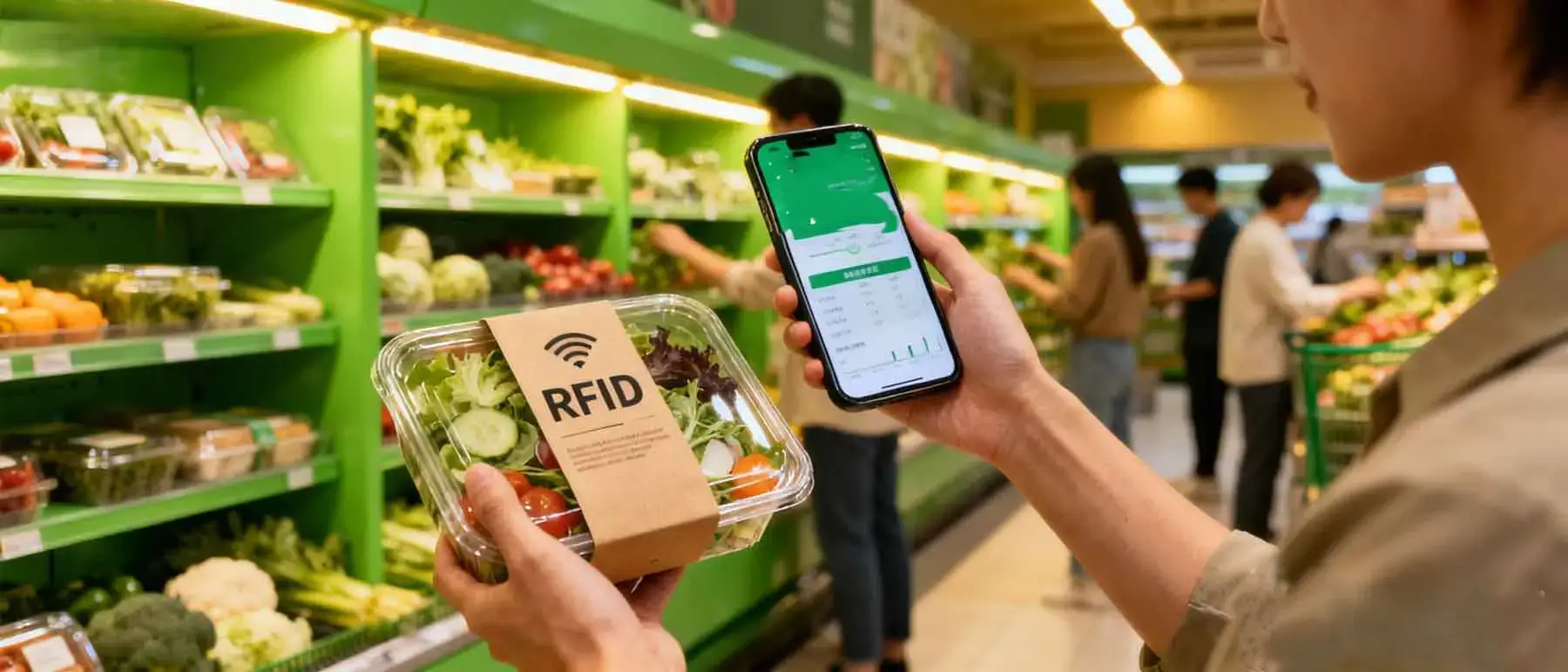
ECO RFID labels empower consumers by allowing them to scan the labels using their smartphones to access detailed product traceability information and receive shelf-life reminders, enhancing transparency and reducing household food waste. With a simple scan using a dedicated app or a standard QR code reader (many ECO RFID labels include a QR code for compatibility), consumers can view the product’s entire journey, including the origin of raw materials, production date, transportation history, and storage conditions. For example, a consumer purchasing a package of organic lettuce can scan the ECO RFID label to see where the lettuce was grown, when it was harvested, and the temperature it was stored at during transit, providing confidence in the product’s freshness and safety. Additionally, the app can send personalized shelf-life reminders based on the product’s expiration date, helping consumers plan their meals and avoid wasting food that would otherwise be forgotten in the refrigerator. A 2024 consumer survey found that 82% of respondents who used the scan function on ECO RFID labels reported reducing their household food waste by an average of 15%, as they were better able to track expiration dates and make informed purchasing decisions. This direct consumer engagement not only benefits the environment but also strengthens the relationship between food brands and their customers, as it demonstrates a commitment to transparency and sustainability.
Nestlé’s Eco-Packaging Project Achieves Significant Carbon Reduction Resultsv
Annual Carbon Emissions Reduced by 420,000 Tonnes, Equivalent to Planting 7 Million Trees
Nestlé, one of the world’s largest food and beverage companies, has implemented a comprehensive eco-packaging project incorporating ECO RFID labels, resulting in an annual carbon emissions reduction of 420,000 tonnes, an environmental impact equivalent to planting 7 million trees (each tree absorbs approximately 60 kilograms of carbon dioxide per year over its lifetime). This ambitious project, launched in 2022, targeted the company’s entire packaging supply chain, replacing traditional plastic labels and packaging with sustainable alternatives, including ECO RFID labels made from plant fiber-based compostable materials. The reduction in carbon emissions stems from multiple factors: the lower emissions associated with producing the ECO RFID labels compared to traditional plastic labels, the reduced food waste enabled by real-time temperature monitoring, and the elimination of emissions from plastic label disposal. For example, Nestlé’s use of ECO RFID labels on its chocolate bars reduced the carbon footprint of the packaging by 55% per unit, while the real-time temperature monitoring ensured that fewer bars were wasted due to melting during transit. The 420,000-tonne reduction in annual emissions is a significant step toward Nestlé’s goal of achieving net-zero carbon emissions by 2050 and aligns with the Paris Agreement’s targets for climate change mitigation. This project demonstrates the scalability and impact of ECO RFID labels in large-scale food industry operations, proving that sustainability and profitability can go hand in hand.
Packaging Material Costs Reduced by 28%, Operational Efficiency Improved by 35%
In addition to its environmental benefits, Nestlé’s eco-packaging project with ECO RFID labels has delivered substantial economic advantages, including a 28% reduction in packaging material costs and a 35% improvement in operational efficiency. The reduction in packaging material costs is due to several factors: the plant fiber-based materials used in ECO RFID labels are increasingly cost-competitive with traditional plastics as demand grows and production scales up, and the reduced food waste means fewer resources are wasted on products that never reach consumers. For example, Nestlé’s use of ECO RFID labels on its yogurt line reduced the number of spoiled products by 32%, resulting in lower raw material and production costs. The improvement in operational efficiency is driven by the streamlined tracking and data collection capabilities of ECO RFID labels. With UHF RFID technology, Nestlé’s warehouses can process incoming and outgoing shipments 50% faster than before, as workers no longer need to manually scan each product or log temperature data. The real-time alerts and automated quality control also reduce the need for manual inspections, freeing up employees to focus on more value-added tasks. Additionally, the carbon footprint data provided by ECO RFID labels has allowed Nestlé to negotiate better rates with sustainable suppliers and optimize its transportation routes, further reducing costs. These economic benefits have made the project self-sustaining, proving that investing in ECO RFID labels is not only environmentally responsible but also financially viable.
Consumer Recognition of the Brand’s Eco-Friendly Image Reaches 87%
Nestlé’s adoption of ECO RFID labels and its commitment to sustainable packaging have significantly enhanced its brand reputation, with consumer recognition of the brand’s eco-friendly image reaching 87%, according to a 2024 brand perception survey. This high level of recognition is due in large part to the transparency provided by ECO RFID labels, which allow consumers to easily access information about the company’s sustainability efforts. Nestlé has promoted the use of ECO RFID labels through in-store campaigns, social media, and its mobile app, encouraging consumers to scan the labels to learn about the product’s environmental impact. This engagement has resonated with consumers, particularly younger demographics, who are more likely to support brands that demonstrate a commitment to sustainability. For example, sales of Nestlé’s products featuring ECO RFID labels have increased by 22% compared to similar products with traditional packaging, indicating that consumers are willing to vote with their wallets for eco-friendly options. The strong consumer recognition has also strengthened Nestlé’s position in the market, helping it to retain existing customers and attract new ones. Additionally, the positive brand image has led to partnerships with retailers and distributors who prioritize sustainable products, expanding Nestlé’s market reach. This case study highlights the role that ECO RFID labels can play in building brand value and fostering consumer loyalty in the food industry.
Convenient Mobile Verification Builds an Environmental Information Channel for Packaging
Tap the Label to Instantly Display Product Carbon Footprint and Degradation Guidelines
The integration of ECO RFID labels with mobile technology has created a convenient environmental information channel for food packaging, allowing consumers to tap the label (using near-field communication, or NFC) to instantly display the product’s carbon footprint and degradation guidelines. This seamless interaction eliminates the need for complex apps or additional equipment, making it easy for consumers to access sustainability information on the go. When a consumer taps their smartphone against the ECO RFID label, the phone automatically connects to the label’s RFID chip and retrieves the relevant data, which is displayed in a user-friendly format. The carbon footprint information includes details such as the emissions associated with the product’s production, packaging, and transportation, while the degradation guidelines provide clear instructions on how to dispose of the packaging (e.g., “compost in home compost bin” or “recycle with paper products”). For example, a consumer purchasing a package of pasta can tap the ECO RFID label to learn that the product’s carbon footprint is 0.8 kilograms of CO2e per unit and that the packaging will degrade in 60 days if composted. This instant access to information empowers consumers to make more sustainable choices and holds food brands accountable for their environmental claims. A 2024 study by the Consumer Technology Association found that 76% of consumers find this tap-to-access feature “very useful” and that it influences their purchasing decisions.
Blockchain Certification Ensures the Authenticity and Credibility of Environmental Data
To ensure the authenticity and credibility of the environmental data provided by ECO RFID labels, many food brands are integrating blockchain technology into their systems, creating an immutable record of sustainability information. Blockchain is a distributed ledger technology that records transactions and data in a way that is transparent, secure, and impossible to alter without the consensus of the network. When environmental data (such as carbon footprint, material sourcing, and degradation metrics) is encoded into an ECO RFID label, it is simultaneously recorded on a blockchain, where it can be verified by consumers, regulators, and other stakeholders. For example, if a food brand claims that its ECO RFID label is made from 100% recycled plant fibers, this information is recorded on the blockchain along with third-party certification data, ensuring that the claim is not exaggerated or falsified. Consumers can access the blockchain record through the same mobile tap function, viewing the entire history of the data to confirm its authenticity. This blockchain certification addresses the issue of “greenwashing”, the practice of making false or misleading environmental claims, which is a growing concern in the food industry. A 2023 survey found that 68% of consumers are skeptical of food brands’ sustainability claims, but this skepticism decreases by 80% when the claims are supported by blockchain-verified data. By combining ECO RFID labels with blockchain technology, food brands can build trust with consumers and demonstrate their genuine commitment to sustainability.
Environmental Action Points Incentivize Consumers to Participate in Recycling Systems
ECO RFID labels are also being used to incentivize consumers to participate in recycling and composting systems through environmental action points, creating a closed-loop circular economy for food packaging. When consumers properly dispose of their food packaging (e.g., composting a package with an ECO RFID label or returning it to a recycling drop-off point), they can scan the label to earn points, which can be redeemed for discounts, free products, or donations to environmental charities. This incentive program addresses one of the key challenges in sustainable packaging: ensuring that consumers actually dispose of the packaging in an environmentally responsible way. For example, a major coffee chain has implemented a program where customers earn 10 points for returning their ECO RFID-labeled coffee cup to a in-store recycling bin. After accumulating 100 points, customers receive a free cup of coffee. This program has increased the coffee chain’s cup recycling rate from 15% to 65% in just six months, demonstrating the effectiveness of incentives. Additionally, the data collected from the ECO RFID labels during the return process provides valuable insights into consumer behavior, allowing food brands to optimize their recycling programs and target areas where participation is low. The environmental action points not only encourage sustainable behavior but also create a sense of community among consumers who are working together to reduce packaging waste.
Future Development Trends of Smart Eco-Friendly Packaging
Biosensing Technology Enables Real-Time Monitoring of Food Freshness
The future of smart eco-friendly packaging will see the integration of biosensing technology into ECO RFID labels, enabling real-time monitoring of food freshness at the molecular level. Unlike current temperature and humidity sensors, biosensors can detect specific biological markers associated with food spoilage, such as bacteria, enzymes, and volatile organic compounds (VOCs) released by decaying food. These biosensors will be embedded within ECO RFID labels, continuously analyzing the food’s condition and transmitting the data to the label’s RFID chip. For example, a biosensing ECO RFID label on a package of chicken will detect the presence of Salmonella bacteria or the increase in VOCs associated with spoilage, sending an immediate alert to the consumer’s smartphone and changing color to indicate that the product is no longer safe to eat. This technology will revolutionize food safety, reducing the risk of foodborne illnesses and further minimizing food waste. Researchers at leading universities are already developing prototype biosensing ECO RFID labels, with commercialization expected within the next three to five years. Additionally, these biosensors will be made from biodegradable materials, ensuring that they do not compromise the sustainability of the ECO RFID labels. The integration of biosensing technology will elevate ECO RFID labels from a tracking and sustainability tool to a critical component of food safety management.
Recyclable ECO RFID Labels Enable Zero-Waste Packaging Solutions
Another key future trend is the development of fully recyclable ECO RFID labels that can be integrated into existing recycling streams, enabling zero-waste packaging solutions for the food industry. Currently, some biodegradable labels can contaminate recycling streams if they are not properly separated, but future ECO RFID labels will be designed to be compatible with paper, plastic, and metal recycling processes. For example, ECO RFID labels used on paper-based food packaging will be made from the same type of paper, allowing them to be recycled together without the need for separation. The RFID chips within these labels will be made from recyclable or biodegradable materials, such as copper and plant-based polymers, ensuring that they do not interfere with the recycling process. Additionally, food brands will implement take-back programs where consumers can return used packaging with ECO RFID labels, allowing the labels to be recycled or reused. For instance, a cereal manufacturer could collect empty cereal boxes with ECO RFID labels, recycle paper, and extract the RFID chips to be reused in new labels. This closed-loop system will eliminate packaging waste entirely, moving the food industry toward a true circular economy. A 2024 report by the Ellen MacArthur Foundation predicts that fully recyclable ECO RFID labels will reduce food packaging waste by 70% by 2030, making them a critical technology for achieving zero-waste goals.
AI Algorithms Optimize Packaging Design and Material Usage Efficiency
Artificial intelligence (AI) algorithms will play an increasingly important role in the future of ECO RFID labels, optimizing packaging design and material usage efficiency to further reduce the environmental impact of food packaging. AI will analyze vast amounts of data collected by ECO RFID labels, including supply chain conditions, consumer behavior, and material performance, to identify opportunities for improvement. For example, AI algorithms can analyze temperature and humidity data from ECO RFID labels on a particular food product to determine the minimum amount of packaging material needed to maintain freshness, reducing over-packaging. Additionally, AI can optimize the design of ECO RFID labels themselves, ensuring that they are the optimal size and shape to minimize material usage while maintaining functionality. For instance, AI can design a label that uses 20% less material than a traditional label by adjusting the placement of the RFID chip and sensors. AI will also help food brands predict demand for their products, allowing them to produce the right amount of packaging and reduce excess inventory. For example, an AI system analyzing sales data and ECO RFID tracking data can predict that a particular flavor of ice cream will be in high demand during the summer, ensuring that the brand produces enough packaging to meet demand without creating waste. The combination of AI and ECO RFID labels will create a more efficient, sustainable food packaging system that minimizes waste, reduces costs, and meets the evolving needs of consumers and the environment.
Why Choose Mytopband?
- Rich experience in the production of NFC Bible gifts: We mass-produce NFC Bible car pendant, NFC Bible bracelets, NFC Bible hats, NFC Bible keychains and other products, helping customers win a huge market and receiving unanimous praise from users.
- Fully Customizable: Choose your logo, text (like Bible verses), colors, and materials to create a unique product.
- Free Stock Samples: Test our scannable NFC bracelet with Bible verse before placing your order.
- Low MOQ as 500pcs: Perfect for startups and small businesses.

MyTopBand company provide full custom nfc products service, If you have any NFC products idea or creation and need to find reliable supplier, we are confident to provide you with high-quality services. Please find us: www.mytopband.com, or send message to info@mytopband.com, we will reply you within 24 hours.