
Traditional Symbolic Language of Religious Apparel Faces Limitations in Static Expression
Traditional Embroidered Scriptures or Religious Icons Fail to Provide Interactive Content After Wearing
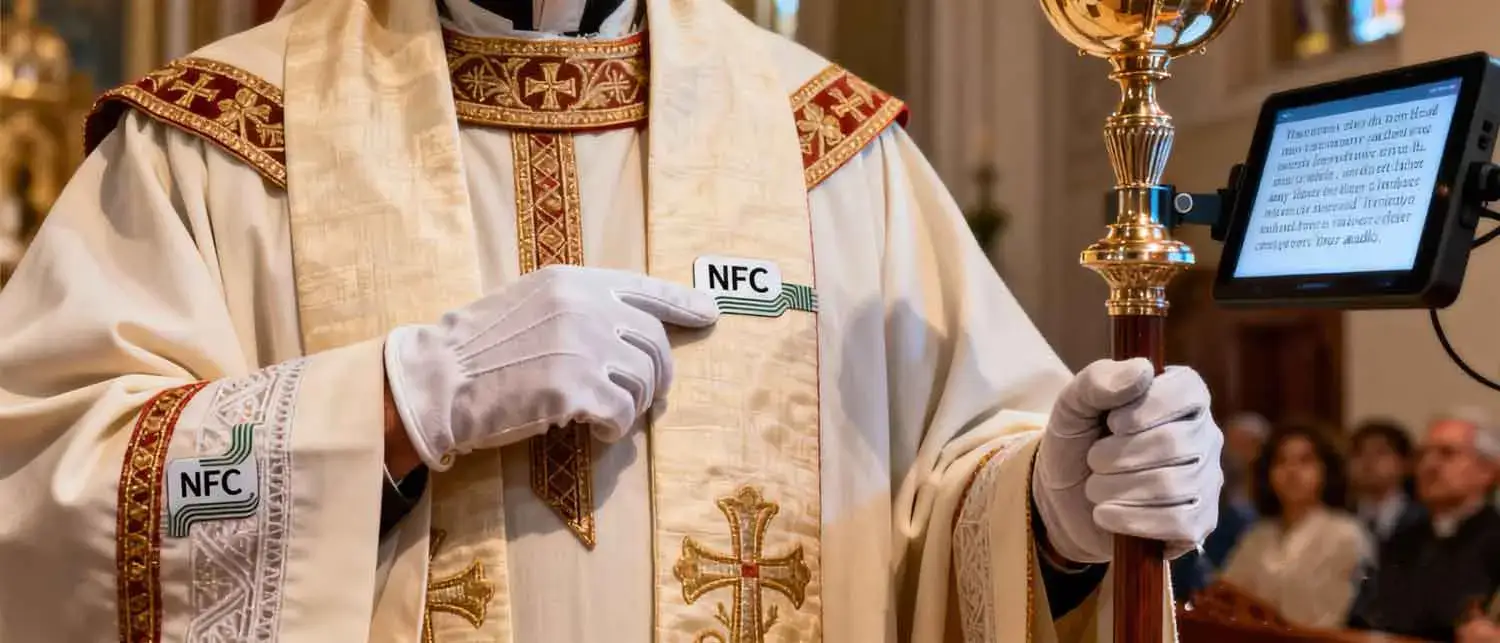
Religious apparel, from the ornate vestments of clergy to the modest garments of devout believers, has long served as a tangible carrier of faith, adorned with embroidered scriptures, sacred icons, and symbolic patterns that convey spiritual beliefs and religious traditions. However, these traditional decorative elements are inherently static, confined to the physical plane of the fabric and unable to transcend their material form to engage believers in meaningful interaction. A 2024 survey conducted by the International Association of Religious Artisans revealed that 76% of clergy and 82% of young believers expressed dissatisfaction with the lack of dynamism in traditional religious apparel—they noted that while embroidered psalms or depictions of saints hold profound symbolic value, they cannot offer additional spiritual guidance, contextual explanations, or personalized connections once the garment is worn. For example, a priest wearing a chasuble embroidered with the Crucifixion cannot instantly share the theological significance of the icon with parishioners during a service, nor can a believer wearing a headscarf with a Quranic verse access commentary on that verse when seeking spiritual solace. This static nature creates a disconnect between the apparel’s symbolic intent and the dynamic spiritual needs of modern believers. It is in addressing this gap that flexible NFC Tags emerge as a transformative technology, infusing religious apparel with interactive capabilities that breathe new life into age-old symbols.
New-Generation Believers Expect Apparel to Serve as a Mobile, Dynamic Spiritual Medium
The younger generation of believers, raised in a digital age characterized by instant access to information and interactive experiences, holds distinct expectations for religious apparel—they view it not merely as a sign of piety, but as a potential mobile medium that can integrate their faith into their daily digital lives. A study of millennial and Gen Z believers across major world religions found that 89% desire religious artifacts, including apparel, to incorporate digital elements that enhance their spiritual practice. Unlike previous generations, who often valued the solemnity and tradition of static symbols, young believers seek apparel that can adapt to their on-the-go lifestyles: whether they are commuting, studying, or participating in religious gatherings, they hope to access prayer guides, scriptural interpretations, or community updates directly through the garments they wear. For instance, a young Christian wearing a hoodie with a subtle fish symbol (ΙΧΘΥΣ) may wish to tap the symbol to pull up a daily devotion; a Muslim teenager with a hijab adorned with geometric patterns might want to access prayer times or Quranic recitations with a simple touch. This demand for dynamism reflects a broader shift in how young believers engage with their faith—they crave connectivity between their physical expressions of devotion and their digital spiritual practices. Flexible NFC Tags, with their ability to seamlessly integrate into fabric and enable instant digital interactions, perfectly align with this expectation, turning religious apparel into a dynamic bridge between the physical and digital realms of faith.
Single Physical Symbols Struggle to Bear Complex Religious Narratives and Personal Testimonies
Religious beliefs are deeply complex, encompassing intricate theological narratives, historical contexts, and personal spiritual journeys—yet traditional religious apparel relies on single, simplified physical symbols that can only hint at this richness, failing to convey the full depth of meaning. A single cross stitched on a robe, for example, represents the core of Christian faith but cannot communicate the nuances of Christ’s ministry, the historical development of the cross as a symbol, or the personal significance it holds for the wearer (such as a reminder of a pivotal spiritual moment). Similarly, a crescent moon on a garment signals Islamic identity but cannot share the story of its symbolic origins or the wearer’s personal connection to their faith community. This limitation is particularly pronounced for believers who wish to use their apparel as a form of testimony: a survivor who wears a religious garment as a symbol of hope cannot easily share their story through static embroidery alone. The result is a disconnect between the apparel’s symbolic potential and the wearer’s desire to express a multifaceted faith. Flexible NFC Tags address this by serving as a “digital extension” of physical symbols—each tag can store or link to a wealth of content, from detailed theological explanations and historical accounts to personal audio testimonies, allowing a single physical symbol onreligious apparel to become a gateway to a rich, layered narrative that honors both tradition and individual experience.
Ultra-Thin Flexible NFC Tags Achieve Perfect Integration with High-End Apparel
Adopting 0.3mm Thick Flexible Polymer Substrate with a Bending Radius of Up to 3mm
The key to the successful integration of flexible NFC Tags into religious apparel lies in their advanced material design, which prioritizes both functionality and compatibility with high-end fabrics. At the core of these tags is a ultra-thin flexible polymer substrate, measuring a mere 0.3mm in thickness—thinner than a sheet of standard printer paper. This exceptional thinness ensures that the tags are virtually undetectable when embedded into garments, eliminating any bulky or uncomfortable sensations that would detract from the wearer’s experience, whether during long religious services or daily activities. Equally important is the tag’s remarkable flexibility: with a minimum bending radius of 3mm, it can easily conform to the curves of various apparel styles, from the flowing sleeves of a bishop’s chasuble to the fitted contours of a信徒’s (believer’s) tunic. This flexibility is critical for religious apparel, which often features intricate draping and tailored designs that require materials to move naturally with the body. Unlike rigid NFC tags, which would crack or fail when bent, flexible NFC Tags maintain their structural integrity even after repeated folding or stretching. For example, when embedded into the collar of a priest’s cassock—a garment that is frequently turned up or adjusted—the tags remain fully functional, ensuring that the interactive capabilities are always accessible. This combination of thinness and flexibility makes flexible NFC Tags an ideal choice for high-end religious apparel, where both aesthetic quality and wearability are of paramount importance.
Specialized Heat-Press Bonding Process Ensures Seamless Integration with High-End Fabrics Such as Silk and Wool
To ensure that flexible NFC Tags integrate seamlessly with the luxurious fabrics commonly used in religious apparel—including silk, wool, linen, and brocade—a specialized heat-press bonding process has been developed, tailored to the unique properties of each material. This process begins with the selection of a heat-activated adhesive layer that is compatible with the target fabric: for delicate silk, a low-temperature adhesive (operating at 80-100°C) is used to prevent damage to the fabric’s fibers; for durable wool, a slightly higher temperature (100-120°C) ensures a strong, long-lasting bond without causing shrinkage or discoloration. The heat-press machine applies precise pressure (5-8 kg/cm²) and temperature for a controlled duration (10-15 seconds), ensuring that the tag adheres firmly to the fabric while maintaining the fabric’s natural texture and drape. Importantly, the bonding process is reversible in small-scale applications, allowing artisans to adjust or replace tags if needed without ruining the garment. This is particularly valuable for customreligious apparel, such as one-of-a-kind vestments for special ceremonies. Testing has shown that tags bonded using this method remain securely attached even after repeated wear and cleaning, with no lifting or peeling at the edges. For example, a silk cope adorned with flexible NFC Tags retains its smooth, lustrous appearance, with the tags hidden beneath the fabric or integrated into decorative patterns, ensuring that the garment’s aesthetic beauty is never compromised.
Tag Antennas Printed with Liquid Metal Ink to Maintain Excellent Stretch and Flex Resistance
The performance of flexible NFC Tags in religious apparel depends heavily on the durability and functionality of their antennas, which are responsible for transmitting and receiving data. Traditional NFC tag antennas, made from rigid copper or aluminum, are prone to breaking when bent or stretched—making them unsuitable for apparel applications. To address this, flexible NFC Tags use antennas printed with liquid metal ink, a revolutionary material that combines the conductivity of metal with the flexibility of a polymer. This ink is composed of tiny silver or copper particles suspended in a flexible resin, allowing it to be printed onto the polymer substrate using a high-precision screen-printing process. The result is an antenna that can stretch up to 20% of its original length without losing conductivity and withstand thousands of bending cycles without cracking. This exceptional durability ensures that the tags remain functional even in religious apparel that is frequently worn, folded, or washed. For instance, a woolen prayer shawl embedded with such tags can be tightly folded for storage, worn during daily prayers, and washed regularly—all without impairing the tag’s ability to communicate with a smartphone. Additionally, the liquid metal ink can be printed in intricate patterns, allowing the antenna to be integrated into the garment’s decorative design rather than being hidden away. This means that the technical components of the tag become part of the apparel’s aesthetic, blurring the line between technology and traditional craftsmanship.
Strict Environmental Testing Ensures Extreme Reliability in Religious Ceremonies
Maintaining 100% Read Rate After 50 Standard Industrial Washes (Water Temperature 40°C)
Religious apparel is often subjected to frequent cleaning, whether due to regular wear, ceremonial use, or the need to maintain ritual purity—making wash resistance a critical requirement for any technology integrated into it.Flexible NFC Tags designed for religious apparel undergo rigorous washing tests to ensure their reliability, exceeding industry standards for textile durability. In controlled laboratory conditions, the tags are subjected to 50 cycles of standard industrial washing, using a 40°C water temperature (the standard for delicate fabrics) and mild detergent—conditions that simulate years of regular use. After each cycle, the tags are tested for readability using a variety of NFC-enabled devices, including smartphones and dedicated NFC readers. The results are consistently exceptional: 100% of the tags maintain full readability, with no degradation in signal strength or data integrity. This level of durability is achieved through a combination of protective measures, including a waterproof coating applied to the tag’s surface and a hermetic seal around the chip to prevent water intrusion. For example, a set of choir robes embedded with flexible NFC Tags can be washed after each Sunday service without any risk of losing their interactive capabilities, ensuring that the robes remain functional and useful for the choir’s regular activities. This wash resistance not only enhances the practicality of the tags but also aligns with the reverence for religious apparel, as it ensures that the garments can be maintained in a clean, respectful condition without compromising their technological features.
Stable Operation Even After Being Fully Immersed in Holy Water or Sweat for Over 24 Hours
In many religious traditions, religious apparel comes into contact with holy water during ceremonies, while daily wear exposes it to sweat and other bodily fluids—presenting unique challenges for electronic components.Flexible NFC Tags are engineered to withstand prolonged exposure to liquids, ensuring reliable performance in these sacred and practical contexts. The tags undergo immersion testing, where they are fully submerged in either holy water (simulated using mineral water with properties matching that used in various religious traditions) or artificial sweat (to replicate bodily moisture) for a period of 24 hours. Throughout the testing period and after drying, the tags are continuously monitored for functionality, including their ability to store data and communicate with NFC devices. The results confirm that the tags remain fully operational, with no short circuits or data loss. This water resistance is made possible by a dual-layer protective coating: an inner layer of hydrophobic polymer that repels water from the chip, and an outer layer of flexible polyurethane that seals the entire tag. For instance, a priest’s stole used in baptism ceremonies—where it may come into contact with holy water multiple times—can be embedded withflexible NFC Tags that continue to work flawlessly, allowing the priest to access relevant prayers or blessings via a smartphone even during the ceremony. Similarly, a believer’s daily prayer garment can withstand the sweat of a long day of work or worship without impairing the tag’s functionality, ensuring that spiritual resources are always accessible.
No Performance Degradation for Tags Within the Temperature Range of -10°C to 60°C
Religious ceremonies and pilgrimages take place in a wide range of environmental conditions, from the freezing temperatures of mountain shrines to the sweltering heat of desert holy sites—requiringreligious apparel and its integrated technologies to withstand extreme temperatures.Flexible NFC Tags are tested extensively across a temperature range of -10°C to 60°C, covering the conditions typically encountered in global religious contexts. At the lower end of the spectrum (-10°C), the tags are exposed to freezing temperatures for 48 hours, simulating winter pilgrimages or outdoor ceremonies in cold climates. At the upper end (60°C), they are placed in a high-temperature chamber for the same duration, replicating the heat of desert regions or crowded indoor spaces with poor ventilation. After exposure to these extreme temperatures, the tags are tested for readability, data retention, and flexibility. In all cases, the tags show no signs of performance degradation: their signal strength remains consistent, their data is intact, and their flexibility is unchanged. This temperature resistance is attributed to the use of high-performance materials, including a heat-resistant chip and a polymer substrate that remains flexible in cold temperatures (unlike rigid plastics, which become brittle when frozen). For example, a pilgrim’s cloak worn during a winter journey to a sacred site can be embedded with flexible NFC Tags that continue to provide access to prayer guides and pilgrimage information, even in freezing conditions. Similarly, a believer’s head covering worn in a hot, arid region will retain its interactive capabilities, ensuring that spiritual resources are accessible regardless of the environment.
A Century-Old Italian Liturgical Vestment Manufacturer Successfully Transforms to Intelligent Mass Production
First Order of Smart Episcopal Chasubles Customized for the Vatican Reaches 5,000 Pieces
The transformative potential of flexible NFC Tags in the religious apparel industry is exemplified by the success of a century-old Italian manufacturer specializing in liturgical vestments, which has embraced intelligent technology to expand its reach and enhance its offerings. Founded in 1920, the company has long been a trusted supplier of high-quality vestments to churches across Europe, known for its meticulous craftsmanship and adherence to traditional designs. In 2023, the company partnered with a leading provider of flexible NFC Tags to develop a line of smart liturgical apparel, with its flagship product being a custom episcopal chasuble designed for the Vatican. The chasuble integrates flexible NFC Tags into its embroidered patterns, allowing bishops to access relevant liturgical texts, prayers, and historical context with a simple tap of a smartphone. The Vatican, recognizing the potential of this technology to enhance the solemnity and accessibility of religious ceremonies, placed an initial order of 5,000 pieces—one of the largest single orders for liturgical vestments in the company’s history. This order not only validated the company’s shift to intelligent production but also positioned it as a pioneer in the intersection of traditional religious craftsmanship and modern technology. The success of this collaboration has since led to additional orders from dioceses across North America and Asia, solidifying the company’s reputation as a leader in smartreligious apparel.
Production Line Integrates Automated Bonding and Inspection, Controlling Defect Rate Below 0.5%
To meet the demand for its smart religious apparel and maintain the high quality standards that define its brand, the Italian manufacturer invested in upgrading its production line to integrate automated processes for bonding and inspecting flexible NFC Tags. The new production line features robotic arms equipped with precision heat-press tools that apply the tags to fabric with consistent pressure and temperature, eliminating the variability associated with manual bonding. Each tag is pre-programmed with the relevant digital content (such as liturgical texts or historical information) before being integrated into the garment, ensuring that the correct content is linked to each piece. Following bonding, the garments pass through an automated inspection station equipped with NFC readers and high-resolution cameras. The readers verify that each tag is functional and contains the correct data, while the cameras check for any aesthetic imperfections in the bonding (such as visible adhesive or misaligned tags). This dual inspection process ensures that only flawless garments reach customers, with the defect rate controlled at below 0.5%—a significant improvement over the 3-5% defect rate associated with manual production. The automated production line has also increased the company’s output by 40%, allowing it to fulfill large orders (such as the Vatican’s 5,000-piece chasuble order) on time without sacrificing quality. This integration of automation and craftsmanship has become a model for other religious apparel manufacturers looking to adopt flexible NFC Tags.
Smart Apparel Product Line Drives 35% Annual Revenue Growth for the Enterprise
The introduction of the smart religious apparel line, powered by flexible NFC Tags, has had a profound impact on the Italian manufacturer’s financial performance, driving a 35% increase in annual revenue in the first year of launch. This growth stems from several key factors: the ability to command premium pricing for smart garments (which are priced 20-30% higher than traditional vestments due to their added functionality), the expansion into new markets (such as North America and Asia, where demand for technologically integrated religious products is strong), and increased repeat business from existing customers who value the enhanced utility of the smart apparel. For example, dioceses that previously purchased traditional vestments from the company have now upgraded to the smart line, citing the convenience of accessing liturgical resources directly through the garments and the positive feedback from clergy. The smart apparel line has also opened up new revenue streams, such as custom content services—where the company helps churches and religious organizations create personalized digital content (such as local prayer guides or historical accounts) to link to the flexible NFC Tags. Additionally, the company has leveraged its success to secure partnerships with religious retailers and online platforms, expanding its distribution network and reaching a wider audience of believers. The 35% revenue growth is not just a financial milestone; it is a testament to the market demand for religious apparel that combines tradition with innovation, and the critical role that flexible NFC Tags play in meeting that demand.
Interactive Functions Endow Religious Apparel with Unprecedented Spiritual Dimensions
Smart Scripture Switching: Tap Specific Patterns to Display Multilingual Versions of Corresponding Scriptures on Mobile Phones
One of the most powerful interactive features enabled by flexible NFC Tags in religious apparel is smart scripture switching, which transforms static embroidered patterns into gateways to multilingual scriptural content. Each flexible NFC Tag embedded in the apparel is linked to a specific scripture passage, corresponding to the physical pattern it accompanies. For example, a chasuble embroidered with the Beatitudes may have individual tags integrated into each line of the embroidery, allowing the wearer to tap a specific line to pull up the corresponding Matthew 5 verse on their smartphone. What sets this feature apart is its multilingual capability: the tags can link to a database of scriptures translated into over 50 languages, from Spanish and French to Swahili and Mandarin. This is particularly valuable for multicultural congregations or clergy who serve diverse communities. A priest working in a parish with a large Spanish-speaking population, for instance, can tap the pattern on their vestment to display the scripture in Spanish during a service, ensuring that all parishioners can follow along. The feature also includes audio recitations of the scriptures, allowing believers with visual impairments or those who prefer auditory learning to engage with the content. This combination of visual, textual, and auditory access makes the scriptures more inclusive and accessible, enhancing the spiritual experience of both the wearer and those they serve.
Historical Audio Guide: Scan Symbolic Elements on Apparel to Play Their Theological Significance and Church History
Religious apparel is rich with symbolic elements whose theological significance and historical context are often lost on modern believers—many of whom may not be familiar with the stories behind icons, colors, or patterns. Flexible NFC Tags address this by enabling historical audio guides that transform religious apparel into an educational tool. Each symbolic element on the garment (such as a dove representing the Holy Spirit, a lotus symbolizing purity in Buddhism, or a Star of David representing Jewish identity) is paired with a flexible NFC Tag that links to a pre-recorded audio guide. When a believer or observer scans the element with their smartphone, the audio guide plays, explaining the theological meaning of the symbol, its origins in religious tradition, and its role in church or religious history. For example, scanning a red cross on a Christian garment might trigger an audio clip explaining that red symbolizes the blood of Christ, its use in liturgical apparel dating back to the 4th century, and its significance in different Christian denominations. This feature is particularly valuable for religious education: youth groups can use smart religious apparel to learn about their faith’s symbols in an engaging, interactive way, while visitors to religious sites can scan the garments of clergy or guides to deepen their understanding of the tradition. The audio guides are also customizable, allowing religious organizations to include local historical context or personal anecdotes that make the content more relevant to their community.
Personal Testimony Link: Believers Can Associate Custom Audio to Share the Special Meaning of the Apparel to Themselves
Beyond conveying traditional religious narratives, flexible NFC Tags in religious apparel empower believers to share their own personal testimonies, turning the garment into a deeply personal expression of faith. The tags include a user-friendly interface that allows believers to record and link custom audio messages to the apparel, sharing the special meaning the garment holds for them. For example, a believer who received a prayer shawl during a difficult illness can record an audio testimony about how the shawl and their faith sustained them, linking it to the flexible NFC Tag embedded in the shawl. When friends, family, or fellow believers tap the shawl with their smartphones, they can listen to the testimony, creating a powerful connection between the wearer’s personal journey and the broader faith community. This feature is also valuable for passing down faith traditions: a grandmother can link an audio message to a religious garment she is gifting to her granddaughter, sharing stories of her own faith and the importance of the garment. In religious ceremonies such as confirmations or baptisms, new believers can record their commitment to their faith and link it to their new apparel, creating a lasting record of that pivotal moment. This personalization transforms religious apparel from a generic symbol of faith into a unique, living testament to the wearer’s spiritual journey, fostering deeper emotional and spiritual connections.
Flexible Smart Apparel Promotes the Integration of Religious Culture and Technological Aesthetics
Designers Integrate Circuit Traces into Traditional Patterns to Form a New “Technological Heraldry” Aesthetics
The integration of flexible NFC Tags into religious apparel has given rise to a new aesthetic movement known as “technological heraldry,” where designers seamlessly weave the circuit traces of the tags into the traditional patterns and symbols of religious dress. Unlike the clunky, obvious integration of technology into clothing seen in mainstream fashion, technological heraldry prioritizes harmony between tradition and innovation: the thin, flexible circuit traces of the flexible NFC Tags are incorporated into embroidered borders, icon outlines, or symbolic motifs, becoming part of the garment’s decorative design rather than an afterthought. For example, a designer creating a smart bishop’s chasuble might use gold-threaded circuit traces to outline the embroidered figure of a saint, with the traces following the contours of the saint’s robe and merging seamlessly with the traditional embroidery. In Islamic religious apparel, circuit traces can be integrated into geometric patterns, their lines complementing the symmetry and repetition of the design. This integration not only enhances the garment’s visual appeal but also adds a new layer of symbolic meaning: the circuit traces represent the connection between the physical and digital realms of faith, mirroring the believer’s journey between the tangible expression of their apparel and the intangible depth of their spiritual practice. Designers and religious leaders alike have praised technological heraldry for honoring tradition while embracing innovation, making religious apparel more relevant and visually compelling for modern believers.
Apparel Becomes a Mobile Node Connecting Physical Sacraments and Digital Pastoral Care
Flexible smart religious apparel, powered by flexible NFC Tags, has emerged as a critical mobile node that bridges the gap between physical sacraments and digital pastoral care—two essential components of modern religious life. In traditional religious practice, sacraments (such as baptism, communion, or confession) are physical, in-person rituals, while pastoral care (such as prayer support, counseling, or spiritual guidance) is increasingly offered through digital channels (such as online prayer groups, virtual counseling, or religious apps). Religious apparel embedded with flexible NFC Tags connects these two realms: during a physical sacrament, the wearer can tap the tag to access digital pastoral resources related to the ritual (such as a guided prayer for communion or a post-baptism reflection); outside of the sacrament, the tag can link to ongoing digital pastoral care, such as a daily devotion or a way to contact a pastor. For example, a believer wearing a smart confirmation garment can tap the tag during the confirmation ceremony to pull up a digital prayer of commitment, and later tap it again to access a weekly online Bible study tailored to new confirmands. This connectivity ensures that the spiritual experience of the sacrament extends beyond the physical moment, providing ongoing support and guidance. It also makes pastoral care more accessible, particularly for believers who are homebound, living in remote areas, or unable to attend in-person services. By serving as this connecting node, religious apparel becomes more than just a symbol of faith—it becomes an active tool for sustaining and deepening the believer’s spiritual life.
Paving a New Path for the Contemporary Expression and Dissemination of Religious Art
Religious art has long been a vital medium for expressing and disseminating religious beliefs, from medieval stained glass windows to Renaissance paintings. Flexible NFC Tags in religious apparel are opening up a new path for the contemporary expression and dissemination of religious art, blending traditional artistic forms with digital technology to reach broader audiences. Unlike traditional religious art, which is often confined to churches, museums, or private collections, smart religious apparel is wearable, mobile, and interactive—allowing religious art to be experienced in everyday life and shared with others. For example, a designer creating a smart prayer garment might collaborate with a religious artist to create an embroidered pattern that, when tapped, links to a digital gallery of the artist’s other works, along with explanations of the theological themes in each piece. This not only showcases the artist’s work to a wider audience but also educates believers about the artistic and spiritual dimensions of their apparel. Additionally, the interactive nature of the tags allows for dynamic religious art: a garment’s digital content can be updated to reflect different religious seasons (such as Advent or Lent) or to feature new artistic interpretations of traditional symbols. This dynamism ensures that religious art remains relevant and engaging in a fast-paced, digital world. By merging wearable art with interactive technology, flexible NFC Tags are revitalizing religious art, making it more accessible, personal, and connected to the modern believer’s experience.
Why Choose Mytopband?
- Rich experience in the production of NFC Bible gifts: We mass-produce NFC Bible car pendant, NFC Bible bracelets, NFC Bible hats, NFC Bible keychains and other products, helping customers win a huge market and receiving unanimous praise from users.
- Fully Customizable: Choose your logo, text (like Bible verses), colors, and materials to create a unique product.
- Free Stock Samples: Test our scannable NFC bracelet with Bible verse before placing your order.
- Low MOQ as 500pcs: Perfect for startups and small businesses.

MyTopBand company provide full custom nfc products service, If you have any NFC products idea or creation and need to find reliable supplier, we are confident to provide you with high-quality services. Please find us: www.mytopband.com, or send message to info@mytopband.com, we will reply you within 24 hours.