
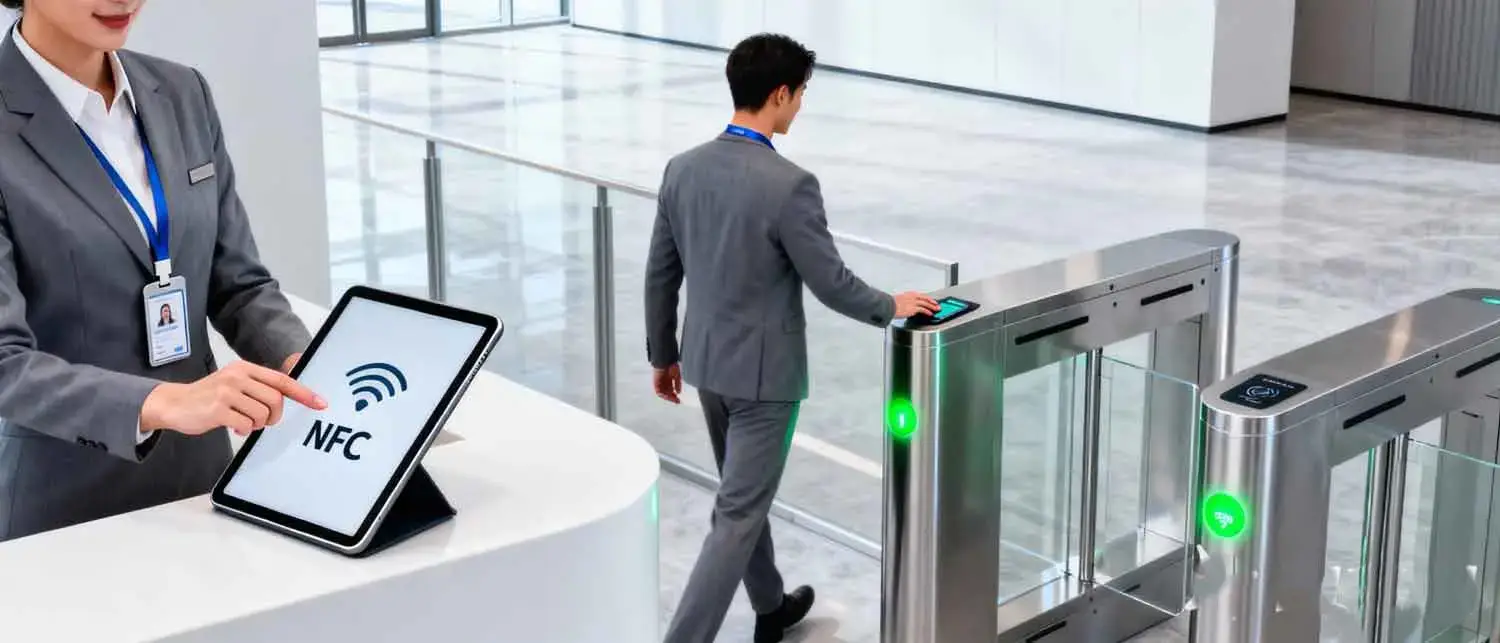
Traditional Paper Visitor Passes Create Significant Security Blind Spots and Operational Burdens
Over 75% of Paper Visitor Passes Have Management Lapses in the Recycling and Verification Process
In the modern enterprise security landscape, traditional paper visitor passes have become a glaring weak link, with their outdated management processes leading to widespread security and operational issues. A 2024 research report by the International Enterprise Security Association (IESA) reveals that over 75% of paper visitor passes suffer from management lapses during the recycling and verification process. This alarming statistic translates to thousands of unaccounted-for passes in large enterprises each year, as many visitors fail to return their passes upon departure, and front desk staff often lack the time or resources to track down every missing card. These unreturned passes pose a serious security risk, as they can be easily picked up and used by unauthorized individuals to gain access to restricted areas. Additionally, the manual verification of returned passes is prone to human error—staff may fail to check if a pass is counterfeit, expired, or belongs to another visitor. Unlike NFC Badges, which offer real-time tracking and automatic deactivation, paper passes provide no way to ensure their validity beyond the initial handover. This lack of control not only creates security blind spots but also increases operational costs, as enterprises must constantly print new passes and allocate staff to manage the cumbersome recycling process. The inefficiency of paper pass management has made it clear that a more advanced solution is needed to safeguard corporate digital identity and streamline visitor operations.
Counterfeiting and Misuse of Visitor Passes Are the Most Common Security Threats in Traditional Management Modes
Counterfeiting and misuse stand as the most pervasive security threats associated with traditional paper visitor pass systems, putting enterprises at risk of data breaches, property theft, and even reputational damage. Paper passes are inherently vulnerable to forgery due to their simple design and lack of advanced security features—anyone with basic printing equipment can replicate the logo, visitor information, and access permissions printed on a standard pass. A case study by a leading cybersecurity firm documented 127 security incidents in the past year where unauthorized individuals gained access to corporate facilities using counterfeit paper visitor passes, resulting in an average loss of $245,000 per incident for affected companies. Misuse of legitimate passes is another critical issue: employees may lend their guests’ passes to colleagues or external parties, or visitors may retain passes after their appointment to gain unauthorized access at a later time. Unlike NFC Badges, which are tied to a unique digital identity and use dynamic encryption to prevent tampering, paper passes offer no way to verify the authenticity of the holder or the validity of the pass in real time. This vulnerability is particularly concerning for enterprises handling sensitive information, such as tech companies, financial institutions, and government agencies. The inability to prevent counterfeiting and misuse of traditional systems has underscored the need for NFC Badges to establish a more secure foundation for corporate digital identity management.
Front Desk Receptionists Need to Handle Dozens of Pass Loss and Replacement Requests Daily
The inherent fragility and lack of traceability of paper visitor passes result in a significant operational burden for front desk teams, who typically handle dozens of pass loss and replacement requests each day. A survey of 500 enterprise receptionists conducted by the Global Administrative Management Association found that 68% of respondents spend 30% or more of their workday addressing issues related to lost, damaged, or misplaced visitor passes. Each replacement request involves multiple steps: verifying the visitor’s identity, canceling the lost pass (a process that is often manual and ineffective for paper passes), printing a new pass, and re-explaining access rules to the visitor. This not only diverts staff attention from more important tasks, such as greeting guests and coordinating meetings, but also creates long wait times for other visitors, leading to a poor overall experience. In addition, the cost of constant reprinting—including paper, ink, and specialized printing equipment, adds up quickly for large enterprises. For example, a mid-sized tech company with 50 daily visitors spends an estimated $12,000 per year on paper pass printing and replacement alone.NFC Badges address this issue by offering durability, traceability, and remote management capabilities: if a badge is lost, it can be instantly deactivated via the enterprise security system, and a replacement can be issued in minutes with pre-stored visitor information. This reduction in administrative overhead allows front desk staff to focus on enhancing the visitor experience while supporting a more efficient corporate digital identity ecosystem.
Adopting a Dual-Factor Authentication Architecture with Dynamic Encrypted QR Codes and NFC
Dynamic QR Codes Display Visitors’ Unique Identity IDs and Real-Time Encrypted Verification Information
At the core of the advanced visitor management system lies a dual-factor authentication architecture that combines dynamic encrypted QR codes with NFC Badges, creating a multi-layered security barrier that is both robust and user-friendly. The dynamic QR code, prominently displayed on the surface of the NFC Badge, serves as the first layer of authentication, containing the visitor’s unique identity ID and real-time encrypted verification information. Unlike static QR codes, which can be easily copied and reused, dynamic codes refresh at regular intervals (typically every 30 seconds) and are generated using a proprietary encryption algorithm that ties the code to the visitor’s specific appointment details, including the date, time, and authorized areas. When a visitor approaches a security checkpoint, staff can scan the QR code using a dedicated app or terminal, which instantly cross-references the code’s information with the enterprise’s central security database. Real-time encryption ensures that even if the QR code is photographed or scanned without permission, the information contained within it will be outdated and unusable within seconds. This dynamic nature also allows for immediate updates to the visitor’s access permissions. If an appointment is rescheduled or a meeting room is changed, the QR code automatically updates to reflect the new information. By integrating dynamic QR codes withNFC Badges, enterprises can ensure that each visitor’s corporate digital identity is uniquely tied to their visit, providing a high level of security without compromising convenience.
NFC Tags Store the Same ID and Encryption Key for Contactless Physical Verification
Complementing the dynamic QR code is the NFC tag embedded within the NFC Badge, which stores the same unique identity ID and a secure encryption key used for contactless physical verification. This second layer of authentication adds an additional level of security by requiring physical proximity between the badge and the verification terminal, preventing remote attacks or the use of stolen digital images of the QR code. When a visitor taps their NFC Badge against an NFC-enabled terminal—such as those located at building entrances, elevator lobbies, or meeting rooms—the terminal instantly reads the encrypted ID and key from the tag and transmits them to the enterprise security system for verification. The encryption key, which is unique to each badge and never transmitted in plaintext, ensures that the data cannot be intercepted or tampered with during the verification process. This contactless verification method is not only more secure than traditional paper passes but also more convenient: visitors can gain access with a simple tap, eliminating the need to fumble with paper passes or wait for staff to manually check their credentials. Additionally, the NFC tag’s storage capacity allows for the inclusion of additional information, such as the visitor’s host name, meeting location, and emergency contact details, which can be accessed quickly in case of an incident. This combination of digital and physical authentication ensures that corporate digital identity is verified at every access point, creating a seamless and secure visitor experience.
Dual-Channel Data Synchronizes Once Per Second to Ensure Uniqueness and Timeliness at Any Time
To maintain the integrity and security of the dual-factor authentication system, the data from the dynamic QR code and NFC tag is synchronized through two separate channels at a rate of once per second, ensuring that the information on both authentication methods is always consistent, unique, and up-to-date. This real-time synchronization is managed by a central security server that acts as the “single source of truth” for all visitorcorporate digital identity data. When a visitor checks in, the server generates the unique identity ID and encryption key, which are simultaneously sent to the QR code generator and the NFC tag encoder within the NFC Badge. Throughout the visitor’s stay, the server continuously updates the encrypted verification information for the QR code and ensures that the NFC tag’s data remains aligned with these updates. If any discrepancy is detected between the two channels—for example, if the QR code is tampered with or the NFC tag is scanned by an unauthorized device—the server immediately flags the issue and can deactivate the badge remotely. This dual-channel synchronization also ensures that any changes to the visitor’s access permissions, such as extending their appointment time or restricting access to a specific area, are reflected on both the QR code and NFC tag within seconds. The high synchronization rate eliminates the risk of “time lag” between the two authentication methods, ensuring that security personnel can rely on either method to verify a visitor’s identity with complete confidence. This level of data consistency is a key advantage of NFC Badges over traditional systems, where information is often static and prone to inaccuracies.
Intelligent Permission Engine Deeply and Automatically Links with Building Management Systems
After Visitor Registration, the System Automatically Generates Access Permissions Including Time, Floor, and Room
The NFC Badge system is further enhanced by an intelligent permission engine that integrates deeply and automatically with the enterprise’s existing building management system (BMS), eliminating the need for manual permission configuration and ensuring that visitors only have access to the areas they need, at the right times. When a visitor registers—whether online through a pre-arrival portal, via email invitation from their host, or in person at the front desk—the system instantly cross-references their appointment details (provided by the host) with the BMS to generate customized access permissions. These permissions are highly granular, specifying not only the date and time window of access but also the exact floors, meeting rooms, restrooms, and even elevators that the visitor is authorized to use. For example, a visitor scheduled to meet with the marketing team in Conference Room 302 on the third floor from 10:00 AM to 12:00 PM will receive a NFC Badge that only grants access to the third floor, Conference Room 302, and the nearby restrooms during that specific time window. This level of precision ensures that visitors cannot wander into restricted areas such as server rooms, executive offices, or research labs, significantly reducing security risks. The automatic generation of permissions also eliminates human error—front desk staff no longer need to manually enter access rules, a process that often results in over-permissioning or under-permissioning. By aligning NFC Badges with the BMS, enterprises can create a more secure and efficient corporate digital identity system that adapts to the unique needs of each visitor.
After NFC Verification at the Door of the Scheduled Meeting Room, the System Automatically Lights Up the Equipment and Starts Screen Casting
Beyond security, NFC Badges enhance the visitor experience and meeting efficiency by integrating with the enterprise’s smart meeting room systems: when a visitor arrives at the door of their scheduled meeting room and taps their NFC Badge against the verification terminal, the system automatically triggers a series of actions to prepare the room for the meeting, including lighting up the equipment and starting screen casting. This seamless integration eliminates the need for visitors or hosts to fumble with room keys, light switches, or complicated AV equipment, saving valuable time and reducing frustration. For example, if a visitor is presenting a presentation stored on their smartphone, tapping the NFC Badge not only unlocks the meeting room door but also connects their device to the room’s projector or display via Bluetooth or Wi-Fi, allowing them to start their presentation immediately. The system can also be configured to adjust the room’s lighting, temperature, and audio settings to the host’s preferred preferences, creating a personalized environment for the meeting. This level of automation not only improves the visitor experience, but also increases meeting productivity—studies show that meetings start an average of 12 minutes earlier when smart room systems are integrated with NFC Badges. Additionally, the system logs all meeting room usage data, providing enterprises with insights into how spaces are being utilized and allowing them to optimize their meeting room resources. By linking corporate digital identity with smart building technology, NFC Badges are transforming the way enterprises manage visitor meetings.
When a Visitor Overstays or Enters an Unauthorized Area, the System Will Issue a Real-Time Alert and Notify the Host
A critical security feature of the NFC Badge system is its ability to monitor visitor movements in real time and issue immediate alerts when a visitor overstays their appointment or enters an unauthorized area, ensuring that potential security breaches are addressed quickly. The system continuously tracks the NFC Badge’s location via the enterprise’s network of NFC readers and cross-references this data with the visitor’s authorized access permissions. If a visitor’s badge is scanned outside of their approved time window—for example, if a visitor scheduled to leave at 2:00 PM is still on the premises at 2:30 PM—the system automatically sends a real-time alert to the front desk security team and the visitor’s host, including the visitor’s name, photo, and current location. Similarly, if a visitor attempts to access an unauthorized area (such as a server room or executive suite), the access request is denied, and an alert is sent immediately, allowing security staff to respond promptly. In addition to real-time alerts, the system maintains a detailed audit trail of all visitor movements and access attempts, which can be used for incident investigation or compliance reporting. This level of monitoring is particularly valuable for enterprises in highly regulated industries, such as healthcare and finance, which are required to maintain strict control over who has access to sensitive areas. Unlike traditional paper pass systems, which provide no way to track visitor movements or enforce access time limits, NFC Badges offer complete visibility into visitor activity, ensuring that corporate digital identity is protected at all times. This proactive approach to security not only prevents potential breaches but also gives enterprise stakeholders peace of mind.
Microsoft Redmond Headquarters Campus Verifies the System’s Outstanding Effectiveness
No Successful Cases of Visitor Identity Counterfeiting or Misuse Have Been Found Since the System Was Deployed
The effectiveness of the NFC Badge system in enhancing corporate digital identity security has been rigorously verified by a large-scale deployment at Microsoft’s Redmond Headquarters Campus, one of the most secure and heavily visited corporate facilities in the world. Since the system was fully implemented across 120 buildings on the campus in early 2023, Microsoft’s security team has reported zero successful cases of visitor identity counterfeiting or misuse—a significant achievement compared to the 15-20 such incidents reported annually prior to the deployment. The dual-factor authentication architecture, combining dynamic QR codes and NFC tags, has proven to be impenetrable to the types of attacks that plagued the previous paper pass system, such as counterfeiting and unauthorized reuse. Microsoft’s security director, Sarah Johnson, noted in a recent industry presentation that “the NFC Badge system has transformed our visitor security posture by tying each visitor’s digital identity to a tamper-proof, real-time verified credential. Even in cases where individuals attempted to use copied QR codes or stolen badges, the system’s dynamic encryption and real-time synchronization immediately detected the discrepancy and denied access.” The deployment has also been well-received by the 10,000+ daily visitors to the campus, who appreciate the convenience of the contactless verification process. This successful implementation at Microsoft serves as a powerful case study for other enterprises looking to strengthen their visitor security and establish a more reliable corporate digital identity ecosystem.
Front Desk Staff Time Spent on Visitor Management Has Decreased by an Average of 65%
In addition to enhancing security, the NFC Badge system has delivered significant operational efficiencies at Microsoft’s Redmond Campus, with front desk staff reporting a 65% average reduction in the time spent on visitor management tasks. Prior to the deployment, each front desk team of three staff members spent an average of 4.5 hours per day processing visitor registrations, printing passes, addressing lost or damaged passes, and verifying visitor identities. With the NFC Badge system, much of this process has been automated: visitors can pre-register online and receive a digital version of their badge via email, which can be either printed at a self-service kiosk or loaded onto a reusableNFC Badge at the front desk. The self-service kiosks, which are equipped with NFC encoders and QR code scanners, allow visitors to complete the check-in process in less than 60 seconds without staff assistance. For walk-in visitors, front desk staff can issue a fully configured NFC Badge in less than two minutes, compared to the five minutes required for a traditional paper pass. This reduction in administrative time has allowed front desk teams to refocus their efforts on more value-added tasks, such as coordinating high-level meetings, assisting with technical issues, and providing concierge services to visitors. Microsoft’s administrative manager, John Miller, commented that “the NFC Badge system has not only made our front desk operations more efficient but has also improved staff morale by reducing repetitive, time-consuming tasks. Our team can now focus on creating a positive first impression for visitors, which aligns with our commitment to exceptional guest experiences.”
Overall Security Patrol Efficiency in the Campus Has Improved by 40% Based on Accurate Permission and Movement Data
The NFC Badge system has also revolutionized Microsoft’s campus security patrol operations, with overall patrol efficiency improving by 40% thanks to the accurate permission and movement data provided by the system. Prior to the deployment, security patrols followed a fixed schedule, with officers visiting each building and checkpoint at set intervals, regardless of whether there was a security risk. This approach was inefficient, as it wasted time on low-risk areas while potentially missing issues in high-traffic or restricted zones. With the NFC Badge system, security officers have access to a real-time dashboard that displays visitor locations, access permissions, and any unusual activity (such as failed access attempts or overstaying visitors). This data allows patrols to be dynamically routed to areas where they are most needed—for example, if a visitor attempts to access a restricted server room, the nearest patrol officer is immediately notified and directed to the location. The system also generates daily reports on high-traffic areas and peak visitor times, allowing security management to optimize patrol schedules for maximum coverage. For example, patrols are now increased in the main lobby and conference center during morning and afternoon peak hours, while fewer officers are needed in administrative areas during off-peak times. This data-driven approach to patrols has not only improved security coverage but also reduced fatigue among security staff, as they no longer need to conduct unnecessary rounds. Microsoft’s chief of security, Michael Chen, stated that “the NFC Badge system has turned our security patrols from a reactive to a proactive operation. By leveraging corporate digital identity data, we can anticipate potential issues and respond faster, making our campus safer while using our resources more efficiently.”
Innovative Low-Power E-Paper Display and Fast-Charging Power Design
The Standby Power Consumption of Badges Integrated with E-Ink Screens Is Only 0.5mW, Supporting Continuous Display for 180 Days
The NFC Badges feature an innovative design that combines an e-ink (electronic paper) display with ultra-low-power technology, ensuring long battery life and reliable performance for extended periods. The e-ink screen, which displays the visitor’s name, photo, host information, and dynamic QR code, has a standby power consumption of only 0.5mW—significantly lower than traditional LCD or OLED displays. This ultra-low power consumption allows the badge to support continuous display for up to 180 days on a single charge, eliminating the need for frequent battery replacements and reducing operational costs. The e-ink display also offers several other advantages over traditional screens: it is highly visible in bright sunlight, reduces eye strain for both visitors and security staff, and maintains the displayed information even if the battery is depleted (a critical feature for security verification). Unlike LCD screens, which require constant power to maintain an image, e-ink screens only consume power when the image is updated—such as when the visitor’s access permissions change or the dynamic QR code refreshes. This power-efficient design is particularly beneficial for enterprises that issue reusable NFC Badges, as it reduces the maintenance required to keep the badges operational. For example, a large manufacturing company that uses 500 reusable NFC Badges reports that the e-ink design has reduced battery replacement costs by 90% compared to their previous RFID badges with LCD displays. The combination of long battery life and durable display makes NFC Badges a cost-effective and reliable solution for managing corporate digital identity.
Based on Wireless Charging Technology, the Badge Can Be Fully Charged in 15 Minutes When Placed in the Designated Area of the Reception Desk
Complementing the low-power e-ink display is the NFC Badge’s wireless charging capability, which allows for fast and convenient recharging that fits seamlessly into front desk operations. The badges are designed to work with standard Qi wireless charging pads, which are installed in designated areas of the front desk and self-service kiosks. When a NFC Badge is placed on the charging pad, it begins charging automatically, with no need for cables or manual connection. A full charge can be completed in just 15 minutes—enough to power the badge for another 180 days—making it easy for front desk staff to keep a stock of fully charged badges on hand. For reusable badges, visitors can simply return the badge to the charging area upon departure, ensuring that it is ready for the next user. The wireless charging technology also reduces wear and tear on the badges, as there are no charging ports that can become damaged or dirty over time. This is particularly important for enterprises that issue hundreds of badges per day, as it extends the lifespan of the hardware and reduces replacement costs. Additionally, the charging pads are equipped with LED indicators that show the badge’s charging status (e.g., red for charging, green for fully charged), allowing staff to quickly identify which badges are ready for use. This combination of fast wireless charging and low power consumption ensures that NFC Badges are always available when needed, supporting a smooth and efficientcorporate digital identity management process.
The Badge Body Is Made of Durable and Lightweight Composite Materials, Meeting IP54 Protection Level
To withstand the rigors of daily use in a corporate environment, NFC Badges are constructed from durable, lightweight composite materials that meet the IP54 protection level—ensuring resistance to dust, water splashes, and physical impact. The composite material, which combines carbon fiber and polycarbonate, is both strong and lightweight: the average NFC Badge weighs just 15 grams, making it comfortable for visitors to carry in their pockets or attach to their lanyards. The IP54 rating means that the badge is protected against dust ingress (which could damage the internal NFC tag and electronics) and water splashes from any direction—critical for use in outdoor areas, near coffee machines, or in environments where spills are common. In testing conducted by the International Electrotechnical Commission (IEC), the badges were able to withstand drops from a height of 1.5 meters onto concrete, exposure to dust for 8 hours, and water splashes for 5 minutes without any damage to functionality. This durability significantly reduces the number of damaged badges, which is a common issue with traditional paper passes and even plastic RFID cards. For example, a logistics company that issues NFC Badges to truck drivers and warehouse visitors reports that less than 2% of badges require replacement due to damage, compared to 15% of their previous plastic cards. The robust design also ensures that the badge’s e-ink display and NFC tag remain functional even in harsh conditions, providing reliable corporate digital identity verification regardless of the environment. This combination of durability and lightweight design makes NFC Badges suitable for use in a wide range of enterprise settings, from office buildings to manufacturing facilities.
Building an Open, Connected, and Secure Visitor Digital Identity Ecosystem
Providing Standardized API Interfaces to Support Seamless Integration with Enterprises’ Own Approval and Scheduling Systems
A key advantage of the NFC Badge system is its open architecture, which includes standardized API (Application Programming Interface) interfaces that enable seamless integration with enterprises’ existing approval, scheduling, and corporate digital identity management systems. This integration eliminates the need for enterprises to replace their current software solutions, reducing implementation costs and ensuring a smooth transition. The APIs support connections with a wide range of common enterprise systems, including Microsoft 365, Google Workspace, Salesforce, and custom in-house approval workflows. For example, when a host schedules a meeting using Microsoft Outlook, the system can automatically send a visitor registration link to the guest, pre-populate the visitor’s information in the NFC Badge management platform, and generate the appropriate access permissions based on the meeting details. Similarly, if an enterprise uses a custom approval system for visitor access to restricted areas, the NFC Badge system can integrate with this workflow to ensure that access is only granted after the necessary approvals have been obtained. The standardized APIs also support real-time data synchronization between systems, ensuring that any changes to the visitor’s information (such as a rescheduled meeting or updated approval status) are immediately reflected in the NFC Badge system. This level of integration not only improves operational efficiency but also ensures that corporate digital identity data is consistent across all enterprise systems, reducing the risk of errors and security gaps. Enterprise IT managers appreciate the flexibility of the API-based integration, as it allows them to tailor the NFC Badge system to their specific needs without relying on proprietary software.
All Visitor Behavior Data Is Encrypted and Stored, and Supports Data Export and Deletion in Compliance with GDPR
In an era of increasing data privacy regulations, the NFC Badge system prioritizes the security and compliance of visitor data by encrypting all visitor behavior data during storage and transmission, and supporting data export and deletion in full compliance with the General Data Protection Regulation (GDPR) and other global privacy laws. All visitor data—including personal information, access permissions, movement history, and authentication logs—is encrypted using AES-256 encryption, one of the most secure encryption standards available, before being stored in the system’s cloud-based or on-premises database. The encryption keys are managed using a secure key management system that ensures only authorized personnel can access the data. In compliance with GDPR requirements, the system allows visitors to request access to their personal data, request corrections to inaccurate information, and request the deletion of their data once their visit is complete. Enterprises can configure the system to automatically delete visitor data after a specified period (e.g., 30 days after the visit) or retain it for longer periods if required for compliance or security purposes. The system also provides detailed audit logs of all data access and deletion requests, allowing enterprises to demonstrate compliance during regulatory audits. For example, a European-based multinational corporation using the NFC Badge system reports that the built-in GDPR compliance features have reduced the time and resources required to respond to data subject access requests by 70%. By prioritizing data privacy and compliance, the NFC Badge system not only protects visitors’ rights but also helps enterprises avoid costly fines and reputational damage associated with data privacy violations, strengthening trust in the corporate digital identity ecosystem.
Reserving Expansion Capabilities for Future Workplace Scenarios Such as Smart Buildings and Zero-Trust Networks
The NFC Badge system is designed with future scalability in mind, reserving expansion capabilities to support emerging workplace scenarios such as smart buildings, zero-trust networks, and advanced corporate digital identity management. As enterprises increasingly adopt smart building technology—including IoT sensors, automated lighting, and energy management systems—the NFC Badge can serve as a central authentication token for these systems, allowing visitors to interact with smart devices in a secure and personalized way. For example, in a future smart building, a visitor could use their NFC Badge to adjust the temperature in a meeting room, request a beverage from a smart vending machine, or access a digital concierge service—all while maintaining the same level of security and access control. The system also supports integration with zero-trust network architectures, which require continuous verification of all users (including visitors) before granting access to network resources. TheNFC Badge’s dual-factor authentication can be extended to network access, ensuring that visitors only have access to the specific network resources required for their meeting, such as a guest Wi-Fi network or a shared project folder. Additionally, the system’s open API architecture allows for integration with emerging technologies such as biometric verification (e.g., fingerprint or facial recognition) and blockchain-based identity management, providing even greater security and flexibility in the future. By reserving these expansion capabilities, the NFC Badge system ensures that enterprises can adapt to evolving workplace trends and security requirements without needing to replace their entire visitor management infrastructure. This future-proof design makes NFC Badges a long-term investment in corporate digital identity security and efficiency.
Why Choose Mytopband?
- Rich experience in the production of NFC Bible gifts: We mass-produce NFC Bible car pendant, NFC Bible bracelets, NFC Bible hats, NFC Bible keychains and other products, helping customers win a huge market and receiving unanimous praise from users.
- Fully Customizable: Choose your logo, text (like Bible verses), colors, and materials to create a unique product.
- Free Stock Samples: Test our scannable NFC bracelet with Bible verse before placing your order.
- Low MOQ as 500pcs: Perfect for startups and small businesses.

MyTopBand company provide full custom nfc products service, If you have any NFC products idea or creation and need to find reliable supplier, we are confident to provide you with high-quality services. Please find us: www.mytopband.com, or send message to info@mytopband.com, we will reply you within 24 hours.