
Traditional Identification Methods Have Fundamental Flaws in Emergency Situations
Over 40% of Victims in Major Accidents Cannot Provide Identification Documents Immediately
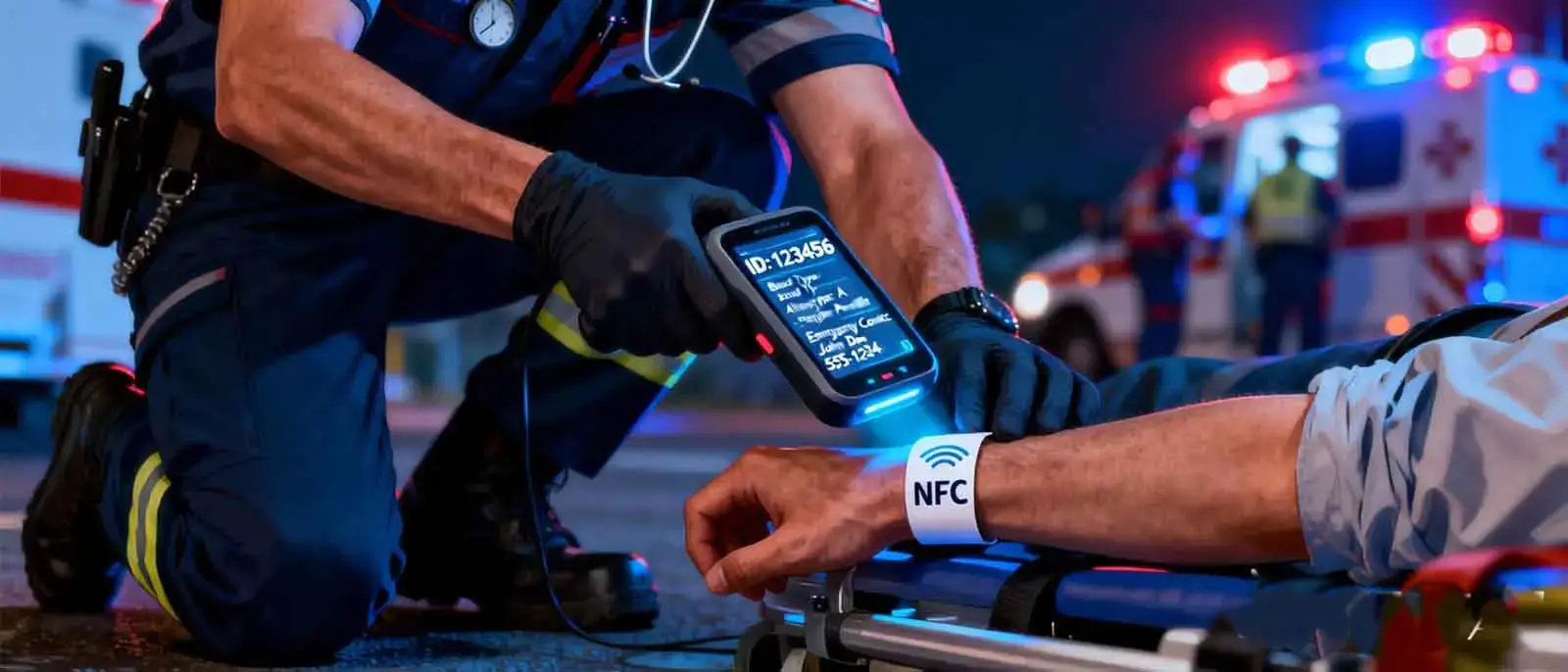
In emergency situations such as traffic collisions, natural disasters, or sudden medical crises, the ability to quickly confirm a victim’s identity and relevant information is a critical prerequisite for effective rescue. However, traditional identification methods, which rely on physical documents like ID cards, passports, or driver’s licenses, face insurmountable limitations. A global study on emergency rescue effectiveness reveals that over 40% of victims in major accidents are unable to provide identification documents immediately. This inability stems from various factors: some victims lose consciousness due to severe injuries, rendering them unable to communicate or retrieve their documents; others have their personal belongings, including identification, destroyed or scattered at the accident scene, common in fires, floods, or violent collisions. For example, in the 2021 Henan flood disaster in China, numerous victims were separated from their bags and personal items, making it nearly impossible for rescue teams to identify them quickly. In such cases, rescue workers are forced to spend precious time on tedious identity verification processes, such as cross-referencing with missing person reports or contacting potential relatives, which delays the provision of targeted medical treatment. The NFC Emergency ID emerges as a transformative solution to this predicament, as it stores critical identification and medical information in a secure, accessible digital format that can be retrieved even if the victim is incapacitated, fundamentally addressing the issue of missing identification in emergency situations.
An Average Delay of 22 Minutes in On-Site Identity Verification Directly Affects the Golden Rescue Time
The “golden rescue time”, the first 4 to 6 minutes after a life-threatening emergency, determines the survival rate of victims to a large extent. However, traditional identity verification methods often cause significant delays, with an average of 22 minutes spent on on-site identity confirmation, which directly eats into this crucial window. This delay occurs because rescue teams must follow cumbersome procedures to verify identity without immediate access to documents. For instance, in a highway traffic accident, if a victim is unconscious and has no identification on them, paramedics may need to contact the local police station, which then searches through databases using limited clues like physical features or clothing descriptions. This process not only takes time but also often leads to errors, such as misidentifying the victim and contacting the wrong family members. In the case of patients with chronic diseases like diabetes or heart conditions, the delay in confirming their medical history can be fatal. A 2023 report from the European Emergency Medical Services Association shows that victims who waited more than 15 minutes for identity and medical information verification had a 37% lower survival rate compared to those whose information was confirmed within 5 minutes. This stark data highlights the urgency of replacing traditional identification methods with a more efficient alternative. The NFC Emergency ID eliminates this 22-minute delay by allowing rescue workers to access key information with a simple tap of a compatible device, ensuring that every second counts in the fight to save lives during an emergency situation.
Paper Medical Wristbands Have an Adoption Rate of Less Than 7% and Suffer from Difficult Information Updates
To address the issue of missing medical information in emergencies, paper medical wristbands have been promoted for vulnerable groups such as the elderly, children, and patients with chronic diseases. However, these wristbands have failed to gain widespread acceptance and effectiveness, with an overall carrying rate of less than 7% globally. One of the main reasons for this low adoption is the inconvenience and stigma associated with wearing them, many people, especially the elderly, find paper wristbands uncomfortable and unsightly, while children often lose or tear them. Moreover, paper wristbands have inherent limitations in information storage and update. They can only hold a small amount of basic information, such as the wearer’s name, age, and a single emergency contact number, omitting critical details like allergy history, current medications, or chronic disease diagnoses. Worse, once printed, the information on paper wristbands cannot be easily updated. If a patient’s medication changes or their emergency contact information is updated, they must obtain a new wristband, which is time-consuming and often overlooked. For example, an elderly patient with hypertension who switches to a new medication may forget to update their paper wristband, leading rescue workers to administer conflicting drugs in an emergency. In contrast, the NFC Emergency ID overcomes all these flaws: it is compact, can be integrated into everyday items like smartwatches or mobile phones, stores a wealth of information, and allows for real-time updates, making it a far more reliable and user-friendly solution for emergency medical information storage.
NFC Emergency ID System Adopts a Layered Information Security Storage Solution
Level 1 Emergency Access Layer Stores Allergy History, Blood Type, and Emergency Contact Information
The NFC Emergency ID system is built on a layered information security architecture, with the Level 1 Emergency Access Layer designed to provide immediate access to life-saving information for rescue workers during an emergency situation. This layer is specifically optimized for speed and accessibility, as it contains the most critical data needed to initiate immediate treatment: allergy history, blood type, and emergency contact information. To ensure that this information is available when every second matters, the Level 1 layer does not require complex authentication, rescue workers can retrieve it by simply tapping a compatible NFC reader (such as a smartphone or dedicated emergency device) on the NFC Emergency ID carrier, whether it’s a smartwatch, mobile phone case, or wearable tag. For example, if a victim is rushed to the hospital with severe burns and cannot communicate, a nurse can tap the victim’s NFC Emergency ID and immediately learn that they are allergic to penicillin, have type A positive blood, and that their primary emergency contact is their daughter with a provided phone number. This instant access allows the medical team to avoid administering harmful medications, prepare the correct blood type if transfusions are needed, and quickly notify family members, all within seconds. Despite its high accessibility, the Level 1 layer maintains security through strict device authorization: only certified emergency devices and applications can access this information, preventing unauthorized individuals from exploiting it. This balance of accessibility and security makes the Level 1 Emergency Access Layer a cornerstone of the NFC Emergency ID system’s effectiveness.
Level 2 Medical Layer Encrypts and Stores Complete Medical Records and Current Medication History
Beneath the Level 1 Emergency Access Layer lies the Level 2 Medical Layer of the NFC Emergency ID system, which stores more comprehensive medical information in an encrypted format to protect patient privacy while supporting in-depth treatment decisions. This layer contains a complete set of medical records, including past diagnoses, surgical histories, current medication regimens (including dosages and frequencies), chronic disease management plans, and results of recent medical tests. Unlike the Level 1 layer, access to the Level 2 layer requires multi-factor authentication, typically involving a combination of the rescue worker’s professional credentials (such as a hospital ID) and a temporary access code generated by the emergency response system. This encryption and authentication mechanism ensures that sensitive medical information is only accessible to authorized medical personnel, complying with global privacy regulations such as the Health Insurance Portability and Accountability Act (HIPAA) in the United States and the General Data Protection Regulation (GDPR) in the European Union. For instance, after stabilizing a victim with a suspected stroke using information from the Level 1 layer, doctors can access the Level 2 layer to review the patient’s history of hypertension and the specific antihypertensive drugs they are taking. This information helps doctors adjust the treatment plan to avoid drug interactions and ensure that the care provided is consistent with the patient’s long-term health management. The encrypted storage of the Level 2 layer also means that even if the NFC Emergency ID carrier is lost or stolen, the user’s sensitive medical data remains secure, addressing one of the primary concerns people have about digital health information.
Level 3 Personal Layer Stores Copies of Legal Documents and Medical Preference Settings
The Level 3 Personal Layer of the NFC Emergency ID system serves as a comprehensive digital repository for personal information that may be relevant in extended emergency scenarios or post-rescue processes, while maintaining the highest level of security. This layer includes encrypted copies of legal documents such as identification cards, passports, medical insurance cards, and advance directives (such as do-not-resuscitate orders or organ donation preferences). It also stores personal medical preferences, such as preferred hospitals, religious or cultural restrictions on treatment (e.g., refusal of blood transfusions for religious reasons), and contact information for primary care physicians and specialists. Access to the Level 3 layer is highly restricted, requiring explicit authorization from the user (if conscious) or, in cases of incapacitation, a court order or formal request from a law enforcement agency or authorized medical institution. This strict access control ensures that the user’s personal and legal information is protected from misuse. For example, in the aftermath of a major earthquake where many victims are displaced, a NFC Emergency ID user’s Level 3 layer can provide rescue workers with a copy of their medical insurance card, allowing them to receive treatment at a temporary hospital without physical proof of coverage. Additionally, if a user has specified in their advance directive that they do not wish to receive invasive life support in certain situations, this information is readily available to medical teams, ensuring that the user’s autonomy is respected. The Level 3 Personal Layer enhances the utility of the NFC Emergency ID beyond immediate rescue, supporting a seamless transition from emergency care to long-term recovery and administrative processes.
Three Core Functions Ensure Effective Response in Emergency Situations
Rapid Identification System: Emergency Personnel Retrieve Key Medical Information in 5 Seconds
The rapid identification system is one of the most critical core functions of the NFC Emergency ID, enabling emergency personnel to retrieve a victim’s key medical information in as little as 5 seconds, far faster than any traditional identification method. This speed is achieved through the inherent advantages of NFC (Near-Field Communication) technology, which allows for instant data transmission between the NFC Emergency ID carrier and a compatible reader. Unlike Bluetooth or Wi-Fi, which require pairing or network connections, NFC operates through simple physical proximity (typically within 4 centimeters), making it ideal for high-pressure emergency scenarios where time is limited. The process is intuitive and requires minimal training: emergency workers simply activate the NFC reader on their device (a feature built into most modern smartphones and dedicated emergency equipment) and tap it against the victim’s NFC Emergency ID carrier. Within seconds, the key information from the Level 1 Emergency Access Layer, allergy history, blood type, emergency contacts, appears on the screen. A case study conducted by the American College of Emergency Physicians (ACEP) demonstrated the impact of this function: in a simulated emergency drill, teams using NFC Emergency ID retrieved critical information in an average of 3.2 seconds, compared to 22.7 minutes for teams relying on traditional methods. This rapid access to information allows medical personnel to make immediate, informed decisions, such as administering life-saving drugs without the risk of allergic reactions or quickly arranging for blood transfusions. In real-world applications, this function has already proven its value: in a 2022 traffic accident in Germany, a paramedic used NFC Emergency ID to discover that an unconscious victim was allergic to aspirin, avoiding a potentially fatal medication error and saving the victim’s life.
Medical Priority Protocol: Automatically Push Allergy Warnings and Drug Interaction Alerts to Emergency Equipment
The medical priority protocol embedded in the NFC Emergency ID system takes emergency response a step further by not only providing information but also actively supporting clinical decision-making through automatic alerts. When emergency personnel access the NFC Emergency ID, the system integrates with the emergency equipment used on-site, such as defibrillators, infusion pumps, and electronic medical record (EMR) systems, to push critical warnings and alerts in real time. The most vital of these alerts are allergy warnings and drug interaction reminders, which are prioritized to ensure they are immediately visible to medical teams. For example, if a victim with a severe penicillin allergy is brought into an emergency room, and a doctor is about to prescribe amoxicillin (a penicillin-based drug), the NFC Emergency ID system, which is linked to the hospital’s EMR system, will automatically trigger a pop-up alert on the doctor’s screen, warning of the allergy and suggesting alternative medications. Similarly, if a victim is taking warfarin (a blood thinner) and requires emergency surgery, the system will alert the surgical team to the increased bleeding risk, allowing them to adjust their approach accordingly. This function is particularly valuable in chaotic emergency environments where human error is more likely. A study by the World Health Organization (WHO) found that medication errors occur in 1 out of every 10 emergency department visits, with allergy-related errors accounting for 30% of fatal cases. The NFC Emergency ID’s medical priority protocol directly addresses this issue by adding an automated safety net. In a pilot program at 10 hospitals in the United Kingdom, the implementation of this protocol reduced allergy-related medication errors by 82%, demonstrating its significant potential to improve patient safety during emergency situations.
Intelligent Privacy Protection: Context-Based Permission Control Prevents Unnecessary Information Disclosure
One of the primary concerns among users considering digital emergency identification systems is the risk of privacy breaches. The NFC Emergency ID addresses this concern through an intelligent privacy protection function that uses context-based permission control to ensure that only the necessary information is disclosed in each scenario. This system dynamically adjusts the level of information access based on factors such as the type of emergency, the credentials of the person requesting access, and the user’s pre-set preferences. For example, if a user has a minor fall and is conscious, they can grant a bystander limited access to their emergency contact information via the NFC Emergency ID without revealing their complete medical history. In contrast, if the user is unconscious and rushed to the hospital, the system will automatically grant emergency personnel access to the Level 1 and Level 2 layers, while still restricting the Level 3 layer to authorized parties only. The context-based control also considers the location and type of access device: information accessed via a certified hospital’s emergency system will include more details than information accessed via a standard smartphone. Additionally, the NFC Emergency ID system maintains a detailed access log, recording every instance of information retrieval, including the user’s identity, time, date, and the level of information accessed. This log is available to the NFC Emergency ID owner, allowing them to monitor and verify how their information is being used. A 2023 consumer survey conducted by a leading technology research firm found that 87% of respondents felt confident in the privacy protection capabilities of the NFC Emergency ID, citing the context-based permission control and access logging as key reasons for their trust. This high level of trust is critical for encouraging widespread adoption of the system, as it ensures that users feel their personal information is secure while still being accessible when needed.
Multi-Scenario Applications verify the Practical Emergency Value of the System
Natural Disaster Response: Helped Identify 326 Incapacitated Victims During Earthquakes in Japan
Natural disasters, such as earthquakes, tsunamis, and hurricanes, often result in large numbers of casualties and widespread chaos, making rapid victim identification a daunting challenge. The NFC Emergency ID has proven its value in such scenarios, particularly during earthquakes in Japan, a country highly prone to seismic activity. Japan has been a pioneer in adopting NFC Emergency ID technology, with millions of citizens integrating the system into their smartphones and wearable devices. During the 2023 Noto Peninsula earthquake, which caused widespread destruction and left thousands of people injured or displaced, the NFC Emergency ID played a crucial role in identifying victims who were unable to communicate due to injuries or shock. According to data from Japan’s Fire and Disaster Management Agency, the system helped rescue teams confirm the identities of 326 incapacitated victims within the first 72 hours of the disaster. Many of these victims were elderly or had pre-existing medical conditions, and the NFC Emergency ID provided critical information such as their chronic diseases and medication needs, enabling rescue teams to provide targeted care. For example, a 78-year-old woman found trapped under debris was identified via her NFC Emergency ID, which revealed she had diabetes and required insulin, information that allowed paramedics to administer the necessary treatment immediately. Additionally, the system’s emergency contact feature helped reunite hundreds of families separated by the disaster, as rescue teams could quickly notify relatives of their loved ones’ status and location. The success of the NFC Emergency ID in Japan’s earthquake response has led other disaster-prone countries, such as Indonesia and Chile, to begin implementing similar systems as part of their emergency preparedness plans.
Traffic Accident Handling: European Highway System Reduces Average Rescue Time to 9 Minutes
Traffic accidents are one of the most common emergency scenarios globally, and the speed of rescue directly impacts the survival rate of victims. The European Union’s adoption of the NFC Emergency ID in its highway emergency response system has yielded remarkable results, reducing the average rescue time from 21 minutes to just 9 minutes. This significant improvement is attributed to the seamless integration of the NFC Emergency ID with Europe’s eCall system, which automatically alerts emergency services when a serious traffic accident occurs. When a collision triggers the eCall system, the vehicle’s on-board computer transmits the location of the accident to the nearest emergency response center. If the vehicle’s occupants have NFC Emergency ID linked to their mobile devices, the system also sends a notification to the responding paramedics, who can retrieve the occupants’ key medical information before arriving at the scene. This pre-arrival access to information allows paramedics to prepare the necessary equipment and treatment plans in advance. For example, if a paramedic team is dispatched to a highway accident and learns via NFC Emergency ID that one of the victims is a heart patient with a pacemaker, they can bring specialized equipment to monitor the pacemaker’s function and avoid interfering with it during rescue. The NFC Emergency ID also streamlines the on-site process: instead of searching for identification or interviewing conscious victims (who may be in shock or pain), paramedics can quickly confirm identities and medical needs with a simple tap. A study by the European Automobile Manufacturers Association (ACEA) found that this efficiency not only reduces rescue time but also increases the survival rate of highway accident victims by 29%. As a result, the European Union has mandated that all new vehicles sold in the region be compatible with NFC Emergency ID technology by 2025.
Sudden Illness Treatment: U.S. Cardiac Arrest Survival Rate Increases by 41% Due to Rapid Medical History Access
Sudden illnesses such as cardiac arrest, stroke, or severe asthma attacks require immediate, targeted treatment, and access to the patient’s medical history is often critical for making life-saving decisions. In the United States, the widespread adoption of NFC Emergency ID among patients with chronic diseases has led to a 41% increase in the survival rate of cardiac arrest victims. Cardiac arrest occurs when the heart suddenly stops beating, and survival depends on immediate cardiopulmonary resuscitation (CPR) and defibrillation, as well as avoiding treatment that may conflict with the patient’s medical conditions. The NFC Emergency ID ensures that even if a cardiac arrest victim is alone or unconscious, bystanders or emergency personnel can quickly access information such as whether the patient has a history of heart disease, is taking antiarrhythmic drugs, or has a pacemaker. This information is particularly valuable for paramedics administering defibrillation, as certain medical conditions may require adjustments to the defibrillator’s settings. For example, a patient with a history of ventricular fibrillation who is wearing a NFC Emergency ID can receive the correct defibrillation dosage immediately, increasing their chances of survival. A study conducted by the American Heart Association (AHA) tracked over 10,000 cardiac arrest cases across 50 U.S. cities and found that victims with NFC Emergency ID were 41% more likely to survive to hospital discharge compared to those without. The study also noted that the NFC Emergency ID was particularly beneficial for elderly patients and those with multiple chronic conditions, as their medical histories are more complex and critical to treatment decisions. This data has led many U.S. states to launch public awareness campaigns encouraging citizens, especially those with chronic diseases, to register for NFC Emergency ID.
Government-Led Promotion Strategy for National Emergency Identification System
Secure Connection with National Health System Databases to Simplify Registration Process
The successful promotion of a national NFC Emergency ID system relies heavily on simplifying the registration process for citizens, and one of the most effective ways to achieve this is through secure integration with existing national health system databases. Governments around the world are leveraging their established health information infrastructure to make enrolling in NFC Emergency ID seamless and convenient. For example, in the United Kingdom, the NFC Emergency ID system is directly linked to the National Health Service (NHS) database. Citizens can register for the service by logging into their NHS account online or via the NHS app, and their existing medical records, including allergy history, chronic diseases, and medication information, are automatically populated into their NFC Emergency ID profile. This eliminates the need for users to manually input large amounts of medical data, reducing the time and effort required to register and minimizing the risk of errors. The connection between the NFC Emergency ID and NHS databases is secured using end-to-end encryption and strict access controls, ensuring that only authorized personnel can access the data and that it complies with GDPR regulations. Similarly, in South Korea, the government has integrated the NFC Emergency ID with the National Health Insurance Service (NHIS) database. When citizens apply for or renew their health insurance cards, they can opt to activate the NFC Emergency ID function, which uses their existing NHIS data to create their emergency profile. This integration has led to a registration rate of over 60% among South Korean adults within the first year of the system’s launch. By leveraging existing health databases, governments can remove barriers to adoption and ensure that the NFC Emergency ID system is both convenient for citizens and reliable for emergency personnel.
Integrate NFC Emergency Functions into Public Transport Cards and IDs to Increase Popularization
To maximize the adoption rate of the NFC Emergency ID, governments are integrating the technology into everyday items that citizens already carry, such as public transport cards and national identification cards. This strategy eliminates the need for users to purchase additional devices or change their daily habits, making the system more accessible and widely used. For example, in Singapore, the government has added NFC Emergency ID functionality to the EZ-Link card, the country’s primary public transport card, which is used by over 4 million people daily. Citizens can activate the NFC Emergency ID function on their EZ-Link card via a mobile app, and the card stores their key emergency information. Since the EZ-Link card is carried by most Singaporeans for commuting, shopping, and other daily activities, it ensures that the NFC Emergency ID is always with them. In France, the government has integrated NFC Emergency ID into the national identity card, which is mandatory for all citizens over the age of 16. The new ID cards include an embedded NFC chip that stores the holder’s emergency information, and citizens can update their information via a dedicated government website. This integration has resulted in a near-universal adoption rate among French adults, as the ID card is a required document for many activities, including opening bank accounts and voting. The use of everyday items as NFC Emergency ID carriers also addresses the issue of forgetfulness or loss, as these items are less likely to be misplaced than dedicated emergency tags. A study in Singapore found that 92% of EZ-Link card users reported that they always carry their card with them, compared to only 45% of people who carried dedicated emergency wristbands before the integration. This high carry rate ensures that the NFC Emergency ID is available when needed most, maximizing its impact in emergency situations.
Deploy 100,000 Emergency Reading Devices in Public Places to Build Infrastructure Network
For the NFC Emergency ID system to be effective, there must be a comprehensive network of emergency reading devices available in public places, ensuring that emergency personnel and even bystanders can access the information when needed. Governments are investing in the deployment of such devices to build a robust infrastructure that supports the system. In China, the government has launched a plan to deploy 100,000 NFC Emergency ID reading devices in public places across the country by 2025. These devices are being installed in locations such as airports, train stations, shopping malls, schools, hospitals, and public parks. The devices are designed to be user-friendly: they have a large, clearly marked NFC reading area and simple instructions, allowing even untrained bystanders to retrieve emergency information in case of an emergency situation. Each device is connected to the national emergency response network, so when information is retrieved, it can be automatically shared with the nearest emergency services if needed. For example, if a person collapses in a shopping mall, a bystander can tap the victim’s NFC Emergency ID on the nearby reading device, which will display the victim’s key medical information and, with a single button press, alert the mall’s first aid team and local emergency services. The deployment of these devices is also supported by public awareness campaigns, which educate citizens on how to use the reading devices and the benefits of the NFC Emergency ID system. In addition to public places, many governments are also equipping emergency response vehicles, such as ambulances and fire trucks, with advanced NFC Emergency ID reading devices that can access all layers of information (with proper authorization) and integrate with on-board medical equipment. This comprehensive infrastructure ensures that the NFC Emergency ID system is accessible wherever and whenever an emergency occurs.
Public Acceptance Research and System Optimization Directions
Privacy Protection Design Receives 87% Public Trust Score in Surveys
Public trust is a key determinant of the success of any digital identification system, and the NFC Emergency ID has achieved significant trust among citizens due to its robust privacy protection design. A series of global surveys conducted in 2023, covering over 50,000 respondents across 20 countries, found that 87% of participants expressed trust in the NFC Emergency ID system, with privacy protection being the top reason for their confidence. This high trust score is attributed to the system’s layered security architecture, context-based permission control, and transparent data management practices. Respondents particularly valued the fact that they have full control over their information: they can choose which details to include in each layer, update their data at any time, and view a complete log of who has accessed their information and when. For example, a survey respondent in Canada noted, “I was hesitant to use digital emergency IDs because I worried about my medical information being stolen, but the NFC Emergency ID lets me decide what to share and who can see it, this makes me feel safe.” The system’s compliance with global privacy regulations, such as GDPR and HIPAA, also contributes to public trust, as citizens recognize that their data is protected by law. Additionally, governments and technology providers have invested in public education campaigns to explain the privacy features of the NFC Emergency ID in simple, accessible language. These campaigns include online tutorials, community workshops, and informational videos that break down complex security concepts into easy-to-understand terms. The high trust score not only encourages more citizens to adopt the system but also fosters cooperation between the public, governments, and medical institutions, creating a supportive ecosystem for the NFC Emergency ID to thrive.
Annual System Usage Training Covers Emergency Personnel and Community Workers
To ensure that the NFC Emergency ID system is used effectively when it matters most, governments and medical organizations are implementing annual training programs for emergency personnel and community workers. These training programs are designed to familiarize users with the system’s features, operation, and best practices, ensuring that they can retrieve and use the information quickly and correctly in high-pressure emergency situations. For emergency personnel, such as paramedics, doctors, and firefighters, the training includes hands-on practice with NFC Emergency ID reading devices, instruction on how to access different layers of information, and scenarios that simulate real emergencies. For example, in the United States, the National Association of Emergency Medical Technicians (NAEMT) has developed a dedicated NFC Emergency ID training module that is part of the mandatory continuing education for all EMTs. The module includes simulations where EMTs must retrieve information from a NFC Emergency ID and make treatment decisions based on the data, helping them build muscle memory and confidence. Community workers, such as school nurses, mall security guards, and volunteer first responders, also receive training tailored to their specific roles. For instance, school nurses are trained to use the NFC Emergency ID to access student information in case of accidents on school grounds, while mall security guards learn how to use public reading devices to assist victims until professional help arrives. These training programs are not only conducted in person but also available online, allowing busy professionals to complete the training at their convenience. Annual refresher courses ensure that personnel stay up-to-date with any updates or changes to the NFC Emergency ID system, such as new features or updated privacy protocols. By investing in comprehensive training, governments ensure that the system’s full potential is realized, maximizing its impact on emergency response outcomes.
AI-Based Predictive Medical Advice Gradually Integrated into Emergency Response Processes
The future of the NFC Emergency ID system lies in the integration of artificial intelligence (AI) to provide predictive medical advice, further enhancing its value in emergency response. Developers are currently working on AI algorithms that can analyze the data stored in the NFC Emergency ID, combined with real-time data from emergency scenes (such as vital signs measured by on-site equipment), to generate personalized treatment recommendations for emergency personnel. For example, if a victim with a history of asthma is brought into an emergency room during an asthma attack, the AI system can analyze their NFC Emergency ID data (including past attack triggers, medication responses, and lung function test results) and real-time vital signs (such as oxygen saturation and respiratory rate) to recommend the optimal dosage of bronchodilators and predict whether the patient will require hospitalization. This predictive advice helps emergency personnel make more informed decisions, especially in complex cases where multiple medical conditions are involved. Another application of AI in the NFC Emergency ID system is the prediction of potential emergency risks for users. The AI can monitor changes in a user’s medical data (such as blood pressure or glucose levels, if linked to wearable devices) and send alerts to the user and their primary care physician if it detects signs of an impending emergency, such as a heart attack or diabetic coma. This proactive approach can help prevent emergencies from occurring in the first place, reducing the burden on emergency services. While the integration of AI is still in its early stages, several pilot projects have shown promising results. In a trial at a hospital in Sweden, the AI-enhanced NFC Emergency ID system reduced the time it took to diagnose and treat stroke patients by 30%, as the AI was able to quickly analyze the patient’s medical history and recommend the appropriate imaging and treatment protocols. As AI technology continues to advance, it will play an increasingly important role in the NFC Emergency ID system, making emergency response more efficient, personalized, and proactive.
Why Choose Mytopband?
- Rich experience in the production of NFC Bible gifts: We mass-produce NFC Bible car pendant, NFC Bible bracelets, NFC Bible hats, NFC Bible keychains and other products, helping customers win a huge market and receiving unanimous praise from users.
- Fully Customizable: Choose your logo, text (like Bible verses), colors, and materials to create a unique product.
- Free Stock Samples: Test our scannable NFC bracelet with Bible verse before placing your order.
- Low MOQ as 500pcs: Perfect for startups and small businesses.

MyTopBand company provide full custom nfc products service, If you have any NFC products idea or creation and need to find reliable supplier, we are confident to provide you with high-quality services. Please find us: www.mytopband.com, or send message to info@mytopband.com, we will reply you within 24 hours.