
Street Art Faces Dual Limitations of Transient Existence and One-Way Communication
The Average Lifespan of Outdoor Graffiti Works Is Less Than Three Months
Urban graffiti, a vibrant form of public expression, has long struggled with the fragility of its physical existence, with the average lifespan of outdoor works hovering at less than three months. This ephemerality stems from a confluence of factors that leave street art vulnerable to erasure and degradation. Environmental elements are among the most relentless: rain, snow, and extreme temperature fluctuations cause paint to crack, fade, and peel, while pollution and airborne particulates dull colors and obscure details. Human factors pose an equally significant threat, municipal cleaning crews often remove graffiti as part of routine maintenance, property owners may paint over works to maintain a “neutral” aesthetic, and rival artists sometimes cover existing pieces with new creations. In some cases, accidental damage from construction, vandalism, or even pedestrian traffic further shortens a work’s life. This constant threat of disappearance forces street artists to work quickly, often under cover of night, and limits their ability to create complex, layered pieces that require time to execute. For art enthusiasts and cultural historians, the brevity of these works means countless meaningful expressions are lost before they can be documented, appreciated, or contextualized. It is within this challenging landscape that NFC Street Art emerges as a revolutionary solution, offering a way to transcend the physical limitations of urban graffiti and preserve its essence for generations.
Artistic Value and Historical Information Vanish with the Physical Disappearance of Works
When a graffiti work is erased or destroyed, it takes with it not just visual beauty but also invaluable artistic value and historical context, creating gaps in the cultural narrative of urban spaces. Each piece of street art carries the unique style and perspective of its creator, brushstrokes, color palettes, and symbolic imagery that reflect the artist’s identity and creative vision. For emerging artists, graffiti often serves as a launching pad for their careers, and the loss of early works erodes the record of their artistic development. Beyond individual expression, street art acts as a mirror of its time, capturing social movements, political tensions, and cultural trends that might otherwise go unrecorded. A 1980s graffiti piece addressing racial inequality, a 2000s work commenting on globalization, or a contemporary piece reflecting pandemic-era anxieties, all these works become historical artifacts that document the collective consciousness of a community. When these pieces vanish, so too does this unfiltered historical record. Traditional documentation methods, such as photography or film, offer partial solutions but fail to capture the full sensory and contextual experience of the work. They cannot convey the texture of the paint, the scale of the piece relative to its surroundings, or the way light interacts with its surfaces at different times of day. NFC Street Art addresses this crisis by digitizing the artistic and historical value of graffiti, ensuring that even when the physical work is gone, its story remains accessible and intact.
Audiences Cannot Engage in In-Depth Interaction with Static Graffiti Works
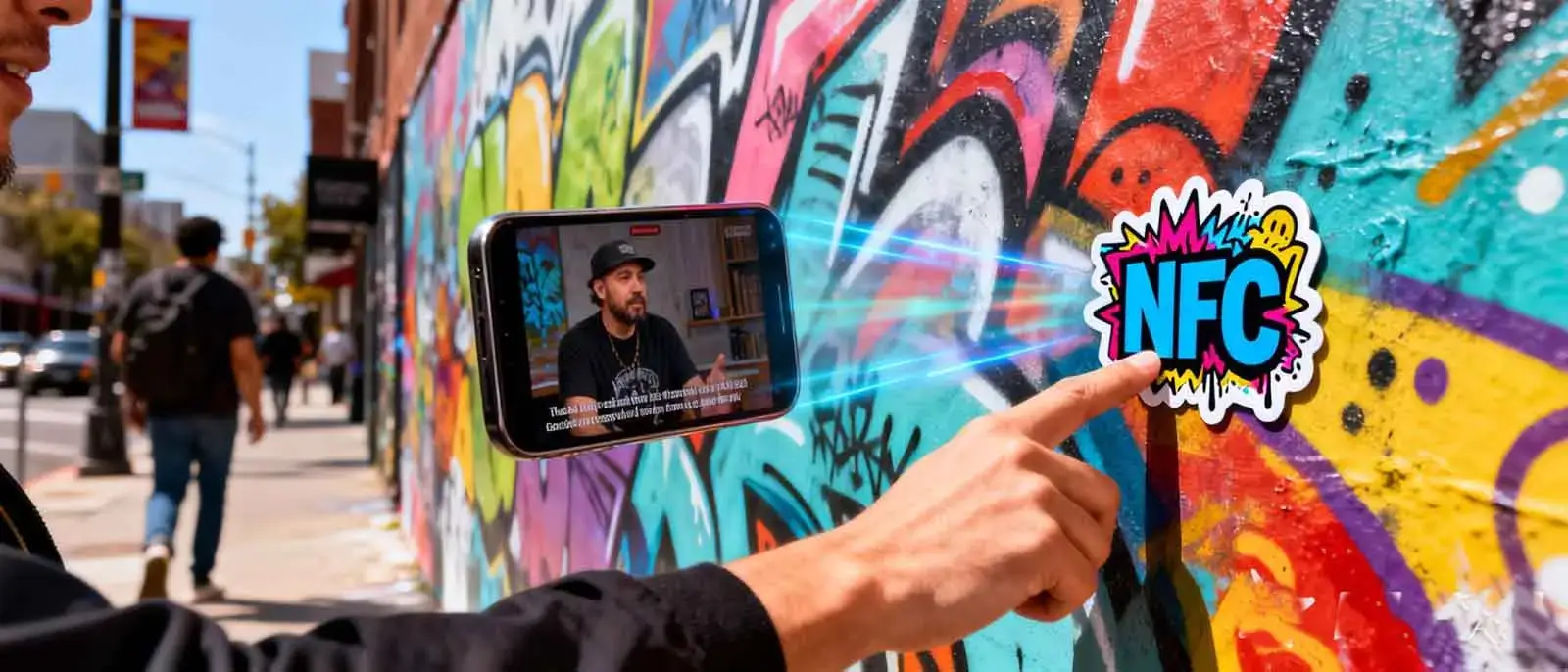
Static graffiti, despite its visual impact, suffers from a fundamental limitation: it fosters only one-way communication, leaving audiences unable to engage in meaningful, in-depth interaction with the art and its creator. A passerby might pause to admire a piece, appreciate its technique, or interpret its message, but there is no mechanism for them to ask questions, learn about the artist’s inspiration, or connect with other viewers who have engaged with the same work. This passive consumption creates a disconnect between the art, the artist, and the community. For example, a viewer might be moved by a graffiti mural depicting a local historical event but have no way to verify details, learn about the event’s significance, or share their own personal connection to it. Similarly, an art student might want to study the technical aspects of a piece, such as the type of paint used, the application method, or the artist’s creative process, but lack access to this information. Traditional attempts to add context, such as nearby plaques or QR codes, are often intrusive, easily damaged, or require additional steps (like downloading a specific app) that deter engagement. NFC Street Art transforms this passive experience into an interactive one by embedding invisible digital layers within graffiti works. With a simple tap of their smartphone, viewers can access a wealth of supplementary content, engage with the artist’s story, contribute their own insights, and connect with a global community of art enthusiasts, turning static urban graffiti into dynamic, participatory cultural platforms.
NFC and Invisible Tagging Technology Enable Digital Extension of Graffiti
IP68 Waterproof NFC Tags Embedded in Wall Gaps for Long-Term Protection
A cornerstone of NFC Street Art technology is the use of IP68-rated waterproof NFC tags, which are strategically embedded in wall gaps or crevices to ensure long-term protection against the elements and human interference. The IP68 rating is the highest standard for ingress protection, meaning these tags are completely dust-tight and can withstand submersion in water up to 1.5 meters for extended periods, making them ideal for outdoor urban environments. Unlike surface-mounted tags that are easily damaged or removed, embedding the tags in wall gaps keeps them hidden from view, preserving the integrity of the graffiti while ensuring their longevity. The installation process is carefully designed to minimize damage to the existing structure: technicians use specialized tools to identify natural crevices or create discrete openings that are then sealed with weather-resistant materials after tag placement. These tags are engineered to withstand extreme temperatures, from the freezing cold of northern winters to the sweltering heat of tropical summers, and are resistant to chemicals like cleaning agents that might be used on nearby surfaces. Each tag has a read range of 2-5 centimeters, ensuring that viewers must be in close proximity to the graffiti to activate it encouraging meaningful engagement with the physical work while accessing the digital content. The durability of these IP68 tags means they can remain functional for up to a decade, providing a stable digital foundation for NFC Street Art projects and ensuring that the digital extension of graffiti works endures long after the physical pieces may have faded.
UV Ink Invisible Marking System Maintains the Integrity of Visual Art
To address the concern of preserving the visual integrity of graffiti works, NFC Street Art employs a UV ink invisible marking system that guides viewers to the location of NFC tags without disrupting the aesthetic of the piece. Traditional methods of indicating digital access points, such as visible stickers or painted symbols often clash with the artist’s vision and detract from the impact of the graffiti. The UV ink solution solves this problem by using specialized inks that are completely invisible under normal daylight but become visible when exposed to ultraviolet light (such as the flashlight function on most smartphones). Artists and technicians collaborate to determine the most unobtrusive locations for these UV marks, typically along the edges of the graffiti or in areas where the mark will blend seamlessly with the background when not activated. Viewers are alerted to the presence of the invisible marks through subtle, context-appropriate signage nearby (such as a small “Tap for More” sticker) or through word-of-mouth and social media. When a viewer shines their smartphone’s UV light on the area, the invisible mark illuminates, guiding them to the exact spot where the NFC tag is embedded. This system ensures that the visual purity of graffiti is maintained while still providing clear access to digital content. Additionally, the UV ink is fade-resistant and compatible with all types of graffiti paints, ensuring that it does not react with the artwork or cause discoloration over time. By keeping the marking system invisible under normal conditions, NFC Street Art respects the artist’s intent while enhancing the viewer’s experience.
Wirelessly Powered NFC Tags with 10-Year Maintenance-Free Design
A key innovation in NFC Street Art technology is the development of wirelessly powered NFC tags with a 10-year maintenance-free design, eliminating the need for battery replacements or regular upkeep, a critical requirement for long-term urban art projects. Traditional battery-powered NFC tags suffer from limited lifespans, often requiring replacement every 1-2 years, which is impractical and costly for large-scale or hard-to-access graffiti installations. The wirelessly powered tags used in NFC Street Art overcome this limitation by harvesting energy from the electromagnetic field generated by a smartphone when it is tapped near the tag. This energy harvesting technology allows the tags to operate without an internal battery, significantly extending their lifespan and eliminating maintenance needs. The tags are constructed with high-quality, corrosion-resistant materials that can withstand the harsh conditions of urban environments, including exposure to saltwater (in coastal cities), pollution, and physical abrasion. Each tag is pre-programmed with the digital content associated with the graffiti work, such as artist interviews, historical context, or interactive features, and can be updated remotely if needed using specialized NFC programming tools. The 10-year maintenance-free design makes NFC Street Art accessible to artists and organizations with limited resources, as it reduces the long-term costs associated with preserving and updating the digital content. This durability and low maintenance also ensure that the digital extension of graffiti works remains accessible to future generations, turning temporary urban art into a lasting part of the cultural landscape.
The Berlin Wall “Memory Layers” Project Validates a New Model for Historical Preservation
Deployment of NFC Digital Memory Tags at 45 Historical Graffiti Sites
The Berlin Wall “Memory Layers” project, a groundbreaking initiative in cultural preservation, has deployed NFC digital memory tags at 45 key historical graffiti sites along the remaining sections of the Berlin Wall, creating a living archive of the wall’s artistic and historical legacy. The selection of these 45 sites was the result of extensive research by a team of historians, art experts, and local community members, who identified works that were particularly significant in documenting the wall’s history, from early 1960s political statements to the celebratory murals created after the wall’s fall in 1989. Each site was carefully surveyed to determine the optimal location for embedding the NFC tags, with priority given to areas that offered maximum protection while ensuring easy access for viewers. The installation process involved working closely with conservationists to ensure that the embedding of tags did not damage the fragile remains of the wall or the graffiti works themselves. Each NFC tag is linked to a comprehensive digital database that includes high-resolution images of the graffiti, historical records of its creation, interviews with the original artists (where possible), and contextual information about the political and social climate at the time the work was created. The tags also include GPS coordinates and links to additional resources, such as documentaries and academic articles about the Berlin Wall and its graffiti. By deploying these NFC digital memory tags, the “Memory Layers” project has transformed static sections of the wall into interactive historical sites that allow visitors to engage with the past in a deeply personal and immersive way.
Scan-Activated Augmented Reality Interface Recreates Graffiti Changes Across Six Decades
A highlight of the Berlin Wall “Memory Layers” project is its scan-activated augmented reality (AR) interface, which allows visitors to use their smartphones to visualize the evolution of graffiti at each site across six decades, from the wall’s construction in 1961 to the present day. When a visitor taps their smartphone on one of the NFC digital memory tags, the AR interface launches automatically, overlaying a digital projection of the graffiti onto the physical wall. By swiping on their screen, visitors can “scroll” through time, watching as the original work is painted, modified, covered by new graffiti, and eventually preserved as part of the wall’s legacy. The AR interface uses advanced image recognition technology to align the digital projections with the physical wall, creating a seamless and realistic experience. For example, at the site of the iconic “Brotherly Kiss” mural by Dmitri Vrubel, visitors can use the AR interface to see how the mural was created in 1990, how it weathered over time, and the conservation efforts that were undertaken to restore it in 2018. The interface also includes audio narration that guides visitors through the changes, explaining the significance of each modification and the historical events that inspired them. This ability to visualize the passage of time through the evolution of graffiti works gives visitors a unique perspective on the Berlin Wall’s history, showing how art was used as a form of resistance, expression, and celebration throughout its existence. The AR interface has been praised for making history more accessible and engaging, particularly for younger visitors who may have no personal memory of the wall.
Annual Visits Exceed 800,000, with an Average User Dwell Time of 27 Minutes
The success of the Berlin Wall “Memory Layers” project is demonstrated by its impressive visitor statistics: annual visits to the 45 NFC-equipped graffiti sites now exceed 800,000, with an average user dwell time of 27 minutes, far higher than the average 5-7 minutes visitors typically spend at historical sites without interactive elements. These numbers reflect the project’s ability to engage visitors on a deeper level than traditional historical markers or static exhibits. The interactive nature of the NFC Street Art experience encourages visitors to spend more time at each site, exploring the digital content, experimenting with the AR interface, and reflecting on the historical significance of the graffiti. Surveys conducted with visitors have shown that 92% found the NFC technology enhanced their understanding of the Berlin Wall’s history, while 87% reported feeling a stronger emotional connection to the site after engaging with the digital content. The project has also attracted a more diverse audience than traditional historical sites, with a 30% increase in younger visitors (18-34 years old) and a 25% increase in international visitors who may not have previously been familiar with the specific stories behind the graffiti works. The high dwell time and visitor numbers have also had a positive economic impact on the surrounding communities, with local businesses reporting increased foot traffic and sales. The success of the “Memory Layers” project has established NFC Street Art as a viable and effective model for historical preservation, demonstrating that technology can breathe new life into cultural heritage sites and make history more accessible to global audiences.
Anonymous Art Collectives Build Multi-Layered Narrative Systems Through NFC Technology
Hidden NFC Tags Trigger Documentaries on the Artist’s Creative Process
Anonymous street art collectives, which often prioritize the message over individual recognition, have embraced NFC Street Art as a way to share their creative process with audiences through hidden NFC tags that trigger exclusive documentaries about the making of their graffiti works. These collectives, which operate outside the traditional art world and often face legal risks for their work, use NFC technology to connect with viewers on a personal level without revealing their identities. The hidden NFC tags are embedded in locations that require viewers to engage closely with the graffiti, such as within the details of a mural or along the edge of a stencil, encouraging careful observation of the work before accessing the digital content. When a viewer taps the tag, a short documentary (typically 3-5 minutes) plays on their smartphone, featuring time-lapse footage of the graffiti being created, voiceovers from the collective explaining their inspiration and techniques, and behind-the-scenes stories of the challenges they faced in creating the work (such as working under cover of night or avoiding security). These documentaries offer a rare glimpse into the secretive world of anonymous street art, demystifying the creative process and humanizing the artists behind the work. For example, a collective known for their large-scale murals addressing climate change has used NFC tags to share documentaries about how they source eco-friendly paints, collaborate on design concepts, and select locations that maximize the impact of their message. By using hidden NFC tags to trigger these documentaries, anonymous collectives are able to maintain their privacy while still building a meaningful connection with audiences and sharing the stories behind their art.
Limited-Edition Digital Collectibles Distributed Exclusively Through Dedicated NFC Channels
NFC Street Art has also become a powerful tool for anonymous art collectives to monetize their work and build a sustainable creative practice through the distribution of limited-edition digital collectibles via dedicated NFC channels. Unlike traditional art, which relies on physical sales or gallery representation, options that are often unavailable to anonymous street artists, digital collectibles allow these collectives to reach a global audience and generate income while maintaining their independence. Each limited-edition digital collectible is a unique digital artwork inspired by the physical graffiti, often featuring animated elements or additional details that expand on the original piece. The collectibles are minted as non-fungible tokens (NFTs) to ensure their authenticity and scarcity, with the number of editions limited (typically between 50-100) to maintain their value. To access these collectibles, viewers must tap their smartphones on the dedicated NFC tag associated with the graffiti work, which redirects them to a secure platform where they can purchase or claim the digital collectible. The NFC channel ensures that only those who have physically engaged with the graffiti work have access to the collectibles, creating a direct link between the physical and digital art worlds. This exclusivity has made NFC-distributed digital collectibles highly sought after by art collectors and enthusiasts, with some pieces selling for thousands of dollars. For anonymous collectives, this revenue stream allows them to invest in better materials, fund larger projects, and support social causes that align with their artistic message. It also provides a way for their work to be collected and preserved by a global community, ensuring that their impact extends beyond the temporary physical existence of their graffiti.
Audience Interaction Data Feeds Back into Artistic Creation, Forming a Digital Symbiotic Cycle
A unique and innovative aspect of NFC Street Art is the way anonymous collectives use audience interaction data from the NFC tags to inform and shape their future artistic creations, creating a digital symbiotic cycle where viewers become active participants in the creative process. Each time a viewer taps an NFC tag, interacts with the digital content, or shares the work on social media, this data is anonymously collected and analyzed by the collective. The data includes information such as the time of day the tag was accessed, the type of digital content that was most viewed (e.g., artist interviews vs. AR experiences), the viewer’s location (based on smartphone GPS), and any comments or feedback left through the interactive features. Collectives use this data to identify trends and preferences among their audience. For example, if viewers in a particular neighborhood consistently engage with works addressing social justice issues, the collective may create more pieces on that theme in that area. Similarly, if a specific type of digital content (such as time-lapse documentaries) receives more views than others, the collective may prioritize that format for future projects. This data-driven approach ensures that the collective’s work remains relevant and resonant with the communities they serve, while also giving viewers a sense of ownership over the art. For example, one anonymous collective in London used NFC data to discover that their murals featuring local historical figures were particularly popular among older residents, while younger viewers preferred works with interactive AR elements. In response, the collective created a new series of murals that combined local history with AR features, resulting in increased engagement from both demographic groups. This digital symbiotic cycle not only strengthens the connection between the collective and their audience but also ensures that NFC Street Art remains a dynamic and evolving form of public expression.
Global Street Art Navigation System Builds a Digital Cultural Map
OpenStreetMap Integrates 42,000 NFC Art Coordinate Points
The global street art navigation system, a collaborative initiative between NFC Street Art practitioners, technologists, and open data advocates, has integrated 42,000 NFC art coordinate points into OpenStreetMap (OSM), the world’s largest free, editable map of the world. This integration has transformed OSM into a comprehensive digital cultural map that allows users to discover and navigate to NFC-equipped street art sites across the globe. Each of the 42,000 coordinate points is linked to detailed information about the graffiti work, including the artist (if known), the date of creation, the theme of the work, and the type of digital content available via the NFC tag. The coordinate points are marked on OSM with a distinctive icon that distinguishes them from other points of interest, making it easy for users to identify NFC Street Art sites while exploring the map. The integration process involved a global network of volunteers, including street art enthusiasts, local residents, and travel bloggers, who contributed to the mapping of NFC art sites by submitting coordinates, photographs, and additional information. This crowdsourced approach ensures that the map remains up-to-date, with new sites added regularly and outdated information corrected by the community. For example, when a new NFC Street Art project is completed in Rio de Janeiro, a local volunteer can add the coordinate point to OSM within days, making it accessible to global users. The integration with OSM also means that the NFC art coordinate points are available on a wide range of mapping applications that use OSM data, including Google Maps, Mapbox, and OsmAnd, ensuring maximum accessibility for users around the world.
Geolocation-Based Intelligent Recommendation of Personalized Art Routes
Building on the 42,000 NFC art coordinate points integrated into OpenStreetMap, the global street art navigation system offers geolocation-based intelligent recommendations for personalized art routes, allowing users to discover street art that aligns with their interests and travel plans. When a user opens the navigation system’s app and enables their location, the system uses their current position, travel preferences (such as walking, cycling, or driving), and interests (such as political art, abstract graffiti, or historical murals) to generate a customized route. For example, a user visiting Paris who is interested in feminist street art and prefers walking routes would receive a recommendation for a 2-hour walk through the Marais district, highlighting 8-10 NFC Street Art sites that feature feminist themes. Each route includes turn-by-turn navigation, estimated travel time, and information about each stop, such as the distance from the user’s current location and the type of digital content available at the NFC tag. The system also allows users to save routes for later, share them with friends, or customize them by adding or removing sites. For travelers with limited time, the system offers “quick visit” routes that focus on the most significant NFC Street Art sites in a particular area, while for art enthusiasts, it provides “deep dive” routes that explore niche themes or lesser-known neighborhoods. The intelligent recommendation algorithm learns from user behavior over time, refining its suggestions based on the routes the user has taken, the sites they have engaged with, and the feedback they have provided. This personalized approach ensures that users have a unique and meaningful experience discovering NFC Street Art, whether they are local residents or international travelers.
Multilingual Art Guides Support Barrier-Free Access for Visitors from 132 Countries
To ensure that NFC Street Art is accessible to a global audience, the global street art navigation system provides multilingual art guides that support barrier-free access for visitors from 132 countries. The digital content associated with each NFC tag, including artist interviews, historical context, and interactive features is available in 28 of the world’s most widely spoken languages, including English, Spanish, Mandarin, Arabic, French, and Portuguese. This multilingual support is made possible through a combination of professional translation services and crowdsourced translations from the global community of NFC Street Art enthusiasts. The translation process prioritizes accuracy and cultural relevance, ensuring that the nuance and context of the original content are preserved in each language. For example, a graffiti work addressing a local political issue in Brazil is translated into Portuguese with explanations of the specific cultural and historical references, while the English translation includes additional context to help international visitors understand the significance of the work. The multilingual art guides also include audio narration options, allowing visitors with visual impairments or reading difficulties to engage with the content. Additionally, the navigation system’s app supports accessibility features such as screen readers and high-contrast mode, further enhancing barrier-free access. The impact of this multilingual support is significant: visitors from non-English speaking countries report a 65% increase in their ability to engage with and understand NFC Street Art content compared to monolingual systems. By breaking down language barriers, the global street art navigation system ensures that NFC Street Art is a truly global cultural phenomenon, accessible to anyone with a smartphone and an interest in urban graffiti.
Sustainable Development Paths for the Digital Public Art Ecosystem
Blockchain Certification System Protects Street Artists’ Digital Copyrights
To address the longstanding issue of copyright protection for street artists, the NFC Street Art ecosystem has implemented a blockchain certification system that securely records and verifies the digital rights associated with each graffiti work and its digital extensions. Street artists, particularly anonymous ones, have historically struggled to protect their work from unauthorized reproduction, modification, or commercial exploitation issues that are compounded in the digital age. The blockchain certification system solves this problem by creating a permanent, tamper-proof record of the artist’s ownership of both the physical graffiti and its digital content. When an artist completes an NFC Street Art project, they register the work on a dedicated blockchain platform, providing details such as the date of creation, GPS location, high-resolution images of the work, and the digital content linked to the NFC tag. The blockchain then generates a unique digital certificate of ownership that is stored on the distributed ledger, making it impossible to alter or forge. This certification system ensures that artists receive proper credit for their work, even if the physical graffiti is erased or the digital content is shared online. It also provides a legal foundation for artists to pursue compensation if their work is used commercially without permission. For example, if a company uses an image of an NFC Street Art work in an advertisement, the blockchain certification can be used to prove the artist’s ownership and secure royalties. The system also supports smart contracts, which can automatically distribute royalties to artists when their digital content is accessed or their limited-edition collectibles are sold. By protecting street artists’ digital copyrights, the blockchain certification system encourages more artists to participate in NFC Street Art projects, knowing that their work and rights will be safeguarded.
Municipal Cultural Funds Support the Maintenance and Update of NFC Infrastructure
The long-term sustainability of the NFC Street Art ecosystem relies on the maintenance and update of the NFC infrastructure, including tags, digital content, and navigation systems, and municipal cultural funds have emerged as a key source of support for these essential activities. Cities around the world, recognizing the cultural and economic value of NFC Street Art, have begun allocating dedicated funds to maintain existing NFC tags, install new ones, and update the digital content associated with the works. For example, Berlin, home to the “Memory Layers” project, has committed €500,000 annually from its municipal cultural budget to fund the maintenance of NFC tags along the Berlin Wall, update the AR content as new historical information becomes available, and train local volunteers to monitor and report any issues with the infrastructure. Similarly, cities like London, New York, and São Paulo have established grant programs that provide funding to local artists and organizations to create new NFC Street Art projects and maintain existing ones. These municipal funds not only cover the cost of physical infrastructure but also support the development of new technologies and features for the NFC Street Art ecosystem, such as improved AR interfaces or expanded multilingual support. The involvement of municipal governments also ensures that NFC Street Art projects align with local cultural policies and urban planning goals, such as revitalizing neglected neighborhoods or promoting cultural tourism. By providing stable, long-term funding, municipal cultural funds are helping to turn NFC Street Art from an innovative experiment into a permanent and sustainable part of the urban cultural landscape.
Art Education Institutions Develop Outdoor Aesthetics Courses Based on NFC
Art education institutions around the world are increasingly recognizing the educational value of NFC Street Art and are developing outdoor aesthetics courses that use NFC technology to teach students about urban art, design, and cultural history. These courses, which are offered at both the high school and university level, take students out of the classroom and into the city, where they use smartphones to engage with NFC-equipped graffiti works and learn about the artistic techniques, historical context, and cultural significance of the pieces. For example, the Berlin University of the Arts offers a course titled “NFC Street Art: From Graffiti to Digital Culture” that takes students on guided tours of the “Memory Layers” project sites. Students use the NFC tags to access artist interviews and historical records, then complete assignments that require them to analyze the relationship between the physical graffiti and its digital extension, or create their own conceptual designs for NFC Street Art projects. High schools in cities like Melbourne and Toronto have integrated NFC Street Art into their visual arts curricula, using local graffiti sites to teach students about color theory, composition, and social commentary in art. These outdoor courses not only make art education more engaging and accessible for students but also help to foster a greater appreciation for urban art and its role in the cultural landscape. They also provide students with practical skills in digital literacy, as they learn to navigate NFC technology, analyze digital content, and even create their own simple interactive features. By integrating NFC Street Art into art education, institutions are helping to nurture the next generation of artists, curators, and cultural enthusiasts who will continue to shape the digital public art ecosystem.
Why Choose Mytopband?
- Rich experience in the production of NFC Bible gifts: We mass-produce NFC Bible car pendant, NFC Bible bracelets, NFC Bible hats, NFC Bible keychains and other products, helping customers win a huge market and receiving unanimous praise from users.
- Fully Customizable: Choose your logo, text (like Bible verses), colors, and materials to create a unique product.
- Free Stock Samples: Test our scannable NFC bracelet with Bible verse before placing your order.
- Low MOQ as 500pcs: Perfect for startups and small businesses.

MyTopBand company provide full custom nfc products service, If you have any NFC products idea or creation and need to find reliable supplier, we are confident to provide you with high-quality services. Please find us: www.mytopband.com, or send message to info@mytopband.com, we will reply you within 24 hours.