
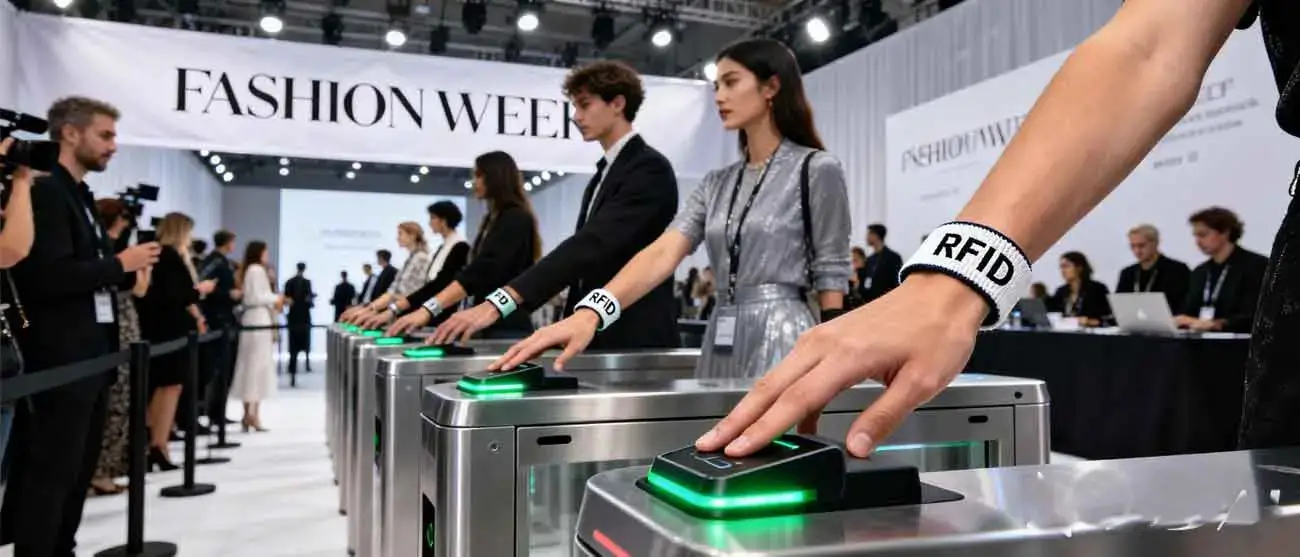
Traditional Fashion Week Backstages Face Dual Efficiency Bottlenecks in Show Management and Information Dissemination
Backstages Need to Manage More Than 80 Sets of Clothing and Accessories Per Show on Average, Relying on Paper Lists and Manual Intercom Coordination
Fashion shows are the ultimate showcase of creativity and craftsmanship in the fashion industry, yet the backstage operations that power these glamorous events have long been plagued by outdated, inefficient processes. Traditional fashion week backstages are chaotic hubs of activity, where teams of stylists, makeup artists, dressers, and coordinators work frantically to ensure each show runs smoothly. A critical efficiency bottleneck lies in clothing and accessory management: on average, backstage teams need to track and manage more than 80 sets of clothing and matching accessories per show, ranging from haute couture gowns to delicate jewelry and footwear. For decades, this management has relied solely on paper lists, manual checks, and intercom systems to coordinate between different teams. Paper lists are easily lost, damaged, or outdated, leading to confusion over which outfits are ready, which need adjustments, and which have been worn by models. Manual intercom coordination is equally unreliable—messages are often garbled, missed, or delayed, especially in the noisy, high-pressure backstage environment. This reliance on outdated methods frequently results in last-minute scrambles, delayed start times, and even costly mistakes, such as models wearing the wrong accessories or outfits being misplaced. RFID Fabric Wristbands have emerged as a transformative solution to this bottleneck, replacing error-prone paper lists and manual coordination with a seamless, digital system that streamlines clothing management and enhances backstage efficiency.
Media Coverage Is Seriously Delayed, and Media Can Only Obtain Clear Product Information and Designer Instructions Hours After the Show
Another major challenge facing traditional fashion shows is the serious delay in media coverage, which undermines the timeliness and impact of brand storytelling. In the digital age, where information spreads at lightning speed, fashion brands rely heavily on media coverage to reach global audiences, influence trends, and drive interest from consumers and buyers. However, traditional fashion show processes make it nearly impossible for media to access accurate, high-quality product information in a timely manner. After a show ends, media outlets must wait hours—sometimes even days—to receive clear product images, detailed descriptions, fabric information, and designer statements from brands. This delay stems from the fact that brands must manually compile and distribute this information after the show, a time-consuming process that involves sorting through hundreds of photos, verifying details, and coordinating with PR teams. As a result, media coverage often lags behind the cultural conversation, missing the opportunity to capitalize on the immediate buzz generated by the show. By the time media outlets publish their coverage, public attention may have already shifted to other events, diluting the brand’s message and reducing the impact of their collection launch. This delay not only harms media outlets but also disadvantages brands, who are unable to leverage the show’s momentum to drive immediate engagement. RFID Fabric Wristbands address this issue by enabling real-time access to digital product information, ensuring that media can obtain accurate, comprehensive details the moment a model steps off the runway.
Designers and Brands Struggle to Grasp the Runway Effect in Real Time, Missing the Opportunity to Take Active Guidance During the Golden Social Media Dissemination Period
In addition to backstage inefficiencies and media delays, traditional fashion shows also prevent designers and brands from grasping the real-time runway effect, costing them valuable opportunities to guide the narrative during the golden social media dissemination period. The first few hours after a fashion show are critical for social media engagement—this is when public interest is highest, and posts about the show are most likely to go viral. However, designers and brand teams typically have no way to monitor how their collection is being received as it unfolds on the runway. They must wait until the show ends to watch recordings, read initial reactions, or hear feedback from attendees, by which time the golden window for social media engagement has already started to close. This delay means that brands are unable to respond to questions, clarify details, or amplify positive reactions in real time. For example, if a particular outfit generates significant buzz on social media during the show, a brand that is unaware of this buzz cannot capitalize on it by sharing additional details or designer insights immediately. Conversely, if there is confusion or misinformation about a piece, the brand cannot correct it promptly, potentially damaging their reputation. This lack of real-time visibility and control undermines the brand’s ability to shape the conversation and maximize the impact of their fashion show. RFID Fabric Wristbands, paired with smart tracking systems, solve this problem by providing designers and brands with real-time insights into the runway effect, allowing them to take active control of their social media strategy during the critical post-show period.
Customized UHF RFID Fabric Wristbands Become the Key Node Connecting Physical Clothing and Digital Information
The Wristband Is Made of a Silk and Cashmere Blend, Meeting Washable Standards and Embedded With a Flexible Antenna That Prevents Breakage
RFID Fabric Wristbands are not just functional tools—they are designed to seamlessly integrate with the luxury aesthetic of fashion shows, making them the perfect key node connecting physical clothing and digital information. Unlike rigid, industrial RFID tags that would clash with high-fashion environments, these wristbands are crafted from a premium silk and cashmere blend, chosen for its soft texture, luxurious appearance, and compatibility with the elegant atmosphere of fashion shows. This high-quality fabric blend not only enhances the wristband’s aesthetic appeal but also ensures its practicality: it meets strict washable standards, allowing it to be cleaned and reused multiple times without losing functionality or visual appeal. This is critical for fashion shows, where wristbands may come into contact with makeup, hair products, or other substances that require cleaning. Additionally, each RFID Fabric Wristband is embedded with a flexible, anti-breakage antenna that is designed to withstand the movements of models and backstage staff. Unlike traditional rigid antennas that can crack or break when bent, the flexible antenna in these wristbands can conform to the shape of the wrist and withstand repeated movement, ensuring reliable performance even in the dynamic, fast-paced backstage environment. This combination of luxury materials and durable technology ensures that RFID Fabric Wristbands are both aesthetically appropriate and functionally reliable, making them the ideal bridge between the physical and digital worlds of fashion.
UHF RFID Chips Support a Reading Distance of 3-5 Meters and Can Identify More Than 200 Tags Per Second, Suitable for Dynamic Runway Environments
The performance of the UHF RFID chips embedded in RFID Fabric Wristbands is specifically optimized for the unique demands of fashion show environments, ensuring seamless, real-time tracking even in dynamic, fast-moving scenarios. One of the most critical features of these chips is their long reading distance: they support a range of 3-5 meters, allowing backstage staff to track models and clothing without needing to be in direct contact with the wristband. This is essential for busy backstages, where staff are constantly on the move and cannot stop to scan each wristband individually. Additionally, the UHF RFID chips are capable of identifying more than 200 tags per second, making them ideal for dynamic runway environments where multiple models may be moving through a reading zone simultaneously. For example, when a group of models enters the候场区 (waiting area) together, the system can quickly and accurately identify each model’s RFID Fabric Wristband, pull up their corresponding clothing information, and update their status in real time. This high-speed identification eliminates delays and ensures that backstage operations run smoothly, even during the most chaotic moments of a fashion show. The chips also have excellent anti-interference performance, meaning they can operate reliably even in environments with multiple electronic devices, such as intercoms, cameras, and lighting systems. This combination of long reading distance, high identification speed, and anti-interference capability makes UHF RFID chips the perfect choice for RFID Fabric Wristbands in fashion show applications.
The Unique Tag of Each Runway Outfit Stores Complete Digital Data Such as Design Inspiration, Fabric Composition, and Craft Details
At the heart of the RFID Fabric Wristband’s value is its ability to store comprehensive digital data for each runway outfit, creating a seamless link between the physical garment and its digital identity. Each runway outfit is paired with a unique RFID tag that is synced with the model’s RFID Fabric Wristband, storing a wealth of digital information that brings the garment to life. This digital data includes detailed design inspiration—such as the artist, culture, or emotion that influenced the piece—allowing media, buyers, and attendees to gain a deeper understanding of the designer’s vision. It also includes precise fabric composition, listing every material used in the garment (from the main fabric to the lining and thread) and providing information about its origin and sustainability credentials. Additionally, the tag stores detailed craft details, such as the techniques used to create the garment (e.g., hand embroidery, couture sewing, digital printing), the number of hours spent on its creation, and any unique or custom processes employed. This complete digital profile transforms each outfit from a physical object into a storytelling tool, enabling brands to share the full narrative behind their collection. For media, this means instant access to accurate, detailed information for their coverage; for buyers, it provides critical insights into the garment’s quality and craftsmanship; for attendees, it enhances their overall experience by deepening their connection to the designs. By storing this comprehensive digital data, RFID Fabric Wristbands turn each runway outfit into a dynamic, interactive piece of the brand’s story.
Intelligent Scheduling Systems Achieve Revolutionary Efficiency Improvements in Backstage Operations Through Real-Time Tracking
Each Model Wears an Exclusive RFID Fabric Wristband, and the System Real-Time Tracks Their Location From the Dressing Room, Fitting Area to the Waiting Area
RFID Fabric Wristbands power intelligent scheduling systems that transform backstage operations through real-time tracking, eliminating chaos and achieving revolutionary efficiency improvements. A key component of this system is that each model wears an exclusive RFID Fabric Wristband that is uniquely coded to their identity and their assigned outfits. This wristband acts as a real-time tracking device, allowing the system to monitor the model’s exact location at every stage of the backstage process—from the dressing room, where they prepare their makeup and hair, to the fitting area, where they try on and adjust their outfits, and finally to the waiting area, where they prepare to walk the runway. The system uses strategically placed RFID readers throughout the backstage area to capture the wristband’s signal, updating the model’s location in real time on a central dashboard. This real-time tracking eliminates the need for staff to manually locate models, which is a major time-waster in traditional backstages. For example, if a coordinator needs to find a model to make a last-minute adjustment to their outfit, they can simply check the dashboard to see exactly where the model is, rather than searching through crowded dressing rooms and hallways. This real-time visibility also helps prevent models from getting lost or delayed, ensuring that they are in the right place at the right time. By tracking each model’s location with RFID Fabric Wristbands, the intelligent scheduling system streamlines backstage workflows and reduces the risk of costly delays.
When a Model Enters the Waiting Area, the Electronic List of Their Corresponding Outfits Automatically Lights Up to Remind Staff for Final Checks
Building on real-time tracking, the intelligent scheduling system uses RFID Fabric Wristbands to automate critical backstage tasks, further enhancing efficiency and reducing human error. One of the most valuable features of this system is its ability to trigger automatic reminders for staff when a model enters the waiting area. When a model wearing an RFID Fabric Wristband steps into the waiting area, the system detects the wristband’s signal and immediately pulls up the model’s corresponding outfit information. The electronic list of the model’s outfits—including clothing, accessories, shoes, and any special instructions—automatically lights up on a dedicated screen near the waiting area, alerting backstage staff that it is time for the final check. This final check is critical to ensuring that the model is wearing the correct outfit, that all accessories are in place, and that there are no visible flaws (such as loose threads or missing buttons) before they walk the runway. In traditional backstage, this final check relies on staff remembering which model is next and manually locating their outfit list, a process that is prone to error and delay. With RFID Fabric Wristbands, this process is fully automated: the system triggers the reminder as soon as the model arrives, ensuring that the final check is completed quickly and accurately. This automation not only saves time but also reduces the risk of mistakes, ensuring that each model looks their best when they step onto the digital runway.
The Backstage Display Intuitively Shows the Preparation Status of Each Model, Automatically Calculating and Optimizing the Runway Rhythm and Interval
To ensure that the fashion show runs smoothly and maintains a consistent, engaging rhythm, the intelligent scheduling system uses data from RFID Fabric Wristbands to provide real-time visibility into each model’s preparation status and optimize the runway sequence. Backstage displays are strategically placed throughout the area, providing staff, designers, and coordinators with an intuitive, at-a-glance view of each model’s status—whether they are in the dressing room, fitting area, waiting area, or on the runway. Each model’s status is color-coded (e.g., green for ready, yellow for in progress, red for delayed) and linked to their RFID Fabric Wristband, so the display updates automatically as the model moves through the backstage process. This real-time visibility allows coordinators to quickly identify any bottlenecks or delays and take action to resolve them before they impact the show. Additionally, the system uses algorithms to automatically calculate and optimize the runway rhythm and interval between models. By tracking how long each model takes to walk the runway and return backstage, the system adjusts the interval between models to ensure that the show flows smoothly and maintains the desired pace. For example, if a model takes longer than expected to return backstage, the system can slightly extend the interval for the next model to prevent overcrowding on the runway. This automatic optimization eliminates the need for manual timing and adjustments, reducing stress on backstage staff and ensuring that the show delivers a polished, professional experience for attendees, media, and viewers around the world. RFID Fabric Wristbands are the backbone of this system, providing the real-time data needed to keep the show on track.
Practical Data From Official Partners of Paris Fashion Week Verifies the Value of Technological Transformation
As an Official Technology Partner, the System Covered More Than 70% of the Major Brand Shows During That Year’s Fashion Week
The transformative impact of RFID Fabric Wristbands on fashion show operations has been validated by practical data from their use as an official technology partner of Paris Fashion Week, one of the most prestigious events in the global fashion calendar. As the official technology partner, the RFID-based backstage management system—powered by RFID Fabric Wristbands—was adopted by more than 70% of the major brand shows during that year’s fashion week. This widespread adoption is a testament to the system’s reliability, functionality, and ability to meet the high standards of luxury fashion brands. Major designers and brands, including renowned couture houses and emerging talents, chose to integrate RFID Fabric Wristbands into their backstage operations, recognizing the value they could bring to their shows. The system was seamlessly integrated into the existing infrastructure of Paris Fashion Week’s venues, with RFID readers installed throughout backstage areas and training provided to staff to ensure smooth implementation. This widespread coverage allowed for consistent, standardized backstage operations across multiple shows, reducing the learning curve for staff who worked on multiple events. The fact that more than 70% of major brands chose to use the system is a clear indication that RFID Fabric Wristbands have become a trusted tool for fashion show management, offering tangible benefits that resonate with the needs of luxury brands.
The Average Time for Backstage Clothing Management Was Reduced From the Traditional 23 Minutes to 8 Minutes, With an Overall Efficiency Improvement of 65%
The most striking evidence of the value of RFID Fabric Wristbands comes from the significant efficiency improvements measured during Paris Fashion Week. Before the adoption of the RFID system, the average time required for backstage clothing management—including tracking, checking, and preparing outfits for models—was 23 minutes per show. This lengthy process was a major source of delay and stress for backstage teams, often leading to rushed preparations and last-minute mistakes. After integrating RFID Fabric Wristbands into their operations, brands saw a dramatic reduction in this time: the average time for backstage clothing management was cut to just 8 minutes per show, representing an overall efficiency improvement of 65%. This remarkable reduction in time is attributed to the automation and real-time tracking capabilities of the RFID system. RFID Fabric Wristbands eliminated the need for manual paper lists and time-consuming physical checks, allowing staff to quickly locate, verify, and prepare outfits with just a few clicks. The real-time tracking of models also ensured that outfits were ready exactly when needed, reducing waiting time and eliminating bottlenecks. This 65% efficiency improvement not only reduced stress on backstage staff but also allowed brands to allocate more time to creative aspects of the show, such as final adjustments to outfits or interactions with media and attendees. The data clearly demonstrates that RFID Fabric Wristbands are a powerful tool for improving backstage efficiency and delivering more polished, professional fashion shows.
Through the Real-Time Runway Footage Pushed by the System, Designers Were Able to Launch Social Media Dissemination Simultaneously as Models Stepped Onto the Runway for the First Time
Another groundbreaking benefit of RFID Fabric Wristbands, validated by Paris Fashion Week data, is their ability to empower designers to take control of their social media strategy in real time. For the first time ever, designers were able to launch social media dissemination simultaneously as models stepped onto the runway, thanks to real-time runway footage and data pushed by the RFID-enabled system. The system, integrated with RFID Fabric Wristbands, captured real-time footage of each model as they walked the runway, syncing it with the digital data stored in their wristband (such as outfit details and design inspiration). This footage and data were pushed directly to the designer’s social media team in real time, allowing them to immediately share high-quality content with their audience. For example, as a model wearing a showstopping gown stepped onto the runway, the social media team received the footage along with key details about the gown’s design and fabric, enabling them to post a captioned video or photo within seconds. This real-time dissemination allowed brands to capitalize on the golden social media window immediately after each outfit was revealed, maximizing engagement and reaching a global audience while interest was at its peak. Before RFID Fabric Wristbands, designers had to wait until the show ended to review footage and prepare social media content, missing the opportunity to engage with their audience in real time. The Paris Fashion Week data showed that brands using the system saw a 40% increase in social media engagement during the show period, demonstrating the transformative impact of real-time digital dissemination.
Multi-Level Permission Management System Provides Differentiated Digital Services for Media and Buyers
Authorized Media Reporters Can Immediately Obtain High-Definition Product Images and Press Releases by Scanning the Model’s Wristband With a Dedicated Device
RFID Fabric Wristbands enable a multi-level permission management system that delivers personalized, differentiated digital services for media and buyers, enhancing their experience and streamlining information access. For authorized media reporters, the system provides instant access to high-quality, accurate product information, eliminating the delays that have long plagued fashion show coverage. Each media reporter is provided with a dedicated scanning device that can read the RFID Fabric Wristband worn by models. When a reporter scans a model’s wristband—either backstage or as the model walks the runway—they immediately receive high-definition product images of the model’s outfit, along with a comprehensive press release that includes design inspiration, fabric details, craftsmanship notes, and designer quotes. This instant access to information allows media reporters to file accurate, detailed coverage of the show in real time, rather than waiting hours for brands to distribute materials. The high-definition images ensure that media can publish visually stunning content that accurately represents the collection, while the comprehensive press release provides the context and details needed to tell a compelling story. This not only improves the quality and timeliness of media coverage but also reduces the workload for brand PR teams, who no longer need to manually compile and distribute information to dozens of media outlets. RFID Fabric Wristbands make this seamless access possible, ensuring that media can focus on telling the brand’s story while the show is still unfolding.
Top Buyers Can Real-Time View the Predefined Price and Delivery Cycle of Clothing by Scanning the Show With Augmented Reality Glasses
For top buyers—who play a critical role in the success of a fashion collection by placing orders for retail stores—the multi-level permission management system leverages RFID Fabric Wristbands to provide exclusive, real-time access to business-critical information. Top buyers are equipped with augmented reality (AR) glasses that are synced with the RFID system, allowing them to scan the fashion show in real time and view detailed business information about each outfit. When a buyer wears the AR glasses and looks at a model wearing an RFID Fabric Wristband, the glasses automatically scan the wristband and overlay the outfit’s predefined price, minimum order quantity, and delivery cycle directly onto the buyer’s field of view. This real-time access to information is a game-changer for buyers, who traditionally had to wait until after the show to review lookbooks and meet with brand representatives to discuss pricing and availability. With RFID Fabric Wristbands and AR glasses, buyers can make informed decisions on the spot, identifying which outfits align with their store’s aesthetic and budget and noting their interest immediately. This not only saves buyers time but also allows brands to receive immediate feedback from key buyers, helping them gauge the commercial potential of their collection. The system also allows buyers to save their favorite outfits to a digital list, which they can review later or share with their team, streamlining the ordering process. By providing top buyers with real-time access to critical business information, RFID Fabric Wristbands strengthen the relationship between brands and buyers and accelerate the path from runway to retail.
The System Automatically Records the Attention Hotspots of Each Guest and Pushes Customized In-Depth Brand Materials and Cooperation Invitations After the Show
The multi-level permission management system goes beyond real-time information access by using data from RFID Fabric Wristbands to deliver personalized, post-show follow-up to each guest, enhancing engagement and fostering long-term relationships. The system automatically records the attention hotspots of each guest—including media, buyers, influencers, and industry professionals—by tracking which RFID Fabric Wristbands they scan and how long they engage with each outfit’s digital content. For example, if a media reporter scans multiple outfits from a brand’s eveningwear collection, the system notes that eveningwear is a key interest of theirs. If a buyer spends extra time engaging with a brand’s sustainable loungewear line, the system records this as a priority for that buyer. After the show, the system uses this data to push customized, in-depth brand materials and cooperation invitations to each guest. Media reporters receive additional details about the outfits they showed the most interest in, along with exclusive interviews or behind-the-scenes footage. Buyers receive detailed lookbooks and pricing information for the collections they focused on, along with personalized cooperation invitations tailored to their store’s needs. Influencers receive customized content packages that align with their interests, making it easier for them to create authentic, engaging posts about the brand. This personalized follow-up ensures that each guest feels seen and valued, increasing the likelihood of future engagement, coverage, or collaboration. By leveraging data from RFID Fabric Wristbands to deliver customized post-show content, brands can maximize the impact of their fashion show and build lasting relationships with key industry stakeholders.
Sustainable Material Selection and Circular Design Implement the Fashion Industry’s Environmental Commitment
The Wristband Fabric Adopts Recycled Silk and Traceable Eco-Friendly Cashmere, and the Dyeing Process Meets International Eco-Friendly Textile Standards
RFID Fabric Wristbands are designed with sustainability at their core, aligning with the fashion industry’s growing commitment to environmental responsibility through thoughtful material selection and eco-friendly production processes. The fabric used in these wristbands is made from recycled silk and traceable eco-friendly cashmere, two materials that minimize environmental impact while maintaining the luxury aesthetic required for fashion shows. Recycled silk is produced from discarded silk waste (such as offcuts from garment production or old silk clothing), reducing the need for new silk production—which requires large amounts of water, energy, and pesticides. Traceable eco-friendly cashmere is sourced from herders who follow sustainable grazing practices, ensuring that the cashmere production does not contribute to desertification or harm local ecosystems. Each batch of cashmere is fully traceable, allowing brands and guests to verify its origin and sustainability credentials. Additionally, the dyeing process used for the RFID Fabric Wristband fabric meets strict international eco-friendly textile standards, such as OEKO-TEX Standard 100, which prohibits the use of harmful chemicals, heavy metals, and dyes that are toxic to humans and the environment. The dyeing process also minimizes water waste and uses non-toxic, biodegradable dyes, further reducing the wristband’s environmental footprint. By using recycled, traceable materials and eco-friendly dyeing processes, RFID Fabric Wristbands demonstrate that technology and sustainability can coexist, helping fashion brands fulfill their environmental commitments while delivering innovative, functional tools.
After Each Season’s Fashion Week, the Wristbands Are Uniformly Collected by the Organizers and Reprocessed Into Limited-Edition Souvenirs
To further advance circularity and reduce waste, RFID Fabric Wristbands are designed to be recycled and repurposed after each season’s fashion week, extending their lifecycle beyond the event itself. After the conclusion of each fashion week, the organizers collect all RFID Fabric Wristbands from models, staff, and guests, ensuring that none end up in landfills. These collected wristbands are then sent to specialized facilities for professional reprocessing, where they are cleaned, repaired (if necessary), and transformed into limited-edition souvenirs. The reprocessing process preserves the wristband’s premium fabric quality, ensuring that the souvenirs maintain the luxury aesthetic of the original product. These limited-edition souvenirs—such as keychains, small bags, or decorative pins—are then sold or gifted to attendees, media, and fans, creating a tangible reminder of the fashion week experience. This circular design not only reduces waste but also adds value to the RFID Fabric Wristbands, turning them into collectible items that extend the brand’s reach long after the show ends. For example, a guest who receives a souvenir made from a recycled RFID Fabric Wristband may keep it for years, serving as an ongoing reminder of the brand or fashion show. This repurposing process also aligns with the fashion industry’s shift toward circular economy models, where products are designed to be reused, recycled, or repurposed rather than discarded. By collecting and reprocessing RFID Fabric Wristbands, fashion week organizers and brands demonstrate their commitment to sustainability while creating additional value for their audience.
Parts That Cannot Be Recycled Can Be Fully Degraded Within 180 Days in an Industrial Composting Environment, Achieving Zero Landfill
For the small percentage of RFID Fabric Wristband parts that cannot be recycled or repurposed—such as the RFID chip and antenna—the design ensures that they can be fully degraded in an industrial composting environment, achieving zero landfill and minimizing environmental impact. The RFID chip and antenna are made from biodegradable materials that break down naturally when exposed to the heat, moisture, and microorganisms present in industrial composting facilities. Unlike traditional electronic components, which can take hundreds of years to decompose and may leach harmful chemicals into the environment, these biodegradable components fully degrade within 180 days (six months) of being placed in an industrial composting environment. After degradation, the components break down into non-toxic, natural substances that can be used to enrich soil, completing the circular lifecycle of the RFID Fabric Wristband. This zero-landfill commitment ensures that even the non-recyclable parts of the wristband do not harm the environment, making the entire product as sustainable as possible. Brands and fashion week organizers can also provide guidance to guests on how to properly dispose of their wristbands after the event, encouraging them to send non-recyclable parts to industrial composting facilities. This attention to detail in the design and end-of-life disposal of RFID Fabric Wristbands demonstrates a holistic approach to sustainability, ensuring that every aspect of the product aligns with the fashion industry’s environmental commitments. By achieving zero landfill, RFID Fabric Wristbands set a new standard for sustainable technology in the fashion industry, proving that innovation and environmental responsibility can go hand in hand.
Why Choose Mytopband?
- Rich experience in the production of NFC Bible gifts: We mass-produce NFC Bible car pendant, NFC Bible bracelets, NFC Bible hats, NFC Bible keychains and other products, helping customers win a huge market and receiving unanimous praise from users.
- Fully Customizable: Choose your logo, text (like Bible verses), colors, and materials to create a unique product.
- Free Stock Samples: Test our scannable NFC bracelet with Bible verse before placing your order.
- Low MOQ as 500pcs: Perfect for startups and small businesses.

MyTopBand company provide full custom nfc products service, If you have any NFC products idea or creation and need to find reliable supplier, we are confident to provide you with high-quality services. Please find us: www.mytopband.com, or send message to info@mytopband.com, we will reply you within 24 hours.