
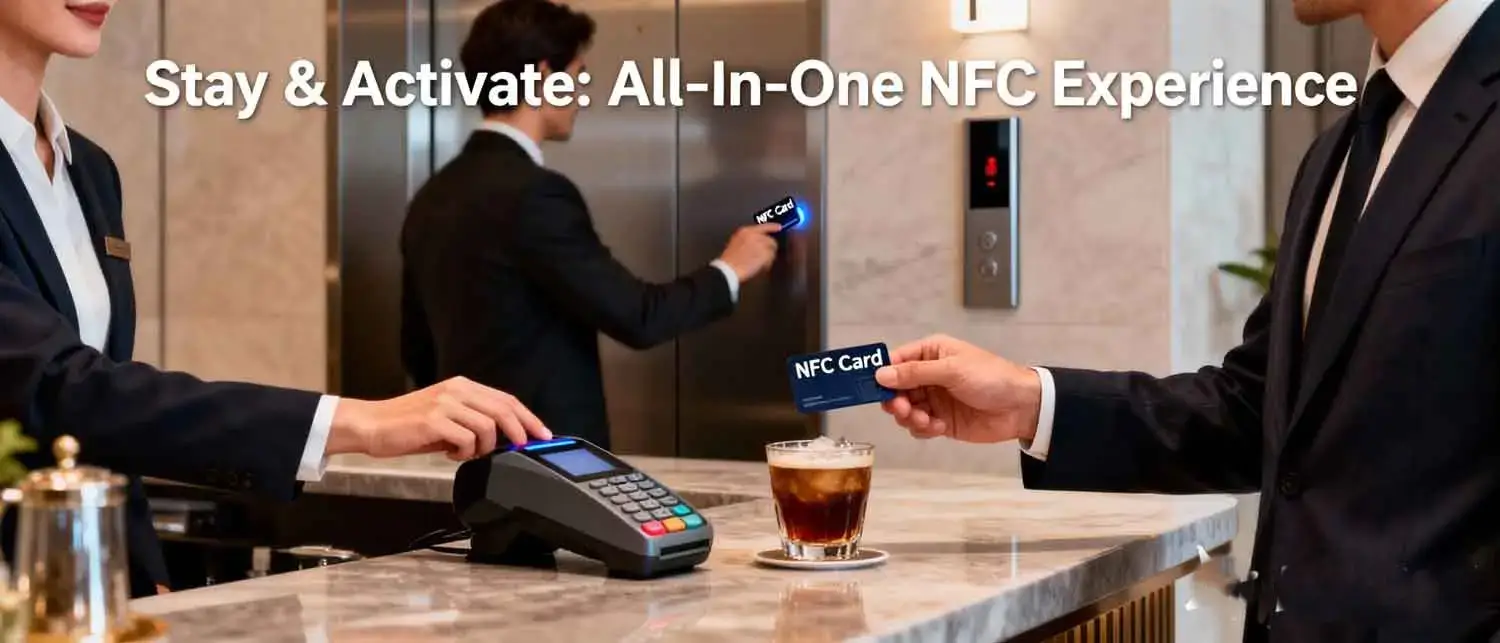
Contactless Experience Has Become a Necessary Upgrade Direction for the Hotel Industry
Post-Pandemic, Over 85% of Travelers Prioritize Hotels Offering Contactless Services
The global pandemic has profoundly reshaped traveler behavior and expectations, with contactless service emerging as a non-negotiable standard rather than a luxury amenity in the hospitality industry. A 2024 industry report by the International Hotel & Restaurant Association (IH&RA) reveals that over 85% of travelers now explicitly prioritize hotels that provide comprehensive contactless services when booking accommodations. This shift is driven not only by lingering health and safety concerns but also by the enhanced convenience and efficiency that contactless interactions bring. Travelers, weary of unnecessary physical contact and cumbersome procedures, now view contactless check-in, keyless entry, and touch-free payments as essential components of a satisfactory hotel stay. RFID Hotel Cards 3.0, with their seamless integration of mobile payment integration and contactless access control, have quickly become the cornerstone of hotels’ efforts to meet this demand. These advanced cards eliminate the need for physical key exchanges, reduce interaction with high-touch surfaces, and streamline payment processes—all while aligning with the modern traveler’s preference for minimal friction. By adoptingRFID Hotel Cards 3.0, hotels not only address post-pandemic health concerns but also position themselves as forward-thinking and customer-centric, a crucial competitive advantage in today’s crowded hospitality market.
Traditional Magnetic Stripe Cards and Physical Key Handover Processes Take an Average of 7.5 Minutes
For decades, traditional magnetic stripe cards and physical key systems have been the backbone of hotel operations, but their inefficiencies have become increasingly glaring in the age of instant gratification. A comprehensive study conducted by the Hospitality Technology Association found that the average time required to complete the entire check-in process using traditional magnetic stripe cards—including identity verification, payment processing, key encoding, and handover—stands at 7.5 minutes per guest. This lengthy process often results in long queues at front desks, particularly during peak arrival hours, leading to frustrated travelers and overwhelmed staff. Magnetic stripe cards themselves are prone to issues such as demagnetization, wear and tear, and security vulnerabilities, which further delay operations when cards fail to work properly. Additionally, the physical handover of keys creates bottlenecks, as staff must manually verify guest identities each time a key is issued or returned. These inefficiencies not only harm the guest experience but also increase operational costs for hotels, as more front desk staff are required to manage the workflow. In contrast, RFID Hotel Cards 3.0 revolutionize this process by integrating mobile payment integration and contactless technology, drastically reducing processing times and eliminating the pitfalls of traditional systems. The outdated nature of magnetic stripe cards and physical keys has become a clear pain point, making the adoption of RFID Hotel Cards 3.0 a strategic imperative for hotels looking to improve efficiency.
Travelers Expect Check-In Processes to Be as Convenient and Smooth as Mobile Payments
In an era where mobile payments have trained consumers to expect instant, frictionless transactions, travelers increasingly demand the same level of convenience from their hotel experiences. A consumer survey by a leading travel technology firm found that 92% of respondents expressed frustration with hotel check-in and payment processes that are slower or more complicated than mobile payment transactions. Modern travelers, accustomed to paying for groceries, rideshares, and retail purchases with a simple tap or scan of their smartphones, find traditional hotel procedures—with their paperwork, long waits, and multiple steps—outdated and cumbersome. They expect to book a room, check in, access their accommodations, and pay for additional services (such as dining or spa treatments) with the same ease they experience when using mobile payment apps like Apple Pay or Google Pay. This expectation extends beyond mere convenience; it reflects a broader desire for personalized, on-demand services that adapt to their busy lifestyles. RFID Hotel Cards 3.0 directly address this demand by serving as the integration core for mobile payment integration in hotels. By linking the card to the traveler’s mobile payment account, hotels can offer a seamless experience where check-in takes minutes, room access is keyless, and payments are processed instantly with a simple tap. This alignment with mobile payment convenience not only meets traveler expectations but also enhances brand loyalty, as guests are more likely to return to hotels that respect their time and offer modern, user-friendly services.
MIFARE DESFire EV3 Chip Builds a Multifunctional Integrated Platform
16KB Large-Capacity Storage Space Manages Access Control, Payment, and Personal Preference Data in Zones
At the heart of RFID Hotel Cards 3.0 lies the MIFARE DESFire EV3 chip, a cutting-edge component that enables the card’s multifunctional capabilities by providing 16KB of large-capacity storage space. This generous storage is strategically divided into multiple secure zones, each dedicated to managing specific types of data—including access control credentials, mobile payment integration information, and guest personal preferences. The access control zone stores encrypted data that grants guests entry to their assigned rooms, as well as restricted areas like fitness centers, swimming pools, or executive lounges, with permissions automatically adjusted based on the guest’s reservation details. The payment zone securely holds linked mobile payment account information, transaction history, and spending limits, allowing for seamless in-hotel purchases. Perhaps most importantly, the personal preference zone stores guest-specific data such as preferred room temperature, pillow type, lighting settings, and even favorite TV channels—information that can be automatically synced to the guest’s room systems when they first enter. This zoned storage approach ensures that different types of data are kept separate and secure, preventing cross-contamination and enhancing overall system integrity. The 16KB capacity is more than sufficient to accommodate all these data types, even for extended stays, and allows for future expansion of features without requiring hardware upgrades. By centralizing these functions on a single chip, RFID Hotel Cards 3.0 eliminate the need for guests to carry multiple cards or devices, creating a truly integrated and convenient experience.
Chip Hardware Encryption Engine Supports Both 3DES and AES-128 Algorithms
Security is a paramount concern for RFID Hotel Cards 3.0, particularly given their role in mobile payment integration, and the MIFARE DESFire EV3 chip addresses this by incorporating a powerful hardware encryption engine that supports both 3DES and AES-128 algorithms. These two encryption standards are widely recognized as industry benchmarks for securing sensitive data, with AES-128 being the preferred choice for financial transactions due to its robustness and efficiency. The hardware-based encryption engine offers a significant advantage over software-based encryption, as it processes encryption and decryption tasks directly on the chip, reducing the risk of data interception or tampering during transmission. When a guest uses their RFID Hotel Card 3.0 to make a payment or access their room, the chip encrypts the data using either 3DES or AES-128 (depending on the transaction type) before sending it to the hotel’s system. This ensures that even if the data is intercepted, it remains unreadable without the unique decryption key. The dual-algorithm support also provides flexibility for hotels, allowing them to choose the encryption method that best aligns with their existing security protocols and compliance requirements. For example, hotels operating in regions with strict financial regulations may opt for AES-128 for payment transactions, while using 3DES for less sensitive data like room access. This layered security approach ensures that RFID Hotel Cards 3.0 provide the highest level of protection for both guests and hotels, building trust in the card’s ability to handle sensitive financial and personal information.
Passed Common Criteria EAL5+ High-Level Security Certification
To further validate its security credentials, the MIFARE DESFire EV3 chip powering RFID Hotel Cards 3.0 has successfully passed the Common Criteria EAL5+ (Evaluation Assurance Level 5+) certification, one of the most rigorous security certifications available for information technology products. Common Criteria is an international standard (ISO/IEC 15408) that evaluates the security functionality and assurance of IT products, with EAL5+ indicating that the product has undergone comprehensive testing and analysis, including formal design verification and penetration testing. Achieving EAL5+ certification means that the chip’s security features—including its encryption engines, data storage protocols, and access control mechanisms—have been independently verified to meet the highest standards for protecting against both accidental and malicious security breaches. For hotels and guests, this certification provides tangible proof that RFID Hotel Cards 3.0 are capable of securely handling sensitive data related to mobile payment integration, room access, and personal preferences. It also demonstrates the manufacturer’s commitment to security, as achieving EAL5+ requires significant investment in research, development, and testing. In an industry where data breaches and security incidents can have severe financial and reputational consequences, this certification gives hotels a competitive edge by reassuring guests that their information is safe. Whether a guest is using their card to pay for a meal, access their room, or sync their preferences, they can have confidence that their data is protected by a chip that meets the strictest international security standards.
NFC Tap-and-Go Technology Enables Extremely Simplified Consumption and Payment
Travelers Can Complete Minibar Consumption Billing by Tapping Their Bound Mobile Phones Against In-Room Tags
One of the most user-friendly features of RFID Hotel Cards 3.0 is their integration with NFC (Near Field Communication) tap-and-go technology, which simplifies even the smallest in-hotel transactions—such as minibar purchases—into a seamless, one-step process. Guests simply link their RFID Hotel Card 3.0 to their mobile payment account during check-in, either through the hotel’s app or at the front desk. Once linked, they can complete minibar consumption billing by simply tapping their bound mobile phone against the NFC-enabled tag located on or near the minibar. The tag instantly communicates with the hotel’s property management system (PMS), recording the specific item consumed, associating it with the guest’s room number, and charging the cost to their linked mobile payment account. This eliminates the need for guests to fill out paper minibar slips, call the front desk to report purchases, or wait for staff to verify consumption—processes that are not only time-consuming but also prone to errors and disputes. For hotels, this technology reduces the administrative burden of tracking minibar usage, minimizes the risk of unreported consumption, and speeds up the billing process. Guests appreciate the convenience and privacy of this method, as they can enjoy a snack or beverage without any additional hassle. This level of simplicity, made possible by the integration of RFID Hotel Cards 3.0 and mobile payment integration, transforms mundane in-room transactions into a frictionless experience that aligns with the modern traveler’s expectations.
Presenting Mobile Phones to Tap POS Terminals in Restaurants or Spas Enables Quick Charging and Payment
The convenience of NFC tap-and-go technology extends beyond the guest’s room, with RFID Hotel Cards 3.0 enabling quick and secure payments in hotel restaurants, spas, bars, and other on-site facilities. When a guest dines at the hotel’s restaurant or enjoys a spa treatment, they no longer need to carry cash, credit cards, or even their physical RFID Hotel Card 3.0—they simply present their bound mobile phone and tap it against the NFC-enabled POS (Point of Sale) terminal. The POS system instantly recognizes the guest’s information via the linked RFID Hotel Card 3.0, allowing the staff to either charge the expense to the guest’s room bill or process the payment directly through their mobile payment account. This process takes mere seconds, significantly reducing wait times for guests and increasing table turnover for restaurants. It also eliminates the need for guests to handle physical payment cards or sign receipts, enhancing both convenience and hygiene. For hotel staff, this technology simplifies the payment process, reduces the risk of billing errors, and allows them to focus more on providing quality service rather than managing transactions. The integration of mobile payment integration with RFID Hotel Cards 3.0 ensures that all on-site purchases are seamlessly linked to the guest’s account, providing a unified and transparent billing experience. Whether a guest is grabbing a quick breakfast, enjoying a romantic dinner, or indulging in a spa day, the tap-and-go payment system makes the experience more enjoyable and efficient.
One-Click Room Bill Settlement Upon Check-Out Eliminates Front Desk Queues and Bill Verification Processes
Check-out is often cited as one of the most frustrating parts of a hotel stay, with long front desk queues and time-consuming bill verification processes testing the patience of even the most relaxed travelers. RFID Hotel Cards 3.0 address this pain point by enabling one-click room bill settlement upon check-out, leveraging their mobile payment integration capabilities to eliminate the need for in-person interactions. Prior to check-out, guests receive a digital copy of their bill via the hotel’s app, which details all charges—including room fees, in-room minibar purchases, restaurant bills, and spa treatments—linked to their RFID Hotel Card 3.0. Guests can review the bill at their convenience, and if they agree with the charges, they simply tap the “Settle Bill” button in the app. The payment is instantly processed through their linked mobile payment account, and a confirmation receipt is sent to their email or mobile device. This entire process takes less than a minute and can be completed from anywhere—whether the guest is still in their room, waiting for a taxi, or already at the airport. By eliminating front desk queues and bill verification delays, RFID Hotel Cards 3.0 transform check-out from a tedious chore into a seamless experience. For hotels, this technology reduces front desk congestion during peak check-out hours, allows staff to reallocate their time to more value-added tasks, and reduces the risk of billing disputes. Guests benefit from the freedom to check out on their own schedule, without being tied to the hotel’s front desk operating hours or waiting in line—a feature that significantly enhances overall satisfaction.
Marriott Group’s Pilot Project Verifies Significant Improvements in Operational Efficiency
The Average Check-In Time of 50 Pilot Hotels Was Reduced from 7.5 Minutes to 4.5 Minutes
The practical benefits of RFID Hotel Cards 3.0 and their mobile payment integration capabilities have been vividly demonstrated by a large-scale pilot project conducted by Marriott Group, one of the world’s leading hospitality companies. The pilot involved 50 Marriott hotels across North America, Europe, and Asia, representing a diverse range of property types—from budget-friendly Courtyard by Marriott locations to luxury Ritz-Carlton resorts. Prior to the pilot, the average check-in time at these hotels, using traditional magnetic stripe cards and manual payment processing, was 7.5 minutes per guest. After implementing RFID Hotel Cards 3.0, the average check-in time was reduced to just 4.5 minutes—a 40% reduction. This significant improvement was attributed to several factors: the elimination of time-consuming magnetic stripe card encoding, the seamless integration of mobile payment integration (which reduced payment processing time), and the ability for guests to pre-register and submit payment information via the Marriott app before arrival. Front desk staff reported that they were able to process more guests in less time, with fewer errors and less stress. Guests also expressed overwhelming satisfaction with the faster check-in process, with 89% of survey respondents stating that the reduced wait time positively impacted their overall hotel experience. This pilot project provides concrete evidence that RFID Hotel Cards 3.0 are not just a theoretical improvement but a practical solution that delivers tangible benefits for both hotels and guests.
Front Desk Labor Costs Reduced by 32%, and Customer Satisfaction Scores Increased to 4.8 Stars
Beyond reducing check-in times, Marriott’s pilot project also revealed significant operational and customer experience benefits associated withRFID Hotel Cards 3.0. One of the most notable financial benefits was a 32% reduction in front desk labor costs at the pilot hotels. This reduction was achieved through a combination of faster guest processing (allowing fewer staff to handle the same number of guests) and the shift of certain tasks—such as pre-registration and payment setup—to the hotel’s app, reducing the need for in-person assistance. For example, many guests now complete the majority of the check-in process on their own devices before arriving, requiring only a quick verification at the front desk (or no in-person interaction at all). This labor cost reduction represents a substantial financial saving for hotels, which can then be reinvested in other areas such as guest amenities or staff training. Equally impressive was the impact on customer satisfaction: the average customer satisfaction score at the pilot hotels increased from 4.2 stars (on a 5-star scale) to 4.8 stars. This dramatic improvement was driven by the faster check-in and check-out processes, the convenience of mobile payment integration, and the elimination of common pain points like long queues and billing errors. Guests particularly appreciated the flexibility and control that RFID Hotel Cards 3.0 provided, allowing them to manage their hotel experience on their own terms. These results demonstrate that RFID Hotel Cards 3.0 deliver a win-win scenario: reducing operational costs for hotels while simultaneously enhancing the guest experience.
Minibar Consumption Increased by 28% Year-on-Year Due to Payment Convenience
A surprising but welcome outcome of Marriott’s pilot project was a 28% year-on-year increase in minibar consumption at the 50 test hotels—directly attributed to the payment convenience enabled byRFID Hotel Cards 3.0 and their mobile payment integration. Prior to the pilot, minibar consumption had been stagnant or declining at many of these properties, with guests citing the hassle of reporting purchases and concerns about billing errors as key deterrents. With the introduction of NFC tap-and-go minibar billing, these barriers were eliminated. Guests could now enjoy a snack or beverage without worrying about filling out slips or waiting for staff to verify their consumption, and they had the peace of mind of receiving instant digital confirmation of the charge. This increased convenience led to a significant uptick in impulse purchases, as guests were more likely to indulge in minibar items when the process was quick and seamless. The data also revealed that the increase in consumption was not limited to traditional high-margin items like alcohol and snacks; there was also a notable rise in purchases of healthier options like bottled water, fruit, and granola bars, indicating that the convenience factor appealed to a broad range of guests. For hotels, this 28% increase in minibar consumption represents a valuable revenue stream that requires minimal additional investment. It also highlights the power of mobile payment integration to drive incremental sales by reducing friction in the purchasing process. By making it easier for guests to spend money on in-hotel amenities, RFID Hotel Cards 3.0 not only improve the guest experience but also boost the hotel’s bottom line.
Financial-Grade Security System Ensures Reliable End-to-End Payment Transactions
Payment Function Modules Strictly Comply with EMVCo International Chip Card Standards
Given their central role in mobile payment integration, the payment function modules of RFID Hotel Cards 3.0 are designed to meet the strictest international security standards, with full compliance with EMVCo specifications. EMVCo is a global consortium of leading payment networks—including Visa, Mastercard, American Express, Discover, JCB, and UnionPay—that develops and maintains standards for secure chip-based payment transactions. Compliance with EMVCo standards ensures that RFID Hotel Cards 3.0 meet rigorous requirements for data security, transaction integrity, and interoperability with existing payment systems. The EMVCo standards cover every aspect of the payment process, from the way data is stored on the card’s chip to the encryption protocols used during transaction transmission and the authentication methods required to verify the transaction. For example, EMVCo requires that payment data be stored in encrypted form and that each transaction be authenticated using a unique cryptographic key, preventing unauthorized access to sensitive financial information. Compliance with these standards also means that RFID Hotel Cards 3.0 are compatible with the vast majority of POS terminals and payment processing systems used by hotels and other merchants worldwide. This interoperability is crucial for hotels, as it allows them to integrate the cards into their existing operations without requiring expensive overhauls of their payment infrastructure. For guests, EMVCo compliance provides the same level of security they expect from their credit and debit cards, ensuring that their mobile payment integration transactions with RFID Hotel Cards 3.0 are protected against fraud and data breaches.
Dynamic Key and One-Time Transaction Code Mechanisms Prevent Data Replay Attacks
To further enhance the security of mobile payment integration transactions, RFID Hotel Cards 3.0 employ advanced anti-fraud mechanisms, including dynamic keys and one-time transaction codes, which effectively prevent data replay attacks. A replay attack occurs when a malicious actor intercepts a valid transaction data packet and retransmits it to fraudulently initiate a second transaction. Dynamic keys address this threat by generating a unique encryption key for each transaction, which is only valid for that specific interaction. The key is generated in real-time by the card’s chip and the hotel’s payment system, using a shared secret and transaction-specific data (such as the transaction amount and timestamp). This means that even if a transaction data packet is intercepted, it cannot be reused, as the key will have expired and a new key will be required for any subsequent transaction. Complementing the dynamic key system is the one-time transaction code (OTTC) mechanism, which assigns a unique, single-use code to each payment. The OTTC is generated by the chip and included in the transaction data, and it is verified by the payment processor before the transaction is approved. Once the transaction is completed, the OTTC becomes invalid and cannot be used again. Together, these two mechanisms create a multi-layered defense against replay attacks and other forms of payment fraud. They ensure that each mobile payment integration transaction using RFID Hotel Cards 3.0 is unique, secure, and tamper-proof, providing maximum protection for both guests and hotels.
Direct Certification with Payment Networks Such as Visa and Mastercard Ensures Transaction Compliance
In addition to complying with EMVCo standards, RFID Hotel Cards 3.0 have obtained direct certification from major global payment networks, including Visa and Mastercard, ensuring that allmobile payment integration transactions are fully compliant with the networks’ rules and regulations. This direct certification is a rigorous process that involves extensive testing of the card’s hardware, software, and security protocols to ensure they meet the specific requirements of each payment network. For example, Visa’s certification process includes testing for data security, transaction processing accuracy, fraud prevention, and interoperability with Visa’s payment infrastructure. Mastercard’s certification process is similarly comprehensive, focusing on ensuring that the cards meet the network’s strict standards for security and reliability. Obtaining this certification is not only a legal requirement for processing payments through these networks but also a mark of trust that reassures guests their transactions are secure. It also ensures that hotels can process payments seamlessly without the risk of transaction failures or penalties for non-compliance. Direct certification with Visa and Mastercard also provides hotels with access to the networks’ fraud monitoring and dispute resolution services, further protecting them from financial losses associated with fraudulent transactions. For guests, this certification means that they can use RFID Hotel Cards 3.0 with confidence, knowing that their payments are processed through the same secure, reliable networks they use for their everyday credit and debit card transactions. This level of compliance and certification is a key differentiator for RFID Hotel Cards 3.0, setting them apart from less secure alternatives in the market.
Smart Hotel Card System’s Future-Oriented Expansion and Integration Vision
In-Depth Integration with Hotel Loyalty Programs Enables Automatic Identification and Redemption of Benefits
Looking to the future, RFID Hotel Cards 3.0 are poised to become even more integral to the hotel experience through in-depth integration with hotel loyalty programs, enabling automatic identification and redemption of guest benefits. Currently, guests often need to present their loyalty program membership cards separately from their room keys, and redeeming benefits (such as free breakfast, room upgrades, or late check-out) typically requires a request to front desk staff. With the next generation of RFID Hotel Cards 3.0, the card will be linked directly to the guest’s loyalty program account, automatically identifying their membership level and eligible benefits when they check in. For example, a platinum-level member of a hotel’s loyalty program would have their room upgrade automatically applied when they use their RFID Hotel Card 3.0 to check in, without needing to ask staff. Similarly, the card could trigger automatic redemption of free breakfast benefits at the hotel’s restaurant, with the staff instantly notified of the guest’s eligibility via the POS system. This integration would also allow hotels to offer personalized rewards based on the guest’s stay history and preferences, such as a complimentary spa treatment for a frequent guest or a welcome gift tailored to their interests. By combining mobile payment integration with loyalty program functionality, RFID Hotel Cards 3.0 create a unified guest experience that is more personalized, convenient, and rewarding. This not only enhances guest loyalty but also provides hotels with valuable data on guest behavior, allowing them to refine their loyalty programs and offer more targeted benefits.
Open API Interfaces Support Seamless Connection with Third-Party Travel and Entertainment Services
Another key aspect of RFID Hotel Cards 3.0’s future vision is the inclusion of open API (Application Programming Interface) interfaces, which will enable seamless connection with a wide range of third-party travel and entertainment services. This open architecture will transform the RFID Hotel Card 3.0 from a hotel-specific tool into a central hub for the guest’s entire travel experience. For example, the card could be integrated with airline loyalty programs, allowing guests to earn frequent flyer miles for their hotel stays by simply using their RFID Hotel Card 3.0 for payments. It could also connect with ride-sharing services like Uber or Lyft, enabling guests to book rides directly from the hotel’s app and charge the cost to their room bill via mobile payment integration. Beyond travel services, the open API could support connections with local entertainment providers, such as theaters, museums, and tourist attractions, allowing guests to purchase tickets using their RFID Hotel Card 3.0 and receive exclusive hotel guest discounts. The card could even be integrated with food delivery services, enabling guests to order meals to their room and have the cost automatically added to their bill. This seamless integration with third-party services not only enhances the guest experience by reducing the need to switch between multiple apps and payment methods but also creates new revenue streams for hotels through partnership agreements with these service providers. It also positionsRFID Hotel Cards 3.0 as a flexible, future-proof solution that can adapt to the evolving needs of travelers and the hospitality industry.
Providing a Reliable Digital Identity and Payment Foundation for Metaverse Virtual Hotel Experiences
As the metaverse continues to emerge as a new frontier for digital interaction, RFID Hotel Cards 3.0 are well-positioned to provide a reliable digital identity and payment foundation for metaverse virtual hotel experiences. Many hotel chains are already exploring the creation of virtual hotel environments in the metaverse, where guests can interact with other travelers, attend virtual events, and even “stay” in digital replicas of physical hotel rooms. These virtual experiences require a secure, verifiable digital identity for guests and a trusted payment system for virtual transactions—both of which can be provided by RFID Hotel Cards 3.0. The physical RFID Hotel Card 3.0 can be linked to a digital wallet and avatar in the metaverse, serving as a bridge between the physical and virtual worlds. Guests can use their card’s mobile payment integration capabilities to purchase virtual amenities, such as premium virtual room upgrades, access to exclusive virtual events, or digital souvenirs. The card’s secure encryption and authentication features ensure that the guest’s digital identity remains protected, and their virtual transactions are processed securely. This integration with the metaverse not only opens up new revenue opportunities for hotels but also allows them to engage with a younger, tech-savvy demographic that is active in virtual environments. It also positionsRFID Hotel Cards 3.0 as a forward-thinking technology that is not just relevant for today’s hospitality industry but also for the future of travel and digital interaction. By providing a reliable foundation for metaverse experiences, RFID Hotel Cards 3.0 ensure that hotels remain at the forefront of innovation in the years to come.
Why Choose Mytopband?
- Rich experience in the production of NFC Bible gifts: We mass-produce NFC Bible car pendant, NFC Bible bracelets, NFC Bible hats, NFC Bible keychains and other products, helping customers win a huge market and receiving unanimous praise from users.
- Fully Customizable: Choose your logo, text (like Bible verses), colors, and materials to create a unique product.
- Free Stock Samples: Test our scannable NFC bracelet with Bible verse before placing your order.
- Low MOQ as 500pcs: Perfect for startups and small businesses.

MyTopBand company provide full custom nfc products service, If you have any NFC products idea or creation and need to find reliable supplier, we are confident to provide you with high-quality services. Please find us: www.mytopband.com, or send message to info@mytopband.com, we will reply you within 24 hours.