
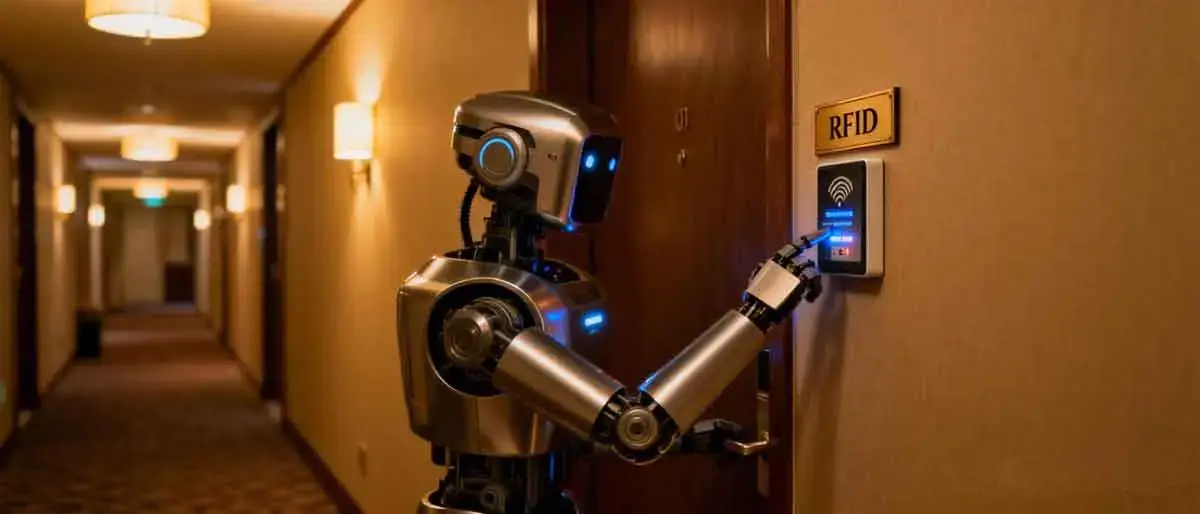
Hotel Room Service Faces Dual Challenges of Rising Labor Costs and Response Efficiency
The Average Labor Cost in the Global Hotel Industry Accounts for Over 45% of Operating Expenses and Continues to Rise
The global hotel industry is currently grappling with unprecedented operational pressures, among which the dual challenges of rising labor costs and inefficient service response have become the most prominent pain points for hoteliers. A key indicator of this pressure is the soaring labor cost: the average labor cost in the global hotel industry now accounts for more than 45% of total operating expenses, and this proportion continues to climb year by year. This upward trend is driven by a combination of factors, including increasing minimum wage standards in various regions, growing demand for better employee benefits, and the ongoing labor shortage in the service sector. For many hotel brands, especially mid-to-high-end ones that prioritize service quality, the need to maintain a sufficient number of well-trained staff has become a heavy financial burden. This financial pressure often forces hotels to make trade-offs between cost control and service quality, which can ultimately affect guest satisfaction. RFID Hotel Key Cards have emerged as an innovative technological solution to alleviate these challenges by enabling precise task scheduling for hotel robots, reducing reliance on manual labor, and optimizing the allocation of human resources, thereby helping hotels achieve a balance between cost efficiency and service excellence.
The Average Response Time for Room Service Reaches 28 Minutes, Making It Difficult to Meet Guests’ Immediate Needs
In addition to rising labor costs, the inefficiency of room service response has become another critical issue plaguing the hotel industry. Statistics show that the average response time for hotel room service currently stands at 28 minutes, a figure that falls far short of the immediate needs of modern guests. Today’s travelers, accustomed to the speed and convenience of digital services, expect prompt responses to their requests, whether it is for additional towels, a bottle of water, or maintenance services. A prolonged wait time can significantly undermine the guest experience, leading to negative reviews, reduced customer loyalty, and even lost business. The main reasons for the long response time include the lack of real-time visibility into guest needs, inefficient manual task assignment processes, and the time wasted by staff on traveling between different floors and rooms. RFID Hotel Key Cards address this inefficiency by providing real-time data on guest presence and room status, which serves as the foundation for automated and precise task scheduling for hotel robots. By enabling robots to respond to guest requests quickly and accurately, RFID Hotel Key Cards help hotels shorten service response times and meet the immediate needs of guests.
Room Attendants Walk an Average of Over 8 Kilometers Per Day, and High-Intensity Labor Leads to High Staff Turnover
The high-intensity nature of room attendant work is another major challenge facing the hotel industry, contributing to persistently high staff turnover rates. On average, room attendants walk more than 8 kilometers per day, carrying heavy cleaning supplies and linens between multiple rooms and floors. This physical exhaustion, combined with long working hours and the pressure to meet strict cleaning standards, makes the job extremely demanding. As a result, the staff turnover rate in the hotel housekeeping department remains consistently high across the globe, with many employees leaving within the first six months of employment. High turnover not only increases recruitment and training costs for hotels but also leads to inconsistencies in service quality, as new staff may lack the experience and skills of their predecessors. This vicious cycle further exacerbates the operational challenges faced by hotels. RFID Hotel Key Cards help mitigate this issue by enabling hotel robots to take over a significant portion of the repetitive and labor-intensive tasks, such as linen delivery, amenities replenishment, and waste collection. By reducing the physical burden on room attendants, RFID Hotel Key Cards improve employee satisfaction, lower turnover rates, and ensure more consistent service quality.
RFID Key Cards Build a Real-Time Decision-Making Foundation from Guest Authorization to Robot Scheduling
When a Guest Inserts the Key Card into the Power Slot, the System Determines That the Guest Has Entered the Room and Sets the Service Permission to “Do Not Disturb”
RFID Hotel Key Cards serve as the core of a real-time decision-making system that connects guest behavior with hotel robot scheduling, creating a seamless and intelligent service ecosystem. The first link in this ecosystem is the automatic identification of guest presence through the key card. When a guest inserts their RFID Hotel Key Card into the power slot of the room, the embedded RFID chip in the card immediately communicates with the hotel’s central management system. This communication triggers the system to automatically determine that the guest has entered the room and updates the room status to “occupied.” Simultaneously, the system sets the service permission to “Do Not Disturb” by default, respecting the guest’s privacy and need for quiet. This automatic status update eliminates the need for manual input by staff and ensures that the hotel does not send unnecessary service notifications or dispatch robots to the room while the guest is present. The precision of this RFID-based identification ensures that the system can accurately reflect the real-time state of the room, laying a solid foundation for subsequent robot task scheduling.
After the Guest Removes the Card and Leaves, the System Automatically Identifies That the Room Enters the “Serviceable” State and Predicts Service Needs Based on Sensor Data
When the guest removes the RFID Hotel Key Card from the power slot to leave the room, the system immediately detects the card’s removal and updates the room status to “serviceable.” This transition is critical for initiating proactive service scheduling. To further enhance the precision of service, the system integrates data from various sensors installed in the room, such as occupancy sensors, temperature sensors, and mini-bar sensors, to predict the specific service needs of the room. For example, if the sensors detect that the linen in the room is used, the system may predict a need for linen replacement; if the mini-bar sensors show that certain items are running low, the system will flag a replenishment requirement. This predictive capability transforms the hotel’s service model from a passive, request-driven one to an active, needs-predicted one. By leveraging RFID Hotel Key Cards to trigger the “serviceable” state and combining it with sensor data, the system can anticipate guest needs before they even make a request, enabling hotel robots to be dispatched proactively and improving overall service efficiency.
The Robot Task Scheduling Center Generates Optimal Work Orders in Real Time Based on the Key Card Status and Predicted Needs of Each Room
The robot task scheduling center, the brain of the hotel’s automated service system, relies heavily on the real-time data provided by RFID Hotel Key Cards to generate optimal work orders. The scheduling center continuously collects data on the key card status (inserted or removed) of each room, as well as the predicted service needs generated by the system. Using advanced algorithms, the center then analyzes this data to prioritize tasks, allocate resources, and determine the most efficient routes for hotel robots. For example, if multiple rooms on the same floor enter the “serviceable” state simultaneously, the scheduling center will group the tasks to minimize the robot’s travel time. If a guest makes an urgent request (such as needing medicine), the center will adjust the priority of that task and dispatch a robot immediately. This real-time, data-driven scheduling ensures that hotel robots operate at maximum efficiency, reducing idle time and ensuring that guest needs are met in a timely manner. Without the accurate and real-time data provided by RFID Hotel Key Cards, this level of precise task scheduling would be impossible to achieve.
Intelligent Algorithms Enable Accurate Prediction of Room Service Needs and Efficient Robot Dispatching
By Analyzing the Frequency and Time Pattern of Guests’ Card Insertion and Removal, the System Intelligently Predicts the Intensity of Cleaning Needs After Extended Stay or Check-Out
The integration of RFID Hotel Key Cards with intelligent algorithms enables hotels to move beyond reactive service to proactive, predictive service. One of the key applications of this integration is the accurate prediction of cleaning needs. The system continuously records and analyzes the frequency and time pattern of guests’ card insertion and removal. For example, if a guest inserts and removes the RFID Hotel Key Card multiple times a day, the system may infer that the guest is spending a lot of time outside the room, which may mean that the room requires less frequent cleaning. Conversely, if a guest keeps the card inserted for long periods (indicating an extended stay), the system will predict a higher intensity of cleaning needs, such as more frequent linen changes and thorough cleaning. For check-out rooms, the system can predict the exact timing of the cleaning need based on the guest’s card removal time (which typically indicates check-out). This intelligent prediction allows the robot task scheduling center to dispatch cleaning robots or prepare human cleaners in advance, ensuring that rooms are cleaned and ready for the next guest as quickly as possible. By optimizing the timing and intensity of cleaning tasks, RFID Hotel Key Cards and intelligent algorithms help hotels improve operational efficiency and guest satisfaction.
Automatically Inventory the Consumable Data in the Robot’s Built-In Minibar and Trigger Automatic Replenishment Tasks When Inventory Is Below the Threshold
Another critical application of intelligent algorithms in conjunction with RFID Hotel Key Cards is the automatic inventory and replenishment of minibar consumables. Many modern hotel robots are equipped with built-in mini fridges or storage compartments that carry common minibar items such as snacks, beverages, and toiletries. When a robot enters a room (triggered by the “serviceable” status indicated by the RFID Hotel Key Card), it uses built-in sensors to automatically inventory the existing consumables in the room’s minibar. The robot then transmits this inventory data to the central system, which compares it against a preset threshold. If any item (such as a bottle of water or a snack) is below the threshold, the system immediately triggers an automatic replenishment task. The robot task scheduling center then dispatches a robot loaded with the required items to the room. This automated process eliminates the need for manual inventory checks by staff, which are not only time-consuming but also prone to errors. By ensuring that minibar items are always fully stocked, RFID Hotel Key Cards and intelligent algorithms enhance the guest experience while reducing the workload on room attendants.
After the Robot Arrives at the Designated Floor, It Performs Meter-Level Precise Positioning and Path Navigation by Reading RFID Location Tags in the Corridor
The precise positioning and navigation of hotel robots are essential for ensuring efficient and reliable service, and this is made possible by the integration of RFID Hotel Key Cards with RFID location tagging technology. After the robot is dispatched to a designated floor based on the data from RFID Hotel Key Cards, it begins its navigation by reading RFID location tags installed at regular intervals in the corridor. These tags contain unique location information that the robot uses to determine its exact position with meter-level precision. This precise positioning allows the robot to navigate through narrow corridors, avoid obstacles, and locate the target room accurately. Unlike GPS, which is ineffective indoors, RFID location tagging provides reliable positioning data even in complex indoor environments. The robot’s path navigation algorithm uses real-time data from the RFID tags to adjust its route dynamically, ensuring that it reaches the target room in the shortest possible time. This seamless integration of RFID Hotel Key Cards (for task triggering) and RFID location tags (for navigation) ensures that hotel robots can operate efficiently and reliably, delivering services to guests with precision.
Marriott Hotel Group’s Service Robot Network Has Achieved Large-Scale and High-Coverage Application
Over 1,200 Hotels Under the Group Have Deployed Room Service Robots Driven by the Key Card System
The effectiveness of RFID Hotel Key Cards in enabling precise task scheduling for hotel robots has been validated by large-scale, high-coverage applications in major hotel groups, most notably Marriott Hotel Group. As a global leader in the hospitality industry, Marriott has recognized the transformative potential of this technology and has deployed room service robots driven by the RFID Hotel Key Card system in over 1,200 of its hotels worldwide. This large-scale deployment spans multiple brands under the Marriott umbrella, including Marriott Hotels, Sheraton, Courtyard, and Residence Inn, covering a diverse range of guest segments from business travelers to family vacationers. The deployment process involved integrating RFID Hotel Key Cards with the group’s existing property management system (PMS) and robot task scheduling platform, ensuring seamless data flow and interoperability. The successful implementation of this technology across such a large number of hotels demonstrates its scalability and adaptability to different hotel environments and operational models. For Marriott, the deployment of these robots has not only improved operational efficiency but also enhanced the brand’s image as an innovator in hospitality service.
Robots Can Independently Respond to 85% of Routine Room Service Requests, Including Delivery, Linen Collection, and Minibar Replenishment
One of the most impressive outcomes of Marriott’s deployment of RFID Hotel Key Card-driven robots is the high level of autonomy these robots achieve in handling routine room service requests. Data from the group shows that the robots can independently respond to 85% of routine room service requests, covering a wide range of tasks such as delivering towels, toiletries, snacks, and beverages; collecting used linen and trash; and replenishing minibar consumables. This high level of task coverage has significantly reduced the workload on manual staff, allowing them to focus on more complex and personalized service tasks that require human interaction, such as handling special guest requests and providing local recommendations. The robots’ ability to handle routine tasks efficiently is directly attributed to the precise task scheduling enabled by RFID Hotel Key Cards, which ensures that robots are dispatched to the right room at the right time with the right supplies. By taking over repetitive, time-consuming tasks, the robots have helped Marriott improve service efficiency and consistency, while also reducing the physical burden on room attendants.
The Average Response Time for Robot Service Is Reduced to 9 Minutes, and the Relevant Score in Guest Satisfaction Has Increased by 22%
The deployment of RFID Hotel Key Card-driven robots has also led to significant improvements in service response time and guest satisfaction at Marriott hotels. Prior to the deployment of robots, the average response time for routine room service requests was around 28 minutes. With the robots in operation, this average response time has been reduced to just 9 minutes—a reduction of nearly 68%. This dramatic improvement in response time has directly translated into higher guest satisfaction: the relevant score in guest satisfaction surveys (related to room service efficiency) has increased by 22%. Guests consistently praise the speed and convenience of robot service, noting that their immediate needs are met quickly and without hassle. This increase in guest satisfaction has had a positive impact on Marriott’s brand reputation, leading to more positive online reviews, higher customer loyalty, and increased repeat business. The data from Marriott’s deployment clearly demonstrates that RFID Hotel Key Cards, by enabling precise task scheduling for hotel robots, can deliver tangible benefits in terms of service efficiency and guest satisfaction.
Multi-Layer Privacy Protection Mechanisms and Personalized Preference Settings Ensure Guest Control
Before Performing Tasks, the Robot Confirms the Unoccupied State Through Room Sensors and Operates Silently Throughout the Process
While the integration of RFID Hotel Key Cards and hotel robots brings significant efficiency gains, Marriott and other hotel brands prioritize guest privacy and comfort, implementing multi-layer privacy protection mechanisms. One of the key mechanisms is the robot’s pre-task occupancy check. Before entering a room to perform a task (triggered by the “serviceable” status from the RFID Hotel Key Card), the robot uses built-in sensors to scan the room and confirm that it is unoccupied. This ensures that the robot does not intrude on the guest’s privacy. Additionally, the robot is designed to operate silently throughout the entire task process, with noise levels kept below 30 decibels—quieter than a normal conversation. This silent operation ensures that even if the guest is in an adjacent area (such as the bathroom), they will not be disturbed. These privacy protection measures are critical for gaining guest trust and acceptance of robot service. By combining the precise room status data from RFID Hotel Key Cards with occupancy sensors and silent operation, hotels can ensure that robot service is both efficient and respectful of guest privacy.
Guests Can Preset “Robot Service Time Windows” via TV or Mobile App, Such as Allowing Entry Only Between 10 AM and 12 PM
To further enhance guest control over robot service, hotels equipped with RFID Hotel Key Card-driven robot systems allow guests to set personalized service preferences, including “robot service time windows.” Guests can access these settings via the in-room TV or the hotel’s mobile app, where they can specify the exact times during which they are willing to receive robot service. For example, a guest may choose to allow robot entry only between 10 AM and 12 PM, ensuring that the service does not interfere with their work, rest, or other activities. The system integrates these personalized preferences with the data from RFID Hotel Key Cards: even if the key card indicates that the room is in “serviceable” status, the robot will not be dispatched to the room outside the preset time window. This level of personalization gives guests a sense of control over their hotel experience, reducing any potential anxiety about robot intrusion. By combining technological efficiency with personalized guest control, RFID Hotel Key Cards help hotels deliver a more human-centric service experience.
All Cameras Equipped on the Robot Adopt Real-Time Pixelation Processing, Only Recognizing Object Contours Without Capturing Any Identifiable Images
Another critical layer of privacy protection is the design of the robots’ imaging systems. Many hotel robots are equipped with cameras for obstacle avoidance and navigation, but these cameras adopt real-time pixelation processing technology to protect guest privacy. This technology ensures that the cameras only recognize the contours of objects (such as walls, furniture, and obstacles) and do not capture any identifiable images of guests or their personal belongings. The pixelation processing is done in real time on the robot itself, meaning that no unprocessed images are ever transmitted or stored. This eliminates the risk of guest privacy being compromised by camera data. The integration of this privacy-focused camera technology with the precise task scheduling enabled by RFID Hotel Key Cards ensures that robot service is not only efficient but also fully compliant with global privacy regulations, such as the EU’s General Data Protection Regulation (GDPR). By prioritizing privacy protection in every aspect of the system design, hotels can build trust with guests and encourage wider acceptance of robot service.
Multi-Agent Collaborative System Achieves Efficient Conflict-Free Operation Through Dynamic Path Planning
The Central Scheduling System Real-Time Monitors the Location, Task Status, and Battery Level of All Robots
The efficient operation of a large fleet of hotel robots requires a sophisticated multi-agent collaborative system, which relies on real-time data from RFID Hotel Key Cards and other sensors to achieve dynamic path planning and conflict-free operation. At the core of this system is the central scheduling platform, which real-time monitors the location, task status, and battery level of every robot in the fleet. The location data is obtained through the integration of RFID location tags (as mentioned earlier) and the robot’s internal navigation system, while the task status and battery level are transmitted by the robots to the central platform at regular intervals. This real-time monitoring allows the central system to have a comprehensive, up-to-date view of the entire robot fleet, enabling it to make informed scheduling decisions. For example, if a robot’s battery level drops below a certain threshold, the system will prioritize dispatching it to a charging station. If a robot is delayed due to an obstacle, the system will adjust the schedules of other robots to minimize the impact on service. This real-time monitoring and adjustment capability ensures that the robot fleet operates at maximum efficiency.
Allocate Right of Passage and Elevator Usage Rights to Different Tasks (Emergency Delivery vs. Scheduled Replenishment) Through Dynamic Priority Algorithms
To ensure that critical guest needs are met promptly, the central scheduling system uses dynamic priority algorithms to allocate right of passage and elevator usage rights to different tasks. Tasks are categorized by priority level: for example, emergency deliveries (such as medicine or first-aid supplies) are assigned the highest priority, while scheduled minibar replenishment is assigned a lower priority. When multiple robots need to use the same corridor or elevator, the system uses the priority level to determine the order of passage. High-priority robots are given precedence, ensuring that they can reach their destination as quickly as possible. The dynamic nature of these algorithms means that priorities can be adjusted in real time based on changing circumstances—for example, if a guest makes an urgent request while a robot is performing a low-priority task, the system can reassign the robot’s priority. This priority-based allocation of resources is made possible by the real-time task data generated by the RFID Hotel Key Card system, which provides the central scheduling platform with the information needed to make quick, accurate priority decisions. By ensuring that critical tasks are prioritized, the system enhances the reliability and responsiveness of robot service.
When Multiple Robots Need to Enter the Same Area, the System Will Automatically Stagger Their Arrival Times or Allocate Different Service Entrances
To avoid conflicts and congestion when multiple robots need to enter the same area (such as a narrow corridor, elevator, or guest room doorway), the central scheduling system uses dynamic path planning to automatically stagger their arrival times or allocate different service entrances. For example, if two robots are dispatched to adjacent rooms on the same floor, the system will adjust their departure times so that they arrive at the floor a few minutes apart, preventing them from blocking each other in the corridor. If multiple robots need to use the same elevator, the system will coordinate their elevator calls to ensure that the elevator is used efficiently without overcrowding. In cases where a hotel has multiple service entrances to a room (such as a main door and a service door), the system may allocate different entrances to different robots to avoid conflicts. This conflict-free operation is critical for maintaining the efficiency of the robot fleet and ensuring that service is not delayed by robot congestion. The precision of this coordination is made possible by the real-time data provided by RFID Hotel Key Cards, which allows the system to accurately predict the timing and location of each robot’s task. By enabling efficient, conflict-free operation, the multi-agent collaborative system ensures that the full potential of RFID Hotel Key Card-driven robot service is realized.
Why Choose Mytopband?
- Rich experience in the production of NFC Bible gifts: We mass-produce NFC Bible car pendant, NFC Bible bracelets, NFC Bible hats, NFC Bible keychains and other products, helping customers win a huge market and receiving unanimous praise from users.
- Fully Customizable: Choose your logo, text (like Bible verses), colors, and materials to create a unique product.
- Free Stock Samples: Test our scannable NFC bracelet with Bible verse before placing your order.
- Low MOQ as 500pcs: Perfect for startups and small businesses.

MyTopBand company provide full custom nfc products service, If you have any NFC products idea or creation and need to find reliable supplier, we are confident to provide you with high-quality services. Please find us: www.mytopband.com, or send message to info@mytopband.com, we will reply you within 24 hours.