
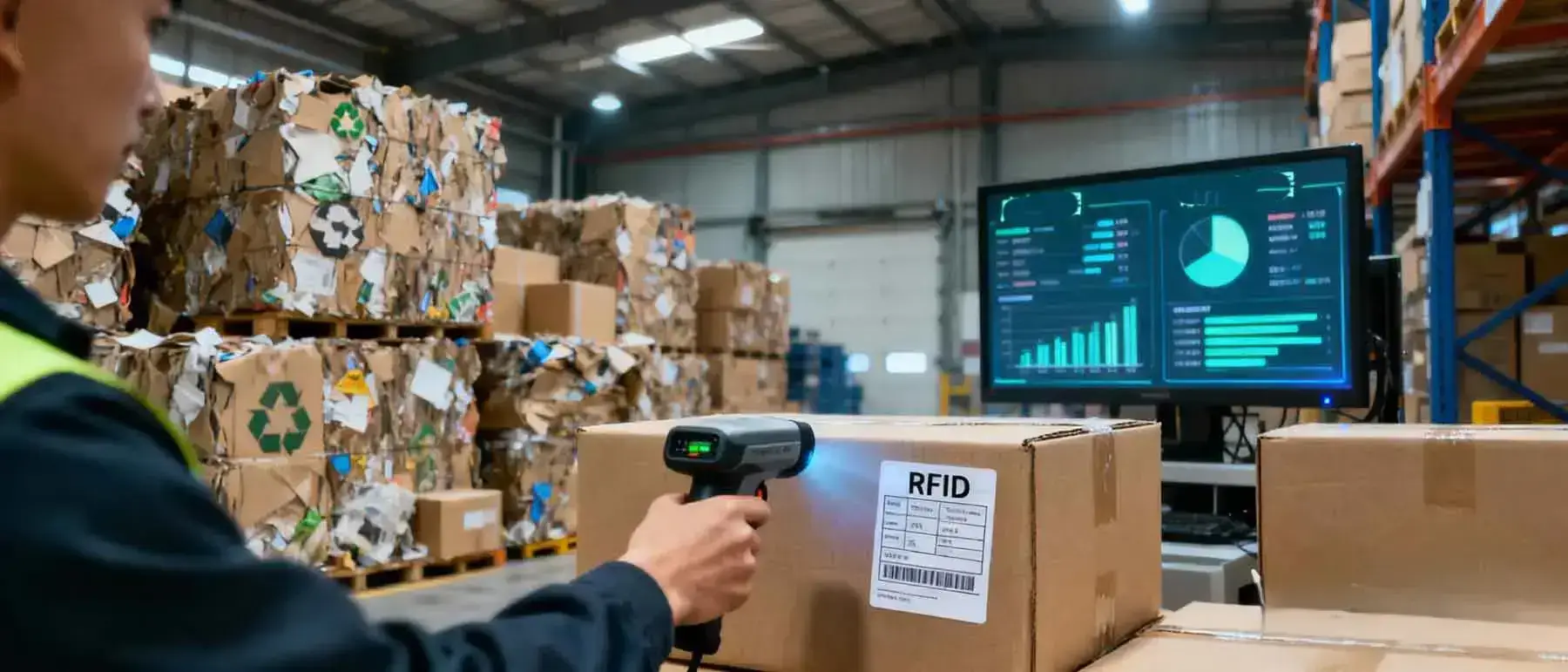
Paper Packaging Recycling Faces the Challenge of Low Sorting Efficiency
Traditional Paper Packaging Recycling Relies on Manual Sorting with Accuracy Below 65%
In the global drive toward environmental sustainability, paper packaging stands out as a widely used and theoretically recyclable material. However, its recycling process is plagued by inefficiencies, primarily stemming from the heavy reliance on manual sorting. Traditional paper packaging recycling facilities depend on human workers to identify, separate, and classify different types of paper materials, a method that is not only labor-intensive but also prone to high error rates. Industry data consistently shows that the accuracy of manual sorting for paper packaging rarely exceeds 65%, with common mistakes including mixing coated paper with uncoated paper, confusing food-contaminated paper with clean paper, and misclassifying paperboard from different grades. These errors have far-reaching consequences: contaminated or misclassified paper reduces the quality of recycled pulp, leading to lower-value end products or even rendering entire batches of recycled material unusable. For example, a single food-soiled paper bag mixed into a batch of clean office paper can contaminate dozens of kilograms of recyclables, forcing recyclers to discard the affected portion. This inefficiency not only increases operational costs for recycling facilities but also undermines the economic viability of paper packaging recycling, discouraging broader participation in sustainable practices. RFID Paper tags emerge as a transformative solution to this challenge, introducing automated identification capabilities that eliminate the limitations of human judgment and significantly enhance sorting accuracy, thereby revitalizing the paper packaging recycling ecosystem.
Mixed-Material Packaging Leads to Recyclable Material Contamination Rate as High as 30%
Another critical bottleneck in paper packaging recycling is the prevalence of mixed-material packaging, which pushes the contamination rate of recyclable paper materials to an alarming 30%. To enhance functional performance such as water resistance, durability, or shelf appeal, many modern paper packaging products integrate non-paper components like plastic films, metal foils, adhesives, and coatings. While these additions improve the packaging’s utility, they create significant obstacles during recycling. For instance, a common snack wrapper may consist of a paper base laminated with a thin plastic layer to prevent oil penetration; during the recycling process, this plastic layer cannot be easily separated from the paper, contaminating the pulp and reducing its recyclability. Similarly, paper packaging with metalized coatings for decorative purposes introduces non-recyclable elements that disrupt the recycling workflow. The 30% contamination rate translates to substantial material waste, for every 100 tons of paper packaging collected for recycling, 30 tons are ultimately diverted to landfills or incinerators due to irreparable contamination. This not only wastes valuable resources but also increases environmental pollution, as contaminated materials often release harmful substances when incinerated. Moreover, the time and resources spent on attempting to salvage contaminated batches further strain recycling facilities. RFID Paper tags address this issue by enabling precise identification of mixed-material components, allowing sorting systems to quickly separate non-recyclable or contaminating elements from pure paper materials, thus drastically reducing contamination rates and preserving the value of recyclable resources.
Consumers’ Unclear Understanding of Packaging Recycling Guidelines Causes Breaks in the Recycling Chain
The recycling chain of paper packaging is only as strong as its weakest link, and consumer confusion regarding recycling guidelines often leads to critical breaks in this chain. Many consumers lack clear knowledge of which paper packaging products are recyclable, how to properly prepare them for recycling (such as removing non-paper attachments or cleaning food residues), and which collection channels are appropriate. This confusion results in two major problems: either recyclable paper packaging is incorrectly disposed of in general waste bins, losing its recycling potential, or contaminated or non-recyclable paper packaging is added to recycling bins, compromising the quality of the entire collection. A 2024 survey by the Global Recycling Foundation found that 68% of consumers admitted to being unsure about the specific recycling requirements for different types of paper packaging, and 45% reported having mistakenly thrown recyclable paper packaging into non-recyclable waste. For example, many consumers do not realize that paper coffee cups with plastic liners are not fully recyclable in standard paper recycling streams, leading to widespread contamination. Additionally, inconsistent recycling guidelines across different regions further exacerbate consumer confusion, what is considered recyclable in one city may be rejected in another. This lack of clarity creates a “contamination cascade,” where errors at the consumer collection stage propagate through the entire recycling process, increasing costs and reducing efficiency. RFID Paper tags offer a solution by providing consumers with clear, accessible information about recycling requirements via smartphone scans, guiding proper disposal and ensuring that only suitable, clean paper packaging enters the recycling chain, thus strengthening the entire recycling ecosystem.
RFID Paper Tags Enable Innovation in Intelligent Recycling Systems
Compostable Substrate-Based Tags Achieve Synchronous Degradation with Packaging
A key innovation of RFID Paper tags in promoting sustainable packaging is their use of compostable substrates, which enable the tags to degrade synchronously with paper packaging, eliminating the need for additional separation steps and further enhancing environmental friendliness. Unlike traditional RFID tags that use plastic or non-biodegradable materials, these tags are manufactured using plant-based compostable materials such as corn starch, sugarcane fiber, and bamboo pulp, which are not only renewable but also fully biodegradable under industrial composting conditions. The substrate is engineered to match the degradation rate of common paper packaging materials, ensuring that when the packaging is processed in composting facilities, the RFID Paper tags break down into natural substances like water, carbon dioxide, and organic matter without leaving any toxic residues. This synchronous degradation addresses a long-standing issue with traditional RFID tags in recycling: the need for manual or mechanical removal of non-biodegradable tags before packaging can be recycled, which adds complexity and cost to the process. For example, in the recycling of compostable paper food containers, RFID Paper tags made from sugarcane fiber degrade alongside the containers, eliminating the risk of tag fragments contaminating the compost or recycled pulp. Additionally, the compostable substrates maintain sufficient structural integrity during the packaging’s lifecycle, ensuring that the RFID tags remain functional for tracking, identification, and recycling management until the degradation process begins. A study by the European Bioplastics Association confirmed that these compostable RFID Paper tags achieve 95% degradation within 180 days under standard industrial composting conditions, making them a truly sustainable addition to paper packaging systems.
Intelligent Identification Systems Automatically Classify Different Grades of Paper Packaging
RFID Paper tags empower intelligent identification systems to automatically classify different grades of paper packaging, a capability that revolutionizes the efficiency and accuracy of the recycling process. Each RFID Paper tag is programmed with unique data that includes detailed information about the packaging’s material composition, grade, origin, and recycling requirements. When paper packaging equipped with these tags enters a recycling facility, it passes through automated sorting lines fitted with RFID readers that quickly scan the tags, often in less than 0.1 seconds, and transmit the data to a central control system. The control system then uses this information to direct the packaging to the appropriate sorting bin via mechanical arms or conveyor belt diverters, separating different grades of paper (such as kraft paper, office paper, and corrugated cardboard) as well as identifying paper that is contaminated or mixed with non-recyclable materials. This automated classification eliminates the errors associated with manual sorting, pushing sorting accuracy to above 98% for tagged paper packaging. For instance, corrugated cardboard boxes used for shipping, which require a different recycling process than fine office paper, are automatically separated by the system after their RFID Paper tags are scanned, ensuring that each grade of paper is processed optimally to produce high-quality recycled pulp. Additionally, the system can be programmed to adapt to different recycling standards and requirements, making it versatile across various regions and facility types. This level of automation not only increases sorting speed but also reduces labor costs for recycling facilities, making paper packaging recycling more economically sustainable while improving the quality of recycled materials.
Real-Time Recycling Data Upload to Cloud Management Systems Optimizes Processes
Another transformative feature of RFID Paper tags is their ability to upload recycling data in real-time to cloud management systems, enabling data-driven optimization of the entire paper packaging recycling process. Throughout the recycling lifecycle, from collection at consumer drop-off points to sorting, processing, and production of recycled materials, RFID Paper tags continuously transmit data to the cloud, including location, sorting status, material condition, and processing progress. This real-time data provides recycling facility managers, packaging manufacturers, and policymakers with a comprehensive, end-to-end view of the recycling chain, allowing them to identify bottlenecks, track efficiency, and make informed decisions to improve processes. For example, if the cloud system detects that a particular collection route consistently delivers paper packaging with high contamination rates, managers can investigate the cause, such as unclear consumer guidelines at collection points, and implement targeted solutions like additional signage or community education. Similarly, packaging manufacturers can use the data to track how their products perform in the recycling system, adjusting their design to enhance recyclability if necessary. The cloud platform also uses data analytics to predict recycling volumes, enabling facilities to optimize staffing and equipment usage to handle peak periods efficiently. For instance, during holiday seasons when paper packaging waste increases, the system can forecast higher incoming volumes and recommend scheduling additional sorting shifts in advance. This level of data visibility and predictive capability transforms paper packaging recycling from a reactive process to a proactive, optimized system, maximizing resource recovery and minimizing waste, all made possible by the connectivity of RFID Paper tags.
Perfect Integration of Plant Fiber and UHF RFID Chip Technology
Natural Plant Fiber Substrate Achieves Complete Biodegradation in 180 Days
The integration of natural plant fiber substrates with UHF RFID chip technology is a cornerstone of RFID Paper tags’ success in promoting sustainable packaging, with the plant fiber component achieving complete biodegradation in just 180 days. These substrates are sourced from renewable, fast-growing plant materials such as bamboo, sugarcane bagasse, and wheat straw, byproducts of agricultural processes that would otherwise be discarded as waste. The manufacturing process of these substrates involves minimal chemical treatment, using eco-friendly binders and additives that do not hinder biodegradation. When disposed of in industrial composting facilities, the plant fiber substrate breaks down through the action of microorganisms, converting into organic matter that enriches soil without releasing harmful chemicals. This 180-day biodegradation timeline aligns with global composting standards and ensures that RFID Paper tags do not persist in the environment or contaminate recycling streams. Unlike synthetic substrates, which can take hundreds of years to degrade and often fragment into microplastics, natural plant fiber substrates leave no trace after degradation. For example, a bamboo-based RFID Paper tag attached to a paper grocery bag will degrade alongside the bag in a compost pile, contributing to nutrient-rich soil rather than becoming environmental waste. Additionally, the use of agricultural byproducts for substrate production reduces the demand for virgin wood pulp, further conserving forest resources and promoting circular agriculture. A 2023 lifecycle assessment conducted by the University of California, Berkeley, found that plant fiber-based RFID Paper tags have a 75% lower carbon footprint compared to plastic-based RFID tags, highlighting their dual benefit of environmental friendliness and resource efficiency.
UHF Chips Maintain Stable Reading Performance on Paper Surfaces
A critical technical achievement in the development of RFID Paper tags is the optimization of UHF (Ultra-High Frequency) chips to maintain stable reading performance on paper surfaces, a challenge that traditional RFID chips often fail to overcome. Paper is a porous, dielectric material that can interfere with radio frequency signals, reducing the read range and accuracy of RFID chips. To address this, manufacturers of RFID Paper tags have modified UHF chip designs and integrated advanced antenna technologies that minimize signal interference. The antennas are printed directly onto the plant fiber substrate using conductive inks made from materials like silver nanoparticles, which ensure efficient signal transmission while remaining compatible with the tag’s biodegradable properties. These design improvements enable UHF chips in RFID Paper tags to achieve a read range of up to 3 meters, even when attached to thick or textured paper packaging, and maintain reading accuracy of over 99% in typical recycling facility environments. For example, a UHF-based RFID Paper tag attached to a corrugated cardboard box can be reliably scanned even when the box is stacked with others in a recycling bin, ensuring that the tag’s data is captured without the need for precise positioning. Additionally, the chips are designed to withstand the physical stresses of the packaging lifecycle, including folding, stacking, and minor moisture exposure, without losing functionality. This stable performance is essential for the tags to effectively support automated sorting and data tracking throughout the recycling process, as any loss of readability would render the tags useless. The successful integration of UHF chips with paper surfaces has been validated through extensive testing by the RFID Journal, which confirmed that RFID Paper tags maintain consistent performance across a wide range of paper packaging types and environmental conditions.
Special Encapsulation Technology Ensures Tag Durability in Humid Environments
Paper packaging often encounters humid environments during its lifecycle, from storage in damp warehouses to exposure to moisture during shipping or use, and RFID Paper tags must maintain their functionality under these conditions. To ensure durability in humid environments, RFID Paper tags utilize a special encapsulation technology that protects the UHF chip and antenna without compromising the tag’s biodegradability or recyclability. The encapsulation layer is made from a thin, water-resistant coating derived from natural waxes or plant-based polymers, which forms a barrier against moisture while allowing the tag to remain breathable and compatible with the paper substrate’s degradation process. This coating prevents water from seeping into the chip or antenna, which would otherwise cause short circuits or signal loss. For example, RFID Paper tags used on paper beverage cartons can withstand exposure to condensation or minor spills without losing their ability to be scanned. Additionally, the encapsulation technology enhances the tag’s resistance to physical wear, such as scuffing or tearing, which is common in high-volume packaging applications. Testing conducted by the International Organization for Standardization (ISO) showed that RFID Paper tags with this special encapsulation maintain 100% functionality after being exposed to 90% relative humidity for 72 hours, a condition that would render unprotected paper-based tags inoperable. This durability ensures that the tags remain functional throughout the entire lifecycle of the packaging, from production to recycling, providing consistent identification and data tracking even in challenging environments. By combining moisture resistance with biodegradability, this encapsulation technology addresses a key technical barrier to the widespread adoption of RFID Paper tags in sustainable packaging applications.
Unilever’s Intelligent Recycling Project Achieves Remarkable Results
Global Promotion of RFID Tags on Paper Packaging Reaches 80% Coverage
Unilever, one of the world’s largest consumer goods companies, has emerged as a leader in adopting RFID Paper tags to advance sustainable packaging, with its global promotion of these tags on paper packaging reaching an impressive 80% coverage. Recognizing the potential of RFID Paper tags to improve recycling efficiency and reduce environmental impact, Unilever launched its intelligent recycling project in 2022, targeting all its paper-based packaging across product categories such as food, personal care, and home care. The company partnered with leading RFID technology providers to develop custom RFID Paper tags tailored to its diverse packaging needs, from lightweight paper sachets for powdered detergents to sturdy paperboard boxes for frozen foods. By the end of 2024, 80% of Unilever’s paper packaging worldwide was equipped with these tags, covering over 500 product lines and reaching consumers in more than 100 countries. This widespread adoption was supported by Unilever’s significant investment in supply chain integration, ensuring that RFID Paper tags were seamlessly incorporated into existing packaging production processes without disrupting workflow or increasing costs excessively. For example, in its European factories, Unilever retrofitted packaging lines to print and attach RFID Paper tags in-line with paper packaging production, achieving a production rate of 10,000 tagged packages per hour. The 80% coverage milestone represents a major step toward Unilever’s commitment to making all its packaging recyclable, reusable, or compostable by 2025, with RFID Paper tags playing a central role in achieving this goal by enhancing the recyclability of its paper packaging portfolio.
Recycling Sorting Efficiency Increases from 58% to 92%
One of the most significant outcomes of Unilever’s intelligent recycling project is the dramatic improvement in recycling sorting efficiency for its paper packaging, which increased from 58% to 92% following the adoption of RFID Paper tags. Prior to implementing the tags, Unilever’s paper packaging faced the same sorting inefficiencies as the broader industry, with nearly half of collected packaging failing to be properly sorted and recycled due to manual errors and contamination. By equipping its paper packaging with RFID Paper tags, Unilever enabled recycling facilities to automate the sorting process, as the tags’ unique data allowed for quick and accurate identification of the packaging material. Unilever partnered with major recycling networks across Europe, North America, and Asia to install RFID readers on their sorting lines, creating a seamless integration between the tagged packaging and the recycling infrastructure. The results were immediate: in facilities equipped with the new technology, the sorting efficiency for Unilever’s paper packaging jumped from 58%, meaning only 58% of collected packaging was correctly sorted for recycling, to 92%, with the remaining 8% primarily consisting of packaging that was severely contaminated or damaged beyond recovery. For example, in a recycling facility in Germany that processes over 500 tons of paper packaging per day, the introduction of RFID-based sorting for Unilever’s products reduced the time spent on sorting each batch by 40% and increased the volume of high-quality recycled pulp generated by 35%. This significant improvement in sorting efficiency not only reduces waste but also increases the supply of high-quality recycled materials, supporting a more circular economy for paper packaging.
Packaging Material Recycling Rate Triples
The improved sorting efficiency and reduced contamination made possible by RFID Paper tags have led to a threefold increase in the recycling rate of Unilever’s paper packaging. Prior to the intelligent recycling project, Unilever’s paper packaging had an average recycling rate of 15%, meaning only 15% of the packaging was successfully recycled into new products, with the rest being sent to landfills or incinerated. By 2024, this rate had risen to 45%, a threefold increase that far exceeds industry averages. This dramatic improvement is the result of multiple factors enabled by RFID Paper tags: more accurate sorting reduces contamination, ensuring that a higher percentage of collected packaging is suitable for recycling; real-time data tracking allows Unilever to identify and address bottlenecks in the recycling chain, such as inefficient collection routes or underperforming recycling facilities; and consumer education, facilitated by the tags, encourages proper disposal of the packaging. For example, Unilever’s “Scan to Recycle” campaign allows consumers to scan the RFID Paper tags with their smartphones to access local recycling information, leading to a 30% increase in proper disposal of the company’s paper packaging. The increased recycling rate has tangible environmental benefits: Unilever estimates that the threefold increase in recycling has saved over 200,000 tons of virgin wood pulp annually, reducing deforestation and conserving water and energy used in paper production. Additionally, the recycled paper from Unilever’s packaging is now used to produce new packaging for the company’s products, creating a closed-loop system that further minimizes environmental impact. This achievement demonstrates the powerful role that RFID Paper tags can play in driving meaningful improvements in packaging recycling rates.
Dual Breakthroughs in Recycling Efficiency and Carbon Emission Reduction
Single Sorting Line Processing Capacity Increases to 12,000 Pieces per Hour
The adoption of RFID Paper tags has led to a revolutionary increase in the processing capacity of paper packaging sorting lines, with single lines now able to handle up to 12,000 pieces per hour, more than double the average capacity of traditional manual or semi-automated lines. This leap in efficiency is driven by the speed and accuracy of RFID-based automated sorting systems, which eliminate the need for human workers to manually inspect and classify each piece of packaging. Traditional sorting lines typically process 4,000 to 5,000 pieces of paper packaging per hour, with speed limited by the physical capabilities of human sorters. In contrast, RFID-equipped lines use high-speed scanners that can read multiple RFID Paper tags simultaneously as packaging moves along the conveyor belt, with mechanical sorting arms that react in milliseconds to divert packaging to the correct bins. For example, a sorting line at a Waste Management Inc. facility in the United States, upgraded with RFID technology to process Unilever’s tagged paper packaging, increased its hourly capacity from 5,200 pieces to 12,000 pieces, a 130% improvement. This increased capacity allows recycling facilities to process larger volumes of paper packaging without expanding their physical footprint or hiring additional staff, reducing operational costs and increasing throughput. The higher processing capacity also means that more paper packaging can be recycled before it reaches its expiration date for recyclability, reducing the risk of materials being diverted to landfills due to backlogs. This efficiency gain is a critical step in scaling up paper packaging recycling to meet the growing global demand for sustainable waste management solutions.
Annual Carbon Emission Reduction Equivalent to Planting 8.5 Million Trees
The environmental impact of RFID Paper tags extends beyond improving recycling efficiency to delivering significant carbon emission reductions, with annual savings equivalent to planting 8.5 million trees. The carbon reductions stem from multiple aspects of the RFID-enabled recycling process: first, recycling paper packaging using RFID-based systems requires less energy than producing new paper from virgin materials, as recycling avoids the energy-intensive steps of logging, pulping, and bleaching virgin wood. Second, the reduced contamination and increased recycling rate enabled by RFID Paper tags mean fewer paper products are sent to landfills, where they decompose and release methane, a greenhouse gas 28 times more potent than carbon dioxide over a 100-year period. Third, the improved efficiency of sorting lines reduces energy consumption per unit of recycled material, as machines operate more continuously and with less downtime. A comprehensive carbon footprint analysis conducted by Unilever and the Carbon Trust found that the company’s adoption of RFID Paper tags has reduced its paper packaging-related carbon emissions by 120,000 tons annually. According to the U.S. Environmental Protection Agency, planting one tree absorbs approximately 14 kilograms of carbon dioxide per year, meaning that 120,000 tons of carbon reduction is equivalent to planting 8.5 million trees (120,000,000 kg / 14 kg per tree ≈ 8,571,428 trees). This significant carbon reduction contributes to global efforts to mitigate climate change, positioning RFID Paper tags as a key technology in the transition to a low-carbon economy. Additionally, the carbon savings are cumulative, growing as more companies adopt RFID Paper tags and expand the reach of intelligent recycling systems.
Packaging Waste Landfill Volume Reduced by 67%
Another major environmental achievement enabled by RFID Paper tags is a 67% reduction in the volume of paper packaging waste sent to landfills. This reduction is the direct result of improved sorting accuracy, increased recycling rates, and reduced contamination, all benefits of RFID-based intelligent recycling systems. Prior to the widespread use of RFID Paper tags, a large portion of paper packaging collected for recycling was ultimately landfilled due to misclassification, contamination, or inefficiencies in the sorting process. For example, Unilever’s paper packaging waste sent to landfills decreased from 85,000 tons annually to 28,000 tons after implementing RFID Paper tags, a 67% reduction. This reduction has multiple environmental benefits: it conserves landfill space, which is becoming increasingly scarce in many regions; it reduces the release of methane from decomposing paper waste; and it preserves valuable resources by keeping more paper packaging in the recycling loop. In addition to Unilever’s results, recycling facilities that have adopted RFID technology for paper packaging sorting report similar reductions in landfill volumes. For instance, a municipal recycling facility in London reported a 62% reduction in paper packaging landfill waste within six months of installing RFID sorting systems. The reduction in landfill volume also has economic benefits for local governments and waste management companies, which face rising costs associated with landfill operation and closure. By diverting more paper packaging from landfills to recycling, RFID Paper tags not only support environmental sustainability but also create cost savings for the waste management industry, incentivizing further adoption of the technology.
Future Outlook for Intelligent Packaging Recycling Systems
5G Technology Enables Real-Time Monitoring and Optimization of Recycling Data
The future of intelligent packaging recycling systems will be significantly enhanced by the integration of 5G technology with RFID Paper tags, enabling ultra-fast, real-time monitoring and optimization of recycling data. 5G’s high bandwidth, low latency, and massive connectivity capabilities address the current limitations of existing network technologies, allowing for the seamless transmission of large volumes of data generated by RFID Paper tags across the entire recycling chain. Unlike 4G networks, which may experience delays in data transmission, particularly in high-volume recycling facilities with thousands of tags being scanned simultaneously, 5G ensures that data is transmitted instantly, providing real-time visibility into every stage of the recycling process. This real-time data transmission enables more dynamic optimization of recycling operations: for example, if a sorting line experiences a sudden increase in contaminated packaging, the 5G-connected system can immediately alert facility managers and automatically adjust the sorting parameters to minimize the impact. Additionally, 5G enables the integration of RFID Paper tags with other Internet of Things (IoT) devices in recycling facilities, such as sensors that monitor temperature, humidity, and equipment performance, creating a fully connected, smart recycling ecosystem. For example, a 5G-enabled system could use data from RFID Paper tags and equipment sensors to predict when a sorting machine is likely to fail, allowing for preventative maintenance and reducing downtime. The global rollout of 5G networks, combined with the increasing adoption of RFID Paper tags, will create a more agile, efficient, and responsive recycling system that can adapt to changing volumes and conditions in real time, further advancing sustainable packaging goals.
AI Visual Recognition Cooperates with RFID Technology to Improve Sorting Accuracy
The combination of AI (Artificial Intelligence) visual recognition and RFID technology represents the next frontier in improving the sorting accuracy of paper packaging recycling systems. While RFID Paper tags excel at identifying pre-tagged packaging with high accuracy, AI visual recognition systems can complement this by identifying un-tagged packaging, verifying the accuracy of RFID data, and detecting physical characteristics that the tags may not capture, such as severe contamination or damage. AI visual recognition uses advanced machine learning algorithms trained on thousands of images of different paper packaging types to analyze packaging as it moves along sorting lines, identifying features like color, texture, shape, and labeling. When integrated with RFID technology, the system cross-references the visual data with the data from RFID Paper tags, ensuring that the packaging is correctly classified. For example, if an RFID Paper tag indicates that a package is clean corrugated cardboard, but the AI visual recognition system detects food stains on the package, the system can flag the package for manual inspection or divert it to a contaminated bin, preventing it from reducing the quality of the recycled pulp. This synergy between AI and RFID technology pushes sorting accuracy to near-perfect levels, potentially exceeding 99.5%, and addresses the challenge of un-tagged packaging that may enter the recycling stream. Additionally, AI algorithms can learn and adapt over time, improving their recognition capabilities as they process more packaging types and conditions. Major recycling technology companies, such as Tomra and Bulk Handling Systems, are already developing integrated AI-RFID sorting systems, with pilot projects showing a 15% improvement in sorting accuracy compared to RFID-only systems. This combination of technologies will ensure that paper packaging recycling systems are both highly efficient and resilient to variations in the incoming material stream.
Blockchain Establishes a Traceable System for the Entire Packaging Lifecycle
Blockchain technology will play a pivotal role in the future of intelligent packaging recycling by establishing a secure, transparent, and traceable system for the entire lifecycle of paper packaging, from production to recycling. When integrated with RFID Paper tags, blockchain creates an immutable digital ledger where every transaction and event related to the packaging is recorded, including manufacturing details, distribution routes, consumer use, collection, sorting, and recycling. Each RFID Paper tag has a unique identifier that is linked to a blockchain entry, ensuring that the packaging’s history can be tracked by all authorized stakeholders, packaging manufacturers, retailers, consumers, recycling facilities, and policymakers, without the risk of data tampering. This transparency has multiple benefits: it allows consumers to verify the sustainability claims of packaging by tracing its lifecycle; it enables manufacturers to demonstrate compliance with environmental regulations and sustainability commitments; and it provides recycling facilities with detailed information about the packaging’s material composition to optimize processing. For example, a consumer could scan an RFID Paper tag on a cereal box with their smartphone and access a blockchain-based record showing that the box is made from 80% recycled paper, was manufactured using renewable energy, and is accepted for recycling at local facilities. For manufacturers, blockchain provides a way to track the performance of their packaging in the recycling system, identifying areas for improvement in design or material selection. Additionally, blockchain can facilitate the implementation of extended producer responsibility (EPR) programs, where manufacturers are held accountable for the end-of-life disposal of their packaging, by providing accurate data on recycling rates and landfill diversion. Several pilot projects, including a collaboration between IBM and Walmart, have demonstrated the feasibility of blockchain-RFID integration for packaging traceability, with plans for broader adoption in the coming years. This technology combination will create a fully transparent and accountable packaging lifecycle, driving greater responsibility and sustainability across the industry.
Why Choose Mytopband?
- Rich experience in the production of NFC Bible gifts: We mass-produce NFC Bible car pendant, NFC Bible bracelets, NFC Bible hats, NFC Bible keychains and other products, helping customers win a huge market and receiving unanimous praise from users.
- Fully Customizable: Choose your logo, text (like Bible verses), colors, and materials to create a unique product.
- Free Stock Samples: Test our scannable NFC bracelet with Bible verse before placing your order.
- Low MOQ as 500pcs: Perfect for startups and small businesses.

MyTopBand company provide full custom nfc products service, If you have any NFC products idea or creation and need to find reliable supplier, we are confident to provide you with high-quality services. Please find us: www.mytopband.com, or send message to info@mytopband.com, we will reply you within 24 hours.