
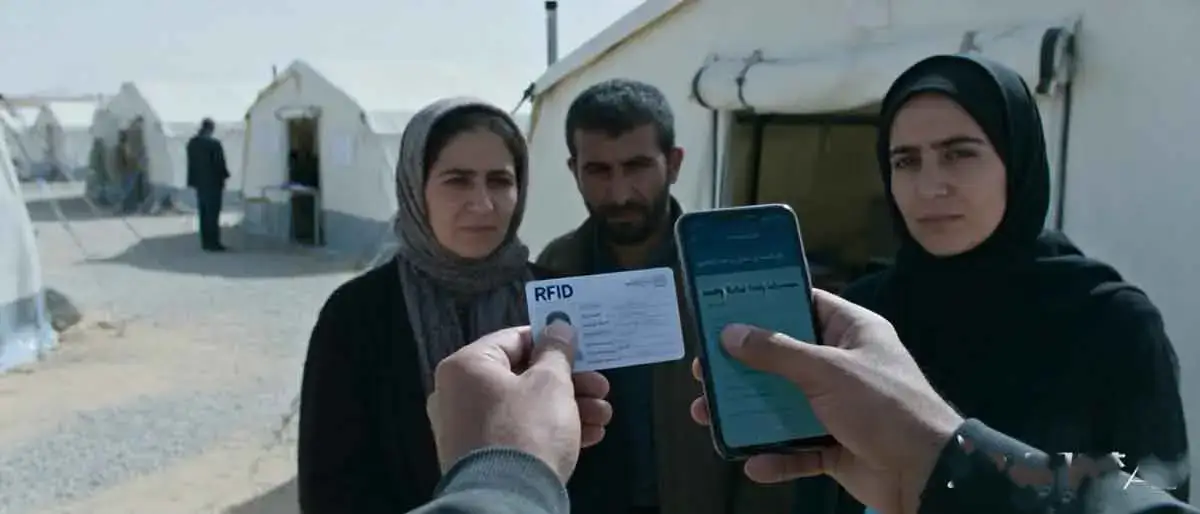
Humanitarian Operations Universally Face Identity Authentication Dilemmas and Resource Allocation Challenges
Traditional Identity Documents Are Prone to Loss or Damage in Post-disaster or Conflict Zones, Making Precise Distribution of Relief Supplies Difficult
Humanitarian operations in post-disaster or conflict-affected regions are frequently hindered by fundamental challenges in identity authentication and resource allocation, which directly impact the effectiveness of relief efforts and the well-being of affected populations. A primary issue is the vulnerability of traditional identity documents, such as passports, national IDs, and birth certificates, which are easily lost, destroyed, or rendered invalid in the chaos of natural disasters, war, or displacement. Without reliable proof of identity, humanitarian organizations struggle to accurately verify the eligibility of individuals seeking assistance, leading to either the exclusion of genuine beneficiaries or the inefficient distribution of limited resources. For instance, in the aftermath of major earthquakes or floods, many survivors are left without any form of identification, forcing aid workers to rely on makeshift verification methods that are time-consuming and prone to error. This not only delays the delivery of critical supplies like food, water, and medical aid but also increases the risk of inequitable distribution. RFID Smart Cards have emerged as a transformative solution to this dilemma, offering a durable and secure digital carrier for individual identity that can withstand the harsh conditions of disaster and conflict zones, thereby enabling precise and timely distribution of relief supplies.
Information Silos Between Aid Organizations Are Severe, with Duplicate Registration and Missed Assistance Rates Reaching 35%
Another significant challenge plaguing humanitarian operations is the pervasive issue of information silos between different aid organizations. In most crisis scenarios, multiple local and international humanitarian agencies, non-governmental organizations (NGOs), and government bodies are involved in relief efforts, yet their data systems often operate independently with little to no interoperability. This lack of coordination results in severe inefficiencies, including duplicate registration of beneficiaries and missed assistance for those in need. According to industry data, the combined rate of duplicate registration and missed assistance in large-scale humanitarian operations can reach as high as 35%. Duplicate registration wastes valuable resources by providing the same individual with multiple aid packages, while missed assistance leaves vulnerable populations, such as the elderly, disabled, and unaccompanied children, without essential support. Moreover, the fragmentation of data makes it difficult for organizations to gain a comprehensive understanding of the needs of the affected population, hindering strategic planning and resource allocation. RFID Smart Cards address this issue by enabling a unified, interoperable identity management system that can be accessed by authorized aid organizations, breaking down information silos and ensuring that each beneficiary is registered only once and receives the appropriate level of assistance.
The Flow of Aid Funds Is Opaque, and Public and Donor Concerns About the Efficiency of Resource Use Are Growing
Transparency in the flow of aid funds and the use of resources is another critical challenge facing the humanitarian sector. Donors, whether governments, private foundations, or individual contributors, increasingly demand greater visibility into how their contributions are utilized, yet the traditional aid delivery chain often lacks adequate mechanisms for tracking funds and resources from donation to final distribution. This opacity can lead to inefficiencies, mismanagement, and even corruption, eroding public trust in humanitarian organizations. A growing body of research and public surveys indicates that concerns about the efficiency of resource use in humanitarian assistance are on the rise, with many donors hesitant to contribute due to fears that their funds will not reach those most in need. Additionally, the lack of transparency makes it difficult to measure the impact of aid programs, hindering efforts to improve their effectiveness. RFID Smart Cards, when integrated with a comprehensive tracking system, provide a transparent and auditable record of resource distribution, allowing donors and the public to trace the journey of aid supplies and funds, thereby rebuilding trust and ensuring accountability in humanitarian operations.
Durable Smart Cards Serve as a Reliable Digital Carrier for Disaster Victims’ Identity and Basic Rights
Adopting High-Toughness PVC Material and IP68 Waterproof and Dustproof Encapsulation to Ensure Long-Term Use in Harsh Environments
To address the challenges of identity authentication in harsh humanitarian settings, RFID Smart Cards are designed with exceptional durability, making them a reliable digital carrier for disaster victims’ identity and basic rights. These cards are constructed using high-toughness PVC material, which offers superior resistance to physical damage such as bending, tearing, and impact. Furthermore, they are encapsulated with an IP68-rated waterproof and dustproof coating, the highest level of protection against ingress of solids and liquids. This means that RFID Smart Cards can withstand prolonged submersion in water, exposure to dust, mud, and extreme temperatures, which are common in post-disaster and conflict zones. The durability of these cards ensures that they remain functional even after being carried for long periods in harsh conditions, providing continuous access to assistance for affected populations. Unlike traditional paper documents or even standard plastic cards, which can degrade or fail in such environments, RFID Smart Cards maintain their integrity and functionality, ensuring that beneficiaries can reliably prove their identity and access the resources they need.
The Card Chip Securely Stores Encrypted Biometric Templates (Such as Fingerprint Hashes) for Identity Verification
At the core of the RFID Smart Card’s identity authentication capability is its integrated chip, which securely stores encrypted biometric templates for accurate and reliable identity verification. Biometric data, such as fingerprint hashes, are chosen for their uniqueness and difficulty to forge, making them an ideal means of confirming an individual’s identity. When a beneficiary is registered, their fingerprint is scanned, and a mathematical hash of the fingerprint data is generated. This hash, rather than the raw fingerprint image, is stored on the card’s chip, ensuring that the original biometric data remains protected. The use of biometric templates eliminates the risk of identity theft or fraud, as each person’s biometric characteristics are unique. When accessing assistance, beneficiaries simply need to scan their fingerprint on a compatible reader, which compares the scanned fingerprint hash with the one stored on the RFID Smart Card. If the hashes match, the identity is verified, and the beneficiary is granted access to relief supplies or services. This biometric authentication process is fast, accurate, and user-friendly, even for individuals with limited literacy or technical skills.
All Biometric Data Is Encrypted Using AES-256 Throughout Collection and Transmission to Prevent Information Leakage
Protecting the privacy and security of biometric data is a top priority in the design of RFID Smart Card systems for humanitarian assistance. To prevent information leakage, all biometric data is encrypted using the Advanced Encryption Standard (AES-256), a globally recognized encryption algorithm that provides the highest level of security. This encryption is applied throughout the entire data lifecycle, from collection at the registration point to transmission between the card and readers, and storage on the card chip and central databases. During collection, biometric data is encrypted immediately after scanning, ensuring that it is never transmitted or stored in an unencrypted form. When the RFID Smart Card communicates with a reader, the data is transmitted via a secure, encrypted channel, preventing interception by unauthorized parties. Additionally, the card chip itself is tamper-resistant, making it impossible for attackers to extract or modify the stored biometric data. This comprehensive encryption and security measures ensure that beneficiaries’ biometric information remains confidential and protected, complying with international data protection standards and safeguarding the privacy rights of affected populations.
Full-Chain Tracking System Enables Visual Supervision of Population Movement and Aid Distribution
The Card Records Encrypted Location Points of the Holder’s Cross-Regional Movement, Assisting in Family Reunification and Population Movement Analysis
RFID Smart Cards are integrated with a full-chain tracking system that enables visual supervision of population movement and aid distribution, enhancing the efficiency and effectiveness of humanitarian operations. One key feature of this system is the ability of the card to record encrypted location points of the holder’s cross-regional movement. Each time the beneficiary uses the RFID Smart Card at a registration point, distribution center, or transit hub, the location of the transaction is securely recorded on the card and transmitted to a central cloud platform (in encrypted form). This location data helps humanitarian organizations track the movement of displaced populations, identify migration patterns, and anticipate needs in different regions. Furthermore, this information is invaluable for assisting in family reunification efforts. In the chaos of disaster or conflict, families are often separated, and traditional methods of tracing relatives are slow and ineffective. By analyzing the location data recorded on RFID Smart Cards, organizations can identify individuals who may be part of the same family based on their movement patterns and facilitate reunification. The encryption of location data ensures that the privacy of beneficiaries is protected, with access restricted to authorized personnel only.
Aid Distribution Points Read the Card to Complete Identity Verification and Registration, with Data Uploaded to the Central Cloud Platform in Real Time
At aid distribution points, RFID Smart Cards streamline the process of identity verification and registration, with data uploaded to the central cloud platform in real time. When a beneficiary arrives at a distribution center, they present their RFID Smart Card, which is read by a portable or fixed reader. The reader instantly verifies the beneficiary’s identity by comparing the biometric data (or card credentials) with the information stored on the card and the central database. Once identity is confirmed, the system records the distribution of aid supplies, including the type and quantity of items provided, and updates the beneficiary’s record in real time. This real-time data upload ensures that all authorized aid organizations have access to the latest information about beneficiary eligibility and aid distribution, eliminating duplication and ensuring that resources are allocated efficiently. The automated verification and registration process also reduces the time required for each beneficiary to receive assistance, minimizing waiting times and reducing the burden on aid workers. Additionally, the real-time data provides organizations with immediate visibility into the progress of aid distribution, allowing them to adjust their strategies and allocate resources based on actual needs.
Donors Can View the Complete Digital Resume of Supplies from Warehouse to Final Beneficiary Through an Authorized Interface
A key advantage of the full-chain tracking system integrated with RFID Smart Cards is the enhanced transparency it provides to donors. Donors can access an authorized interface to view the complete digital resume of supplies, from the moment they leave the warehouse to their final delivery to beneficiaries. This digital resume includes detailed information such as the type and quantity of supplies, the warehouse of origin, the route taken during transportation, the distribution center where the supplies were delivered, and the identity of the final beneficiary (in an anonymized form where necessary). This level of transparency allows donors to verify that their contributions are being used effectively and reaching those most in need. It also provides a clear audit trail for accountability, ensuring that aid organizations are held responsible for the proper management of resources. By increasing transparency, RFID Smart Cards help to rebuild public trust in humanitarian operations and encourage greater donor participation, which is crucial for funding ongoing relief efforts. The authorized interface is designed to be user-friendly, allowing donors to easily track the impact of their contributions and make informed decisions about future donations.
Large-Scale Deployment by the UNHCR in Greece Has Verified Revolutionary Efficiency Improvements
The Lesbos Refugee Camp in Greece Has Deployed the Smart Card System for Over 12,000 Refugees
The effectiveness of RFID Smart Cards in enhancing humanitarian assistance has been verified through large-scale deployment by the United Nations High Commissioner for Refugees (UNHCR) in Greece, particularly at the Lesbos Refugee Camp. Lesbos, a Greek island located in the Aegean Sea, has been a major entry point for refugees and migrants arriving from Turkey, resulting in a large and diverse population in need of humanitarian assistance. To address the challenges of identity management and resource allocation at the camp, the UNHCR deployed the RFID Smart Card system for over 12,000 refugees. This large-scale implementation provided a rigorous test of the system’s functionality, scalability, and adaptability to real-world humanitarian conditions. The deployment involved registering each refugee, capturing their biometric data, and issuing an RFID Smart Card that served as their primary form of identification and access to assistance. The system was integrated with existing UNHCR data systems and used by multiple aid organizations operating at the camp, demonstrating its interoperability and ability to break down information silos. The successful deployment of RFID Smart Cards for such a large number of refugees highlights their practicality and effectiveness in complex humanitarian settings.
Average Waiting Time for Aid Distribution Queues Has Been Reduced by 70%, and Overall Aid Process Efficiency Has Increased by 59%
The deployment of RFID Smart Cards at the Lesbos Refugee Camp resulted in revolutionary improvements in the efficiency of humanitarian operations. One of the most significant outcomes was a 70% reduction in the average waiting time for aid distribution queues. Prior to the implementation of the system, refugees often had to wait for hours in long lines to receive food, water, and other essential supplies, leading to frustration and potential conflicts. With the RFID Smart Card system, the identity verification process was streamlined, and aid distribution was automated, allowing each beneficiary to receive assistance in a matter of minutes. Beyond reducing waiting times, the overall efficiency of the aid process increased by 59%. This improvement was driven by a range of factors, including reduced duplicate registrations, faster data entry and processing, and improved coordination between aid organizations. The increased efficiency allowed the UNHCR and partner organizations to assist more refugees with the same level of resources, ensuring that critical assistance reached those in need more quickly and effectively. These efficiency gains are particularly valuable in humanitarian crises, where every minute saved can mean the difference between life and death for vulnerable populations.
The System Successfully Identified and Prevented Over 3,000 Attempts to Receive Aid Supplies Repeatedly
Another major achievement of the RFID Smart Card system in Greece was its ability to identify and prevent over 3,000 attempts to receive aid supplies repeatedly. Prior to the deployment of the system, duplicate aid distribution was a significant problem at the Lesbos Refugee Camp, with some individuals attempting to register multiple times or collect supplies from multiple distribution points. This not only wasted valuable resources but also deprived other refugees of the assistance they needed. The RFID Smart Card system addressed this issue by creating a unique digital identity for each beneficiary, which was verified at every distribution point. When an individual attempted to collect supplies more than once within the designated period, the system immediately flagged the attempt and prevented the duplicate distribution. This not only saved resources but also ensured that aid was distributed more equitably among the refugee population. The success of the system in preventing duplicate assistance demonstrates its effectiveness in improving accountability and ensuring the efficient use of humanitarian resources. For donors, this translates to greater confidence that their contributions are being used to help as many people as possible, rather than being wasted on fraudulent or duplicate claims.
Inclusive Design Ensures That the System Maintains Core Functions Even Under the Harshest Conditions
The Card Supports Display in 15 UN Working Languages and Reduces the Barrier to Use Through an Icon-Based Interface
RFID Smart Cards are designed with inclusivity in mind, ensuring that the system remains accessible and usable by all beneficiaries, regardless of their language proficiency, literacy level, or technical skills. One key feature of this inclusive design is the support for display in 15 UN working languages, including Arabic, Chinese, English, French, Russian, and Spanish, among others. This ensures that beneficiaries can understand the information displayed on the card, such as their personal details, eligibility status, and aid distribution history, in their native language. Additionally, the card uses an icon-based interface, with simple, intuitive symbols representing different functions and types of assistance. This reduces the barrier to use for individuals with low literacy or those who are not familiar with digital technology. For example, icons for food, water, medical aid, and shelter are used to indicate the types of assistance available to the beneficiary. The combination of multilingual support and icon-based design ensures that the RFID Smart Card system is accessible to the diverse population of refugees and disaster victims, ensuring that no one is excluded from receiving assistance due to language or literacy barriers. This inclusivity is a key component of upholding the human rights of affected populations, ensuring that everyone has equal access to the support they need.
Equipped with Mobile Offline Verification Devices, Which Complete Identity Verification Through Encrypted Handshake Between Cards in Areas Without Network Coverage
To ensure that the RFID Smart Card system remains functional even in areas without network coverage, which is common in post-disaster and conflict zones, the system is equipped with mobile offline verification devices. These portable devices allow aid workers to verify beneficiaries’ identities and record aid distribution even when there is no internet connection. The offline verification process works through an encrypted handshake between the RFID Smart Card and the mobile device. When a beneficiary presents their card, the device reads the encrypted data stored on the card and verifies it against the data stored locally on the device (which is synchronized with the central database when network coverage is available). This encrypted handshake ensures that the identity verification process is secure and reliable, even offline. Once network coverage is restored, the data collected by the mobile device is automatically uploaded to the central cloud platform, ensuring that all records are up to date. This offline capability is critical for ensuring that assistance can be delivered in remote or isolated areas, where network infrastructure may be damaged or non-existent. By maintaining core functionality in offline environments, RFID Smart Cards ensure that no beneficiary is left behind due to poor or non-existent connectivity.
Low-Power Design Ensures That the Card Operates Continuously for Over 5 Years Without Charging
Another important aspect of the inclusive design of RFID Smart Cards is their low-power operation, which ensures that the cards remain functional for over 5 years without the need for charging. This is achieved through the use of passive RFID technology, which allows the card to draw power from the reader when it is in proximity, eliminating the need for an internal battery. Passive RFID cards are activated only when they are near a reader, consuming minimal power and ensuring long-term functionality. This is particularly important in humanitarian settings, where access to electricity and charging facilities is often limited or non-existent. Beneficiaries do not need to worry about their cards running out of power, ensuring that they can access assistance consistently over an extended period. The long lifespan of the cards also reduces the need for frequent replacement, saving resources and minimizing the burden on aid organizations. The low-power design of RFID Smart Cards ensures that the system remains reliable and functional even in the most challenging conditions, providing continuous support to affected populations. This durability and long-term functionality make RFID Smart Cards a cost-effective solution for humanitarian operations, as they do not require ongoing maintenance or power supply.
Why Choose Mytopband?
- Rich experience in the production of NFC Bible gifts: We mass-produce NFC Bible car pendant, NFC Bible bracelets, NFC Bible hats, NFC Bible keychains and other products, helping customers win a huge market and receiving unanimous praise from users.
- Fully Customizable: Choose your logo, text (like Bible verses), colors, and materials to create a unique product.
- Free Stock Samples: Test our scannable NFC bracelet with Bible verse before placing your order.
- Low MOQ as 500pcs: Perfect for startups and small businesses.

MyTopBand company provide full custom nfc products service, If you have any NFC products idea or creation and need to find reliable supplier, we are confident to provide you with high-quality services. Please find us: www.mytopband.com, or send message to info@mytopband.com, we will reply you within 24 hours.