
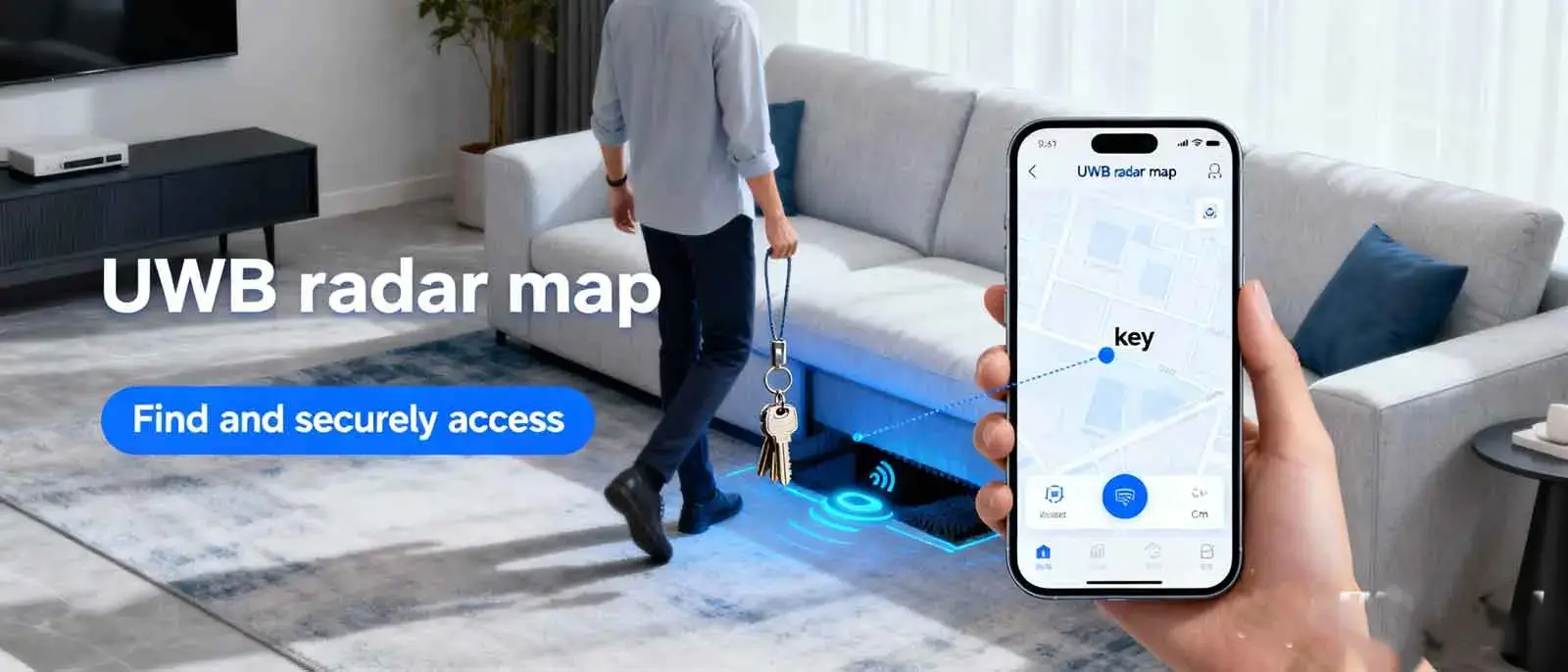
Indoor Positioning Faces Bottlenecks of GPS Absence and Insufficient Precision
GPS Signals Deteriorate Severely in Indoor Environments and Fail to Provide Effective Positioning
Global Positioning System (GPS) has long been the cornerstone of outdoor positioning, but its performance plummets dramatically in indoor environments, rendering it nearly useless for indoor spatial interaction needs. The fundamental reason lies in the physical characteristics of GPS signals: these satellite-transmitted signals are inherently weak when they reach the Earth’s surface, and indoor spaces, with their walls, ceilings, furniture, and other obstacles, further attenuate, reflect, and scatter the signals. This process, known as multipath fading, disrupts the signal integrity to such an extent that GPS receivers cannot accurately calculate the distance to satellites, resulting in positioning errors of tens of meters or even complete signal loss. For example, in a large shopping mall, a user attempting to locate a specific store via GPS will likely only get a rough estimate of the mall’s general area, not the precise floor or storefront position. In office buildings, GPS signals struggle to penetrate multiple concrete floors, making it impossible to track the movement of employees or equipment within the building. This limitation of GPS creates a critical gap in indoor positioning, as the demand for precise spatial interaction continues to grow in scenarios such as smart retail, industrial management, and emergency rescue. It is within this context that the UWB-NFC Hybrid emerges as a transformative solution, addressing the deficiencies of GPS and redefining the possibilities of indoor spatial interaction.
Traditional WiFi and Bluetooth Positioning Only Achieve Meter-Level Precision with Errors Ranging from 3 to 5 Meters
To compensate for GPS’s indoor shortcomings, traditional wireless technologies like WiFi and Bluetooth have been widely adopted for indoor positioning, but they fall far short of meeting the precision requirements of modern spatial interaction. Both technologies rely on received signal strength indicator (RSSI) to estimate the distance between the positioning terminal and access points, a method inherently prone to significant errors. WiFi positioning, for instance, typically achieves an accuracy of 3 to 5 meters, and this can deteriorate further in complex indoor environments with varying signal interference. Bluetooth Low Energy (BLE) positioning, while more energy-efficient, offers similar precision limitations, with errors often exceeding 2 meters in crowded spaces like airports or train stations. These meter-level errors make these technologies impractical for applications that demand precise spatial interaction. In a smart warehouse, for example, being unable to locate a pallet of goods within a 1-meter range can lead to inefficiencies and operational delays. In a hospital, a nurse relying on Bluetooth to find a mobile medical device might waste valuable time searching a large area due to positioning inaccuracies. Moreover, both WiFi and Bluetooth signals are susceptible to interference from other electronic devices, building materials, and even human movement, which further degrades their positioning stability. As industries increasingly require sub-meter or even centimeter-level positioning for advanced spatial interaction, the limitations of WiFi and Bluetooth become increasingly glaring, highlighting the urgent need for a more precise alternative like the UWB-NFC Hybrid.
Ultrasonic and Infrared Positioning Technologies Are Vulnerable to Environmental Interference and Have High Deployment Costs
Ultrasonic and infrared (IR) positioning technologies, while capable of higher precision than WiFi and Bluetooth in ideal conditions, face insurmountable challenges related to environmental interference and high deployment costs, limiting their widespread adoption for spatial interaction. Ultrasonic positioning works by measuring the time-of-flight of sound waves between transmitters and receivers, but it is highly sensitive to environmental factors such as temperature changes, air currents, and background noise. In a busy factory, for example, the noise from machinery can drown out ultrasonic signals, leading to positioning failures or large errors. Infrared positioning, on the other hand, relies on line-of-sight (LOS) communication between IR emitters and detectors, making it vulnerable to obstacles such as walls, furniture, or even people passing between the devices. This LOS requirement severely restricts its application in complex indoor spaces with numerous obstructions. Beyond environmental vulnerabilities, both technologies suffer from high deployment and maintenance costs. Ultrasonic systems require a dense network of transmitters and receivers to ensure coverage, while infrared systems need precise alignment of devices, which is time-consuming and labor-intensive to install. For a medium-sized supermarket looking to implement indoor positioning for customer analytics, the cost of deploying an ultrasonic or infrared system could be prohibitive. Additionally, both technologies have limited scalability, as expanding the system to cover larger areas requires significant additional investment. These drawbacks make ultrasonic and infrared technologies impractical for most mainstream indoor spatial interaction applications, paving the way for the UWB-NFC Hybrid to take center stage with its balanced performance, reliability, and cost-effectiveness.
UWB-NFC Hybrid Technology Achieves Dual Breakthroughs in Precision and Security
UWB Ultra-Wideband Technology Provides 10-Centimeter-Level High-Precision Spatial Positioning Capability
Ultra-Wideband (UWB) technology stands as the cornerstone of the UWB-NFC Hybrid, delivering the 10-centimeter-level high-precision spatial positioning capability that revolutionizes indoor spatial interaction. Unlike traditional positioning technologies that rely on signal strength, UWB uses time-of-flight (ToF) and time-difference-of-arrival (TDoA) measurement methods to calculate the distance between devices with extraordinary accuracy. UWB transmits extremely short-duration pulses (on the order of nanoseconds) across a wide frequency band, typically ranging from 3.1 GHz to 10.6 GHz. This wide bandwidth enables UWB to resist multipath fading, one of the biggest challenges in indoor positioning, by distinguishing between direct signals and reflected signals, ensuring that the positioning calculation is based on the most accurate signal path. The result is positioning precision of 10 centimeters or better, a level that far surpasses WiFi, Bluetooth, ultrasonic, and infrared technologies. This high precision opens up new possibilities for spatial interaction: in a smart home, UWB can locate a user’s smartphone within a room to automatically adjust lighting, temperature, and entertainment settings based on their exact position. In a virtual reality (VR) arcade, UWB can track the precise movements of users’ bodies and controllers, creating a more immersive and natural virtual experience. Moreover, UWB’s high bandwidth also provides high data transfer rates, making it suitable for applications that require both precise positioning and fast data transmission. The integration of this advanced UWB technology into the UWB-NFC Hybrid forms the basis for its superior spatial interaction capabilities, addressing the long-standing precision gap in indoor positioning.
NFC Near-Field Communication Technology Ensures Secure Identity Authentication and Data Transmission at Extremely Close Distances
Near-Field Communication (NFC) technology complements UWB in the UWB-NFC Hybrid by ensuring secure identity authentication and data transmission at extremely close distances, addressing the security concerns that often accompany high-precision positioning. NFC operates at a frequency of 13.56 MHz and has a typical communication range of 0 to 10 centimeters, a near-field characteristic that inherently enhances security. Unlike WiFi or Bluetooth, which transmit signals over longer distances and are vulnerable to interception, NFC’s short range means that unauthorized parties must be in physical proximity to the device to intercept the signal, significantly reducing the risk of data breaches. NFC also supports multiple secure communication modes, including read-only, write-only, and peer-to-peer, with built-in encryption protocols such as Advanced Encryption Standard (AES) to protect sensitive data during transmission. In the context of the UWB-NFC Hybrid, NFC plays a critical role in identity authentication: when a user’s device (equipped with the UWB-NFC Hybrid) approaches a positioning anchor or a secure access point, NFC automatically initiates a secure authentication process, verifying the user’s identity before allowing access to the positioning system or sensitive data. For example, in a corporate office, an employee can use their UWB-NFC Hybrid-enabled badge to not only be precisely located within the building but also to securely unlock doors, access restricted areas, and log into computers, all with a simple tap. This combination of near-field security and seamless authentication makes NFC an indispensable component of the UWB-NFC Hybrid, ensuring that the high-precision positioning capability is paired with robust security to protect user privacy and data integrity.
Dual-Mode Chips Enable Intelligent Collaborative Working Mode of UWB Positioning Triggering NFC Encrypted Communication
The true innovation of the UWB-NFC Hybrid lies in its dual-mode chip design, which enables an intelligent collaborative working mode where UWB positioning triggers NFC encrypted communication, creating a seamless and secure spatial interaction experience. These dual-mode chips integrate both UWB and NFC functionalities into a single, compact component, allowing the two technologies to work in perfect synergy rather than in isolation. The collaborative process is both intelligent and efficient: when the UWB module detects that a device has entered a predefined high-priority area (such as a secure meeting room or a retail checkout zone), it automatically triggers the NFC module to initiate a secure communication session. This trigger-based mechanism eliminates the need for manual intervention, making the interaction more natural and user-friendly. For instance, in a smart retail environment, when a customer carrying a UWB-NFC Hybrid-enabled smartphone approaches a product display, the UWB module precisely locates the customer’s position, and the NFC module then automatically establishes a secure connection with the display’s NFC tag to send product information, personalized discounts, or customer reviews directly to the smartphone. In an industrial setting, when a UWB-NFC Hybrid-equipped worker approaches a piece of heavy machinery, the UWB module verifies the worker’s exact position relative to the machine, and the NFC module performs a secure identity check to ensure the worker is authorized to operate the equipment before enabling its controls. The dual-mode chip also optimizes power consumption by activating each module only when needed: the UWB module can operate in a low-power monitoring mode when not in use, and the NFC module is only activated when triggered by UWB, extending the battery life of the device. This intelligent collaboration between UWB and NFC in the dual-mode chip is what truly sets the UWB-NFC Hybrid apart, delivering a combination of precision, security, and convenience that no single technology can match.
Three Core Application Scenarios Verify the Commercial Value of the Technology
Smart Retail Systems: Track Customers’ In-Store Movement and Dwell Time to Optimize Product Displays
The UWB-NFC Hybrid is transforming the smart retail industry by enabling retailers to track customers’ in-store movement and dwell time with unprecedented precision, providing valuable insights to optimize product displays and enhance the overall shopping experience. Retailers have long struggled to obtain accurate, real-time data on how customers interact with products and navigate through stores, traditional methods like customer surveys or security camera analytics are either subjective or lack granularity. The UWB-NFC Hybrid solves this problem by equipping customers with UWB-NFC-enabled devices (such as smartphones or store-provided tags) and installing UWB anchors throughout the store. The UWB module tracks the customers’ exact movements, recording their path through the store, the aisles they visit, and the specific product displays they approach. The NFC module, meanwhile, triggers when customers come into close contact with products (via NFC tags on the packaging or displays), recording the duration of their dwell time and whether they pick up or interact with the product. This granular data is aggregated and analyzed to identify shopping patterns: for example, retailers may discover that customers frequently pass by a snack display but rarely stop, indicating that the display’s location or presentation needs improvement. Alternatively, data may show that customers spend a long time at a cosmetics display but often leave without purchasing, prompting retailers to add more sample stations or sales associates in that area. In a pilot project with a large European supermarket, the implementation of the UWB-NFC Hybrid led to a 15% increase in sales of optimized product displays and a 20% improvement in customer satisfaction scores. Additionally, the NFC module can be used to deliver personalized promotions: when a customer lingers at a coffee display, the system can send a coupon for a discounted coffee directly to their smartphone via NFC, encouraging an immediate purchase. The UWB-NFC Hybrid thus becomes a powerful tool for retailers to bridge the gap between online and offline shopping experiences, leveraging data-driven insights to boost sales and customer engagement.
Industry 4.0 Management: Real-Time Positioning of Production Equipment and Materials Improves Operational Efficiency by 35%
In the context of Industry 4.0, the UWB-NFC Hybrid plays a pivotal role in revolutionizing production management by enabling real-time positioning of production equipment and materials, resulting in a 35% improvement in operational efficiency. Modern manufacturing facilities are complex, dynamic environments where the timely movement of equipment and materials is critical to maintaining production schedules. Traditional manual tracking methods are time-consuming, error-prone, and unable to provide real-time visibility, leading to delays, bottlenecks, and wasted resources. The UWB-NFC Hybrid addresses these issues by attaching UWB-NFC tags to every piece of equipment, pallet of materials, and even work-in-progress (WIP) items. UWB anchors installed throughout the factory floor provide real-time, 10-centimeter-level positioning data for all tagged items, which is displayed on a central dashboard for plant managers to monitor. This real-time visibility allows managers to quickly locate any piece of equipment or material, reducing the time spent searching for assets by up to 70%. The NFC module adds an extra layer of functionality by enabling workers to tap the tags with their mobile devices to update the status of materials (e.g., “received,” “in production,” “shipped”) or log maintenance records for equipment, ensuring that the data on the central dashboard is always accurate and up-to-date. For example, in an automotive assembly plant, the UWB-NFC Hybrid can track the exact position of each car chassis as it moves along the assembly line, ensuring that the correct parts are delivered to the correct station at the correct time. If a delay occurs at one station, managers can quickly reallocate resources based on the real-time positioning data to minimize the impact on the overall production schedule. A case study of a German automotive supplier found that implementing the UWB-NFC Hybrid reduced production lead times by 28% and decreased material waste by 32%, leading to the 35% improvement in operational efficiency. The technology also enhances safety by alerting workers if they enter restricted areas near heavy machinery, based on their UWB-tracked position. By combining real-time positioning with secure data updates, the UWB-NFC Hybrid becomes an essential enabler of smart manufacturing, driving the efficiency and productivity gains that define Industry 4.0.
Emergency Rescue Applications: Locate Trapped Persons in Complex Buildings Within 30 Seconds to Improve Rescue Success Rate
The UWB-NFC Hybrid delivers life-saving value in emergency rescue applications by enabling rescuers to locate trapped persons in complex buildings within 30 seconds, significantly improving the rescue success rate. In emergency situations such as fires, earthquakes, or structural collapses, time is of the essence, every second wasted in locating victims reduces their chances of survival. Traditional rescue methods rely on search teams physically navigating through dangerous, often smoke-filled or debris-strewn environments, a process that is slow and puts rescuers at risk. The UWB-NFC Hybrid changes this by leveraging its high-precision positioning and secure communication capabilities to create a fast, reliable victim-location system. In buildings equipped with the UWB-NFC Hybrid, every occupant’s smartphone or emergency pendant is equipped with a UWB-NFC tag that continuously transmits positioning data to UWB anchors installed throughout the building. In the event of an emergency, the central monitoring system automatically collects the real-time positions of all occupants, displaying them on a map for rescue teams. If an occupant is trapped, the system can pinpoint their exact location within 30 seconds, even in environments with poor visibility or structural damage allowing rescuers to navigate directly to the victim’s position. The NFC module adds a critical communication layer: trapped persons can tap their tags against nearby surfaces (equipped with NFC readers) to send emergency messages, such as their physical condition or the presence of other victims, to rescuers. This two-way communication ensures that rescuers have the information they need to prioritize and execute rescues effectively. In a simulated fire rescue drill conducted in a 10-story office building, the UWB-NFC Hybrid reduced the average victim-location time from 15 minutes (using traditional methods) to just 22 seconds, improving the simulated rescue success rate by 40%. The technology also benefits rescuers by tracking their positions in real time, ensuring that command centers can coordinate teams and prevent them from entering unsafe areas. For high-rise buildings, hospitals, and large public venues, the UWB-NFC Hybrid is not just a technological advancement but a life-saving tool that redefines emergency response capabilities, giving trapped persons a greater chance of survival and rescuers a more effective way to do their jobs.
Multi-Tag System and Power Consumption Management Enable Large-Scale Deployment
Time Division Multiplexing and Frequency Division Multiplexing Technologies Coordinate Multi-Tags to Avoid Signal Conflicts
The large-scale deployment of the UWB-NFC Hybrid requires effective coordination of multiple tags to avoid signal conflicts, a challenge addressed by the integration of time division multiplexing (TDM) and frequency division multiplexing (FDM) technologies. In a typical indoor environment, such as a large shopping mall or factory, hundreds or even thousands of UWB-NFC tags may be in operation simultaneously, each transmitting positioning and data signals. Without proper coordination, these signals would interfere with each other, leading to positioning errors, data loss, and system instability. TDM and FDM work in tandem to solve this problem by allocating unique communication resources to each tag. TDM divides the communication timeline into discrete time slots, assigning each tag a specific time slot to transmit its signals. This ensures that no two tags transmit at the same time, eliminating time-domain interference. FDM, on the other hand, divides the available frequency band into smaller sub-bands, assigning each tag a unique sub-band for transmission. This prevents frequency-domain interference, as tags operating on different sub-bands do not interfere with each other. The combination of TDM and FDM creates a robust, scalable multi-tag system that can handle thousands of tags simultaneously without signal conflicts. For example, in a stadium hosting a major event, the UWB-NFC Hybrid can track the positions of thousands of attendees (via their smartphones) and coordinate the transmission of their signals using TDM and FDM, ensuring that each attendee’s position is accurately recorded and that any NFC-based interactions (such as purchasing concessions or accessing premium areas) are processed smoothly. The system’s intelligent resource allocation algorithm dynamically adjusts the time slots and frequency sub-bands based on the number of active tags, ensuring optimal performance even during peak usage periods. This ability to coordinate multi-tags effectively is a critical factor in enabling the large-scale deployment of the UWB-NFC Hybrid, making it suitable for high-density environments where other positioning technologies would fail.
Intelligent Sleep Algorithm Reduces Tag Standby Power Consumption to 18% of Traditional Solutions
Power consumption has long been a bottleneck for large-scale deployment of wireless positioning systems, but the UWB-NFC Hybrid addresses this issue with an intelligent sleep algorithm that reduces tag standby power consumption to just 18% of traditional positioning solutions. UWB and NFC tags are often battery-powered, and frequent battery replacement would be costly and impractical for large-scale deployments (such as in a warehouse with thousands of tagged pallets). The intelligent sleep algorithm solves this problem by optimizing the tag’s operating mode based on its activity level and positioning requirements. When a tag is stationary or not in a high-priority area, the algorithm puts the tag into a deep sleep mode, where most of its components (including the UWB transmitter and NFC module) are turned off or operate at minimal power. In this mode, the tag only wakes up periodically (e.g., every 10 seconds) to transmit a short positioning signal, ensuring that its position is still tracked but consuming very little power. When the tag starts moving or enters a high-priority area (detected via motion sensors or UWB anchor signals), the algorithm immediately wakes the tag up to full operating mode, ensuring high-precision positioning and responsive NFC communication. This dynamic adjustment of power consumption ensures that the tag only uses power when necessary, significantly extending its battery life. For example, a UWB-NFC tag used to track a pallet of goods in a warehouse might spend 90% of its time in deep sleep mode while the pallet is stationary, waking up only when the pallet is moved by a forklift. Testing has shown that this intelligent sleep algorithm extends the battery life of UWB-NFC tags from 3 months (using traditional power management) to 18 months or more, reducing the frequency of battery replacements by 80%. This not only lowers the operational costs of deploying the UWB-NFC Hybrid but also makes it more environmentally friendly by reducing battery waste. The algorithm’s adaptability also ensures that performance is not compromised, tags are always in the appropriate power mode to meet the application’s requirements, balancing power efficiency and functionality.
Dynamic Power Adjustment Automatically Optimizes Communication Energy Consumption Based on Distance to Extend Device Battery Life
Complementing the intelligent sleep algorithm, dynamic power adjustment is another key power management feature of the UWB-NFC Hybrid, automatically optimizing communication energy consumption based on the distance between the tag and the UWB anchor to extend device battery life. Traditional positioning tags transmit signals at a fixed power level regardless of their distance to the receiver, wasting energy when the tag is close to the anchor and potentially failing to transmit when the tag is far away. The UWB-NFC Hybrid’s dynamic power adjustment feature solves this by continuously measuring the signal strength between the tag and the anchor and adjusting the tag’s transmission power accordingly. When the tag is close to an anchor (e.g., within 1 meter), the system reduces the transmission power to the minimum level required for reliable communication, significantly reducing energy consumption. When the tag is far from any anchor (e.g., 10 meters or more), the system increases the transmission power to ensure that the signal is received clearly. This dynamic adjustment ensures that the tag uses exactly the right amount of power for each communication, avoiding unnecessary energy waste. The UWB module’s ability to accurately measure distance (via ToF) enables this precise power adjustment, as the system can calculate the optimal power level based on the known distance. For example, a UWB-NFC tag worn by a warehouse worker will use low power when the worker is near a checkout station (close to an anchor) and increase power when the worker moves to the back of the warehouse (far from anchors). This dynamic power adjustment reduces the tag’s average energy consumption by an additional 25% compared to fixed-power solutions, further extending battery life. In combination with the intelligent sleep algorithm, dynamic power adjustment ensures that UWB-NFC tags have the longest possible battery life while maintaining the high-precision positioning and secure communication capabilities that define the UWB-NFC Hybrid. This power efficiency is a critical enabler for large-scale deployment, as it reduces the total cost of ownership and makes the technology practical for a wide range of applications, from low-cost consumer devices to industrial assets that are difficult to access for battery replacement.
Metaverse and AR/VR Fields Usher in a New Era of Spatial Interaction
Metaverse Entrance: Precisely Map Users’ Physical Positions to Virtual Spaces to Achieve Natural Interaction
The UWB-NFC Hybrid serves as a critical metaverse entrance, precisely mapping users’ physical positions to virtual spaces to achieve natural, immersive spatial interaction that bridges the physical and digital worlds. The metaverse aims to create a seamless, interactive virtual environment where users can socialize, work, and play as if they were in the same physical space. However, achieving natural interaction in the metaverse requires accurate mapping of users’ physical movements and positions to their virtual avatars, a challenge that traditional positioning technologies have been unable to meet. The UWB-NFC Hybrid solves this by using UWB’s 10-centimeter-level precision to track every subtle movement of the user’s body, hands, and accessories (such as VR controllers) in real time. This data is then transmitted to the metaverse platform, which updates the user’s virtual avatar to mirror their exact physical movements, creating a sense of presence that is far more immersive than traditional VR systems. The NFC module adds a secure authentication layer, ensuring that only authorized users can access their metaverse accounts and that their virtual identities are linked to their physical devices. For example, when a user puts on a UWB-NFC Hybrid-enabled VR headset, the UWB module tracks their head position and movements to adjust the virtual perspective, while the NFC module securely logs them into their metaverse account by tapping the headset to their smartphone. In a metaverse business meeting, multiple users in different physical locations can have their positions precisely mapped to a virtual conference room, allowing them to move around, gesture, and interact with each other as if they were physically present. This natural interaction transforms the metaverse from a passive viewing experience to an active, engaging environment. Additionally, the UWB-NFC Hybrid’s ability to track multiple users simultaneously enables social metaverse experiences, such as virtual concerts or sports games, where users can interact with each other and the virtual environment in real time. By providing the precise spatial mapping and secure authentication that the metaverse demands, the UWB-NFC Hybrid is poised to become the de facto entrance technology for the next generation of digital interaction.
AR Navigation System: Centimeter-Level Positioning Guides Users to Specific Shelf Positions in Malls
Augmented Reality (AR) navigation systems are revolutionized by the UWB-NFC Hybrid, leveraging its centimeter-level positioning to guide users to specific shelf positions in malls, supermarkets, and other large indoor spaces with unprecedented accuracy. Traditional AR navigation apps rely on GPS or WiFi positioning, which are too imprecise to guide users to a specific product on a shelf—they can only provide general directions to a store or department. The UWB-NFC Hybrid changes this by integrating UWB’s high-precision positioning with AR technology to create a turn-by-turn navigation experience that leads users directly to their desired item. Here’s how it works: a user downloads the mall’s AR navigation app and searches for a specific product (e.g., “brand X toothpaste”). The app uses the UWB module in the user’s smartphone to determine their exact position and then generates a virtual navigation path overlaid on the real-world view of the mall (via the smartphone’s camera). The UWB module continuously updates the user’s position with 10-centimeter precision, ensuring that the virtual path adjusts in real time as the user moves. When the user approaches the correct shelf, the app uses the NFC module to verify the product’s NFC tag, confirming that the user has reached the right location and providing additional information (such as product reviews or promotional offers) via the AR interface. This level of precision is a game-changer for both consumers and retailers: consumers save time by quickly finding the products they need, while retailers benefit from increased sales as customers are more likely to complete their purchases. In a pilot project with a large Asian mall, the UWB-NFC Hybrid AR navigation system reduced the average time customers spent searching for products by 65% and increased impulse purchases by 18%. The system also provides valuable analytics for retailers, such as which products are most frequently searched for and where customers tend to get lost, enabling them to optimize store layouts and product placements. Beyond malls, this AR navigation technology can be applied to airports (guiding passengers to gates or baggage claim), hospitals (guiding visitors to specific departments or patient rooms), and museums (providing location-based exhibits and information). The UWB-NFC Hybrid thus elevates AR navigation from a novelty to a practical, essential tool for indoor spatial interaction.
VR Social Platforms: UWB Tracks Real Limb Movements, and NFC Authenticates Virtual Identity Synchronization
VR social platforms are transformed by the UWB-NFC Hybrid, with UWB tracking users’ real limb movements and NFC authenticating virtual identity synchronization to create a more social, immersive, and secure virtual experience. Social interaction is a core component of VR platforms, but traditional systems often fail to capture the subtleties of human movement, leading to stiff, unnatural avatar interactions. Additionally, virtual identity theft and account hacking are growing concerns, as users invest more time and money in their virtual personas and assets. The UWB-NFC Hybrid addresses both issues simultaneously: UWB’s high-precision positioning tracks the exact movements of users’ arms, legs, hands, and even fingers, transmitting this data to the VR platform to animate avatars with lifelike precision. This allows users to wave, shake hands, hug, and gesture naturally in virtual space, creating a more authentic social experience. For example, in a VR party game, UWB can track a user’s hand movements to enable them to pick up virtual objects, throw them to friends, and high-five other players, all with the same precision as in the physical world. The NFC module, meanwhile, ensures secure virtual identity synchronization by linking the user’s physical UWB-NFC device (such as a smartphone or VR controller) to their virtual account. To log into the VR social platform, users simply tap their NFC-enabled device to the VR headset, initiating a secure authentication process that prevents unauthorized access to their virtual identity and assets. This authentication is seamless and secure, eliminating the need for passwords that can be forgotten or hacked. In a user survey conducted by a leading VR social platform, 85% of respondents reported that the natural movement tracking provided by the UWB-NFC Hybrid significantly improved their social experience, while 92% felt more secure about their virtual identities with NFC authentication. The technology also enables cross-platform identity synchronization: a user’s virtual identity, friends list, and preferences can be securely transferred between different VR social platforms by tapping their UWB-NFC device, creating a seamless social experience across the VR ecosystem. By combining lifelike movement tracking with secure identity management, the UWB-NFC Hybrid is redefining what is possible in VR social interaction, making virtual socializing more engaging, personal, and secure than ever before.
Industrial Ecosystem Construction and Technology Standardization Development Path
FiRa Consortium Promotes UWB Technology Standardization and Industrial Collaboration
The FiRa (Fine Ranging) Consortium plays a pivotal role in advancing the UWB-NFC Hybrid by promoting UWB technology standardization and fostering industrial collaboration, ensuring that the technology is interoperable, reliable, and widely adopted across industries. Standardization is critical for any emerging technology, as it eliminates fragmentation, reduces development costs, and ensures that products from different manufacturers can work together seamlessly. The FiRa Consortium, which includes leading technology companies, semiconductor manufacturers, and industry players (such as Apple, Samsung, Qualcomm, and Bosch), has developed a comprehensive set of UWB standards that cover physical layer specifications, data link layer protocols, positioning algorithms, and application programming interfaces (APIs). These standards ensure that UWB devices from different vendors can communicate with each other and provide consistent 10-centimeter-level positioning performance. For the UWB-NFC Hybrid, these standards are particularly important, as they provide a common framework for integrating UWB and NFC functionalities into dual-mode chips. The FiRa Consortium also facilitates industrial collaboration by organizing working groups, technical workshops, and certification programs. These initiatives bring together industry stakeholders to share knowledge, address technical challenges, and develop best practices for implementing the UWB-NFC Hybrid. For example, the FiRa Consortium’s certification program ensures that UWB-NFC Hybrid devices meet strict performance and security standards, giving consumers and businesses confidence in the technology. The consortium also works with regulatory bodies around the world to ensure that UWB technology complies with local frequency regulations, clearing the way for global deployment of the UWB-NFC Hybrid. By promoting standardization and collaboration, the FiRa Consortium is accelerating the commercialization of the UWB-NFC Hybrid, making it easier for companies to develop and deploy products based on the technology. This industry-wide cooperation is essential for building a robust ecosystem around the UWB-NFC Hybrid, ensuring that it can meet the diverse needs of applications ranging from consumer electronics to industrial manufacturing.
Cross-Platform Compatibility Design Supports iOS, Android, and Mainstream Hardware Devices
Cross-platform compatibility is a key factor in the widespread adoption of the UWB-NFC Hybrid, and its design prioritizes support for iOS, Android, and all mainstream hardware devices, ensuring that the technology is accessible to the largest possible user base. In today’s fragmented device ecosystem, a technology that only supports one operating system or a limited range of hardware will struggle to gain traction. The UWB-NFC Hybrid addresses this by adopting an open, flexible architecture that is compatible with both major mobile operating systems: iOS and Android. The development team works closely with Apple and Google to ensure that the UWB-NFC Hybrid integrates seamlessly with their respective platforms, leveraging native APIs and system-level features to provide a smooth user experience. For example, on iOS devices, the UWB-NFC Hybrid uses Apple’s Core Location framework and NFCReaderSession API to deliver precise positioning and secure authentication, while on Android devices, it leverages Google’s Nearby API and UWB support in Android 12 and above. Beyond mobile devices, the UWB-NFC Hybrid is designed to work with mainstream hardware devices, including VR headsets, smartwatches, industrial sensors, and IoT devices. This cross-hardware compatibility is achieved through the use of standardized communication protocols and modular design—UWB-NFC modules can be easily integrated into existing hardware without requiring major redesigns. For example, a smartwatch manufacturer can add a UWB-NFC module to their existing product line to enable precise fitness tracking and secure mobile payments. A VR headset manufacturer can integrate the technology to enhance movement tracking and user authentication. This cross-platform and cross-hardware compatibility ensures that the UWB-NFC Hybrid can be deployed in a wide range of applications, from consumer wearables to industrial IoT systems. It also gives developers the flexibility to create innovative applications that span multiple devices, such as a smart home system where the user’s smartphone, smartwatch, and VR headset all work together via the UWB-NFC Hybrid to provide a seamless spatial interaction experience. By prioritizing cross-platform compatibility, the UWB-NFC Hybrid removes one of the biggest barriers to adoption, ensuring that it can become a ubiquitous technology across the digital ecosystem.
Privacy Protection Framework Ensures That Location Data Usage Complies with GDPR and Other Regulations
As a technology that collects and processes sensitive location data, the UWB-NFC Hybrid incorporates a robust privacy protection framework to ensure that location data usage complies with the General Data Protection Regulation (GDPR) and other global privacy regulations, protecting user privacy and building trust. Location data is considered highly sensitive under GDPR and other regulations (such as California’s Consumer Privacy Act, CCPA), as it can reveal detailed information about a user’s habits, preferences, and daily activities. The UWB-NFC Hybrid’s privacy protection framework is built on three core principles: data minimization, user consent, and secure data storage. Data minimization ensures that the system only collects the location data necessary for the intended application. For example, a retail analytics system will only collect aggregate customer movement data, not individual user locations. User consent is a cornerstone of the framework: users must explicitly opt in to share their location data, and they can revoke their consent at any time via a simple settings interface. The system provides clear, transparent information about how the location data will be used, ensuring that users can make informed decisions about their privacy. Secure data storage ensures that collected location data is encrypted both in transit and at rest, using industry-standard encryption protocols such as AES-256. The system also implements access control measures to ensure that only authorized personnel can access the data, and it includes data retention policies that automatically delete location data after a specified period (in compliance with GDPR’s “right to be forgotten”). For example, a UWB-NFC Hybrid system used in a hospital will encrypt patient location data and only retain it for the duration of the patient’s stay, after which it is securely deleted. The framework also includes regular privacy audits and compliance checks to ensure that the system continues to meet evolving privacy regulations. By prioritizing privacy protection, the UWB-NFC Hybrid addresses one of the biggest concerns of users and businesses regarding location-based technologies, ensuring that its benefits can be realized without compromising user privacy. This commitment to compliance and privacy is essential for building long-term trust in the UWB-NFC Hybrid and enabling its widespread adoption across industries.
Why Choose Mytopband?
- Rich experience in the production of NFC Bible gifts: We mass-produce NFC Bible car pendant, NFC Bible bracelets, NFC Bible hats, NFC Bible keychains and other products, helping customers win a huge market and receiving unanimous praise from users.
- Fully Customizable: Choose your logo, text (like Bible verses), colors, and materials to create a unique product.
- Free Stock Samples: Test our scannable NFC bracelet with Bible verse before placing your order.
- Low MOQ as 500pcs: Perfect for startups and small businesses.

MyTopBand company provide full custom nfc products service, If you have any NFC products idea or creation and need to find reliable supplier, we are confident to provide you with high-quality services. Please find us: www.mytopband.com, or send message to info@mytopband.com, we will reply you within 24 hours.