
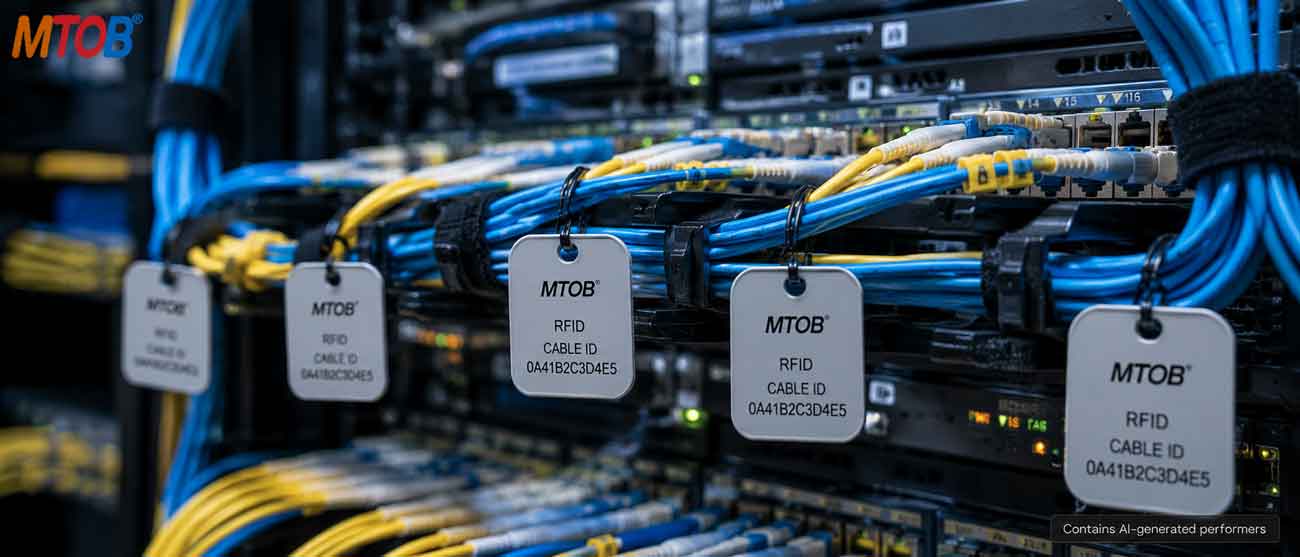
How to Choose RFID Cable Tags: 7 Critical Factors Data Center Managers Must Consider

How to Choose RFID Cable Tags: 7 Critical Factors Data Center Managers Must Consider-MTOB RFID
Modern IT infrastructure is becoming increasingly complex.
A single enterprise data center may contain tens of thousands of network cables, fiber connections, patch cords, and power lines. Telecommunications providers often manage infrastructure spread across multiple cities, while industrial facilities maintain extensive communication and automation networks.
As these environments expand, cable identification and asset management become significantly more difficult.
Traditional labeling methods frequently fail due to fading, human error, incomplete documentation, or physical wear. As a result, organizations spend valuable time tracing cables, troubleshooting connectivity issues, and updating infrastructure records.
RFID Cable Tags offer a more efficient solution by enabling automated identification and lifecycle tracking of cable assets. However, selecting the wrong RFID Cable Tag can create deployment challenges and limit system performance.

This guide explains the seven most important factors buyers should evaluate before investing in RFID Cable Tags.

Why Traditional Cable Identification Systems Are Reaching Their Limits

For years, organizations have relied on:
  • Printed labels
  • Heat-shrink tubing
  • Barcode labels
  • Manual documentation
  • Spreadsheet-based asset records
While these methods are inexpensive, they often create operational inefficiencies.
Common problems include:

Label Deterioration

Labels can fade, peel, or become unreadable over time.

Documentation Gaps

Infrastructure changes frequently occur faster than records are updated.

Human Errors

Technicians may accidentally disconnect the wrong cable or record incorrect information.

Lengthy Troubleshooting

Identifying a single cable among thousands can consume valuable maintenance time.

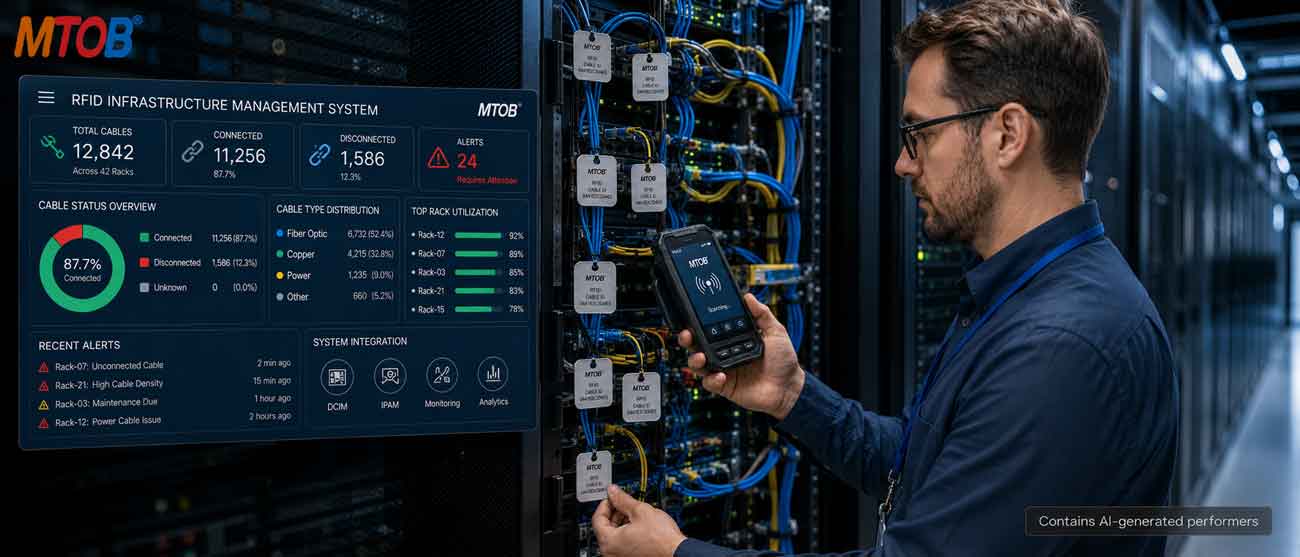
RFID technology addresses these challenges by linking physical cable assets with digital infrastructure records.

Factor 1: Identify Your Deployment Environment

Before selecting RFID Cable Tags, determine where they will be used.
Different environments require different tag characteristics.

Data Centers

Typical requirements include:
  • Compact tag size
  • High read accuracy
  • Dense cable compatibility
  • Long-term durability

Telecommunications Networks

Key requirements include:
  • UV resistance
  • Outdoor durability
  • Weather protection
  • Long-distance asset tracking

Manufacturing Facilities

Industrial environments may require:
  • Chemical resistance
  • Oil resistance
  • High-temperature performance
  • Mechanical durability

Choosing tags designed for the intended environment significantly improves long-term reliability.

Factor 2: Select the Appropriate RFID Frequency

RFID Cable Tags are generally available in two primary frequency categories.

HF RFID (13.56 MHz)

Advantages:
  • Short-range precision
  • Reduced interference
  • Better performance in dense environments
Common applications:
  • Server racks
  • Patch panels
  • Telecommunications cabinets

UHF RFID (860–960 MHz)

Advantages:
  • Longer read distance
  • Faster inventory audits
  • Bulk asset identification
Common applications:
  • Cable warehouses
  • Large infrastructure audits
  • Enterprise asset management

The optimal frequency depends on operational objectives rather than simply choosing the longest read range.

Factor 3: Evaluate Cable Diameter Compatibility

Cable size directly affects tag performance.
Questions buyers should ask include:
  • What is the minimum cable diameter?
  • What is the maximum cable diameter?
  • Are all cable types standardized?
Common cable categories include:

Fiber Optic Cables

Require lightweight, compact tags.

Ethernet Cables

Often support multiple tag attachment methods.

Power Cables

May require larger industrial-grade RFID tags.

Coaxial Cables

Need secure attachment and reliable readability.

Verifying compatibility prevents installation issues later.

Factor 4: Compare RFID Cable Tag Designs

RFID Cable Tags are available in multiple physical formats.

Wrap-Around Tags

Designed to wrap directly around cables.
Best for:
  • Network cabling
  • Telecommunications infrastructure
  • Data center applications

Flag Tags

Extend outward from the cable.
Advantages:
  • Larger antenna area
  • Easier visual identification
  • Improved read performance

Hard Tags

Built for demanding industrial environments.
Suitable for:
  • Outdoor deployments
  • Utility infrastructure
  • Heavy industrial facilities

Each design offers advantages depending on the application.

Factor 5: Understand Read Range Requirements

One of the most common purchasing mistakes is focusing exclusively on maximum read distance.
In reality, the ideal read range depends on operational goals.

Short-Range Reading

Useful when:
  • Identifying individual cables
  • Preventing unintended reads
  • Working in dense rack environments

Long-Range Reading

Useful when:
  • Conducting asset audits
  • Managing cable inventory
  • Tracking infrastructure across facilities

The correct balance improves accuracy and operational efficiency.

Factor 6: Verify Durability Specifications

Cable infrastructure is typically expected to remain in service for many years.
RFID Cable Tags should provide similar longevity.
Important durability considerations include:

Temperature Resistance

Especially important for industrial facilities and data centers.

UV Protection

Required for outdoor telecom infrastructure.

Chemical Resistance

Critical in manufacturing environments.

Abrasion Resistance

Helps maintain performance throughout the asset lifecycle.

Durability directly affects long-term ROI.

Factor 7: Ensure Software Integration Capability

RFID hardware alone does not create value.
The true benefit comes from integration with existing management platforms.
Organizations should verify compatibility with:
  • DCIM systems
  • IT asset management software
  • ERP platforms
  • CMMS systems
  • Telecom management solutions
Seamless integration improves adoption and maximizes operational benefits.

RFID Cable Tags vs Barcode Cable Labels


Feature RFID Cable Tags Barcode Labels
Line-of-sight required No Yes
Bulk scanning Yes No
Automation capability High Limited
Durability High Medium
Asset visibility Excellent Basic
Long-term scalability Excellent Moderate


For organizations managing thousands of cable assets, RFID often delivers substantially greater operational value.
How to Choose RFID Cable Tags: 7 Critical Factors Data Center Managers Must Consider-MTOB RFID

Common Buying Mistakes to Avoid

Many RFID projects encounter avoidable problems.

Selecting Based Only on Price

Low-cost tags may provide poor durability and performance.

Ignoring Environmental Conditions

Outdoor deployments require specialized materials.

Choosing the Wrong Frequency

Frequency selection should align with business requirements.

Skipping Pilot Testing

A small pilot deployment can reveal important implementation considerations.

Overlooking Integration Requirements

Software compatibility is often more important than hardware specifications.

Avoiding these mistakes significantly improves deployment success.

Future Trends in RFID Cable Asset Management

Several emerging technologies are increasing the value of RFID-enabled infrastructure management.

AI-Powered Asset Analytics

Automated infrastructure optimization and maintenance planning.

Digital Twin Data Centers

Real-time virtual representations of physical infrastructure.

Smart Building Integration

Connected infrastructure management platforms.

Predictive Maintenance

RFID data combined with operational analytics.

Organizations investing in RFID Cable Tags today position themselves for future digital transformation initiatives.

Final Thoughts

As network infrastructure continues to expand, traditional cable identification methods become increasingly difficult to manage.
RFID Cable Tags provide a scalable and future-ready solution by enabling:
  • Automated asset identification
  • Faster troubleshooting
  • Improved infrastructure visibility
  • Better maintenance planning
  • Enhanced operational efficiency

For data centers, telecommunications providers, and enterprise IT teams, selecting the right RFID Cable Tags can significantly improve infrastructure management while reducing long-term operational costs.

FAQ

What are RFID Cable Tags?

RFID Cable Tags are RFID-enabled identifiers attached to cables to support automated asset tracking, infrastructure management, and maintenance operations.

Which RFID frequency is best for cable tracking?

HF RFID is generally preferred for precise cable identification, while UHF RFID is often used for large-scale asset audits and inventory management.

Can RFID Cable Tags be used on fiber optic cables?

Yes. Many RFID Cable Tags are specifically designed for fiber optic infrastructure and telecommunications applications.

How long do RFID Cable Tags last?

Industrial-grade RFID Cable Tags can typically last 5–15 years depending on environmental conditions and usage.

Are RFID Cable Tags suitable for outdoor telecom networks?

Yes. Outdoor-rated RFID Cable Tags are available with UV-resistant and weatherproof construction.

 

How to Choose RFID Cable Tags: 7 Critical Factors Data Center Managers Must Consider-MTOB RFID

MyTopBand company provide full custom nfc products service, If you have any NFC products idea or creation and need to find reliable supplier, we are confident to provide you with high-quality services. Please find us: www.mytopband.com, or send message to info@mytopband.com, we will reply you within 24 hours.

Share
Scroll to Top