
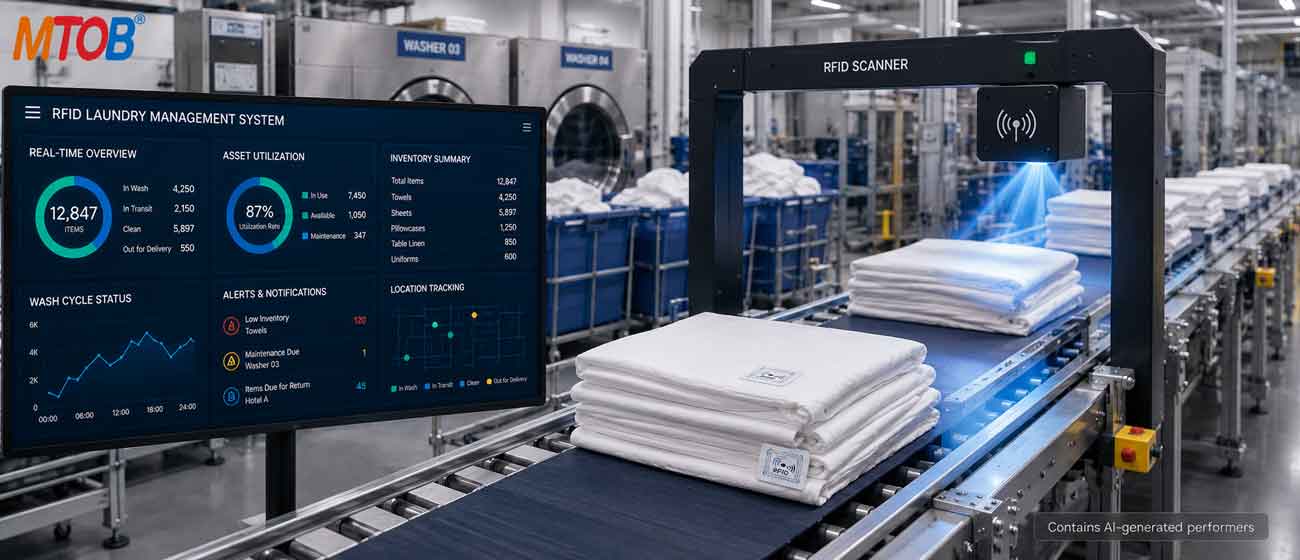
Commercial laundries process thousands of textiles every day. Hotels, hospitals, resorts, industrial facilities, and rental linen providers depend on efficient laundry operations to maintain service quality while controlling costs.
However, traditional laundry management methods often rely on manual counting, barcode labels, or paper-based tracking systems. These approaches create challenges such as inventory inaccuracies, textile losses, excessive labor costs, and limited visibility into linen lifecycles.
RFID Laundry Tags have become one of the most effective technologies for modern textile management. By enabling automated identification and real-time tracking, RFID Laundry Tags help organizations improve efficiency, reduce waste, and gain valuable operational insights.
As labor shortages and operational costs continue to rise, RFID Laundry Tags are becoming a critical component of digital transformation strategies across the commercial laundry industry.
Why Traditional Laundry Tracking Creates Operational Challenges
Managing thousands of linens manually is difficult.
Common problems include:
-
Lost towels and uniforms
-
Inaccurate inventory counts
-
Excessive replacement costs
-
Labor-intensive audits
-
Limited asset visibility
-
Untracked textile lifecycles
For hotels and healthcare facilities, even small inventory discrepancies can lead to significant financial losses over time.
Manual processes also make it difficult to answer important operational questions:
-
How many wash cycles has a linen completed?
-
Which facility currently holds the inventory?
-
Which textiles require replacement?
-
Where are losses occurring?
RFID Laundry Tags solve these challenges through automated asset identification and tracking.
What Are RFID Laundry Tags?
RFID Laundry Tags are specialized RFID devices designed to withstand:
-
Repeated washing
-
High temperatures
-
Chemical exposure
-
Industrial drying
-
Pressing operations
Each tag contains:
-
RFID chip
-
Durable antenna
-
Unique identification number
The tag is sewn into or attached to textiles such as:
-
Bed linens
-
Towels
-
Uniforms
-
Medical garments
-
Workwear
-
Hospitality textiles
When RFID readers scan tagged items, the system automatically records location and status information.
This creates a digital identity for every textile asset.
How RFID Laundry Tags Work
A typical RFID laundry management system includes:
RFID Laundry Tags
Embedded within textile products.
RFID Readers
Installed at:
-
Collection points
-
Sorting stations
-
Wash facilities
-
Storage areas
-
Distribution centers
Management Software
Processes data and generates operational reports.
Analytics Platform
Provides insights into inventory performance and asset utilization.
As linens move through the laundry process, RFID readers automatically capture tracking data without requiring manual scanning.
This creates a continuous visibility system throughout the textile lifecycle.
Benefit 1: Automated Linen Tracking
One of the most significant advantages of RFID Laundry Tags is automated tracking.
Instead of manually counting linens, organizations can instantly identify:
-
Item quantities
-
Asset locations
-
Processing status
-
Distribution history
Benefits include:
-
Reduced labor requirements
-
Improved accuracy
-
Faster processing times
-
Better operational visibility
Automation helps eliminate many of the inefficiencies associated with manual inventory management.
Benefit 2: Reduced Linen Losses
Textile loss is one of the largest hidden costs in commercial laundry operations.
Losses occur due to:
-
Misplacement
-
Theft
-
Sorting errors
-
Delivery mistakes
-
Unauthorized disposal
RFID Laundry Tags create accountability throughout the supply chain.
Organizations can identify:
-
Where assets disappear
-
Which facilities experience higher loss rates
-
Which inventory requires investigation
This visibility helps significantly reduce replacement expenses.
Benefit 3: Improved Inventory Accuracy
Inventory audits often consume substantial staff time.
Traditional counting methods are:
-
Slow
-
Labor-intensive
-
Error-prone
RFID technology allows hundreds of tagged items to be identified rapidly.
Organizations gain:
-
Real-time inventory visibility
-
More accurate stock levels
-
Faster audits
-
Better replenishment planning
Improved inventory accuracy directly supports operational efficiency.
Benefit 4: Lifecycle Management for Textiles
Every textile asset has a limited lifespan.
Without tracking systems, organizations often replace linens either:
-
Too early
-
Too late
RFID Laundry Tags allow operators to monitor:
-
Number of wash cycles
-
Service history
-
Usage frequency
-
Asset age
This data helps maximize textile utilization while maintaining quality standards.
Lifecycle management can significantly reduce overall textile replacement costs.
Benefit 5: Faster Sorting and Processing
Sorting is one of the most labor-intensive stages of laundry operations.
RFID systems can automate identification during:
-
Collection
-
Sorting
-
Washing
-
Packaging
-
Distribution
Benefits include:
-
Increased throughput
-
Reduced processing errors
-
Lower labor requirements
-
Improved productivity
For high-volume facilities, these gains can produce substantial operational savings.
Benefit 6: Better Customer Service
Laundry service providers must maintain accurate inventory records for customers.
RFID Laundry Tags help generate detailed reports showing:
-
Items received
-
Items processed
-
Items returned
-
Asset utilization
This transparency improves customer confidence and service quality.
Hotels, hospitals, and industrial clients gain greater visibility into their textile inventories.
Benefit 7: Enhanced Data Analytics
Modern commercial laundries increasingly rely on data-driven decision making.
RFID systems generate valuable operational insights.
Examples include:
Asset Utilization Analysis
Identify underutilized inventory.
Loss Prevention Reporting
Detect patterns of textile disappearance.
Operational Performance Monitoring
Evaluate efficiency across facilities.
Demand Forecasting
Predict future inventory requirements.
These insights support continuous process improvement.
Benefit 8: Higher Return on Investment
Although RFID deployment requires initial investment, the long-term financial benefits can be substantial.
Savings often come from:
-
Reduced textile losses
-
Lower labor costs
-
Improved inventory control
-
Better asset utilization
-
Increased productivity
Many organizations achieve positive ROI through operational efficiencies alone.
Additional benefits such as improved customer satisfaction further enhance business value.
RFID Laundry Tags in Hospitality Applications
Hotels process large volumes of:
-
Sheets
-
Towels
-
Bathrobes
-
Table linens
RFID Laundry Tags help hospitality operators:
-
Monitor inventory levels
-
Reduce shrinkage
-
Improve housekeeping efficiency
-
Optimize linen replacement schedules
For luxury hotels, maintaining linen quality directly impacts guest satisfaction.
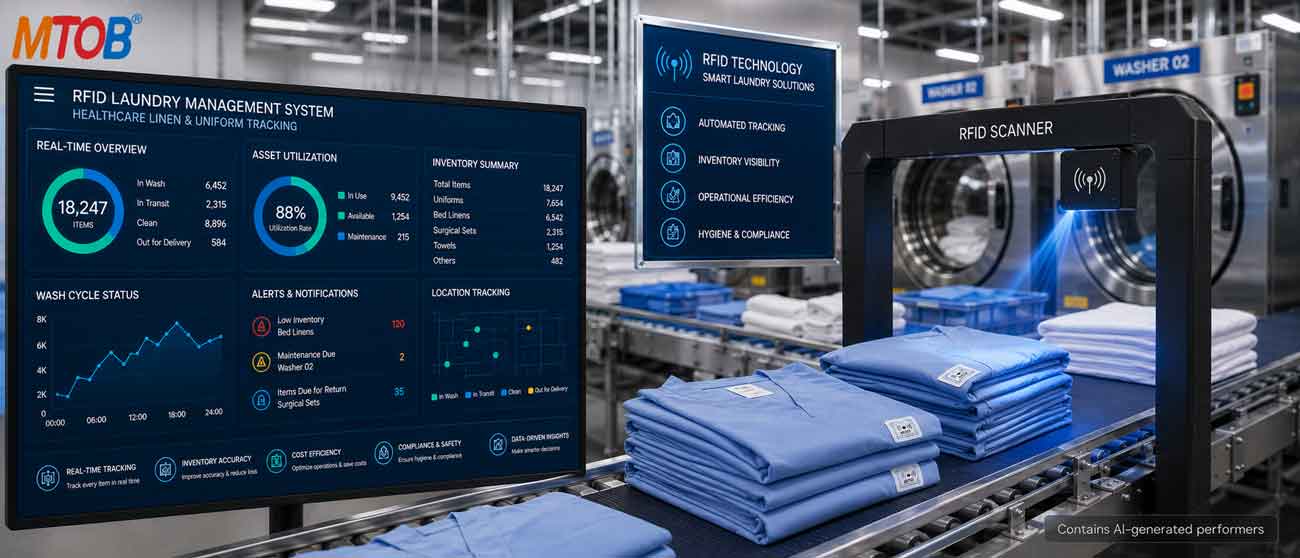
RFID Laundry Tags in Healthcare Facilities
Hospitals face unique linen management challenges.
Items requiring tracking include:
-
Surgical gowns
-
Patient garments
-
Bed linens
-
Staff uniforms
RFID technology helps improve:
-
Inventory control
-
Hygiene management
-
Asset visibility
-
Regulatory compliance
Healthcare organizations increasingly use RFID-enabled systems to support operational excellence.
Future Trends in RFID Textile Tracking
The commercial laundry industry continues to evolve.
Emerging developments include:
AI-Powered Analytics
Predictive maintenance and inventory forecasting.
Smart Textile Ecosystems
Connected textiles integrated with digital management platforms.
Sustainability Reporting
Tracking textile lifecycles to support ESG initiatives.
Digital Twin Operations
Real-time digital representation of textile inventories.
Automated Robotics
RFID-enabled sorting and distribution systems.
RFID Laundry Tags provide the foundation for these future innovations.
How to Choose the Right RFID Laundry Tags
When evaluating RFID Laundry Tags, organizations should consider:
Durability Requirements
Tags must survive repeated industrial washing cycles.
Reading Performance
Reliable detection is critical.
Attachment Method
Options include sewn-in and heat-sealed designs.
Environmental Conditions
Chemical exposure and temperature resistance matter.
System Compatibility
Tags should integrate with existing laundry management platforms.
Selecting the right RFID Laundry Tags ensures long-term performance and return on investment.
Why RFID Laundry Tags Are Becoming Essential for Modern Laundry Operations
Commercial laundry operations are under constant pressure to improve efficiency, reduce costs, and maintain service quality.
RFID Laundry Tags address these challenges by enabling:
-
Automated tracking
-
Real-time inventory visibility
-
Loss reduction
-
Lifecycle management
-
Data-driven decision making
For hospitality providers, healthcare organizations, and industrial laundry operators, RFID Laundry Tags are rapidly becoming a standard technology for building smarter, more efficient textile management systems.
FAQ
How long do RFID Laundry Tags last?
Most RFID Laundry Tags are designed to withstand hundreds of industrial wash cycles, including exposure to heat, chemicals, and mechanical stress.
Can RFID Laundry Tags survive commercial washing machines?
Yes. RFID Laundry Tags are specifically engineered for industrial laundry environments and can tolerate repeated washing, drying, and ironing processes.
What textiles can use RFID Laundry Tags?
RFID Laundry Tags can be attached to bed linens, towels, uniforms, healthcare garments, workwear, and many other textile products.
Do RFID Laundry Tags improve inventory accuracy?
Yes. RFID systems automate identification and tracking, significantly improving inventory visibility and reducing manual counting errors.
Are RFID Laundry Tags suitable for hospitals?
Absolutely. Hospitals commonly use RFID Laundry Tags for tracking linens, uniforms, and medical textiles while improving operational efficiency.

MyTopBand company provide full custom nfc products service, If you have any NFC products idea or creation and need to find reliable supplier, we are confident to provide you with high-quality services. Please find us: www.mytopband.com, or send message to info@mytopband.com, we will reply you within 24 hours.