
Inventory Management Pain Points of European and American E-commerce Overseas Warehouses
Time-Consuming and Inefficient Stocktaking Caused by Complex SKUs
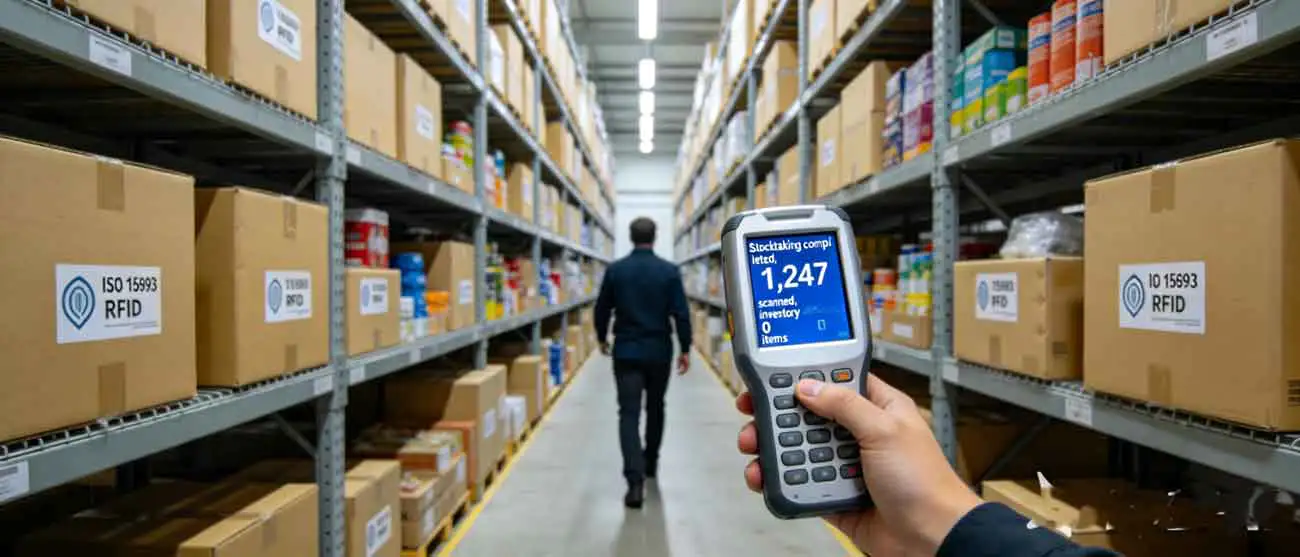
In the booming global e-commerce industry, European and American e-commerce overseas warehouses are facing increasingly severe inventory management challenges, among which the complexity of SKUs has become the primary pain point leading to time-consuming and inefficient stocktaking. With the continuous enrichment of e-commerce product categories, a single overseas warehouse often needs to manage tens of thousands or even hundreds of thousands of SKUs, including clothing, 3C products, home goods, and other categories, each with different specifications, models, and packaging forms. Traditional inventory management methods rely on manual counting or bar code scanning, which requires staff to check each product one by one. This method not only consumes a lot of human resources but also has extremely low efficiency. For example, a medium-sized e-commerce overseas warehouse with 50,000 SKUs usually takes 3 to 5 days to complete a full inventory, and the counting process is prone to human errors due to staff fatigue or negligence. The inefficiency of stocktaking not only affects the timeliness of inventory data but also delays the formulation of procurement and replenishment plans, indirectly affecting the normal operation of the e-commerce business. ISO 15693 RFID Tags, as an advanced automatic identification technology, can effectively solve this pain point. By attaching ISO 15693 RFID Tags to each product or package, staff can complete the batch reading of a large number of SKUs in a short time, greatly improving the efficiency and accuracy of stocktaking.
Delayed Cross-Border Replenishment Response Affects Operational Efficiency
Delayed cross-border replenishment response is another prominent pain point in the inventory management of European and American e-commerce overseas warehouses, which directly affects the overall operational efficiency of e-commerce enterprises. Cross-border e-commerce involves long-distance transportation, customs clearance, and other links, and the replenishment cycle is usually long. However, due to the lack of real-time and accurate inventory data, e-commerce enterprises often cannot timely grasp the inventory status of overseas warehouses, leading to delayed replenishment decisions. When a certain product is out of stock in the overseas warehouse, the enterprise fails to find it in time and initiate replenishment, resulting in stockouts and missed sales opportunities; on the contrary, when the inventory of a product is overstocked, the enterprise still continues to replenish, leading to capital occupation and inventory backlog. In addition, the lag in inventory data also makes it difficult for enterprises to predict market demand accurately, resulting in unreasonable replenishment plans and further reducing operational efficiency. For example, during the peak sales season such as Black Friday, many e-commerce enterprises often face stockouts of hot-selling products due to delayed replenishment response, while some slow-moving products are overstocked, causing huge economic losses. ISO 15693 RFID Tags can realize real-time collection and update of inventory data, enabling e-commerce enterprises to grasp the inventory status of overseas warehouses in real time, make timely replenishment decisions, and shorten the replenishment response cycle, thereby improving operational efficiency.
Traditional Inventory Management Is Prone to Misshipping and Missing Shipping Problems
Traditional inventory management methods are prone to misshipping and missing shipping problems, which have a serious impact on the service quality and brand reputation of e-commerce enterprises. In the process of order fulfillment in overseas warehouses, traditional methods rely on manual scanning of bar codes or manual verification to confirm the products to be shipped. Due to the large number of orders and the similarity of some product appearances, staff are easily confused, leading to the shipment of wrong products or missing some products in the order. Misshipping and missing shipping not only increase the cost of after-sales processing, such as return and reissue, but also affect customer satisfaction and loyalty. According to relevant statistics, the misshipping rate of traditional e-commerce overseas warehouses is usually between 2% and 5%, which brings huge economic losses and brand damage to e-commerce enterprises. For example, if a customer receives a wrong product, they may give a negative review, which will affect the brand’s reputation and attractiveness to other potential customers. ISO 15693 RFID Tags can effectively avoid these problems. By attaching unique ISO 15693 RFID Tags to each product, the warehouse system can quickly and accurately verify the products in the order during the outbound process, ensuring that the shipped products are consistent with the order requirements, and reducing the misshipping rate and missing shipping rate to a minimum.
Technical Advantages of ISO 15693 RFID Tags
Support Long-Distance Batch Reading to Improve Stocktaking Efficiency
One of the core technical advantages of ISO 15693 RFID Tags is that they support long-distance batch reading, which can significantly improve the efficiency of stocktaking in e-commerce overseas warehouses. Unlike traditional bar codes that require close contact and one-by-one scanning, ISO 15693 RFID Tags use radio frequency technology to achieve non-contact reading, with a reading distance of up to 1-3 meters. This means that staff can use a handheld reader to scan a large number of products with ISO 15693 RFID Tags within a certain range at one time, without the need to contact each product individually. For example, in a warehouse shelf full of products, staff can complete the reading of all products on the shelf by simply moving the reader in front of the shelf, which takes only a few minutes, while traditional bar code scanning would take several hours. In addition, ISO 15693 RFID Tags can also realize batch reading of products in packages or boxes, without the need to unpack them, which not only saves time but also avoids damage to the products. This long-distance batch reading function of ISO 15693 RFID Tags greatly reduces the labor intensity of staff, shortens the stocktaking time, and improves the accuracy of stocktaking data, providing a solid foundation for the efficient operation of e-commerce overseas warehouses.
Strong Anti-Metal Interference to Adapt to E-commerce Warehouse Environments
E-commerce overseas warehouses usually store a large number of metal products, such as 3C electronic products, metal home goods, and metal packaging materials. Traditional RFID tags are easily affected by metal interference, resulting in reduced reading distance or even failure to read, which cannot adapt to the complex environment of e-commerce warehouses. However, ISO 15693 RFID Tags have strong anti-metal interference performance, which can work stably in environments with a lot of metal. This is because ISO 15693 RFID Tags adopt a special anti-metal design, which is equipped with an anti-metal layer inside the tag, which can isolate the interference of metal on radio frequency signals and ensure the stability and reliability of reading. For example, when ISO 15693 RFID Tags are attached to metal 3C product shells or metal packaging boxes, they can still be read accurately at a long distance, without being affected by the metal material. This strong anti-metal interference performance makes ISO 15693 RFID Tags widely applicable in e-commerce overseas warehouses, regardless of whether the products are metal or non-metal, whether they are stored in metal shelves or non-metal shelves, ISO 15693 RFID Tags can work stably, ensuring the smooth progress of inventory management.
Standardized Protocols Ensure Compatibility and Interoperability of Multiple Systems
ISO 15693 RFID Tags adopt international standardized protocols, which can ensure the compatibility and interoperability of multiple systems, providing convenience for the integration of e-commerce overseas warehouse management systems. In the actual operation of e-commerce overseas warehouses, there are usually multiple systems involved, such as inventory management systems, order management systems, logistics tracking systems, and cross-border e-commerce platforms (such as Amazon, eBay). These systems need to exchange and share data with each other to ensure the smooth operation of the entire supply chain. ISO 15693 RFID Tags follow the international standard ISO 15693 protocol, which is widely recognized and supported by various system manufacturers. This means that ISO 15693 RFID Tags can be seamlessly connected with various existing management systems of e-commerce overseas warehouses, without the need for large-scale system transformation. For example, the inventory data collected by ISO 15693 RFID Tags can be directly transmitted to the inventory management system, and the system can automatically update the inventory status; at the same time, the data can also be synchronized to the order management system and cross-border e-commerce platforms, enabling e-commerce enterprises to grasp the inventory and order information in real time. The standardized protocol of ISO 15693 RFID Tags not only reduces the cost of system integration but also improves the efficiency of data transmission and sharing, promoting the informatization and intelligent development of e-commerce overseas warehouse management.
Tag Attachment Processes for Different Categories of Products
Tag Attachment for Clothing Categories Without Damaging the Product Appearance
Clothing is one of the main categories stored in e-commerce overseas warehouses, and the tag attachment process for clothing categories needs to focus on not damaging the product appearance while ensuring the stability of the tags. Clothing products are usually made of soft fabrics, and improper tag attachment may cause damage to the fabric, affect the appearance of the product, and even reduce the value of the product. ISO 15693 RFID Tags for clothing categories are usually designed to be lightweight and thin, with a soft texture, which can be attached to the clothing without affecting the appearance and comfort of the clothing. The common attachment methods include hanging tags, adhesive tags, and sewing tags. Hanging tags are the most commonly used method, which connects the ISO 15693 RFID Tags to the clothing through a hanging rope, which is easy to install and remove, and will not damage the fabric. Adhesive tags use special non-toxic and non-residue adhesive to stick the tags to the inner lining of the clothing, which is hidden and does not affect the appearance of the clothing; when the tag needs to be removed, there will be no adhesive residue on the fabric. Sewing tags are suitable for thick clothing such as coats and jeans, which sew the tags to the inner seam of the clothing, ensuring the stability of the tags and not damaging the appearance of the clothing. These attachment methods not only ensure that ISO 15693 RFID Tags can work stably but also protect the appearance of clothing products, meeting the quality requirements of e-commerce enterprises for clothing storage and sales.
Tag Attachment for 3C Categories to Fit the Package and Prevent Falling Off
3C products, such as mobile phones, computers, and headphones, have high value and are usually packaged in hard boxes or plastic boxes. The tag attachment process for 3C categories needs to focus on fitting the package and preventing the tags from falling off, to ensure that the tags can be read accurately throughout the storage and transportation process. 3C product packages are usually smooth and hard, and ordinary adhesive tags are easy to fall off due to friction or vibration during transportation. Therefore, ISO 15693 RFID Tags for 3C categories adopt high-adhesion adhesive, which can firmly stick to the surface of the package and not fall off even after long-term storage and transportation. In addition, the size of the tags is designed to be small and compact, which can be attached to the corner or back of the package without affecting the appearance of the package or the normal use of the product. For some high-end 3C products with special packaging, the tags can also be embedded inside the package, which is more hidden and can effectively prevent the tags from being damaged or lost. The tag attachment process for 3C categories not only ensures the stability and reliability of ISO 15693 RFID Tags but also protects the 3C products from damage, ensuring that the inventory management of 3C products in e-commerce overseas warehouses can be carried out smoothly.
Tag Attachment for Home Categories to Adapt to Complex Packaging Scenarios
Home categories include a wide range of products, such as furniture, home appliances, and daily necessities, with different shapes, sizes, and packaging forms, which brings great challenges to the tag attachment process. The tag attachment for home categories needs to adapt to complex packaging scenarios, ensuring that the tags can be read accurately regardless of the product’s shape and packaging. For large furniture products, such as sofas and beds, which are usually not packaged or packaged in large cloth bags, ISO 15693 RFID Tags can be attached to the hidden parts of the product, such as the bottom or back of the furniture, using high-adhesion adhesive or binding methods, which will not affect the appearance of the product and can ensure stable reading. For small home daily necessities, such as tableware and textiles, which are usually packaged in plastic bags or boxes, the tags can be attached to the surface of the package or embedded inside the package, similar to the attachment method of 3C products. For home appliances with metal shells, such as refrigerators and washing machines, anti-metal ISO 15693 RFID Tags are used, which can be attached to the metal surface of the appliance without being affected by metal interference. The flexible tag attachment process for home categories enables ISO 15693 RFID Tags to adapt to various complex packaging scenarios of home products, ensuring the smooth progress of inventory management in e-commerce overseas warehouses.
Realization of Full-Process Data Linkage in Overseas Warehouses
Accurately Record Product Information in the Warehousing Link to Connect with the System
The warehousing link is the starting point of inventory management in e-commerce overseas warehouses, and accurately recording product information and connecting with the management system is crucial for the realization of full-process data linkage. When products arrive at the overseas warehouse, staff first attach ISO 15693 RFID Tags to each product or package, and then use a handheld reader to scan the tags to collect product information, such as SKU code, product name, specification, quantity, production date, and batch number. The collected information is automatically transmitted to the warehouse management system through the reader, and the system establishes a unique electronic file for each product, which is linked with the tag’s unique identifier. This process not only avoids manual data entry errors but also ensures the accuracy and completeness of product information. In addition, the system can automatically classify and store the products according to the product information, and assign storage locations to the products, which is convenient for subsequent storage and retrieval. By accurately recording product information and connecting with the system in the warehousing link, ISO 15693 RFID Tags lay a foundation for the real-time update and sharing of inventory data in the whole process, ensuring that all links of the overseas warehouse can obtain accurate product information in a timely manner.
Real-Time Update of Inventory Dynamics in the Storage Link
The storage link is the core link of inventory management in e-commerce overseas warehouses, and real-time update of inventory dynamics is an important part of full-process data linkage. After the products are put into storage, ISO 15693 RFID Tags attached to the products can realize real-time monitoring of the storage status of the products. Staff can use fixed readers installed on the warehouse shelves or handheld readers to scan the tags at any time to obtain the storage location, quantity, and status of the products. When the products are moved, transferred, or taken out of the warehouse temporarily, the reader will automatically collect the change information and transmit it to the warehouse management system, and the system will update the inventory data in real time. For example, if a product is moved from shelf A to shelf B, the reader on shelf B will scan the tag of the product and send the new storage location information to the system, and the system will update the storage location of the product immediately. This real-time update of inventory dynamics enables e-commerce enterprises to grasp the inventory status of products at any time, avoid inventory backlogs or stockouts, and improve the efficiency of inventory management. In addition, the system can also generate inventory reports in real time according to the inventory dynamics, providing data support for the formulation of procurement and replenishment plans.
Quick Verification in the Outbound Link to Connect with Amazon FBA System
The outbound link is the key link to ensure the accuracy of order fulfillment, and quick verification and connection with the Amazon FBA system are important guarantees for the smooth operation of cross-border e-commerce. When an order is generated, the warehouse management system will automatically retrieve the product information and storage location according to the order requirements, and generate an outbound list. Staff use a handheld reader to scan the ISO 15693 RFID Tags of the products to be shipped, and the reader will automatically verify whether the products are consistent with the outbound list. If there is a wrong product or missing product, the reader will issue an alarm prompt, reminding staff to correct it in time. This quick verification process can greatly reduce the misshipping rate and missing shipping rate, ensuring the accuracy of order fulfillment. In addition, the warehouse management system can seamlessly connect with the Amazon FBA system. After the outbound verification is completed, the system will automatically transmit the order fulfillment information, such as product quantity, shipping time, and tracking number, to the Amazon FBA system. The Amazon FBA system can update the order status in real time, enabling sellers and customers to grasp the shipping progress in a timely manner. The quick verification function of ISO 15693 RFID Tags in the outbound link and the connection with the Amazon FBA system greatly improve the efficiency and accuracy of order fulfillment, enhancing customer satisfaction.
Application Case Effects of European and American Overseas Warehouses
Efficient Stocktaking Realized by Applying Tags in German Overseas Warehouses
A large e-commerce enterprise with a German overseas warehouse has achieved efficient stocktaking after applying ISO 15693 RFID Tags, significantly improving the inventory management efficiency. Before applying ISO 15693 RFID Tags, the German overseas warehouse had more than 80,000 SKUs, and it took 3 days to complete a full inventory, with a counting error rate of about 3%. The enterprise introduced ISO 15693 RFID Tags and attached them to all products and packages, and equipped staff with handheld readers and fixed readers installed on the shelves. After the transformation, the warehouse can complete a full inventory in only 8 hours, and the counting error rate is reduced to less than 0.1%. In addition, the real-time inventory update function of ISO 15693 RFID Tags enables the enterprise to grasp the inventory status at any time, and the replenishment response cycle is shortened from 7 days to 2 days, avoiding stockouts and inventory backlogs. The application of ISO 15693 RFID Tags not only saves a lot of human resources and time costs but also improves the accuracy of inventory data, providing a strong guarantee for the enterprise’s cross-border e-commerce operation. This case fully proves that ISO 15693 RFID Tags can effectively improve the stocktaking efficiency of European and American e-commerce overseas warehouses.
Misshipping Rate Reduced to 0.5% in American Overseas Warehouses
An American e-commerce overseas warehouse specializing in 3C products and clothing has successfully reduced the misshipping rate to 0.5% after applying ISO 15693 RFID Tags, achieving remarkable results in order fulfillment accuracy. Before applying ISO 15693 RFID Tags, the warehouse’s misshipping rate was 4.2%, which brought a lot of after-sales troubles and economic losses to the enterprise. The main reason for the high misshipping rate was that the traditional bar code scanning method was prone to errors when dealing with a large number of similar products. After introducing ISO 15693 RFID Tags, the warehouse adopted the tag verification method in the outbound link. Staff use readers to scan the tags of the products to be shipped, and the system automatically verifies whether they are consistent with the order requirements. If there is a mistake, the system will issue an alarm immediately. In addition, the unique identifier of ISO 15693 RFID Tags ensures that each product can be accurately identified, avoiding confusion between similar products. After 3 months of application, the warehouse’s misshipping rate dropped from 4.2% to 0.5%, the after-sales cost was reduced by 60%, and customer satisfaction increased by 35%. This case shows that ISO 15693 RFID Tags can effectively solve the problem of misshipping and missing shipping in e-commerce overseas warehouses, improving the quality of order fulfillment.
Stocktaking Time Shortened from 3 Days to 8 Hours
In addition to the above two cases, many other European and American e-commerce overseas warehouses have also achieved significant results after applying ISO 15693 RFID Tags, among which the most obvious effect is that the stocktaking time is greatly shortened, from 3 days to 8 hours on average. For example, a medium-sized e-commerce overseas warehouse in France with 60,000 SKUs used to take 3 days to complete a full inventory, requiring 10 staff to work continuously. After applying ISO 15693 RFID Tags, only 2 staff are needed to complete the full inventory in 8 hours, and the accuracy of the inventory data is also greatly improved. Another overseas warehouse in the United Kingdom, which mainly stores home goods, shortened the stocktaking time from 4 days to 7 hours after applying ISO 15693 RFID Tags, and the inventory backlog problem was effectively solved. The significant reduction in stocktaking time not only saves a lot of labor costs and time costs for e-commerce enterprises but also enables enterprises to update inventory data in a more timely manner, making more scientific and reasonable procurement and replenishment decisions. These cases fully confirm that ISO 15693 RFID Tags can effectively improve the efficiency of inventory management in e-commerce overseas warehouses, bringing tangible economic benefits to enterprises.
Tag Cost and Return on Investment Calculation
Batch Procurement Cost of ISO 15693 Tags Is Controllable
Many e-commerce enterprises are worried about the high cost of applying ISO 15693 RFID Tags, but in fact, the batch procurement cost of ISO 15693 Tags is controllable, and the cost per tag will decrease significantly with the increase of procurement quantity. At present, the unit price of a single ISO 15693 RFID Tag is about 0.3 to 0.8 US dollars, and when the batch procurement quantity exceeds 100,000 pieces, the unit price can be reduced to 0.2 to 0.5 US dollars. For e-commerce enterprises with large inventory scales, the batch procurement of ISO 15693 Tags can effectively control the cost. In addition, the service life of ISO 15693 RFID Tags is long, usually up to 5 to 10 years, and they can be reused for multiple times for products that can be recycled, further reducing the long-term use cost. Compared with the economic losses caused by traditional inventory management problems such as low efficiency, misshipping, and stockouts, the batch procurement cost of ISO 15693 Tags is negligible. For example, an e-commerce enterprise with an annual inventory of 1 million products needs to purchase 1 million ISO 15693 Tags, with a total cost of about 300,000 to 500,000 US dollars, which is much lower than the annual after-sales cost and inventory loss caused by traditional inventory management problems. Therefore, the batch procurement cost of ISO 15693 Tags is controllable and has high cost performance.
Cost Recovery Can Be Achieved Within 6 Months After Application
The application of ISO 15693 RFID Tags can bring significant economic benefits to e-commerce enterprises, and the cost invested in tags can be recovered within 6 months on average. The economic benefits mainly come from three aspects: first, the reduction of labor costs. After applying ISO 15693 RFID Tags, the efficiency of stocktaking and order fulfillment is greatly improved, and the number of staff needed can be reduced by 50% to 70%, saving a lot of labor costs. Second, the reduction of after-sales costs. The misshipping rate and missing shipping rate are reduced to less than 1%, which greatly reduces the cost of returns, reissues, and customer compensation. Third, the reduction of inventory losses. Real-time inventory update and accurate replenishment decisions avoid inventory backlogs and stockouts, reducing inventory occupation costs and missed sales opportunities. Taking a medium-sized e-commerce overseas warehouse as an example, the enterprise invested 400,000 US dollars in ISO 15693 Tags and related equipment. After application, the labor cost was reduced by 200,000 US dollars per month, the after-sales cost was reduced by 100,000 US dollars per month, and the inventory loss was reduced by 50,000 US dollars per month. The total monthly economic benefit was 350,000 US dollars, and the cost was fully recovered in about 1.1 months. Even for small and medium-sized e-commerce enterprises with relatively small inventory scales, the cost can be recovered within 6 months. This shows that the application of ISO 15693 RFID Tags has high investment returns, which is worthy of promotion and application in e-commerce overseas warehouses.
Why Choose Mytopband?
- Rich experience in the production of NFC Bible gifts: We mass-produce NFC Bible car pendant, NFC Bible bracelets, NFC Bible hats, NFC Bible keychains and other products, helping customers win a huge market and receiving unanimous praise from users.
- Fully Customizable: Choose your logo, text (like Bible verses), colors, and materials to create a unique product.
- Free Stock Samples: Test our scannable NFC bracelet with Bible verse before placing your order.
- Low MOQ as 500pcs: Perfect for startups and small businesses.

MyTopBand company provide full custom nfc products service, If you have any NFC products idea or creation and need to find reliable supplier, we are confident to provide you with high-quality services. Please find us: www.mytopband.com, or send message to info@mytopband.com, we will reply you within 24 hours.