
Understanding How RFID Systems Work
-
RFID Tags
-
RFID Readers
-
Software Platform
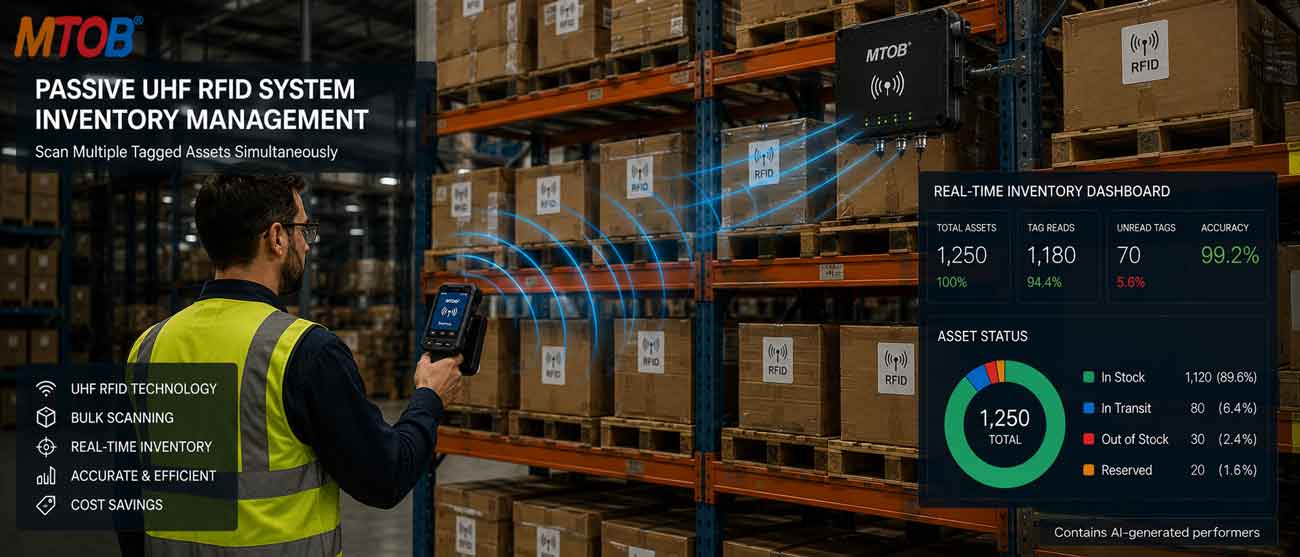
How Passive RFID Works
-
The tag receives energy.
-
The microchip activates.
-
The tag transmits its identifier back to the reader.
Once the tag leaves the reader’s field, it becomes inactive again.
Key Characteristics of Passive RFID
-
No battery
-
Low cost
-
Long lifespan
-
Lightweight design
-
Minimal maintenance
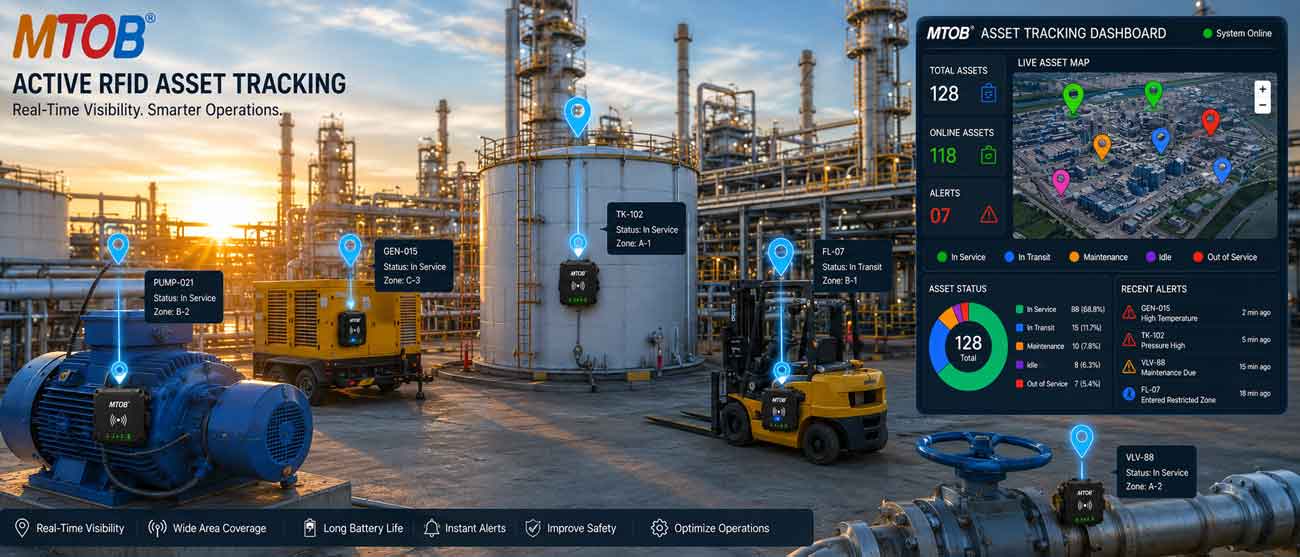
How Active RFID Works
-
Broadcast continuously
-
Transmit at scheduled intervals
-
Communicate with multiple readers simultaneously
This allows real-time asset monitoring across larger areas.
Key Characteristics of Active RFID
-
Internal battery
-
Long read range
-
Higher cost
-
Larger physical size
-
Real-time visibility
Side-by-Side Technology Comparison
| Feature | Passive RFID | Active RFID |
| Power Source | Reader Powered | Internal Battery |
| Typical Read Range | 1–15 meters | 30–300+ meters |
| Tag Cost | Low | High |
| Maintenance | Minimal | Battery Replacement |
| Tag Size | Small | Larger |
| Lifespan | 10–20 Years | 3–7 Years |
| Real-Time Tracking | Limited | Excellent |
| Infrastructure Cost | Lower | Higher |
This table highlights why each technology serves different business objectives.
Which RFID Technology Is More Affordable?
Cost is often the deciding factor for many RFID projects.
Passive RFID Pricing
| Tag Type | Approximate Cost |
| Paper RFID Labels | $0.08–$0.50 |
| Durable RFID Tags | $1–$10 |
| Industrial RFID Tags | $5–$30 |
Because no battery is required, passive tags remain highly affordable.
Active RFID Pricing
| Tag Type | Approximate Cost |
| Standard Active Tag | $20–$100 |
| Industrial Active Tag | $50–$300+ |
Battery technology, sensors, and communication modules increase costs substantially.
Read Range Comparison
Passive RFID Range
-
Frequency
-
Antenna design
-
Environmental conditions
-
Reader power
-
3–15 meters
Active RFID Range
-
30 meters
-
100 meters
-
300+ meters
Which Industries Prefer Passive RFID?
Common applications include:
Warehouse Inventory Management
Fast inventory audits and stock visibility.
Retail Item Tracking
Apparel, footwear, and merchandise management.
Manufacturing Operations
Work-in-process and asset identification.
Data Centers
IT asset tracking and infrastructure management.
Healthcare Equipment Tracking
Which Industries Prefer Active RFID?
Active RFID is typically used where real-time location visibility is critical.
Mining Operations
Oil and Gas Facilities
Monitoring high-value assets.
Container Yards
Managing equipment in large outdoor areas.
Airports
Tracking baggage carts and operational assets.
Defense and Military Logistics
A Practical Selection Framework
Consider the following.
Choose Passive RFID If:
Choose Active RFID If:
Common Misconceptions About Active RFID
This is not true.
Misconception #1
Many inventory applications require precise identification rather than maximum distance.
Misconception #2
Readers, gateways, and software remain necessary.
Misconception #3
Future Trends in RFID Technology
Several trends are shaping RFID adoption.
Battery-Assisted Passive RFID
Hybrid technology combining passive RFID with enhanced performance.
IoT Integration
RFID increasingly supports connected asset ecosystems.
Sensor-Enabled Tags
Tracking temperature, humidity, and shock conditions.
Digital Product Passports
Final Thoughts
-
Inventory management
-
Asset identification
-
Supply chain visibility
-
Large-scale deployments
-
Real-time tracking
-
Long-range monitoring
-
High-value asset visibility
Understanding the strengths and limitations of each approach helps organizations build more effective and cost-efficient RFID strategies.
FAQ
What is the main difference between Passive RFID and Active RFID?
Is Passive RFID cheaper than Active RFID?
Which RFID technology offers the longest read range?
Does Active RFID require battery replacement?
Which RFID technology is best for inventory management?
Passive RFID is typically the preferred choice because of its lower cost and scalability.

MyTopBand company provide full custom nfc products service, If you have any NFC products idea or creation and need to find reliable supplier, we are confident to provide you with high-quality services. Please find us: www.mytopband.com, or send message to info@mytopband.com, we will reply you within 24 hours.