
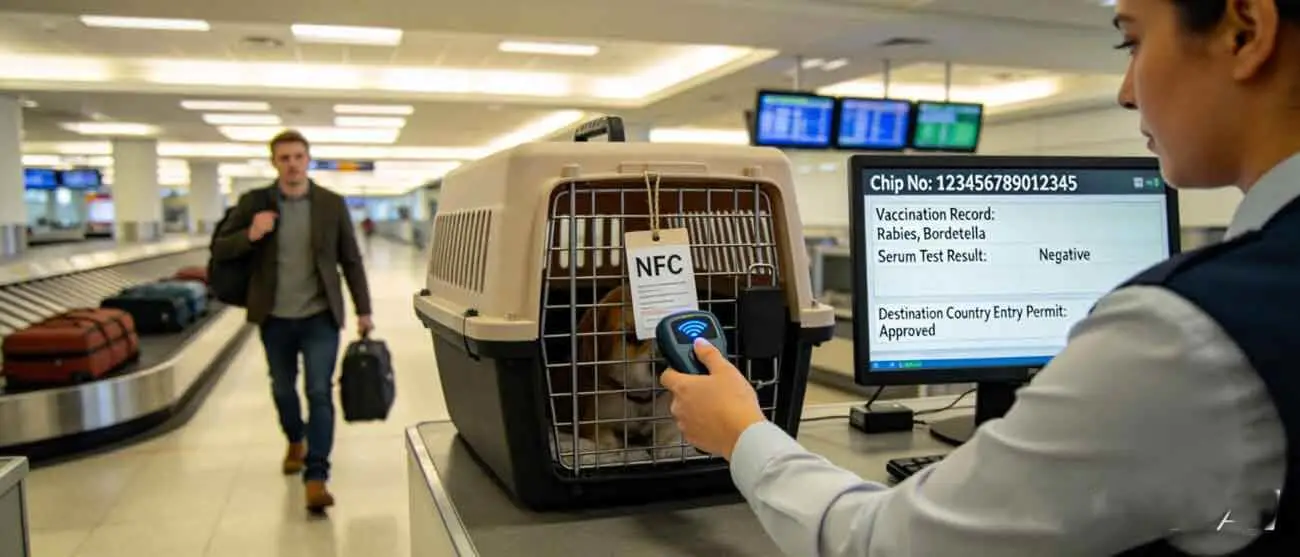
NFC Cards Simplify Health Checks for International Pet Shipping
International pet shipping has become increasingly common as more pet owners choose to take their beloved companions abroad for work, travel, or relocation. However, health checks and quarantine verification have long been a major bottleneck in the process, often causing delays, stress, and even complications for both pets and their owners. NFC Cards have emerged as an innovative solution that revolutionizes health checks for international pet shipping, making the entire process more efficient, secure, and convenient. Unlike traditional paper-based health certificates that are easily lost or damaged, NFC Cards store all essential health data in a secure, digital format that can be accessed quickly and accurately by quarantine officials and airline staff. By integrating advanced near-field communication technology, NFC Cards allow for seamless data transfer with a simple tap, eliminating the need for manual document checks and reducing the risk of human error. This simplification not only speeds up health verification but also ensures compliance with diverse international quarantine standards, providing peace of mind for pet owners and streamlining operations for airlines and检疫 agencies. NFC Cards have quickly become an indispensable tool in international pet shipping, transforming how health checks are conducted and setting a new standard for efficiency and reliability in cross-border pet travel.
Core Pain Points in Global Cross-Border Pet Shipping
Loss of Health Certificates in Cross-Border Pet Shipping Affects Quarantine Verification
One of the most frustrating and common pain points in international pet shipping is the loss of health certificates, which directly disrupts quarantine verification and can lead to significant delays or even the denial of entry for pets. Traditional health certificates are paper-based documents that are easily misplaced, damaged, or lost during the complex shipping process—whether during transit, handling by airline staff, or submission to quarantine authorities. When a health certificate is lost, pet owners are forced to go through the time-consuming process of obtaining a replacement, which involves revisiting a veterinarian, re-verifying health records, and paying additional fees. This not only delays the shipping schedule but also causes unnecessary stress for both the pet and the owner. For quarantine officials, the absence of a valid health certificate means they cannot verify the pet’s health status, putting the pet at risk of being quarantined for an extended period or even sent back to the country of origin. In some cases, lost health certificates can result in the pet being denied entry entirely, which is devastating for pet owners who have invested time and resources into planning the move. This issue highlights the need for a more secure and reliable way to store and access pet health data, which is exactly what NFC Cards provide.
Ununiform Quarantine Standards Across Countries Increase Shipping Difficulty
Another major challenge in international pet shipping is the lack of uniform quarantine standards across different countries, which significantly increases the difficulty and complexity of the process. Each country has its own unique requirements for pet entry, including specific vaccination protocols,驱虫 schedules, and health testing requirements. For example, some countries require pets to be vaccinated against rabies at least 30 days before entry, while others have stricter timeframes or additional vaccinations for other diseases. Additionally, some countries mandate a mandatory quarantine period upon arrival, while others waive it if the pet’s health records are complete and compliant. Navigating these varying standards is extremely challenging for pet owners and shipping agents, who must ensure that all requirements are met to avoid delays or entry denial. Traditional paper-based records make it difficult to track and verify compliance with multiple sets of standards, as officials must manually cross-check each requirement against the document. This not only increases the risk of human error but also prolongs the verification process. The lack of uniformity in quarantine standards creates confusion and uncertainty, making international pet shipping a stressful and complicated process for everyone involved.
Cumbersome Traditional Verification Methods Delay Shipping Timeliness
Traditional health verification methods for international pet shipping are cumbersome, time-consuming, and prone to delays, which can disrupt the entire shipping schedule and cause stress for pets and owners alike. In the traditional process, quarantine officials and airline staff must manually review paper-based health certificates, vaccination records, and other relevant documents. This involves checking each entry for accuracy, verifying that all required information is present, and cross-referencing the data with the country’s quarantine standards. This manual process is not only slow but also prone to human error—mistakes in data entry, missing information, or misinterpretation of requirements can lead to delays or even entry denial. For example, a simple typo in the pet’s vaccination date or chip number can result in the verification process being halted, requiring additional time to correct the error. Additionally, paper documents can be difficult to read or may be damaged, further slowing down the process. These delays can have serious consequences, as pets may be held in transit for extended periods, increasing their stress and risk of illness. The cumbersome nature of traditional verification methods has long been a major pain point in international pet shipping, and there is an urgent need for a more efficient solution.
Exclusive Design and Safety Guarantee of NFC Pet Shipping Cards
Bend-Resistant Material Adapts to Complex Pet Shipping Scenarios
NFC Cards for international pet shipping are designed with bend-resistant materials to withstand the complex and often harsh scenarios encountered during cross-border travel. Pet shipping involves multiple stages of handling, including loading and unloading from crates, transport between airports, and storage in warehouses or quarantine facilities. During these processes, the card may be subjected to bending, pressure, or rough handling, which could damage traditional paper documents or fragile digital storage devices. To address this, NFC Cards are made from high-quality, flexible materials that are resistant to bending and impact, ensuring that the card remains intact and functional throughout the entire shipping process. The core chip of the NFC Cards is encapsulated in a durable shell that provides additional protection against physical damage, preventing data loss or corruption. Whether the card is stored in a pet’s crate, a owner’s bag, or handled by airline or quarantine staff, it can withstand the rigors of international pet shipping. This bend-resistant design not only extends the lifespan of the NFC Cards but also ensures that critical health data is always accessible when needed, providing a reliable solution for pet owners and shipping professionals.
Waterproof Performance Copes with Humid Environments During Shipping
Humid environments are a common challenge in international pet shipping, whether due to changes in climate, condensation during air transport, or accidental exposure to water. To ensure that pet health data remains secure and accessible, NFC Cards for pet shipping are equipped with excellent waterproof performance. The cards are designed with a fully sealed structure, using advanced waterproof technology to prevent moisture from entering the card and damaging the internal chip. This waterproof design meets or exceeds IP67 standards, meaning the card can be submerged in water for a short period without any loss of data or functionality. This is particularly important during air transport, where changes in temperature and pressure can cause condensation inside the cargo hold, potentially damaging paper documents or unprotected digital devices. With waterproof NFC Cards, pet owners can rest assured that their pet’s health data will remain intact even in humid conditions. Additionally, the waterproof design makes the cards easy to clean, allowing staff to wipe off any dirt or moisture without worrying about damaging the card. This waterproof performance is a critical feature of NFC Cards, ensuring reliability in all types of shipping environments.
Encrypted Information Storage Strictly Protects Pet Health Data
Pet health data is sensitive information that requires strict protection to ensure privacy and prevent unauthorized access or tampering. NFC Cards for international pet shipping use advanced encryption technology to store pet health data securely, ensuring that only authorized personnel—such as quarantine officials and airline staff—can access the information. The data stored on the NFC Cards is encrypted using industry-standard encryption algorithms, making it virtually impossible for unauthorized individuals to read or modify the data. This encryption not only protects the privacy of the pet and its owner but also ensures the integrity of the health data, preventing tampering that could lead to incorrect verification or entry denial. Additionally, the NFC Cards require a secure authentication process to access the data, further enhancing security. For example, quarantine officials must use a authorized handheld terminal to read the card, ensuring that only those with the proper credentials can access the sensitive information. This encrypted storage feature gives pet owners peace of mind knowing that their pet’s health data is protected throughout the shipping process, while also ensuring compliance with data privacy regulations in different countries.
Core Health Verification Data Integrated in NFC Cards
Store Complete Vaccination Records for Quick Quarantine Verification
One of the most important pieces of data integrated into NFC Cards for international pet shipping is the pet’s complete vaccination records, which are essential for quick and accurate quarantine verification. Vaccination records are a key requirement for pet entry in almost all countries, as they prove that the pet is protected against common diseases such as rabies, distemper, and parvovirus. NFC Cards store detailed vaccination information, including the type of vaccine administered, the date of vaccination, the expiration date of the vaccine, and the name and contact information of the veterinarian who administered the vaccine. This comprehensive data allows quarantine officials to quickly verify that the pet meets the country’s vaccination requirements with a simple tap of the card. Unlike paper-based records, which may be incomplete or difficult to read, the digital vaccination records on NFC Cards are clear, accurate, and easy to access. This not only speeds up the verification process but also reduces the risk of human error, ensuring that the pet’s vaccination status is correctly assessed. For pet owners, this means less time spent waiting for verification and a lower risk of delays due to incomplete or incorrect vaccination records.
Retain Pet Deworming Certificates to Meet Entry Requirements of Various Countries
In addition to vaccination records, NFC Cards also retain pet deworming certificates, which are required by many countries to prevent the spread of parasites across borders. Deworming is a critical part of pet health checks for international shipping, as parasites such as tapeworms, roundworms, and heartworms can pose a risk to both animal and human health. NFC Cards store detailed deworming information, including the type of deworming medication used, the date of administration, and the next scheduled deworming date. This information is essential for quarantine officials to verify that the pet has been properly dewormed and meets the entry requirements of the destination country. Some countries have strict deworming requirements, such as mandating deworming within a specific timeframe before entry, and the digital records on NFC Cards make it easy to confirm compliance. This eliminates the need for pet owners to carry separate paper deworming certificates, reducing the risk of loss or damage. By storing deworming certificates in NFC Cards, pet owners can ensure that their pet meets all entry requirements and avoid delays or quarantine due to missing or incomplete deworming records.
Record Pet Chip Number and Quarantine Certificate Information
NFC Cards also store the pet’s chip number and quarantine certificate information, two critical pieces of data for international pet shipping. A pet’s microchip is a permanent form of identification that is required by most countries for entry, as it allows officials to track the pet’s identity and health history. The chip number stored on the NFC Card is linked to the pet’s health records, making it easy for quarantine officials to cross-reference the chip number with the data on the card. This ensures that the pet being shipped is the same one listed in the health records, preventing fraud or mix-ups. Additionally, NFC Cards store detailed quarantine certificate information, including the certificate number, the date of issuance, the expiration date, and the issuing authority. This information is essential for verifying that the pet has completed any required pre-shipping quarantine or health testing. By integrating both the pet’s chip number and quarantine certificate information into the NFC Card, officials can quickly and accurately verify the pet’s identity and compliance with entry requirements, streamlining the verification process and reducing the risk of delays.
Adaptation Schemes for Pet Entry Quarantine Systems in Different Countries
Adapt to EU Pet Entry Quarantine Standards for Quick Customs Clearance
The European Union (EU) has strict but standardized pet entry quarantine requirements, and NFC Cards are designed to adapt to these standards, enabling quick customs clearance for pets entering EU countries. The EU’s pet entry requirements include a valid rabies vaccination, a pet microchip, and a European Pet Passport (or equivalent health certificate). NFC Cards for EU pet shipping are pre-programmed to store all the data required by the EU, including the pet’s microchip number, rabies vaccination records, deworming records, and other relevant health information. This data is formatted to be compatible with the EU’s quarantine verification systems, allowing officials to quickly read and verify the information with a handheld terminal. By using NFC Cards, pet owners can avoid the need for a separate paper Pet Passport, reducing the risk of loss or damage. Additionally, the digital data on the NFC Card is updated in real time, ensuring that any changes to the pet’s health status (such as a booster vaccination) are immediately reflected. This adaptation to EU standards ensures that pets can clear customs quickly and efficiently, reducing stress for both the pet and the owner and avoiding delays in the shipping process.
Comply with Australia’s Strict Pet Quarantine Entry Norms
Australia has some of the strictest pet quarantine entry norms in the world, designed to protect its unique ecosystem from the introduction of foreign diseases and parasites. NFC Cards for pet shipping to Australia are specifically designed to comply with these strict requirements, ensuring that pets meet all entry criteria and can complete the quarantine process smoothly. Australia’s requirements include a series of pre-shipping health tests, a valid rabies vaccination (if applicable), deworming, and a mandatory post-arrival quarantine period. NFC Cards store all the required pre-shipping health data, including test results, vaccination records, and deworming information, which can be easily accessed by Australian quarantine officials. The cards are also compatible with Australia’s quarantine management system, allowing officials to track the pet’s health status throughout the quarantine period. This compatibility ensures that the verification process is efficient and accurate, reducing the risk of delays or entry denial. By using NFC Cards, pet owners can ensure that all required information is readily available, making the process of shipping a pet to Australia less stressful and more straightforward.
Adapt to Japan’s Pet Entry Quarantine Process and Core Requirements
Japan has specific pet entry quarantine processes and core requirements that must be met for pets to enter the country, and NFC Cards are adapted to these requirements to facilitate smooth entry. Japan’s pet entry requirements include a valid rabies vaccination, a pet microchip, a health certificate issued by a recognized veterinarian, and in some cases, a rabies antibody test. NFC Cards for pet shipping to Japan store all of this critical information, formatted to be compatible with Japan’s quarantine verification systems. Quarantine officials in Japan can quickly read the card to verify the pet’s health status, vaccination records, and microchip information, ensuring compliance with all entry requirements. Additionally, the NFC Cards can store information about any required pre-shipping tests, such as the rabies antibody test, making it easy for officials to confirm that all tests have been completed and the results are valid. This adaptation to Japan’s quarantine process ensures that pets can go through the verification process quickly, reducing the time spent in quarantine and minimizing stress for the pet. For pet owners, this means a more efficient and reliable shipping experience, with fewer delays and complications.
Efficient Reading Operation Process for Airlines and Quarantine Agencies
Quarantine Personnel Quickly Read Data in the Card Through Handheld Terminals
Quarantine personnel can quickly read the data stored in NFC Cards using handheld terminals, a key feature that streamlines the health verification process for international pet shipping. The handheld terminals used by quarantine agencies are specially designed to be compatible with NFC technology, allowing for seamless and fast data transfer. When a pet arrives at the destination airport, quarantine officials simply bring the handheld terminal close to the NFC Card (within 5 centimeters), and the terminal automatically connects to the card and reads all the stored health data. This process takes only 1-2 seconds, significantly faster than manual document checks, which can take several minutes per pet. The handheld terminal displays the data in a clear, easy-to-read format, allowing officials to quickly verify the pet’s health status, vaccination records, and compliance with entry requirements. This speed and efficiency are crucial in busy airports, where large numbers of pets may be processed daily. By using handheld terminals to read NFC Cards, quarantine personnel can reduce waiting times, improve workflow, and ensure that pets are processed quickly and accurately.
Airlines Synchronously Verify Pet Health Data to Improve Overall Efficiency
Airlines play a critical role in international pet shipping, and NFC Cards allow airlines to synchronously verify pet health data, improving the overall efficiency of the shipping process. Before a pet is boarded, airline staff can use handheld terminals to read the NFC Card and verify that the pet’s health records are complete and compliant with the destination country’s requirements. This synchronous verification ensures that any issues with the pet’s health data are identified before the flight, avoiding delays or complications upon arrival. For example, if the pet’s vaccination records are incomplete or expired, airline staff can notify the pet owner immediately, allowing them to resolve the issue before the flight departs. This not only saves time but also reduces the risk of the pet being denied entry at the destination. Additionally, the data from the NFC Card can be synchronized with the airline’s shipping system, allowing staff to track the pet’s health status throughout the journey. This synchronization between airlines and quarantine agencies ensures a smooth, efficient process from boarding to arrival, benefiting both pet owners and shipping professionals.
Simple Operation Process Reduces Waiting Time for Shipping Verification
The operation process for reading NFC Cards is simple and straightforward, reducing the waiting time for shipping verification and making the entire process more convenient for pet owners and staff. Unlike traditional verification methods, which require manual document checks and cross-referencing, reading an NFC Card requires only a single tap with a handheld terminal. There is no need for pet owners to fill out additional forms, present multiple paper documents, or wait for staff to manually verify each piece of information. The simplicity of the process means that even staff with minimal training can quickly and accurately read the card and verify the pet’s health data. This reduces the time spent on verification, both at the departure and arrival airports, minimizing waiting times for pet owners and ensuring that pets are processed efficiently. Additionally, the simple operation process reduces the risk of human error, as there is no need for manual data entry or interpretation of paper documents. This simplicity and efficiency make NFC Cards an ideal solution for international pet shipping, transforming the verification process into a quick and stress-free experience.
Why Choose Mytopband?
- Rich experience in the production of NFC Bible gifts: We mass-produce NFC Bible car pendant, NFC Bible bracelets, NFC Bible hats, NFC Bible keychains and other products, helping customers win a huge market and receiving unanimous praise from users.
- Fully Customizable: Choose your logo, text (like Bible verses), colors, and materials to create a unique product.
- Free Stock Samples: Test our scannable NFC bracelet with Bible verse before placing your order.
- Low MOQ as 500pcs: Perfect for startups and small businesses.

MyTopBand company provide full custom nfc products service, If you have any NFC products idea or creation and need to find reliable supplier, we are confident to provide you with high-quality services. Please find us: www.mytopband.com, or send message to info@mytopband.com, we will reply you within 24 hours.