
The Light Luxury Apparel Industry Urgently Needs to Improve the Authentic Product Traceability and Brand Anti-Counterfeiting System
Authentic Product Traceability of Light Luxury Apparel is the Core Support for Safeguarding Brand Reputation
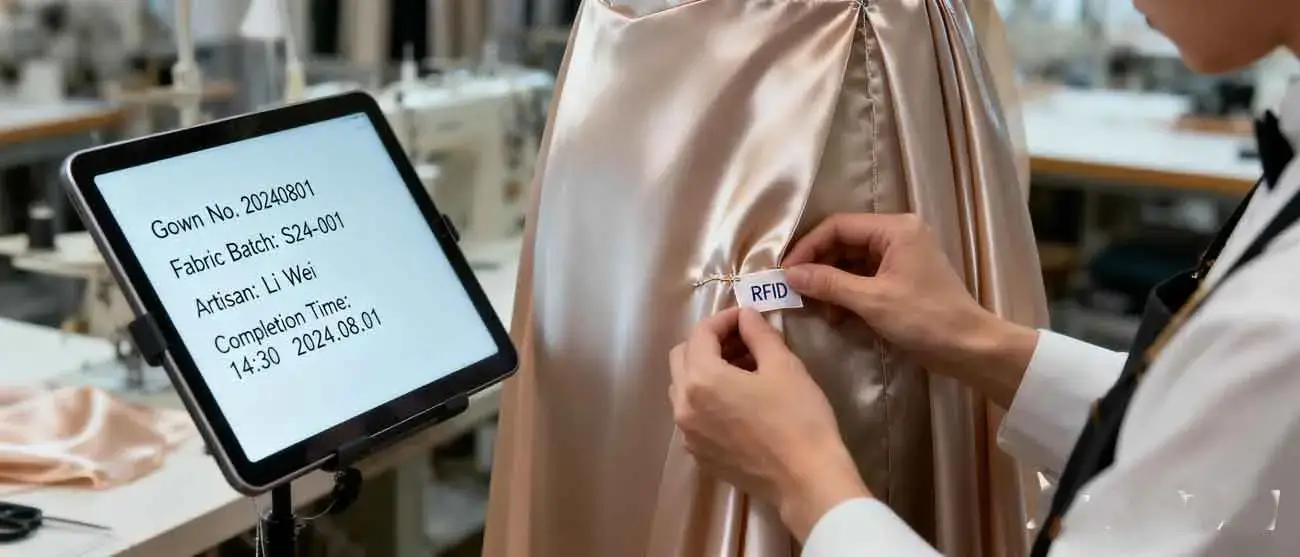
In the light luxury apparel industry, brand reputation is the core competitiveness that determines the long-term development of enterprises. With the continuous improvement of consumers’ living standards and brand awareness, more and more consumers are willing to pay for high-quality light luxury apparel, and their demand for product authenticity is becoming increasingly urgent. Authentic product traceability has become the core support for light luxury brands to safeguard their brand reputation. For light luxury brands, every piece of apparel represents the brand’s image and quality commitment. If counterfeit products flow into the market, it will not only damage the brand’s image but also reduce consumers’ trust in the brand, resulting in the loss of customers and market share. The RFID Fabric Tags have emerged as the times require, providing an effective solution for the authentic product traceability of light luxury apparel. The RFID Fabric Tags are seamlessly woven into the apparel, which can store the unique identity information of each piece of apparel, including production batch, raw material source, production process, and other key information. Through the RFID Fabric Tags, brands can realize the full-chain traceability of products from production to sales, ensuring that every piece of apparel sold to consumers is authentic. This not only safeguards the brand’s reputation but also enhances consumers’ trust in the brand, laying a solid foundation for the long-term development of the brand. In addition, the RFID Fabric Tags also cooperate with ECO RFID cards to further improve the traceability system, making the traceability process more efficient and environmentally friendly.
The Chaos of Counterfeiting Forces Brands to Strengthen Anti-Counterfeiting and Traceability Capabilities
In recent years, the light luxury apparel industry has been plagued by the chaos of counterfeiting. Counterfeit light luxury apparel, with its low cost and similar appearance, has flooded the market, seriously disrupting the market order and damaging the interests of brands and consumers. Counterfeit products not only have poor quality, which may cause skin irritation and other problems to consumers, but also confuse consumers’ judgment, making it difficult for consumers to distinguish between genuine and counterfeit products. This chaos has forced light luxury brands to strengthen their anti-counterfeiting and traceability capabilities to protect their own interests and the legitimate rights and interests of consumers. Traditional anti-counterfeiting methods, such as anti-counterfeiting labels and watermarks, are easy to be copied and imitated by counterfeiters, and their anti-counterfeiting effect is limited. The RFID Fabric Tags have unique anti-counterfeiting advantages. Each RFID Fabric Tag has a unique electronic code that cannot be copied or tampered with, and the information stored in the tag can only be read by a dedicated scanner, which effectively prevents counterfeiters from copying and forging. In addition, the RFID Fabric Tags are woven into the apparel, which is not easy to be torn off or replaced, further enhancing the anti-counterfeiting effect. By using RFID Fabric Tags, light luxury brands can effectively distinguish genuine products from counterfeit products, crack down on counterfeiting activities, and maintain the market order. At the same time, the combination of ECO RFID cards and RFID Fabric Tags can further improve the anti-counterfeiting system, making it more difficult for counterfeiters to take advantage of loopholes.
Consumers’ Demand for Querying Traceability Information of Light Luxury Apparel is Increasingly Rising
With the improvement of consumers’ awareness of rights protection and quality requirements, their demand for querying traceability information of light luxury apparel is increasingly rising. Modern consumers are no longer satisfied with simply purchasing products; they also want to know the source of the product, production process, quality inspection results, and other relevant information to ensure that the product they purchase is authentic and of high quality. For light luxury apparel, consumers are more concerned about whether the product is made of high-quality materials, whether the production process is exquisite, and whether it meets the brand’s quality standards. The traditional traceability query method is cumbersome and inefficient, requiring consumers to enter a large number of codes or log in to a specific platform, which cannot meet the consumers’ demand for convenient and quick query. The RFID Fabric Tags solve this problem perfectly. Consumers only need to use their mobile phones or dedicated scanners to scan the RFID Fabric Tags on the apparel, and they can quickly obtain the complete traceability information of the product, including production information, logistics information, and quality inspection information. This convenient query method not only meets the consumers’ demand for traceability information but also enhances the transparency of the product, making consumers more assured when purchasing. In addition, the ECO RFID cards can also be used as a supplementary tool for traceability query, allowing consumers to query traceability information more flexibly. The increasing demand for traceability information has also promoted light luxury brands to accelerate the construction of traceability systems, and RFID Fabric Tags have become an indispensable part of this system.
Optimize the Weaving Process and Signal Testing of RFID Fabric Tags for Light Luxury Apparel Fabrics
Adopt Refined Weaving Process to Ensure Perfect Integration of Tags and Apparel Fabrics
Light luxury apparel pays great attention to the texture and appearance, so the RFID Fabric Tags must be perfectly integrated with the apparel fabrics to avoid affecting the overall beauty and comfort of the apparel. To achieve this goal, we adopt a refined weaving process to ensure that the RFID Fabric Tags are seamlessly woven into the apparel fabrics. The refined weaving process uses advanced weaving equipment and professional technical personnel to control every link of the weaving process precisely. First, we select high-quality RFID chips and fabric materials that are consistent with the light luxury apparel fabrics, ensuring that the tags have good compatibility with the fabrics. Then, the technical personnel weave the RFID chips into the fabrics according to the design requirements, controlling the weaving density and tension to ensure that the tags are flat and smooth, and do not protrude or wrinkle. The edge of the tags is treated with a special process to make it consistent with the fabric texture, avoiding scratching the consumer’s skin. In addition, the refined weaving process also ensures that the RFID Fabric Tags do not affect the breathability and flexibility of the fabrics, maintaining the comfort of the apparel. This perfect integration not only ensures the aesthetic and comfort of the apparel but also ensures the stable performance of the RFID Fabric Tags, allowing the tags to work normally throughout the product life cycle. The combination of the refined weaving process and ECO RFID cards also makes the traceability system more environmentally friendly and sustainable.
Adapt to the Characteristics of Different Light Luxury Fabrics and Optimize the Tag Weaving Details Without Damaging the Texture
Light luxury apparel uses a variety of high-quality fabrics, such as cashmere, silk, cotton, and wool, each with different characteristics, such as thickness, softness, and texture. Therefore, it is necessary to adapt to the characteristics of different light luxury fabrics and optimize the tag weaving details to avoid damaging the fabric texture. For thin and soft fabrics such as silk and cashmere, we use ultra-thin RFID chips and lightweight fabric materials, and adopt a loose weaving method to ensure that the tags do not increase the thickness of the fabric or affect the softness of the fabric. The weaving position is selected at the inconspicuous part of the apparel, such as the inner side of the collar or the hem, to avoid affecting the appearance of the apparel. For thick and tough fabrics such as wool and cotton, we use high-strength RFID chips and durable fabric materials, and adopt a tight weaving method to ensure that the tags are firmly fixed on the fabrics and not easy to fall off. The weaving details are optimized according to the fabric’s texture, such as adjusting the weaving pattern to be consistent with the fabric’s grain, making the tags blend with the fabrics more naturally. In addition, we also conduct a series of tests on the woven tags, such as washing resistance, wear resistance, and stretching resistance, to ensure that the tags can maintain stable performance without damaging the fabric texture during the use of the apparel. This targeted optimization of weaving details ensures that the RFID Fabric Tags are suitable for various light luxury fabrics, providing reliable support for the traceability of light luxury apparel.
Conduct Full-Scene Signal Testing to Ensure the Stability and Accuracy of Tag Recognition
The stable and accurate recognition of RFID Fabric Tags is crucial for the traceability of light luxury apparel. Therefore, it is necessary to conduct full-scene signal testing to ensure that the tags can be recognized stably and accurately in various scenarios. The full-scene signal testing covers all links of the product life cycle, including production, logistics, storage, and sales. In the production link, we test the signal strength and recognition rate of the RFID Fabric Tags during the weaving process to ensure that the tags are not damaged and can work normally. In the logistics link, we simulate various transportation environments, such as high temperature, low temperature, humidity, and vibration, to test the signal stability of the tags, ensuring that the tags can still be recognized accurately after long-distance transportation. In the storage link, we test the signal recognition of the tags in different storage environments, such as warehouses with different temperatures and humidity, to ensure that the tags are not affected by the storage environment. In the sales link, we test the signal recognition of the tags in the store environment, including different lighting conditions, distances, and angles, to ensure that the store staff and consumers can scan the tags quickly and accurately. During the testing process, we use professional testing equipment to record the signal strength, recognition rate, and response time of the tags, and optimize the tags and scanning equipment according to the test results. This full-scene signal testing ensures that the RFID Fabric Tags have stable and accurate recognition performance in all scenarios, providing reliable support for the full-chain traceability of light luxury apparel. The ECO RFID cards also undergo the same full-scene signal testing to ensure that they can cooperate with the RFID Fabric Tags to achieve efficient traceability.
Standardize the Accurate Chip Writing Process for Full-Chain Information of Light Luxury Apparel
Accurately Write Core Production Information Such as Fabrics and Processes in the Production Link
The production link is the starting point of the full-chain traceability of light luxury apparel, and accurately writing core production information into the RFID Fabric Tags is crucial for ensuring the authenticity and traceability of the product. The core production information includes fabric information, production process information, quality inspection information, and production batch information. In the production link, we establish a standardized information writing process to ensure the accuracy and completeness of the information. First, the production staff collects detailed production information, including the type, origin, and quality of the fabric, the production process parameters, the results of each quality inspection link, and the production batch number. Then, the staff uses a dedicated RFID writer to write the collected information into the chip of the RFID Fabric Tags. The writing process is carried out in a clean and stable environment to avoid signal interference or operation errors. After writing, the staff uses a scanner to read the chip information to verify whether the production information is accurate and complete, and whether there are any missing or wrong items. If any error is found, the information needs to be rewritten in time. In addition, the writing process is recorded in detail, including the writing time, operator, and production batch information, for future traceability. This standardized writing process ensures that the core production information in the RFID Fabric Tags is accurate and reliable, laying a solid foundation for the full-chain traceability of the product. The ECO RFID cards also store the same core production information, which can be used as a backup to ensure the integrity of the traceability information.
Synchronously Record Transportation Trajectory in the Logistics Link to Realize Full-Process Traceability
The logistics link is an important part of the full-chain traceability of light luxury apparel, and synchronously recording the transportation trajectory into the RFID Fabric Tags can realize the full-process traceability of the product from the factory to the store. In the logistics link, we cooperate with professional logistics companies to install RFID readers and positioning devices in the transportation vehicles, which can record the real-time location and transportation status of the products. The transportation trajectory information includes the departure time, departure location, arrival time, arrival location, transportation vehicle information, and driver information. This information is synchronously transmitted to the background management system and written into the RFID Fabric Tags through the dedicated writer. During the transportation process, the staff can query the real-time transportation trajectory of the products through the background system, and consumers can also query the transportation information of the products by scanning the RFID Fabric Tags after purchasing. This full-process transportation trajectory recording not only ensures the safety of the products during transportation but also allows brands and consumers to grasp the flow of the products in real time, avoiding the loss or replacement of products during transportation. In addition, the ECO RFID cards also store the transportation trajectory information, which can be used to verify the authenticity of the product and the accuracy of the traceability information, further improving the reliability of the traceability system.
Supplement Warehousing and Display Information at the Store End to Improve Full-Chain Data
The store end is the final link of the full-chain traceability of light luxury apparel, and supplementing warehousing and display information at the store end can improve the completeness of the full-chain data. When the products arrive at the store, the store staff uses a scanner to read the RFID Fabric Tags, and supplements the warehousing information, including the arrival time, warehousing location, and storage time. Then, when the products are put on display, the staff supplements the display information, including the display location, display time, and sales status. This information is written into the RFID Fabric Tags and synchronized to the background management system, forming a complete full-chain traceability data. The supplemented warehousing and display information not only helps the store manage the products efficiently but also provides more detailed traceability information for consumers. For example, consumers can query the arrival time of the product at the store and the display status, which enhances the transparency of the product and the trust of consumers. In addition, the store staff can also use the traceability data to analyze the sales status of the products, adjust the display strategy and inventory management, and improve the operational efficiency of the store. The ECO RFID cards also store the warehousing and display information, which can be used to check the consistency of the data and ensure the accuracy of the full-chain traceability.
Simplify the Rapid Scanning and Verification Process of RFID Tags in Offline Stores
Optimize Store Scanning Equipment to Adapt to the High-End Service Scenario of Light Luxury Stores
Light luxury stores pay great attention to the high-end service experience of consumers, so the scanning equipment used for RFID Fabric Tags must be optimized to adapt to the high-end service scenario of light luxury stores. Traditional scanning equipment is usually bulky, unsightly, and inconvenient to use, which affects the overall service experience of the store. To solve this problem, we optimize the store scanning equipment, making it small, exquisite, and fashionable, which is consistent with the high-end positioning of light luxury stores. The optimized scanning equipment is small in size, easy to carry, and can be held by the store staff with one hand, which is convenient for scanning and verification. The appearance of the equipment is designed to be simple and elegant, with a high-end texture, which is consistent with the decoration style of light luxury stores. In addition, the scanning equipment is equipped with a high-sensitivity scanner, which can quickly read the information in the RFID Fabric Tags, completing the verification in 0.5 seconds. The equipment also has a long battery life, which can meet the daily use needs of the store without frequent charging. This optimized scanning equipment not only improves the efficiency of scanning and verification but also enhances the high-end service experience of the store, making consumers feel more respected and valued. The ECO RFID cards can also be scanned by the same equipment, ensuring the consistency and efficiency of the scanning process.
Realize Rapid Scanning and Verification to Help Store Staff Efficiently Identify the Authenticity of Apparel
Efficiently identifying the authenticity of apparel is an important responsibility of light luxury store staff, and the RFID Fabric Tags can help staff realize rapid scanning and verification, improving the efficiency of authenticity identification. The traditional authenticity identification method requires staff to check the details of the apparel, such as the logo, stitching, and fabric, which is time-consuming and labor-intensive, and requires professional skills. The RFID Fabric Tags simplify the authenticity identification process. The store staff only needs to use the optimized scanning equipment to scan the RFID Fabric Tags on the apparel, and the equipment will immediately display the product’s traceability information, including production information, logistics information, and store information. If the product is genuine, the information will be consistent with the background data; if the product is counterfeit, the equipment will prompt an error, and the staff can quickly identify the counterfeit product. This rapid scanning and verification method not only saves the time and energy of the staff but also improves the accuracy of authenticity identification, avoiding the misjudgment caused by manual identification. In addition, the scanning equipment can automatically record the verification results, which is convenient for the store to manage and statistics. The ECO RFID cards can also be used to assist in authenticity identification, providing double guarantee for the authenticity of the product. This efficient authenticity identification method helps store staff better protect the interests of the brand and consumers.
Simplify the Operation Process to Reduce the Use Threshold for Store Staff
Store staff have different levels of familiarity with electronic equipment, so it is necessary to simplify the operation process of scanning and verification to reduce the use threshold for store staff. The operation process of the RFID Fabric Tags scanning equipment is designed to be simple and easy to understand, with clear operation prompts and a user-friendly interface. The staff only needs to turn on the equipment, align the scanner with the RFID Fabric Tags, and press the scanning button to complete the verification. The equipment will display the verification result in a clear and intuitive way, such as a green light for success and a red light for failure, which is easy for the staff to understand. In addition, we provide simple training for store staff, explaining the operation steps, common problems, and solutions of the scanning equipment, helping the staff master the use method quickly. The training content is simple and practical, and the staff can master the operation skills in a short time without professional technical knowledge. This simplified operation process not only reduces the use threshold for store staff but also improves the work efficiency of the staff, avoiding the delay of work due to incorrect operation. The ECO RFID cards have the same simple operation process, ensuring that the staff can use them flexibly. This user-friendly design makes the RFID Fabric Tags more popular among store staff, promoting the wide application of the traceability system in light luxury stores.
Provide Clear Guidance for Customers to Independently Scan and Query Apparel Traceability Information
Design Simple and Easy-to-Understand Independent Scanning Operation Guidelines Suitable for All Types of Customers
Customers have different ages, educational backgrounds, and levels of familiarity with electronic equipment, so it is necessary to design simple and easy-to-understand independent scanning operation guidelines suitable for all types of customers. The operation guidelines are designed in a concise and clear way, using simple language and clear steps to guide customers to complete the scanning and query process. The guidelines are printed on the tag or the product manual, and there are also prompt signs in the store to guide customers. The operation steps are as follows: first, turn on the NFC function of the mobile phone; second, align the mobile phone with the RFID Fabric Tags on the apparel; third, wait for 1-2 seconds, and the traceability information will be displayed on the mobile phone screen. For customers who are not familiar with mobile phone operations, the store staff can provide timely help and guidance. In addition, the guidelines also include common problems and solutions, such as failure to scan, unreadable information, etc., helping customers solve problems encountered during the query process quickly. This simple and easy-to-understand operation guideline ensures that all types of customers can independently complete the scanning and query of traceability information, improving the convenience of customer query. The ECO RFID cards also have the same operation guidelines, allowing customers to query traceability information more flexibly.
Ensure that Complete Traceability Information is Quickly Presented After Scanning to Enhance Customer Trust
The speed and completeness of traceability information presentation directly affect the customer’s trust in the product and the brand. Therefore, it is necessary to ensure that complete traceability information is quickly presented after scanning the RFID Fabric Tags to enhance customer trust. The RFID Fabric Tags are equipped with high-sensitivity chips and use advanced signal transmission technology, which can quickly transmit the traceability information to the customer’s mobile phone after scanning, and the information can be displayed in 1-2 seconds. The presented traceability information is complete and detailed, including production information (fabric, process, quality inspection), logistics information (transportation trajectory, arrival time), and store information (warehousing, display). The information is displayed in a clear and intuitive way, easy for customers to read and understand. In addition, the traceability information is real-time and accurate, and will be updated synchronously with the background system, ensuring that customers can obtain the latest information. This quick presentation of complete traceability information not only enhances the transparency of the product but also makes customers more assured when purchasing, improving customer trust in the brand. The ECO RFID cards also display the same complete traceability information, providing double guarantee for customer trust.
Support the Saving and Sharing of Traceability Information to Strengthen Brand Reputation Transmission
Supporting the saving and sharing of traceability information can help strengthen the transmission of brand reputation, allowing customers to become the disseminators of the brand. The RFID Fabric Tags support customers to save the traceability information to their mobile phones, so that customers can query the information at any time after purchasing the product. In addition, the traceability information also supports sharing through social media platforms, such as WeChat, Facebook, and Instagram. Customers can share the traceability information of the product with their friends and relatives, showing that they have purchased genuine light luxury apparel, and at the same time, they can also recommend the brand to others. This sharing function not only helps to expand the brand’s influence but also enhances the brand’s reputation, as the recommendation from customers is more credible than the brand’s own promotion. For light luxury brands, this kind of word-of-mouth transmission is crucial for improving brand awareness and market share. The ECO RFID cards also support the saving and sharing of traceability information, further expanding the scope of brand reputation transmission. By supporting the saving and sharing of traceability information, the RFID Fabric Tags not only provide convenience for customers but also help brands strengthen brand reputation transmission, achieving a win-win situation between brands and customers.
Why Choose Mytopband?
- Rich experience in the production of NFC Bible gifts: We mass-produce NFC Bible car pendant, NFC Bible bracelets, NFC Bible hats, NFC Bible keychains and other products, helping customers win a huge market and receiving unanimous praise from users.
- Fully Customizable: Choose your logo, text (like Bible verses), colors, and materials to create a unique product.
- Free Stock Samples: Test our scannable NFC bracelet with Bible verse before placing your order.
- Low MOQ as 500pcs: Perfect for startups and small businesses.

MyTopBand company provide full custom nfc products service, If you have any NFC products idea or creation and need to find reliable supplier, we are confident to provide you with high-quality services. Please find us: www.mytopband.com, or send message to info@mytopband.com, we will reply you within 24 hours.