
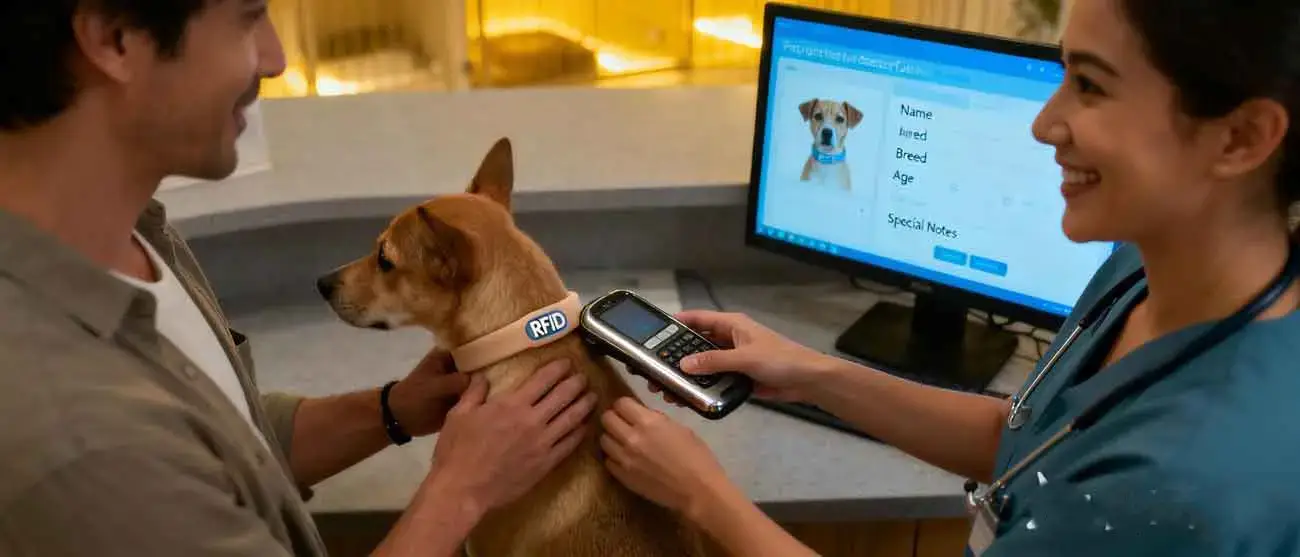
Multi-Pet Concentrated Care Scenarios Put Forward Requirements for Rapid Identity Verification and Health Traceability
Foster Care Centers Need Efficient Pet Identity Verification Methods for Multi-Pet Concentrated Management
Pet foster care centers are important places that provide temporary care services for pets when their owners are away, and most of these centers face the scenario of concentrated care for multiple pets of different breeds, sizes and personalities. With the increasing demand for pet foster care services, the number of pets received by foster care centers every day is constantly increasing, and efficient pet identity verification has become an indispensable part of daily management. In the daily operation of foster care centers, staff need to quickly verify the identity of each pet when they check in, check out, receive daily care, and carry out health checks to avoid confusion between pets with similar appearances. Traditional identity verification methods, such as hanging name tags or manually recording information, have obvious limitations: name tags are easy to fall off, wear or be chewed by pets, leading to loss of identity information; manual recording is not only time-consuming and labor-intensive, but also prone to errors such as wrong filling and missing records, especially when facing dozens or even hundreds of pets, the verification efficiency is extremely low. This has made foster care centers urgently need an efficient, reliable and convenient pet identity verification method. The RFID Silicone Pet Collars perfectly solve this problem. Equipped with 125KHz RFID Tags, the collars can store unique identity information of each pet, and staff only need to use a dedicated scanner to quickly read the information, realizing rapid identity verification of pets in a few seconds. This efficient verification method greatly improves the work efficiency of foster care centers and ensures the accuracy of pet identity management in multi-pet concentrated care scenarios.
Traceable Pet Health Data Has Become a Core Requirement of Foster Care Services
With the continuous improvement of pet owners’ attention to pet health, traceable pet health data has gradually become a core requirement of pet foster care services. Pet owners are not only concerned about whether their pets can get proper care during foster care, but also hope to know the health status of their pets at any time, including vaccination records, diet conditions, health checks and any abnormal situations that occur during foster care. For foster care centers, traceable pet health data is not only an important basis for improving service quality, but also a key link to avoid disputes with pet owners. If a pet has health problems during foster care, complete and traceable health data can clearly show the health status of the pet when it checked in, the care process during foster care, and the handling of abnormal situations, which can effectively clarify responsibilities. In addition, traceable health data can also help foster care centers better grasp the health status of each pet, provide targeted care services, and prevent the spread of diseases among multiple pets. However, traditional health data management methods, such as paper records or simple electronic files, are difficult to achieve real-time update and traceability of data, and it is also inconvenient to query and statistics. The emergence of RFID Silicone Pet Collars has solved this problem. The built-in 125KHz RFID Tags can store detailed health data of pets, and the data can be updated and queried in real time, realizing the full traceability of pet health data, which fully meets the core requirements of foster care services for pet health management.
Traditional Management Modes Are Difficult to Meet the Efficient Control Needs of Multi-Pet Care
The traditional pet foster care management mode, which relies on manual operation and simple recording methods, has been difficult to meet the efficient control needs of multi-pet care, and has become a bottleneck restricting the development of foster care centers. In the traditional mode, staff need to manually record the identity information, health status, diet situation, and daily care records of each pet, which not only consumes a lot of human resources, but also has low work efficiency and high error rate. For example, when feeding pets, staff need to manually check the diet taboos of each pet, which is easy to make mistakes due to carelessness, leading to pets eating inappropriate food and causing health problems; when carrying out health checks, manual recording of check results is not only time-consuming, but also difficult to timely update and query, making it impossible to grasp the health changes of pets in a timely manner. In addition, in the multi-pet concentrated care scenario, the traditional management mode is difficult to achieve rapid response to abnormal situations. For example, if a pet has symptoms of illness, it is difficult for staff to quickly find the relevant health records of the pet, which may delay the treatment time. With the continuous expansion of the scale of foster care centers and the increasing number of pets, the drawbacks of the traditional management mode are becoming more and more prominent. Therefore, it is urgent to introduce an intelligent management tool to improve the efficiency and accuracy of multi-pet care control. RFID Silicone Pet Collars, with their efficient information reading and data storage capabilities, have become an ideal choice for foster care centers to realize intelligent management, effectively solving the problems of the traditional management mode and meeting the efficient control needs of multi-pet care.
Clarify the Core Specifications of RFID Silicone Pet Collars Adapted to Foster Care Scenarios
High Waterproof, Anti-Bite and Wear-Resistant Features Adapt to High-Frequency Use Scenarios in Pet Foster Care
Pet foster care centers have high-frequency use scenarios such as daily feeding, bathing, cleaning, and outdoor activities, which put forward high requirements for the durability of pet collars. RFID Silicone Pet Collars are specially designed for the high-frequency use scenarios of pet foster care, with high waterproof, anti-bite and wear-resistant features, ensuring long-term stable use. In terms of waterproof performance, the collars adopt a fully sealed design, and the 125KHz RFID Tags built in the collars are completely encapsulated in high-quality silicone materials, which can reach the IP67 waterproof level. This means that the collars can be completely immersed in water with a depth of 1 meter for 30 minutes without being damaged, and can be used normally even when pets are bathed, playing in water, or exposed to rain. In terms of anti-bite performance, the silicone material used in the collars has high toughness and elasticity, which can effectively resist the biting of pets of different sizes—whether it is small dogs that like to bite collars or large dogs with strong bite force, the collars are not easy to be bitten and damaged. In addition, the surface of the collars is treated with a special wear-resistant process, which can withstand the friction caused by pets’ daily activities, such as running, jumping, and rubbing against the ground or objects, and is not easy to fade, crack or wear. These high-durability features make the RFID Silicone Pet Collars perfectly adapt to the high-frequency use scenarios of pet foster care, reducing the frequency of collar replacement, saving the operating costs of foster care centers, and ensuring that the identity and health information of pets can be continuously and stably stored and read.
Soft and Comfortable Silicone Material Does Not Hurt Pet Skin and Is Suitable for Long-Term Wear
Pets need to wear collars for a long time during foster care, so the comfort and safety of the collars are crucial. RFID Silicone Pet Collars are made of high-quality food-grade silicone material, which is soft, skin-friendly, non-toxic and harmless, and will not cause any irritation or damage to the pet’s skin, making it suitable for long-term wear. Unlike traditional collars made of leather or plastic, which are hard and easy to rub the pet’s neck, causing redness, swelling or hair loss, the silicone material of the RFID Silicone Pet Collars has good flexibility and elasticity, which can fit the pet’s neck closely without being tight, and can move freely with the pet’s activities, reducing the sense of restraint. In addition, the silicone material has good breathability, which can prevent the pet’s neck from being stuffy and sweaty even when worn for a long time, avoiding skin problems such as eczema. The edge of the collars is polished smoothly, without any burrs, which can effectively prevent scratching the pet’s skin. For pets with sensitive skin or long-term wear needs, the RFID Silicone Pet Collars are the most ideal choice. Foster care centers can let pets wear the collars all the time during the foster care period, ensuring that the identity and health information of pets can be read at any time, while ensuring the comfort and safety of pets, improving the quality of foster care services.
Adjustable Size Adapts to Pets of Different Breeds and Sizes
Pet foster care centers receive pets of different breeds and sizes every day, from small pets such as Chihuahuas and Persian cats to large pets such as Labradors and German Shepherds, which have very different neck sizes. Therefore, the pet collars used in foster care centers must have adjustable sizes to adapt to pets of different breeds and sizes. RFID Silicone Pet Collars are designed with adjustable straps, which can be freely adjusted according to the neck size of pets, ensuring a perfect fit. The adjustable range of the collars is wide, usually from 15cm to 50cm, which can cover the neck size of most pets, whether it is a small pet with a thin neck or a large pet with a thick neck. The adjustment method is simple and convenient—there is a buckle on the collar, and staff only need to adjust the length of the strap according to the pet’s neck size, and then fix it with the buckle, which is firm and not easy to loosen. In addition, the adjustable strap is made of the same soft silicone material as the collar, which will not cause discomfort to the pet even when adjusted to the tightest state. This adjustable size design makes the RFID Silicone Pet Collars highly versatile, and foster care centers do not need to prepare different sizes of collars for different pets, which saves costs and improves the convenience of management. Whether it is a small, medium or large pet, the RFID Silicone Pet Collars can provide a comfortable and firm wearing experience, ensuring the normal use of the collars in multi-pet foster care scenarios.
Standardize the Chip Writing Steps and Information Standards for Pet Health-Related Information
Clearly Define the Chip Writing Steps for Pet Vaccination Information
Vaccination information is one of the most important health data of pets, which is directly related to the health of pets and the safety of other pets in the foster care center. Therefore, it is crucial to clearly define the chip writing steps for pet vaccination information to ensure the accuracy and completeness of the information. The RFID Silicone Pet Collars use 125KHz RFID Tags to store pet vaccination information, and the writing steps are standardized to ensure that every staff member can operate correctly. First, before writing the information, staff need to confirm the pet’s basic information, including the pet’s name, breed, age, and owner’s contact information, to ensure that the information matches the pet. Then, staff need to collect detailed vaccination information, including the type of vaccine, vaccination time, vaccination dose, vaccination institution, and the name of the vaccinating doctor. Next, staff use a dedicated RFID writer to connect to the computer, input the collected vaccination information into the system, and then place the writer close to the 125KHz RFID Tags in the RFID Silicone Pet Collars to write the information into the chip. After writing, staff need to use a scanner to read the information in the chip to verify whether the written information is accurate and complete, and whether there is any missing or wrong information. If any error is found, the information needs to be rewritten in time. Finally, staff record the writing time and operator information in the management system for future traceability. This standardized writing step ensures that the pet vaccination information stored in the RFID Silicone Pet Collars is accurate, complete and reliable, providing a strong basis for the health management of pets in foster care centers.
Standardize the Information Entry Standards for Pet Allergies and Dietary Taboos
Pet allergies and dietary taboos are important health information that foster care centers must master, as improper diet or contact with allergens may cause serious health problems for pets. To ensure that staff can accurately grasp this information and provide targeted care services, it is necessary to standardize the information entry standards for pet allergies and dietary taboos in the RFID Silicone Pet Collars. First, in terms of allergy information entry, the standards clearly stipulate that staff need to record the type of allergen (such as food allergens, pollen, dust mites, etc.), the symptoms of allergies (such as skin itching, vomiting, diarrhea, etc.), and the handling methods after allergies. For pets with multiple allergens, all allergens need to be listed one by one to avoid omissions. In terms of dietary taboo information entry, the standards require staff to record the foods that pets are forbidden to eat (such as chocolate, grapes, onions, etc.), the foods that are not suitable for long-term consumption, and the special dietary needs of pets (such as vegetarian, low-salt, low-fat, etc.). In addition, the entry standards also require that the information be written in clear and concise language, avoiding ambiguous expressions, so that staff can quickly understand and grasp the key points. When entering the information, staff need to verify the information with the pet owner to ensure the accuracy of the information, and then write the standardized information into the 125KHz RFID Tags of the RFID Silicone Pet Collars. This standardized information entry ensures that the allergy and dietary taboo information of each pet is clear, accurate and consistent, helping staff quickly grasp the relevant information when feeding and caring for pets, avoiding health problems caused by improper diet or contact with allergens.
Ensure That the Chip Information Is Accurate and Complete for Quick Reference During Foster Care
During the pet foster care period, staff need to quickly cpnsult the pet’s identity and health information at any time to provide targeted care services, so it is crucial to ensure that the chip information in the RFID Silicone Pet Collars is accurate and complete. To achieve this goal, foster care centers have formulated a series of strict management measures. First, before the pet checks in, staff need to collect detailed information of the pet, including identity information, health status, vaccination records, allergies, dietary taboos, and other relevant content, and verify the information with the pet owner to ensure that there is no missing or wrong information. Then, staff write the verified information into the 125KHz RFID Tags of the RFID Silicone Pet Collars in accordance with the standardized writing steps, and conduct a second verification after writing to ensure that the information in the chip is consistent with the collected information. During the foster care period, if the pet’s health status changes, such as new symptoms, supplementary vaccination, or changes in dietary needs, staff need to update the chip information in a timely manner to ensure that the information is always up-to-date. In addition, foster care centers regularly check the chip information of all pets, using a scanner to read the information in the RFID Silicone Pet Collars, and compare it with the information in the management system to find and correct any inconsistent or wrong information in time. These measures ensure that the chip information in the RFID Silicone Pet Collars is accurate, complete and up-to-date, allowing staff to quickly consult the relevant information of pets in a few seconds during the foster care period, improving the efficiency and quality of care services.
Optimize the Rapid Scanning Process of RFID Collars in Key Areas of Foster Care Centers
Simplify the Entry Scanning Process to Realize Rapid Identity Verification for Pet Check-In
The entry of pets is the first link of foster care services, and the efficiency of identity verification directly affects the user experience of pet owners and the work efficiency of foster care centers. To improve the efficiency of pet check-in, RFID Silicone Pet Collars are used to simplify the entry scanning process, realizing rapid identity verification for pet check-in. When a pet arrives at the foster care center, the staff first asks the pet owner to provide the pet’s relevant information, and then puts the RFID Silicone Pet Collar equipped with 125KHz RFID Tags on the pet’s neck. Then, the staff uses a handheld scanner to scan the collar, and the pet’s identity information, health records, and other relevant content will be displayed on the scanner screen in real time. Staff only need to confirm that the information displayed on the scanner is consistent with the information provided by the pet owner, and then complete the check-in procedures. Compared with the traditional check-in process, which requires manual filling of forms and recording of information, the scanning process of RFID Silicone Pet Collars is extremely simple and fast, and the whole check-in process can be completed in 1-2 minutes, which greatly shortens the waiting time of pet owners. In addition, the scanner can automatically record the check-in time and operator information, which is convenient for subsequent management and traceability. This simplified entry scanning process not only improves the work efficiency of foster care centers but also enhances the user experience of pet owners, making the pet check-in process more convenient and efficient.
Optimize the Scanning Link in the Feeding Area to Accurately Match Pet Dietary Taboos
The feeding area is one of the key areas of pet foster care centers, and accurate matching of pet dietary taboos is crucial to ensuring pet health. To avoid pets eating inappropriate food, the scanning link in the feeding area is optimized by using RFID Silicone Pet Collars, realizing accurate matching of pet dietary taboos. In the feeding area, a fixed scanner is installed next to each feeding point, and the feeding staff only need to scan the RFID Silicone Pet Collar of the pet before feeding. The scanner will quickly read the dietary taboo information stored in the 125KHz RFID Tags, and display the pet’s forbidden foods, suitable foods, and special dietary needs on the screen. Staff can then prepare the corresponding food according to the displayed information, ensuring that each pet eats the appropriate food. In addition, the scanner is connected to the feeding management system, which can automatically record the feeding time, food type, and food quantity of each pet, facilitating staff to track the dietary situation of pets. This optimized scanning link not only avoids the mistakes caused by manual memory of dietary taboos but also ensures that each pet’s dietary needs are met, reducing the occurrence of health problems caused by improper diet. For foster care centers with a large number of pets, this scanning link greatly improves the efficiency and accuracy of feeding work, making the feeding management more standardized and intelligent.
Improve Scanning Efficiency to Reduce the Labor Control Cost of Foster Care Centers
Labor cost is an important part of the operating cost of pet foster care centers, and improving work efficiency is the key to reducing labor cost. The application of RFID Silicone Pet Collars greatly improves the scanning efficiency of each link, thereby reducing the labor control cost of foster care centers. In the traditional management mode, staff need to spend a lot of time on manual identity verification, information recording, and dietary matching, which requires a large number of staff to complete the work. With the RFID Silicone Pet Collars, the scanning process of each link is simplified, and the information reading speed is greatly improved—staff can read the pet’s information in a few seconds, and complete identity verification, dietary matching, and other work quickly. For example, in the daily health check link, staff can scan the RFID Silicone Pet Collar of each pet to quickly obtain the pet’s health information, and record the check results in real time through the scanner, which is much more efficient than manual recording. This improvement in scanning efficiency reduces the time required for each work link, enabling a small number of staff to complete the work that originally required a large number of staff, thereby reducing the number of staff needed by the foster care center and lowering the labor control cost. In addition, the reduction in manual operation also reduces the error rate of work, avoiding the economic losses caused by work mistakes, further reducing the operating cost of the foster care center. The RFID Silicone Pet Collars not only improve the work efficiency of foster care centers but also help reduce labor costs, providing strong support for the sustainable development of foster care centers.
Clarify the Real-Time Modification Method of Chip Data for Pet Health Status Update
Provide a Simple and Convenient Real-Time Modification Operation Process for Chip Data
During the pet foster care period, the health status of pets may change at any time, such as the occurrence of illness, recovery from illness, supplementary vaccination, or changes in dietary needs. Therefore, it is necessary to provide a simple and convenient real-time modification operation process for chip data to ensure that staff can update the pet’s health status in a timely manner. The RFID Silicone Pet Collars use 125KHz RFID Tags that support real-time data modification, and the operation process is simplified to adapt to the work needs of foster care center staff. First, staff need to turn on the dedicated RFID writer and connect it to the management system. Then, staff scan the RFID Silicone Pet Collar of the pet with the writer to read the existing data in the chip. Next, staff find the health status information that needs to be modified in the management system, such as adding new symptoms, updating the recovery status, or modifying dietary taboos, and input the modified information into the system. After confirming that the modified information is accurate, staff place the writer close to the 125KHz RFID Tags in the collar to write the modified data into the chip. Finally, staff use a scanner to read the chip information again to verify whether the modification is successful. The whole operation process is simple and easy to understand, and staff can master it through simple training, without the need for professional technical knowledge. This simple and convenient real-time modification operation process ensures that staff can update the pet’s health status in a timely manner, keeping the chip information up-to-date.
Ensure That the Data Is Synchronously Retained and Traceable After the Health Status Is Updated
When updating the pet’s health status, it is not only necessary to modify the chip data in the RFID Silicone Pet Collars but also to ensure that the modified data is synchronously retained and traceable, which is crucial for the health management and dispute handling of foster care centers. To achieve this goal, the management system of the foster care center is connected to the RFID writer and scanner, forming a complete data synchronization and retention mechanism. When staff modify the chip data of the RFID Silicone Pet Collars, the modified information will be automatically synchronized to the management system, and the system will record the modification time, modified content, operator information, and the original data before modification in detail. This means that every modification of the pet’s health status is traceable, and staff can query the modification record at any time to understand the changes in the pet’s health status and the handling process. In addition, the management system will automatically back up the data, ensuring that the modified data will not be lost due to system failure or other reasons. This data synchronization and retention mechanism not only ensures the integrity and traceability of the data but also provides a strong basis for the health management of pets and the handling of disputes. For example, if a pet owner questions the health status of the pet during foster care, the foster care center can provide the complete modification record of the pet’s health data to clarify the responsibility and avoid disputes.
Adapt to the Operating Habits of Foster Care Center Staff to Reduce the Use Threshold
The staff of pet foster care centers have different levels of familiarity with electronic equipment, and some staff may not be proficient in using complex electronic equipment. Therefore, when designing the real-time modification method of chip data, it is necessary to fully adapt to the operating habits of foster care center staff to reduce the use threshold. The RFID Silicone Pet Collars and the matching writer and scanner are designed with a user-friendly interface, which is simple and intuitive, and the operation steps are simplified as much as possible, avoiding complex operations. For example, the writer and scanner are equipped with clear function buttons, and the operation prompts are displayed on the screen, guiding staff to complete the data modification step by step. In addition, the operation process is consistent with the daily work habits of staff. For example, the way of scanning the collar is the same as the way of scanning during identity verification, so that staff can get used to it quickly without additional adaptation time. The foster care center also provides simple training for staff, explaining the operation steps and common problems of data modification, helping staff master the use method quickly. This design that adapts to the operating habits of staff greatly reduces the use threshold of the RFID Silicone Pet Collars and the data modification function, ensuring that every staff member can operate it correctly and proficiently, improving the work efficiency and reducing the occurrence of operation errors. The RFID Silicone Pet Collars not only have powerful functions but also are easy to use, which is very suitable for the work needs of pet foster care centers.
Why Choose Mytopband?
- Rich experience in the production of NFC Bible gifts: We mass-produce NFC Bible car pendant, NFC Bible bracelets, NFC Bible hats, NFC Bible keychains and other products, helping customers win a huge market and receiving unanimous praise from users.
- Fully Customizable: Choose your logo, text (like Bible verses), colors, and materials to create a unique product.
- Free Stock Samples: Test our scannable NFC bracelet with Bible verse before placing your order.
- Low MOQ as 500pcs: Perfect for startups and small businesses.

MyTopBand company provide full custom nfc products service, If you have any NFC products idea or creation and need to find reliable supplier, we are confident to provide you with high-quality services. Please find us: www.mytopband.com, or send message to info@mytopband.com, we will reply you within 24 hours.