
The Pain Points of Large Equipment Asset Management Are Prominent and Urgently Need to Be Optimized
Difficult Location of Large Equipment Leads to Low Management Efficiency
In modern industrial production and operation, large equipment such as industrial robots, CNC machine tools, heavy cranes, shipping containers, and mining machinery are the core assets of enterprises, bearing the key tasks of production, transportation, and operation. However, the management of these large equipment has long been plagued by the pain point of difficult positioning, which directly leads to low management efficiency and serious waste of enterprise resources. Traditional large equipment asset management mainly relies on manual registration, barcode scanning, or simple GPS positioning, which has obvious limitations in practical application. Manual registration is not only time-consuming and labor-intensive but also prone to human errors such as wrong registration, missing registration, and delayed updates; barcode scanning requires close contact and line of sight operation, which is extremely inconvenient for large equipment that is bulky, heavy, and often placed in large workshops, outdoor construction sites, or remote industrial areas. For example, in a large manufacturing plant with hundreds of large CNC machine tools and production lines, maintenance personnel may spend several hours searching for a specific machine that needs routine maintenance, which not only delays the maintenance progress but also causes unnecessary production downtime. In outdoor construction sites, large equipment such as excavators and bulldozers are often moved between different work areas, and traditional positioning methods cannot timely and accurately feedback their specific locations, leading to misallocation of equipment resources, idle equipment, or insufficient equipment supply in key work areas. This series of problems caused by difficult positioning of large equipment not only increases the management cost of enterprises but also seriously affects the normal operation of production and operation. RFID UHF Tags, as a high-efficiency, long-distance identification technology, have gradually become a key solution to solve the positioning problem of large equipment and improve the efficiency of asset management.
Chaotic Equipment Maintenance Records Easily Cause Maintenance Omissions
The normal operation of large equipment is closely related to regular and standardized maintenance, which is not only related to the service life of the equipment but also related to the safety of production and operation. However, in the actual management process, the maintenance records of large equipment are often chaotic and disorganized, which easily leads to maintenance omissions and brings hidden dangers to the safe operation of equipment. At present, many enterprises still use manual paper records, simple electronic forms, or scattered record management methods to record the maintenance information of large equipment. These methods have many defects: paper records are easy to be lost, damaged, or blurred, and it is difficult to query and update; electronic forms are often managed by different departments, resulting in information isolation and inconsistent record standards; scattered records make it impossible for managers to comprehensively grasp the maintenance history, maintenance cycle, and existing problems of each large equipment. For example, a large industrial boiler needs regular pressure testing and component replacement every six months, but due to chaotic maintenance records, the maintenance team may miss the maintenance period, resulting in accelerated wear of boiler components, reduced operation efficiency, and even serious safety accidents such as boiler leakage. In addition, chaotic maintenance records also make it difficult to trace the maintenance process. When equipment fails, it is impossible to quickly find the root cause through the maintenance records, which increases the difficulty and cost of maintenance. For enterprises, maintenance omissions not only shorten the service life of large equipment and increase the cost of equipment replacement but also may cause production shutdowns and safety accidents, bringing huge economic losses and reputation risks. Therefore, solving the problem of chaotic maintenance records of large equipment is an urgent task for enterprises to optimize asset management.
Traditional Management Models Fail to Adapt to the Multi-scenario Management Needs of Large Equipment
Large equipment has the characteristics of wide application scenarios, complex operation environment, and frequent movement, which puts forward higher requirements for asset management models. However, the traditional large equipment asset management model is mostly static and manual-driven, which is difficult to adapt to the multi-scenario management needs of large equipment, and has become a bottleneck restricting the optimization and upgrading of enterprise asset management. Traditional management models are often designed for fixed scenarios such as indoor workshops, and lack effective management methods for outdoor construction sites, remote industrial areas, mobile transportation fleets, and other dynamic scenarios. For example, a construction enterprise has a fleet of large equipment such as cranes, excavators, and loaders, which are often deployed in multiple construction sites in different regions. The traditional management model can only rely on on-site personnel to manually report the use status and location of equipment, which is not only slow in information feedback but also easy to have false reports and missing reports. Managers cannot timely grasp the real-time status of equipment in different scenarios, making it difficult to make scientific allocation decisions. In addition, the traditional management model has poor scalability. When enterprises add new types of large equipment or expand the scope of operation, the original management system cannot be quickly adjusted and upgraded, resulting in the inability to effectively manage new equipment and new scenarios. At the same time, the traditional management model lacks the ability of data analysis and intelligent decision-making, and can only rely on experience to manage equipment, which is difficult to find potential problems in equipment operation and management in a timely manner. With the continuous expansion of enterprise scale and the increasing complexity of large equipment application scenarios, the traditional management model has been unable to meet the needs of modern enterprise asset management, and it is urgent to introduce new technologies and new models to realize the transformation and upgrading of large equipment asset management.
The Core Characteristics of RFID UHF Tags Are Adapted to Large Equipment Management
The Long-distance Identification Feature Solves the Location Problem of Large Equipment
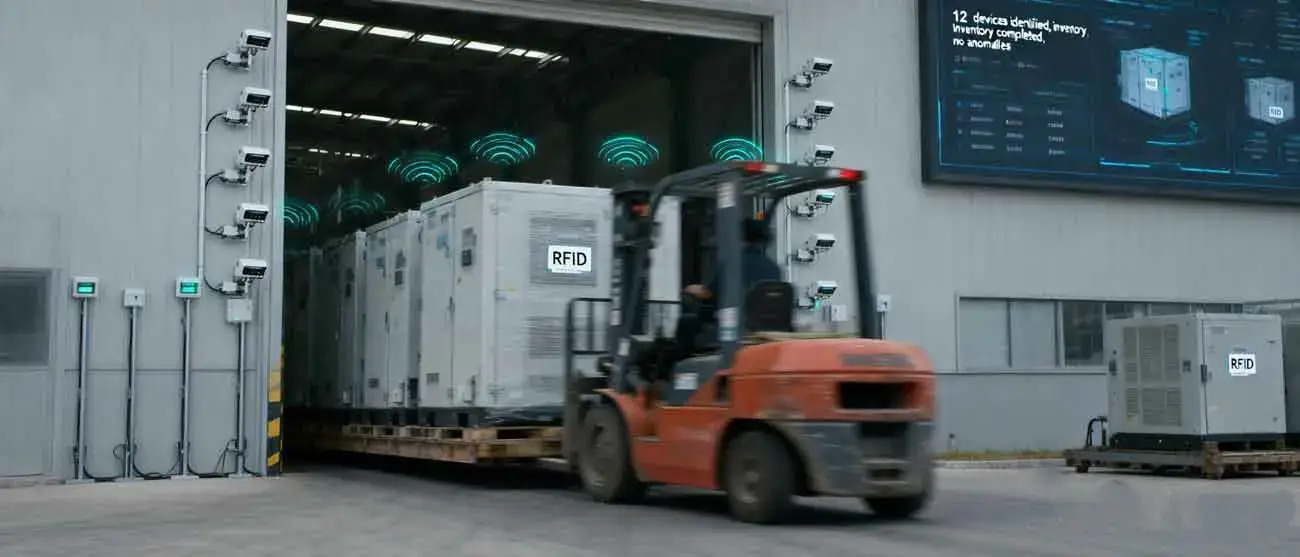
One of the core advantages of RFID UHF Tags is their long-distance identification capability, which perfectly solves the problem of difficult positioning of large equipment and provides a strong technical support for improving the efficiency of large equipment asset management. Unlike traditional barcode tags that require close contact and line of sight scanning, RFID UHF Tags can realize non-contact identification at a distance of several meters to more than 100 meters, depending on the type of tag and reader. This long-distance identification feature is particularly suitable for large equipment that is bulky, heavy, and difficult to approach, and can greatly reduce the labor intensity of management personnel and improve the efficiency of asset positioning. For example, in a large warehouse storing large mechanical parts and equipment, managers can use a handheld RFID UHF reader to scan all tagged large equipment in the warehouse from a distance of 10 meters, quickly completing the inventory and positioning of equipment, which would take several hours with traditional barcode scanning. In outdoor construction sites, fixed RFID UHF readers can be installed at key positions, and when large equipment such as excavators and cranes pass by, the readers can automatically identify the RFID UHF Tags on the equipment and record their real-time location, realizing real-time tracking of equipment. In addition, RFID UHF Tags can also realize multi-tag simultaneous identification, that is, a single reader can identify multiple RFID UHF Tags at the same time, which is very suitable for the inventory and positioning of a large number of large equipment. This long-distance and multi-tag simultaneous identification capability not only solves the problem of difficult positioning of large equipment but also enables managers to grasp the real-time location of all large equipment in a timely manner, realizing scientific allocation and efficient management of equipment resources.
Strong Durability Adapts to Long-term Use in Complex Industrial Environments
Large equipment is often used in complex industrial environments such as high temperature, high humidity, dust, vibration, and chemical corrosion, which puts forward high requirements for the durability of the tags used for asset management. RFID UHF Tags are specially designed and manufactured for industrial environments, with strong durability, which can adapt to long-term use in complex industrial environments and ensure the stability and reliability of asset management. The shell of RFID UHF Tags is usually made of high-quality industrial-grade materials such as ABS plastic, stainless steel, or special engineering plastics, which have excellent impact resistance, wear resistance, and corrosion resistance. These materials can effectively protect the internal chip and antenna of the tag from damage caused by collision, friction, and chemical erosion. For example, RFID UHF Tags attached to large mining machinery can withstand the impact of ore, the erosion of dust and rain, and the vibration during equipment operation, and still maintain normal identification performance. In addition, RFID UHF Tags also have excellent environmental adaptability, with a wide operating temperature range, which can work normally in extreme environments from -40℃ to 85℃, adapting to the temperature changes of indoor workshops, outdoor construction sites, and cold storage warehouses. At the same time, most RFID UHF Tags have a high IP protection level (usually IP67 or above), which is completely waterproof and dustproof, ensuring that the tags can still work normally even in humid or dusty environments. The strong durability of RFID UHF Tags not only reduces the frequency of tag replacement, saves enterprise management costs but also ensures the continuity and stability of large equipment asset management, avoiding the interruption of asset tracking caused by tag damage.
High-efficiency Identification Capability Improves the Management Efficiency of Large Equipment
The high-efficiency identification capability of RFID UHF Tags is another core characteristic that adapts to large equipment management, which can significantly improve the efficiency of large equipment asset management and reduce the labor cost of enterprises. Compared with traditional manual management and barcode scanning methods, RFID UHF Tags have obvious advantages in identification speed and efficiency. First of all, the identification speed of RFID UHF Tags is extremely fast, and a single tag can be identified in milliseconds, which is hundreds of times faster than barcode scanning. This fast identification speed is particularly important for the inventory and management of a large number of large equipment. For example, a manufacturing enterprise with 500 large equipment can complete the full inventory of all equipment in less than an hour by using RFID UHF Tags, while the traditional barcode scanning method would take 2-3 days. Secondly, RFID UHF Tags can realize automatic identification without manual intervention. By installing fixed RFID UHF readers at key positions such as the entrance and exit of workshops, warehouses, and construction sites, the system can automatically identify the RFID UHF Tags on large equipment when they pass by, and update the equipment location and status information in real time. This automatic identification method not only saves a lot of manual labor but also avoids human errors caused by manual operation. In addition, RFID UHF Tags can also realize batch identification, that is, a single reader can identify multiple tags at the same time, which further improves the efficiency of asset management. For example, when a batch of large equipment is transported to the warehouse, the reader can identify all the tags on the equipment at one time, completing the warehousing registration quickly. The high-efficiency identification capability of RFID UHF Tags enables enterprises to realize efficient, accurate, and automatic management of large equipment assets, greatly improving the level of asset management.
RFID UHF Tags Achieve Full-process Tracking of Large Equipment
Accurately Realize Real-time Location and Traceability of Large Equipment
Real-time location and full-process traceability are important goals of large equipment asset management, which can help enterprises grasp the dynamic status of equipment in real time and realize the whole-life cycle management of equipment. RFID UHF Tags, combined with real-time location system (RTLS) and enterprise asset management system, can accurately realize real-time location and trajectory traceability of large equipment, providing comprehensive visibility for equipment management. In the real-time location aspect, fixed RFID UHF readers are installed in key areas such as workshops, warehouses, and construction sites, and the readers continuously send radio frequency signals to the surrounding environment. When the large equipment with RFID UHF Tags enters the signal coverage area of the reader, the reader will automatically identify the tag information and upload it to the central management system. The system calculates the real-time location of the equipment according to the signal strength and identification time of multiple readers, and displays it on the digital dashboard in real time. Managers can check the real-time location of any large equipment at any time through the dashboard, and grasp the movement status of the equipment in a timely manner. In terms of trajectory traceability, the management system will record the location information of the equipment at different times, forming a complete trajectory record. Managers can query the movement trajectory of the equipment within any time period, understand the use path and location change of the equipment, and effectively prevent equipment loss, misplacement, or unauthorized movement. For example, if a large crane is found missing, managers can query the trajectory record of the crane through the system, quickly lock the last location of the crane, and retrieve it in time. The real-time location and trajectory traceability function of RFID UHF Tags not only improves the visibility of large equipment management but also provides a reliable basis for equipment allocation, use supervision, and loss prevention.
Smartly Record Equipment Maintenance Cycles to Ensure Timely Maintenance
Timely and standardized maintenance is the key to ensuring the normal operation of large equipment and extending its service life. RFID UHF Tags can intelligently record the maintenance cycle of large equipment, automatically track the maintenance status of the equipment, and ensure that the maintenance work is carried out in a timely manner, avoiding maintenance omissions. Each RFID UHF Tag is uniquely bound to a specific large equipment, and the tag can store the basic information of the equipment, maintenance cycle, maintenance content, and last maintenance time. When the maintenance personnel perform maintenance on the equipment, they only need to scan the RFID UHF Tag with a mobile reader, and the system will automatically retrieve the maintenance record of the equipment, display the maintenance content that needs to be performed, and record the maintenance time, maintenance personnel, and maintenance details in real time after the maintenance is completed. At the same time, the system will calculate the next maintenance time according to the maintenance cycle of the equipment and send an automatic reminder to the maintenance team when the maintenance time is approaching. The reminder can be sent in the form of a system message, SMS, or email, ensuring that the maintenance personnel can receive the reminder in a timely manner and arrange the maintenance work in advance. For example, a large air compressor has a maintenance cycle of 3 months. When the maintenance time is approaching, the system will send a reminder to the maintenance team 7 days in advance, prompting them to prepare the maintenance tools and materials and arrange the maintenance personnel. This intelligent recording and reminder function not only solves the problem of chaotic maintenance records but also ensures that the maintenance work is carried out in a timely and standardized manner, reducing the risk of equipment failure caused by maintenance omissions, and extending the service life of large equipment.
Real-time Feedback of Equipment Usage Status to Avoid Safety Hazards
The safety of large equipment operation is the top priority of enterprise production and operation. RFID UHF Tags can be integrated with sensors and telematics devices installed on large equipment to realize real-time feedback of equipment usage status, timely identify potential safety hazards, and avoid safety accidents. The sensors installed on the equipment can collect real-time operational data such as equipment operating temperature, vibration amplitude, load capacity, and operating time, and transmit these data to the RFID UHF Tag. The RFID UHF Tag then sends the data to the central management system through the reader, and the system analyzes and processes the data in real time. When the operational data of the equipment exceeds the safe threshold, the system will immediately trigger an alarm, and send an alarm message to the equipment operator and maintenance personnel, prompting them to take timely measures. For example, if the operating temperature of a large generator exceeds the safe range, the system will send an alarm to the operator, who can then stop the equipment in time to cool it down, avoiding equipment damage or fire accidents. In addition, RFID UHF Tags can also record the usage history of the equipment, including operating time, load status, and fault records. Managers can analyze the usage status of the equipment through these data, find potential problems in advance, and take preventive maintenance measures to avoid safety hazards. For example, by analyzing the vibration data of a large crane, managers can find the wear of the crane’s lifting components in advance, and replace the components in time to avoid the risk of component failure during operation. The real-time feedback function of equipment usage status provided by RFID UHF Tags helps enterprises establish a proactive safety management mechanism, effectively avoiding safety accidents and ensuring the safe operation of large equipment.
The Linkage Upgrade of RFID UHF Tags and Equipment Management Systems
Seamlessly Link to Equipment Management Systems to Achieve Data Synchronization and Sharing
The value of RFID UHF Tags in large equipment asset management can be maximized only through seamless linkage with the equipment management system. RFID UHF Tags can be seamlessly integrated with enterprise existing equipment management systems (such as EAM, CMMS), realizing real-time data synchronization and sharing, and building a unified and efficient asset management platform. When the RFID UHF reader identifies the tag information, the data such as equipment ID, location, status, and maintenance records are automatically transmitted to the equipment management system, and the system updates the asset database in real time, ensuring that the data in the system is consistent with the actual status of the equipment. This data synchronization function eliminates the need for manual data entry, avoids human errors, and ensures the accuracy and timeliness of asset data. At the same time, the equipment management system can also send instructions to the RFID UHF Tags through the reader, such as updating the equipment maintenance cycle, modifying the equipment status, and setting the equipment use permission. In addition, the data in the equipment management system can be shared among different departments of the enterprise, such as production department, maintenance department, finance department, and management department. The production department can query the real-time location and use status of the equipment to arrange production tasks; the maintenance department can query the maintenance records and maintenance cycle of the equipment to formulate maintenance plans; the finance department can use the asset data to conduct asset valuation and cost accounting; the management department can grasp the overall status of large equipment assets through the data to make scientific management decisions. The seamless linkage between RFID UHF Tags and equipment management systems realizes the integration and sharing of asset data, breaking the information isolation between departments, and improving the overall efficiency of enterprise asset management.
Smartly Trigger Equipment Maintenance Reminders to Reduce Human Negligence
Human negligence is one of the important reasons for maintenance omissions of large equipment. The linkage between RFID UHF Tags and equipment management systems can intelligently trigger equipment maintenance reminders, reducing the impact of human negligence and ensuring that maintenance work is carried out in a timely manner. The equipment management system stores the maintenance cycle, maintenance content, and last maintenance time of each large equipment, which are bound to the corresponding RFID UHF Tags. The system calculates the next maintenance time according to the maintenance cycle and the last maintenance time, and sets multiple reminder nodes (such as 7 days in advance, 3 days in advance, and 1 day in advance). When the equipment reaches the reminder node, the system will automatically trigger the maintenance reminder, and send the reminder information to the maintenance personnel through multiple channels such as system messages, SMS, email, and WeChat. The reminder information includes the equipment name, equipment ID, maintenance time, maintenance content, and maintenance location, so that the maintenance personnel can clearly understand the maintenance task. In addition, the system can also track the status of the maintenance reminder. If the maintenance personnel do not confirm the reminder within a certain time, the system will send a secondary reminder, and even notify the maintenance manager to supervise, ensuring that the maintenance task is not ignored. For example, if a large CNC machine tool is due for maintenance in 3 days, the system will send a reminder to the maintenance personnel. If the maintenance personnel do not confirm the reminder within 24 hours, the system will send a secondary reminder and notify the maintenance manager. This intelligent reminder function not only reduces the impact of human negligence but also standardizes the maintenance process, ensuring that the maintenance work is carried out in a timely and standardized manner, and improving the reliability of large equipment operation.
System Linkage Realizes Digital Upgrade of Large Equipment Management
The linkage between RFID UHF Tags and equipment management systems is an important way to realize the digital upgrade of large equipment management, helping enterprises transform from traditional manual management to digital, intelligent management. Before the application of RFID UHF Tags, large equipment asset management was mostly based on manual records and experience judgment, which was backward in management mode and low in efficiency. After the linkage between RFID UHF Tags and equipment management systems, the entire process of large equipment asset management, including equipment registration, positioning, maintenance, use, and retirement, can be digitized and recorded. The system collects a large amount of data through RFID UHF Tags, including equipment basic information, location data, maintenance records, use status, and fault information. These data are stored in the system database and can be analyzed and processed through data analysis tools to provide scientific basis for enterprise management decisions. For example, through the analysis of equipment use status data, managers can find the underutilized equipment and adjust the equipment allocation to improve the utilization rate of equipment; through the analysis of maintenance records, managers can optimize the maintenance plan and reduce maintenance costs. In addition, the digital management platform built by system linkage can realize visual management of large equipment assets. Managers can view the real-time status, location, and maintenance records of all large equipment through the digital dashboard, and grasp the overall situation of asset management at a glance. The digital upgrade of large equipment management not only improves the management efficiency and accuracy but also helps enterprises realize refined management of assets, reduce management costs, and enhance the core competitiveness of enterprises.
RFID UHF Tags Industrial Scenario Application Cases and Effects
Analysis of RFID UHF Tags Application Cases in Large Equipment Asset Management
In recent years, more and more industrial enterprises have applied RFID UHF Tags to large equipment asset management, achieving remarkable results. The following are two typical application cases to provide reference for other enterprises. Case 1: A large construction enterprise with more than 200 large equipment such as cranes, excavators, and bulldozers. Before applying RFID UHF Tags, the enterprise faced problems such as difficult equipment positioning, chaotic maintenance records, and low equipment utilization rate. After applying RFID UHF Tags, the enterprise installed tags on each large equipment, and installed fixed readers at the entrance and exit of each construction site and key work areas. Through the linkage with the equipment management system, the enterprise realized real-time location and trajectory traceability of equipment, intelligent recording of maintenance cycles, and real-time feedback of use status. The maintenance team can quickly locate the equipment that needs maintenance through the system, and receive automatic maintenance reminders, which greatly reduces maintenance omissions. After half a year of application, the equipment failure rate of the enterprise decreased by 45%, the maintenance efficiency increased by 60%, and the equipment utilization rate increased by 35%. Case 2: A large manufacturing enterprise with 300 large CNC machine tools and production lines. The enterprise used to rely on manual barcode scanning for equipment inventory and maintenance records, which was time-consuming and error-prone. After applying RFID UHF Tags, the enterprise completed the inventory of all equipment in 1 hour, which previously took 3 days. The system automatically records the maintenance records of each equipment, and triggers maintenance reminders in a timely manner. At the same time, through the analysis of equipment use data, the enterprise optimized the equipment allocation, reducing the idle rate of equipment by 25%. These cases fully show that RFID UHF Tags can effectively solve the pain points of large equipment asset management, improve management efficiency, and bring significant economic benefits to enterprises.
Tag Application Helps Enterprises Achieve Significant Cost Savings
The application of RFID UHF Tags in large equipment asset management can help enterprises achieve significant cost savings in multiple aspects, including maintenance costs, labor costs, equipment replacement costs, and resource waste costs. First of all, in terms of maintenance costs, RFID UHF Tags can ensure timely maintenance of equipment, avoid equipment failure caused by maintenance omissions, reduce the cost of emergency maintenance and equipment repair, and extend the service life of equipment, thereby reducing the cost of equipment replacement. For example, a large industrial enterprise reduced the equipment failure rate by 40% after applying RFID UHF Tags, and the annual maintenance cost was reduced by 300,000 US dollars. Secondly, in terms of labor costs, RFID UHF Tags realize automatic identification and data collection, reducing the need for manual operation. For example, the inventory work that previously required 5 people to complete in 3 days can now be completed by 1 person in 1 hour, greatly reducing labor costs. Thirdly, in terms of resource waste costs, RFID UHF Tags can realize real-time location and scientific allocation of equipment, reducing the idle rate of equipment and the waste of resources caused by misallocation. For example, a construction enterprise reduced the equipment idle rate by 25% after applying RFID UHF Tags, saving nearly 500,000 US dollars in equipment rental and idle costs every year. In addition, the reusable feature of RFID UHF Tags also reduces the cost of tag replacement. The tags can be reused on different equipment, avoiding the waste of resources and reducing the cost of tag purchase. Overall, the application of RFID UHF Tags can help enterprises reduce various management costs, improve economic benefits, and achieve cost-saving and efficiency-increasing goals.
Case Experience Provides Replicable Management Solutions for Industrial Enterprises
The successful application cases of RFID UHF Tags in large equipment asset management have accumulated valuable experience, providing replicable management solutions for other industrial enterprises. Combined with the practical experience of various enterprises, the replicable management solutions mainly include the following aspects. First of all, enterprises should clarify their own asset management needs and select suitable RFID UHF Tags and readers. Different types of large equipment have different use environments and management needs, and enterprises should select tags with corresponding durability, identification distance, and functional characteristics according to the actual situation. For example, outdoor equipment should select tags with high waterproof and dustproof levels, while equipment that needs long-distance identification should select high-gain tags. Secondly, enterprises should establish a perfect equipment management system and realize seamless linkage with RFID UHF Tags. The system should include functions such as real-time location, maintenance management, data analysis, and alarm reminder, to realize the full-process management of large equipment. Thirdly, enterprises should formulate standardized operation procedures, including tag installation, reader deployment, data collection, and maintenance management, to ensure the normal operation of the system. For example, the installation position of the tag should be selected in a place that is not easy to be damaged and convenient for identification, and the maintenance personnel should regularly check the tag and reader to ensure their normal performance. Finally, enterprises should pay attention to the training of employees, improve the professional quality of employees, and ensure that employees can proficiently use the RFID UHF system to carry out asset management work. These replicable management solutions can help industrial enterprises quickly apply RFID UHF Tags to large equipment asset management, solve management pain points, and improve management efficiency.
Anti-interference Design and Installation Scheme of RFID UHF Tags
Anti-interference Design Ensures Stable Operation in Complex Industrial Environments
Complex industrial environments are often accompanied by various interference factors, such as electromagnetic interference, metal interference, and environmental interference, which may affect the identification effect of RFID UHF Tags. Therefore, the anti-interference design of RFID UHF Tags is crucial to ensure their stable operation in complex industrial environments. In terms of electromagnetic interference resistance, RFID UHF Tags adopt anti-electromagnetic interference design, which can effectively resist the interference of electromagnetic signals generated by industrial equipment such as motors, transformers, and frequency converters. The internal chip and antenna of the tag are wrapped with electromagnetic shielding materials, which can isolate external electromagnetic signals and ensure the normal transmission of tag signals. In terms of metal interference resistance, metal materials will reflect and absorb radio frequency signals, which will affect the identification distance and accuracy of RFID UHF Tags. To solve this problem, RFID UHF Tags for large equipment are specially designed with anti-metal tags, which are equipped with a special isolation layer between the tag and the metal surface. The isolation layer can reduce the absorption and reflection of radio frequency signals by metal materials, ensuring that the tag can work normally when attached to metal equipment. For example, anti-metal RFID UHF Tags attached to large metal machinery can still maintain a long-distance identification effect. In terms of environmental interference resistance, the tag shell is made of durable materials with waterproof, dustproof, and high-temperature resistance, which can resist the interference of environmental factors such as humidity, dust, and temperature changes. The anti-interference design of RFID UHF Tags ensures that the tags can maintain stable and reliable identification performance in complex industrial environments, providing a strong guarantee for the normal operation of large equipment asset management.
Diversified and Convenient Installation Schemes Adapted to Large Equipment
Large equipment has various types, different shapes, and different use environments, which requires RFID UHF Tags to have diversified and convenient installation schemes to adapt to different equipment. According to the characteristics of large equipment, the common installation schemes of RFID UHF Tags mainly include the following types. First, adhesive installation. This scheme is suitable for equipment with flat surfaces, such as CNC machine tools, generators, and shipping containers. The tag is equipped with high-quality industrial-grade adhesive, which can be firmly attached to the surface of the equipment. The adhesive has strong stickiness, good high-temperature resistance, and waterproof performance, and will not fall off easily even in harsh environments. At the same time, the adhesive is removable, and will not leave glue marks on the equipment surface when the tag is removed. Second, bolt installation. This scheme is suitable for equipment with uneven surfaces or equipment that needs to be used for a long time, such as cranes, excavators, and mining machinery. The tag is fixed to the equipment surface with bolts, which is firm and reliable, and can withstand the vibration and impact during equipment operation. Third, inlay installation. This scheme is suitable for equipment with special structures, such as equipment casings and components. The tag is inlaid into the reserved position of the equipment, which not only does not affect the appearance of the equipment but also can effectively protect the tag from damage. Fourth, magnetic adsorption installation. This scheme is suitable for metal equipment, such as large metal storage tanks and metal pipelines. The tag is equipped with a strong magnet, which can be adsorbed on the surface of the metal equipment, and is easy to install and disassemble. These diversified and convenient installation schemes enable RFID UHF Tags to be flexibly installed on various types of large equipment, ensuring the convenience and firmness of installation.
Installation and Anti-interference Design Take into Account Practicality and Economy
When designing the installation and anti-interference schemes of RFID UHF Tags, enterprises need to take into account both practicality and economy, ensuring that the schemes can meet the management needs of large equipment and control the cost within a reasonable range. In terms of practicality, the installation scheme should be simple and convenient, easy to operate and maintain, and the anti-interference design should ensure the stable operation of the tags in complex industrial environments. For example, the adhesive installation scheme is simple and fast, suitable for most flat-surface equipment, and can reduce the installation cost and time; the anti-metal tag design can solve the metal interference problem, ensuring the identification effect of the tags on metal equipment. In terms of economy, enterprises should select suitable tags and installation schemes according to their own economic strength and management needs, avoiding blind pursuit of high-end products and complex schemes. For example, for equipment with low environmental requirements, ordinary RFID UHF Tags can be selected; for equipment with high environmental requirements, high-performance anti-interference tags can be selected. At the same time, the reusable feature of RFID UHF Tags can also reduce the cost of tag replacement, improving the economic benefits of the scheme. In addition, when deploying readers, enterprises should reasonably plan the installation position of readers according to the layout of equipment and the identification range of tags, avoiding redundant deployment of readers, which can reduce the cost of hardware investment. By balancing practicality and economy, enterprises can select the most suitable installation and anti-interference schemes of RFID UHF Tags, realizing efficient and low-cost management of large equipment assets.
Why Choose Mytopband?
- Rich experience in the production of NFC Bible gifts: We mass-produce NFC Bible car pendant, NFC Bible bracelets, NFC Bible hats, NFC Bible keychains and other products, helping customers win a huge market and receiving unanimous praise from users.
- Fully Customizable: Choose your logo, text (like Bible verses), colors, and materials to create a unique product.
- Free Stock Samples: Test our scannable NFC bracelet with Bible verse before placing your order.
- Low MOQ as 500pcs: Perfect for startups and small businesses.

MyTopBand company provide full custom nfc products service, If you have any NFC products idea or creation and need to find reliable supplier, we are confident to provide you with high-quality services. Please find us: www.mytopband.com, or send message to info@mytopband.com, we will reply you within 24 hours.