
Urgent Need to Solve the Pain Points of Participating in Large-Scale Global Marathons
Congestion at the Race Entrance Affects Event Experience and Process Efficiency
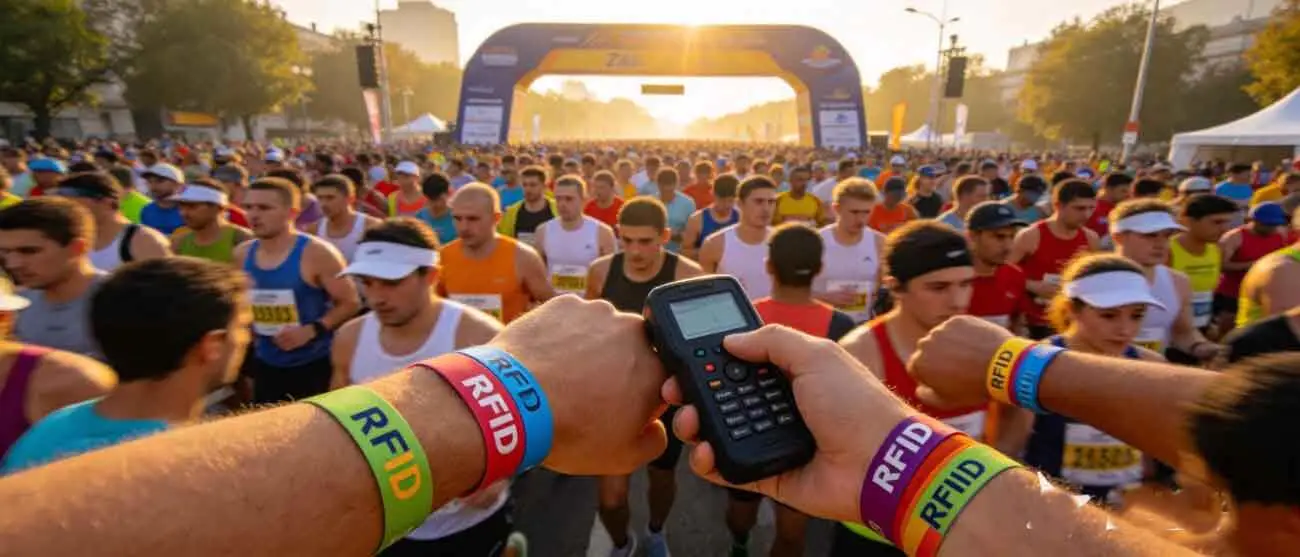
Marathons have become one of the most popular global sports events, attracting millions of runners to participate every year. However, with the continuous expansion of the scale of marathon events, the pain points in the participation process have become increasingly prominent, among which congestion at the race entrance is the most common and influential problem. Every large-scale marathon event will gather tens of thousands of runners, and the traditional manual identity verification method is not only inefficient but also easy to cause serious congestion at the entrance. Runners often need to queue for a long time to show their ID cards, race numbers and other documents for verification, which not only wastes a lot of time for runners but also affects their pre-race state and overall event experience. In some serious cases, the congestion at the entrance even leads to some runners being late for the race, missing the starting time and failing to participate normally. In addition, the low efficiency of manual verification also affects the overall process efficiency of the event, increasing the workload of event staff and easily causing chaos at the entrance. At this critical moment, Event Access RFID Wristbands have emerged as an efficient solution to solve the problem of entrance congestion, helping marathon organizers complete the identity verification of runners quickly and accurately, and improving the efficiency of the event process and the participation experience of runners.
Traditional Score Statistics Methods Are Lagging and Difficult to Announce Results Quickly
For marathon runners, the most concerned issue after the race is their own race results, and the speed and accuracy of score statistics directly affect the runners’ experience and the credibility of the event. However, traditional score statistics methods, such as manual timing with stopwatches and manual recording of race numbers, have obvious limitations of lag and inaccuracy. Manual timing is not only easy to make mistakes due to human factors but also cannot record the split time and finish time of each runner accurately and in a timely manner. After the race, the staff need to sort out and count the timing data manually, which takes a lot of time and energy. It often takes several hours or even a whole day to announce the official results, which makes runners wait anxiously and reduces their sense of gain and satisfaction with the event. In addition, the lag of traditional score statistics methods also affects the timeliness of event publicity and reporting, making it difficult for the event to attract more attention and influence. For global large-scale marathons, which have runners from all over the world, the lag of score statistics will also affect the international image of the event. Event Access RFID Wristbands can effectively solve this problem by integrating high-precision timing functions, which can record the runner’s start time, split time and finish time in real time, and realize the rapid statistics and announcement of results, greatly improving the timeliness and accuracy of score statistics.
Frequent Loss of Runners’ Items Affects the Participation Experience
In marathon events, runners often need to carry personal items such as mobile phones, wallets, clothes and water bottles, but due to the long distance and intense intensity of the marathon, it is inconvenient for runners to carry these items during the race. Therefore, most marathon events will set up item storage areas for runners to store their personal items. However, the traditional item storage method, which uses paper labels or plastic tags to identify the runner’s items, has the problem of frequent item loss. Due to the simple and easy-to-damage nature of paper labels and plastic tags, they are often lost or confused during the storage and retrieval process, leading to runners being unable to find their own items after the race. In addition, the traditional item storage method requires runners to manually check and register when storing and retrieving items, which is inefficient and easy to cause confusion and errors. The loss of personal items not only brings economic losses to runners but also seriously affects their participation experience, making some runners feel dissatisfied with the event organization. This problem has become an important factor restricting the improvement of the quality of marathon events. Event Access RFID Wristbands can solve this problem by linking with the item storage system, realizing the accurate identification and safe storage of runners’ items, and greatly reducing the occurrence of item loss.
Multi-Functional Integrated Design of RFID Wristbands Adapts to Marathon Needs
Integrating Identity Verification Function to Complete Race Entry Quickly
The core function of Event Access RFID Wristbands is to integrate identity verification, which is specially designed to solve the problem of congestion at the marathon entrance and improve the efficiency of race entry. Each Event Access RFID Wristband is pre-encoded with the runner’s personal information, including name, ID number, race number, event category and other key data. When runners enter the race venue, they only need to approach the RFID reader at the entrance with the Event Access RFID Wristband on their wrist, and the reader can quickly read the runner’s information and complete the identity verification in 1-2 seconds. This efficient verification method greatly reduces the time for each runner to enter the venue, effectively solving the problem of entrance congestion. Compared with the traditional manual verification method, which takes 10-15 seconds per person, Event Access RFID Wristbands can improve the verification efficiency by more than 80%, ensuring that tens of thousands of runners can enter the venue smoothly and quickly. In addition, the identity verification function of Event Access RFID Wristbands also has high security—each wristband has a unique code, which is difficult to counterfeit or tamper with, effectively preventing the occurrence of fake runners and ensuring the fairness of the event. The integrated identity verification function of Event Access RFID Wristbands not only improves the efficiency of race entry but also enhances the security and fairness of the event, laying a solid foundation for the smooth progress of the marathon.
Built-in Score Timing Function to Accurately Record Runners’ Finish Data
Another important function of Event Access RFID Wristbands is the built-in score timing function, which can accurately record the runner’s start time, split time and finish time, providing a scientific and accurate basis for score statistics. The Event Access RFID Wristband is equipped with a high-precision RFID chip, which can communicate with the RFID timing mats set at the starting line, split points and finish line of the marathon in real time. When the runner passes through each timing mat, the timing mat will automatically read the information of the Event Access RFID Wristband and record the corresponding time data, which is then transmitted to the event background system in real time. This timing method not only avoids the errors caused by manual timing but also can record the time data of each runner accurately and comprehensively. Runners can query their own split time and finish time through the event official website or APP shortly after the race, without waiting for a long time. For marathon organizers, the built-in timing function of Event Access RFID Wristbands also greatly reduces the workload of score statistics, realizing the automatic collection, sorting and statistics of timing data, and improving the efficiency and accuracy of score statistics. In addition, the timing data recorded by Event Access RFID Wristbands can also be used for event analysis and optimization, helping organizers understand the running status of runners and improve the overall quality of the event.
Linking with Item Storage Function to Ensure the Safety of Runners’ Personal Items
Event Access RFID Wristbands also integrate the function of linking with item storage, which effectively solves the problem of frequent loss of runners’ items and ensures the safety of runners’ personal items. The specific implementation method is: when runners store their items in the event’s item storage area, the staff will scan the Event Access RFID Wristband of the runner, and bind the runner’s information with the storage box or storage bag. Each storage box or storage bag is also equipped with an RFID tag, which corresponds to the runner’s Event Access RFID Wristband one by one. When runners retrieve their items after the race, they only need to scan their Event Access RFID Wristband at the retrieval terminal, and the system will automatically identify the corresponding storage box or storage bag, and open it automatically. This linking method not only ensures the accuracy of item storage and retrieval but also greatly improves the efficiency of storage and retrieval—each runner only needs 2-3 seconds to complete the retrieval of items, avoiding the confusion and errors caused by manual registration. In addition, the RFID technology used by Event Access RFID Wristbands has high security, which can effectively prevent the wrong retrieval or theft of items. Runners can participate in the race with peace of mind without worrying about the safety of their personal items. The item storage function linked with Event Access RFID Wristbands not only solves the pain point of item loss but also greatly improves the participation experience of runners.
Durability Design of RFID Wristbands Adapting to Different Climate Regions
Adapting to High-Temperature Climate in Africa to Ensure Stable Operation of Wristbands
Marathon events are held in different regions around the world, and the climate conditions of different regions vary greatly, which puts forward high requirements for the durability of Event Access RFID Wristbands. Africa is one of the regions where many large-scale marathons are held, and the high-temperature climate in Africa (usually 30-40℃, even up to 45℃ in some areas) is a great test for the stability of Event Access RFID Wristbands. High temperature will easily cause the deformation, melting or failure of the wristband material, and may also affect the performance of the internal RFID chip, leading to the failure of the wristband to read information normally. To solve this problem, Event Access RFID Wristbands are specially designed for the high-temperature climate in Africa—using high-temperature resistant materials (such as high-temperature resistant PVC and silicone) to make the wristband body, which can withstand high temperatures of up to 60℃ without deformation or damage. At the same time, the internal RFID chip is also encapsulated with high-temperature resistant materials, which can ensure stable operation in high-temperature environments and avoid chip failure. In addition, the surface of the Event Access RFID Wristband is treated with a special heat-insulating coating, which can reduce the impact of high temperature on the wristband and the runner’s skin, ensuring that the runner feels comfortable when wearing it. This high-temperature resistant design ensures that Event Access RFID Wristbands can operate stably in the high-temperature climate of Africa, providing reliable support for marathon events in the region.
Optimizing Wristband Waterproof Performance for Rainy Weather in Northern Europe
Northern Europe is another important region for global marathon events, but the rainy weather in Northern Europe (especially in spring and autumn) often brings great challenges to the use of Event Access RFID Wristbands. Rainwater can easily penetrate into the wristband, damage the internal RFID chip and circuit, and lead to the failure of the wristband to read information normally. To adapt to the rainy weather in Northern Europe, Event Access RFID Wristbands have optimized the waterproof performance, adopting a fully sealed design to ensure that rainwater cannot penetrate into the wristband. The wristband body is made of waterproof materials, and the connection between the wristband and the chip is sealed with special waterproof glue, which can achieve IP67 waterproof level (can be immersed in water of 1 meter depth for 30 minutes without water penetration). This waterproof design can ensure that Event Access RFID Wristbands can operate normally even in heavy rain, and will not be affected by rainwater. In addition, the surface of the wristband is also treated with a waterproof coating, which can prevent rainwater from adhering to the surface of the wristband, ensuring that the RFID reader can read the information of the wristband normally. The optimized waterproof performance of Event Access RFID Wristbands makes them perfectly adapt to the rainy weather in Northern Europe, ensuring the smooth progress of marathon events in the region.
All-Climate Adaptation Reduces the Maintenance Cost of Event Wristbands
The all-climate adaptation design of Event Access RFID Wristbands not only ensures their stable operation in different climate regions but also greatly reduces the maintenance cost of event wristbands for marathon organizers. Traditional marathon wristbands often need to be customized according to the climate conditions of the event region—for example, using high-temperature resistant wristbands in high-temperature regions and waterproof wristbands in rainy regions, which increases the customization cost and maintenance cost of wristbands. In contrast, Event Access RFID Wristbands adopt an all-climate adaptation design, which can adapt to various climate conditions such as high temperature, low temperature, rain, and humidity, without the need for separate customization according to different regions. This not only reduces the customization cost of wristbands but also simplifies the procurement and management process of wristbands for organizers. In addition, the durable material and stable performance of Event Access RFID Wristbands also reduce the failure rate of wristbands—during the event, the number of wristbands that fail due to climate factors is very small, which reduces the workload of staff in replacing and maintaining wristbands. For global marathon organizers who hold events in multiple regions, the all-climate adaptation design of Event Access RFID Wristbands can save a lot of maintenance costs and improve the operational efficiency of the event. This cost-saving advantage makes Event Access RFID Wristbands more popular among marathon organizers.
Real-Time Linkage Between Event Data and RFID Wristband System
Real-Time Synchronization of Participant Number Data Helps Event Overall Management
The real-time linkage between Event Access RFID Wristband system and event data is an important guarantee for the smooth operation of marathon events, especially in the overall management of the event. The number of participants in large-scale global marathons is often tens of thousands, and the real-time grasp of the number of participants is crucial for event organization and management. Event Access RFID Wristband system can synchronize the number of participants in real time—when runners enter the venue through the RFID reader, the system will automatically count the number of runners who have entered the venue and transmit the data to the event background management system in real time. Organizers can view the real-time number of participants, the number of runners in each area, and the entry progress through the background system, so as to make timely adjustments to the event arrangement. For example, if the data shows that the number of runners entering a certain area is too large, organizers can dispatch more staff to guide and maintain order, avoiding congestion. In addition, the real-time synchronization of participant number data also helps organizers grasp the actual participation situation of the event, which is of great significance for the summary and analysis of the event and the optimization of future events. The real-time linkage function of Event Access RFID Wristband system provides scientific data support for marathon management, making the overall management of the event more efficient and accurate.
Linking with Wristband System to Update Runners’ Finish Rate in Real Time
The finish rate is an important indicator to measure the quality of a marathon event, and the real-time update of the finish rate can help organizers grasp the progress of the event and make timely adjustments. Event Access RFID Wristband system can link with the timing system to update the runners’ finish rate in real time. When runners pass through the finish line, the RFID timing mat will read the information of the Event Access RFID Wristband and record the finish time, and the system will automatically count the number of finishers and calculate the finish rate. The finish rate data is updated in real time and displayed on the event background system and the on-site large screen, allowing organizers, runners and spectators to know the progress of the event in real time. For organizers, the real-time finish rate data can help them judge whether the event is progressing smoothly—if the finish rate is significantly lower than expected, it may indicate that there are problems such as insufficient supply points or difficult track conditions, and organizers can make timely adjustments. For runners, the real-time finish rate data can help them understand their own ranking and progress, motivating them to persist in finishing the race. For spectators, the real-time finish rate data can enhance their sense of participation and attention to the event. The real-time update of the finish rate through the linkage of Event Access RFID Wristband system greatly improves the transparency and interactivity of the event.
Real-Time Data Linkage Improves the Operational Efficiency of Marathon Events
The real-time data linkage between Event Access RFID Wristband system and various event systems (such as timing system, item storage system, supply system, etc.) greatly improves the operational efficiency of marathon events. In the past, various systems of marathon events were independent of each other, and the data could not be shared in real time, leading to low operational efficiency and easy errors. For example, the timing system and the item storage system could not share runner information, requiring staff to manually input data, which was time-consuming and laborious. Event Access RFID Wristband system solves this problem by serving as a data link hub, realizing the real-time sharing of data between various systems. For example, the runner information and timing data recorded by the Event Access RFID Wristband can be shared with the item storage system, allowing the item storage system to quickly identify the runner and complete the storage and retrieval of items; the data can also be shared with the supply system, allowing the supply points along the track to grasp the number and progress of runners passing by in real time, and prepare sufficient supplies in advance. This real-time data linkage not only reduces the workload of staff but also avoids errors caused by manual data input, improving the operational efficiency of the event. For large-scale global marathons, the improvement of operational efficiency is crucial to ensuring the smooth progress of the event, and Event Access RFID Wristband system provides a strong guarantee for this.
Runners Enjoy Convenient Event Services Through RFID Wristbands
Quickly Obtain Event Supplies with Wristbands to Save Waiting Time
During a marathon, runners need to obtain water, energy gels, fruits and other supplies at the supply points along the track to maintain their physical strength. However, the traditional supply method requires runners to queue up to get supplies, which not only wastes time but also may affect the running rhythm of runners. Event Access RFID Wristbands can help runners quickly obtain event supplies, saving waiting time and improving the participation experience. The specific implementation method is: the supply points along the track are equipped with RFID readers, and runners only need to approach the reader with their Event Access RFID Wristband on their wrist, and the reader can quickly read the runner’s information and confirm their eligibility to obtain supplies. The staff can then quickly provide the corresponding supplies to the runner, without the need for the runner to queue up for registration or verification. This method can reduce the time for each runner to obtain supplies to 1-2 seconds, greatly improving the efficiency of the supply point and reducing the queue length. In addition, the Event Access RFID Wristband system can also record the number of supplies obtained by each runner, helping organizers grasp the supply situation in real time and supplement supplies in a timely manner. This convenient supply method not only saves the waiting time of runners but also ensures that runners can obtain sufficient supplies in time, helping them complete the race smoothly.
Conveniently Collect Finishers’ Bags to Simplify the Post-Race Process
After the marathon, runners need to collect their finishers’ bags, which usually contain souvenirs, certificates, energy supplements and other items. The traditional method of collecting finishers’ bags requires runners to show their race numbers or ID cards for verification, which is inefficient and easy to cause congestion. Event Access RFID Wristbands can simplify the process of collecting finishers’ bags, making it more convenient and efficient for runners to collect their bags. When runners arrive at the finishers’ bag collection area after the race, they only need to scan their Event Access RFID Wristband at the collection terminal, and the system will automatically identify the runner’s information and confirm the corresponding finishers’ bag. The staff can then quickly hand over the finishers’ bag to the runner, without the need for manual verification. This method not only improves the efficiency of collecting finishers’ bags but also avoids the confusion and errors caused by manual verification. For runners who are already exhausted after the race, this convenient collection method can greatly reduce their burden and improve their post-race experience. In addition, the Event Access RFID Wristband system can also record the collection status of finishers’ bags, helping organizers grasp the collection progress in real time and handle the uncollected bags in a timely manner.
Multi-Functional Wristbands Improve Runners’ Overall Participation Experience
Event Access RFID Wristbands integrate multiple functions such as identity verification, timing, item storage, and supply collection, which comprehensively improve the runners’ overall participation experience. Compared with the traditional single-function wristbands or paper tags, Event Access RFID Wristbands are more convenient and practical—runners only need to wear one wristband to complete multiple links such as entry, timing, item storage, and supply collection, without carrying multiple documents or tags. This not only reduces the burden on runners but also makes the entire participation process more smooth and efficient. In addition, Event Access RFID Wristbands also have some additional functions to enhance the participation experience of runners, such as linking with the event official APP to provide runners with real-time track information, weather reminders, and split time queries; some wristbands also have a emergency call function, allowing runners to call for help in time when they encounter physical discomfort during the race. These multi-functional designs make Event Access RFID Wristbands not only a tool for event management but also a companion for runners during the race. The improvement of the overall participation experience makes runners more satisfied with the event, which is conducive to improving the reputation of the event and attracting more runners to participate in the future.
Application Cases of RFID Wristbands in World-Famous Marathon Events
Practical Experience of Applying Event Access RFID Wristbands in the New York Marathon
The New York Marathon is one of the world’s six major marathons, attracting more than 50,000 runners from all over the world every year. In the past, the New York Marathon also faced problems such as entrance congestion, lagging score statistics, and frequent item loss, which affected the event experience of runners. To solve these problems, the New York Marathon began to use Event Access RFID Wristbands in 2022, and achieved remarkable results. The New York Marathon customized Event Access RFID Wristbands with the event logo and colors, which integrated functions such as identity verification, timing, item storage, and supply collection. On the day of the event, runners only needed to wear the wristband to complete the entrance verification quickly—each runner’s verification time was less than 2 seconds, and the entrance congestion problem was completely solved. The built-in timing function of the wristband accurately recorded the start time, split time and finish time of each runner, and the official results were announced within 1 hour after the last runner finished the race, which greatly improved the timeliness of score statistics. In addition, the wristband was linked with the item storage system, and the loss rate of runners’ items was reduced from 5% in the past to less than 0.5%. The application of Event Access RFID Wristbands not only improved the operational efficiency of the New York Marathon but also greatly enhanced the participation experience of runners, winning wide praise from runners and the media.
Case Analysis of Tokyo Marathon Optimizing Event Operation with Wristbands
The Tokyo Marathon is another world-famous marathon event, known for its rigorous organization and high-quality service. In order to further improve the operational efficiency and runner experience of the event, the Tokyo Marathon began to apply Event Access RFID Wristbands in 2023, and achieved obvious results in optimizing event operation. The Tokyo Marathon’s Event Access RFID Wristbands focused on the real-time linkage of data, linking with the event’s timing system, supply system, and medical system to realize the comprehensive management of the event. Through the wristband system, the organizers could grasp the real-time number of participants, the progress of runners, and the supply situation of each supply point, and make timely adjustments to the event arrangement. For example, when the data showed that the number of runners passing through a certain supply point was too large, the organizers could quickly dispatch additional supplies and staff to avoid shortages. In addition, the wristband was also linked with the medical system—when a runner’s heart rate or other physical indicators were abnormal (some wristbands were equipped with physiological monitoring functions), the medical staff could receive an alarm in real time and provide timely assistance. The application of Event Access RFID Wristbands helped the Tokyo Marathon optimize the event operation process, improve the operational efficiency, and ensure the safety of runners, making the event more competitive and influential in the world.
Cases Confirm the Empowering Value of Event Access RFID Wristbands for Marathons
The application cases of the New York Marathon and Tokyo Marathon fully confirm the empowering value of Event Access RFID Wristbands for marathon events, which can effectively solve the pain points of marathon participation and operation, and improve the quality and influence of the event. Before applying Event Access RFID Wristbands, both marathons faced problems such as entrance congestion, lagging score statistics, and frequent item loss, which affected the event experience and operational efficiency. After applying Event Access RFID Wristbands, these problems were effectively solved: the entrance verification efficiency was improved by more than 80%, the score statistics time was shortened by more than 90%, the item loss rate was reduced to less than 0.5%, and the operational efficiency of the event was greatly improved. In addition, the application of Event Access RFID Wristbands also enhanced the participation experience of runners, with the satisfaction rate of runners increasing by more than 70%. These cases show that Event Access RFID Wristbands are an important tool for optimizing marathon management, which can not only improve the operational efficiency of the event but also enhance the runner experience, and help marathon events achieve sustainable development. For global marathon organizers, applying Event Access RFID Wristbands is an effective way to improve the quality of the event and enhance its competitiveness.
Why Choose Mytopband?
- Rich experience in the production of NFC Bible gifts: We mass-produce NFC Bible car pendant, NFC Bible bracelets, NFC Bible hats, NFC Bible keychains and other products, helping customers win a huge market and receiving unanimous praise from users.
- Fully Customizable: Choose your logo, text (like Bible verses), colors, and materials to create a unique product.
- Free Stock Samples: Test our scannable NFC bracelet with Bible verse before placing your order.
- Low MOQ as 500pcs: Perfect for startups and small businesses.

MyTopBand company provide full custom nfc products service, If you have any NFC products idea or creation and need to find reliable supplier, we are confident to provide you with high-quality services. Please find us: www.mytopband.com, or send message to info@mytopband.com, we will reply you within 24 hours.