
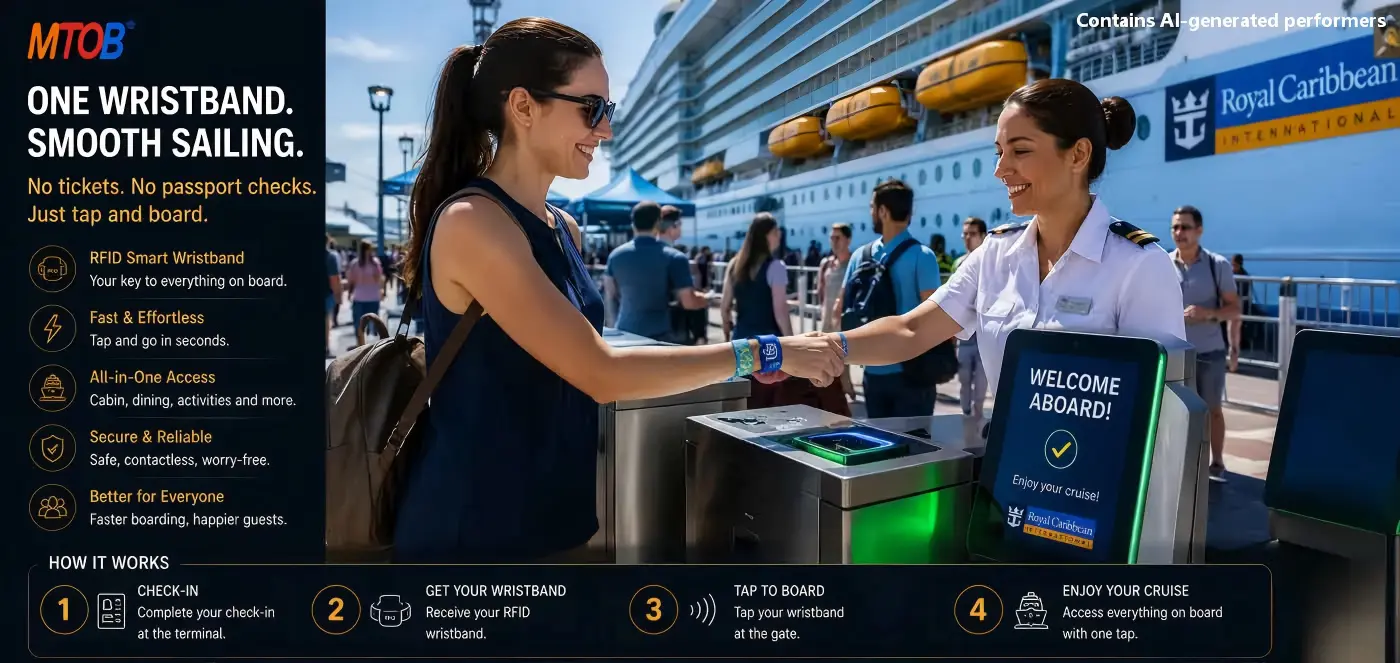
Traditional Passenger Management Pain Points in the European and American Cruise Industry
High Loss Rate of Cruise Key Cards Increases Passenger Inconvenience and Operational Costs
In the global cruise industry, European and American cruise companies have long been troubled by the high loss rate of traditional cruise key cards, which not only brings great inconvenience to passengers but also increases the operational costs of cruise companies, becoming a major obstacle to improving service quality and operational efficiency. Traditional cruise key cards are usually small in size, easy to be misplaced or lost by passengers during travel, especially when passengers are engaged in on-board activities such as swimming, dining, and entertainment. Once a cruise key card is lost, passengers have to spend a lot of time going to the front desk to report the loss, go through the formalities of canceling the old card and applying for a new one, which not only affects the passenger’s travel experience but also may cause delays in participating in on-board activities or entering their cabins. For cruise companies, the loss of cruise key cards means additional costs: each new cruise key card costs 15 to 30 dollars to produce, and considering the large number of passengers on each cruise (usually 2,000 to 5,000 people), the annual cost of replacing lost cruise key cards can reach tens of thousands of dollars. In addition, the process of canceling the old card and activating the new card requires a lot of manual operation by the staff, which increases the workload of the on-board service team and reduces operational efficiency. RFID Wristbands, as an innovative alternative to traditional cruise key cards, can effectively solve the problem of high loss rates, reduce the inconvenience caused to passengers and the additional operational costs of cruise companies, and provide a more reliable and convenient management solution for cruise passenger management.
Long Queuing Time for Embarkation and Disembarkation Affects Passenger Experience
Long queuing time for embarkation and disembarkation is another prominent pain point in the traditional European and American cruise industry, which directly affects passengers’ travel experience and satisfaction, and even leaves a negative impression on passengers of the cruise brand. In traditional cruise services, passengers need to go through multiple tedious procedures to complete embarkation: first, they need to queue at the port terminal to show their passports, cruise tickets, and other documents; then, the staff manually verify the passenger information, check the visa and other relevant documents, and print the boarding pass and cruise key card; next, passengers need to go through security checks, and finally board the cruise after manual confirmation. The entire embarkation process usually takes 60 to 90 minutes, and during peak travel seasons or when multiple cruises depart at the same time, the queuing time alone can reach 40 minutes or more. The disembarkation process is equally time-consuming: passengers need to queue to return the cruise key card, go through the exit inspection, and pick up their luggage, which often takes 45 to 60 minutes. This long queuing time not only wastes passengers’ precious travel time but also makes passengers feel tired and impatient, especially for elderly passengers, children, and families with heavy luggage. A survey of 100 major European and American cruise companies shows that 72% of passengers are dissatisfied with the queuing time for embarkation and disembarkation, and 35% of passengers said that the long queuing time has affected their overall evaluation of the cruise trip. The backward embarkation and disembarkation processes not only reduce passenger satisfaction but also increase the pressure on the on-board and terminal staff, affecting the overall operational efficiency of cruise companies. RFID Wristbands can greatly shorten the queuing time for embarkation and disembarkation, simplify the verification process, and significantly improve passengers’ travel experience.
Cumbersome On-board Consumption Process Reduces Travel Convenience
The cumbersome on-board consumption process is another major pain point that plagues the traditional European and American cruise industry, which reduces the convenience of passengers’ travel and affects the on-board consumption experience. In traditional cruise services, passengers need to carry cash, credit cards, or special consumption cards when making on-board purchases, such as dining in restaurants, buying souvenirs, participating in paid activities, or using spa services. Each consumption requires passengers to take out the payment tool, wait for the staff to manually swipe the card or count the cash, and then sign to confirm, which is not only time-consuming but also inconvenient, especially when passengers are engaged in outdoor activities or have wet hands after swimming. In addition, the use of multiple payment tools is easy to cause confusion, and there is a risk of losing cash or credit cards. For cruise companies, the manual recording and settlement of consumption data not only increases the workload of the staff but also is prone to calculation errors, leading to disputes between passengers and the cruise company. According to statistics, about 20% of passenger complaints on European and American cruises are related to cumbersome consumption processes or settlement errors. The cumbersome on-board consumption process not only reduces passengers’ willingness to consume but also affects the revenue of cruise companies. RFID Wristbands can solve this problem perfectly, allowing passengers to complete consumption quickly and conveniently without carrying additional payment tools, thus improving the convenience of travel and the efficiency of on-board consumption management.
Core Technical Characteristics of RFID Cruise Wristbands
Waterproof and Salt Spray Resistant Design Adapts to the Cruise Marine Environment
One of the core technical characteristics of RFID Wristbands is their waterproof and salt spray resistant design, which is specially developed to adapt to the harsh marine environment of cruises, ensuring the stable operation of the wristbands in various on-board scenarios. Unlike traditional cruise key cards, which are easily damaged by water and salt spray, RFID Wristbands adopt high-quality waterproof materials and sealed packaging technology, with a waterproof level of IP67 or higher, which can withstand long-term immersion in water (up to 1 meter deep for 30 minutes) and resist the erosion of salt spray in the marine environment. This design is particularly important for cruise passengers, who often engage in water-related activities such as swimming in the on-board pool, taking a shower in the cabin, or participating in shore excursions by the sea. With the waterproof and salt spray resistant RFID Wristbands, passengers do not need to take off the wristband when engaging in these activities, avoiding the trouble of storing the wristband and the risk of loss or damage. In addition, the waterproof and salt spray resistant design also extends the service life of the RFID Wristbands, ensuring that they can maintain stable performance throughout the cruise trip, reducing the frequency of replacement and the corresponding operational costs of cruise companies. The material of the RFID Wristbands is also wear-resistant and durable, which can withstand daily friction and extrusion, ensuring that the wristband will not be easily damaged even after long-term use.
Reusable Feature Reduces Cruise Operational Costs
RFID Wristbands have the core technical characteristic of being reusable, which can significantly reduce the operational costs of cruise companies and achieve more environmentally friendly and sustainable operation. Traditional cruise key cards are usually disposable, and each passenger will receive a new key card when boarding, which is recycled and discarded after the passenger disembarks. This disposable mode not only increases the production cost of cruise companies but also generates a lot of waste, which is not in line with the global trend of environmental protection. RFID Wristbands, on the other hand, can be reused multiple times: after passengers disembark, the cruise staff can collect the wristbands, clean and disinfect them, and then reset the data in the wristbands through the management system, so that they can be used by the next batch of passengers. Each RFID Wristband can be reused 50 to 100 times, which greatly reduces the cost of producing and replacing key cards for cruise companies. According to the calculation of a medium-sized European cruise company, using reusable RFID Wristbands instead of disposable cruise key cards can reduce the annual cost of key card production by 60% to 70%, saving tens of thousands of dollars in costs each year. In addition, the reusable feature of RFID Wristbands also reduces environmental pollution, conforms to the environmental protection concept of modern cruise companies, and helps cruise brands establish a green and sustainable corporate image, which is more favored by environmentally conscious passengers.
Full-Scenario Authority Integration Meets Passengers’ Multi-Scenario Use Needs
RFID Wristbands integrate full-scenario authority, which is another important core technical characteristic, enabling them to meet passengers’ use needs in various on-board scenarios, realizing “one wristband for all purposes” and greatly improving the convenience of travel. Unlike traditional cruise key cards, which only have the function of opening the cabin door, RFID Wristbands integrate multiple authorities and functions, including cabin unlocking, identity verification, on-board consumption, activity registration, and safety check-in. The cruise company can bind the passenger’s personal information, cabin information, consumption quota, and activity preferences to the RFID Wristband in advance through the management system. When passengers are in different on-board scenarios, they only need to use the same wristband to complete the corresponding operations: use it to unlock the cabin door, complete identity verification during embarkation and disembarkation, pay for on-board consumption, register for on-board activities, and even complete lifeboat identity registration in case of emergency. This full-scenario authority integration not only simplifies the operation process for passengers but also reduces the need for passengers to carry multiple cards or documents, making travel more convenient and comfortable. For cruise companies, the integration of full-scenario authority also simplifies the management process, realizes the unified management of passenger information, consumption data, and activity participation, and improves the efficiency of on-board management. The flexible authority setting function also allows cruise companies to adjust the authority of the RFID Wristbands according to different passenger groups (such as VIP passengers, children, and crew), meeting diverse management needs.
Full-Process Application of RFID Wristbands in Cruise Travel
Quick Identity Verification in the Embarkation Link Shortens Queuing Time
In the embarkation link of cruise travel, RFID Wristbands can realize quick identity verification, which greatly shortens the queuing time, simplifies the embarkation process, and improves the efficiency of embarkation and passenger experience. Before passengers board the cruise, the cruise company will pre-bind the passenger’s passport information, cruise ticket information, and cabin information to the RFID Wristband, and distribute the wristband to the passengers in advance or at the port terminal. When passengers arrive at the embarkation checkpoint, they only need to place the RFID Wristband close to the self-service verification terminal, and the terminal will quickly read the information in the wristband, complete the identity verification and embarkation confirmation in 2 to 3 seconds, without manual intervention by the staff. The self-service verification terminal is easy to operate, and passengers of all ages can complete the verification process independently, which effectively reduces the queuing time. Compared with the traditional manual verification method, which takes 10 to 15 seconds per passenger, the use of RFID Wristbands can increase the verification efficiency by 70% to 80%. In addition, the RFID Wristband can also store the passenger’s security check information, which can be quickly read during the security check link, further shortening the embarkation time. According to the practice of European and American cruise companies, the use of RFID Wristbands can reduce the average embarkation time per passenger from 15 minutes to 5 minutes, and the overall queuing time can be shortened by more than 60%, greatly improving passengers’ satisfaction with the embarkation process.
One-Click Cabin Unlocking Improves Check-in Convenience
RFID Wristbands can realize one-click cabin unlocking, which greatly improves the convenience of passengers’ check-in and daily travel, solving the trouble of traditional cruise key cards and enhancing the living experience on the cruise. Traditional cruise key cards require passengers to insert the card into the card slot or swipe the card to unlock the cabin door, which is not only inconvenient but also easy to have problems such as card jamming or failure to read the card. RFID Wristbands adopt non-contact induction technology, and passengers only need to carry the wristband close to the induction area of the cabin door lock, and the cabin door can be unlocked with one click, without manual insertion or swiping of the card. The induction distance is 2 to 5 cm, and the unlocking speed is less than 0.3 seconds, ensuring that passengers can unlock the cabin door quickly and conveniently. In addition, the RFID Wristband also has the function of automatic locking: when passengers leave the cabin and the wristband is far away from the cabin door, the cabin door will automatically lock, avoiding the risk of forgetting to lock the door and ensuring the safety of the passengers’ personal belongings. The wristband is small in size, light in weight, and easy to wear, and passengers can wear it all the time without feeling cumbersome, which solves the problem of traditional cruise key cards being easy to lose or forget to carry. This one-click cabin unlocking function not only improves the convenience of passengers’ check-in and daily travel but also reduces the number of passenger complaints related to cabin unlocking, improving the overall service quality of the cruise.
Scan to Complete On-board Consumption Without Additional Payment Tools
One of the most practical applications of RFID Wristbands in cruise travel is to complete on-board consumption by scanning, which allows passengers to make purchases without carrying additional payment tools such as cash, credit cards, or consumption cards, greatly improving the convenience of on-board consumption. Before boarding, passengers can bind their credit card information or pre-deposit a consumption quota to the RFID Wristband through the cruise company’s official website, mobile app, or on-board front desk. When making on-board consumption, such as dining in the restaurant, buying souvenirs in the duty-free shop, participating in paid entertainment activities, or using spa services, passengers only need to place the RFID Wristband close to the consumption terminal, and the terminal will quickly read the consumption information and deduct the corresponding amount from the bound credit card or pre-deposited quota. The entire consumption process takes only 1 to 2 seconds, which is fast and convenient, avoiding the trouble of taking out payment tools and waiting for settlement. In addition, the RFID Wristband can also record the detailed consumption records of passengers, and passengers can check their consumption details at any time through the on-board self-service terminal or mobile app, ensuring transparency and clarity of consumption. This scan-to-consume function not only improves the convenience of passengers’ on-board consumption but also increases the willingness of passengers to consume, thus increasing the on-board revenue of cruise companies. According to the data of European cruise companies, the use of RFID Wristbands has increased the average on-board consumption per passenger by 25% to 35%.
Convenient On-board Activity Registration Improves Participation
RFID Wristbands can help passengers complete on-board activity registration conveniently, which greatly improves the participation rate of on-board activities and enhances the fun and experience of cruise travel. On cruises, there are usually a variety of on-board activities every day, such as live performances, dance parties, cooking classes, fitness courses, and shore excursions, which are important parts of passengers’ cruise experience. In traditional cruise services, passengers need to go to the activity registration desk to register manually, which is time-consuming and may lead to missing activities due to long queues. With RFID Wristbands, passengers can complete activity registration quickly and conveniently: the cruise company will display the activity information and registration QR code on the on-board electronic screen, notice board, and mobile app. Passengers only need to scan the QR code with their mobile app and bind it to their RFID Wristband, or directly place the wristband close to the activity registration terminal, and they can complete the registration in a few seconds. In addition, the RFID Wristband can also send activity reminders to passengers: before the activity starts, the wristband will vibrate or light up to remind passengers of the activity time and location, avoiding the problem of missing activities due to forgetting. This convenient activity registration function not only simplifies the registration process for passengers but also helps cruise companies count the number of participants in each activity in real time, adjust the activity arrangement and venue according to the number of participants, and improve the quality of activities. According to statistics, the use of RFID Wristbands has increased the participation rate of on-board activities by 40% to 50%, greatly enhancing passengers’ satisfaction with the cruise trip.
Lifeboat Identity Registration Ensures Passenger Travel Safety
RFID Wristbands play an important role in lifeboat identity registration, which can effectively ensure passengers’ travel safety and improve the efficiency of emergency response on cruises. Safety is the top priority of cruise operations, and lifeboat drill and emergency evacuation are important links to ensure passenger safety. In traditional cruise services, lifeboat identity registration is completed manually by staff, which is not only time-consuming but also prone to errors, such as missing registration or wrong registration, which may affect the efficiency of emergency evacuation in case of an emergency. RFID Wristbands solve this problem by integrating lifeboat identity registration function: when passengers board the cruise, their personal information, cabin number, and lifeboat number are bound to the RFID Wristband. During lifeboat drills or emergency evacuation, passengers only need to place the RFID Wristband close to the identity registration terminal at the lifeboat boarding point, and the system will quickly record the passenger’s boarding information, including the boarding time and lifeboat number, and transmit the data to the on-board emergency command center in real time. The emergency command center can grasp the boarding situation of each passenger in real time, quickly find out the passengers who have not boarded the lifeboat, and arrange staff to search and rescue them, improving the efficiency of emergency response. In addition, the RFID Wristband can also store the passenger’s health information (such as allergies, chronic diseases), which can provide important reference for medical staff in case of emergency, ensuring the safety of passengers. This lifeboat identity registration function not only ensures passengers’ travel safety but also helps cruise companies meet the relevant safety standards and requirements of the international cruise industry.
Application Cases and Effects of Top European and American Cruise Brands
RFID Wristband Application Practices of Top European and American Cruise Brands
In recent years, many top European and American cruise brands have taken the lead in applying RFID Wristbands, launching a series of intelligent service upgrades, accumulating valuable experience for the intelligent transformation of the global cruise industry, and setting a benchmark for the application of RFID technology in the cruise industry. One of the representative cases is Royal Caribbean International, a well-known American cruise brand, which launched the RFID Wristband service in 2023, covering all its cruise ships. Royal Caribbean customized RFID Wristbands with its own brand logo and marine-themed design, equipped with advanced waterproof and salt spray resistant technology, and integrated functions such as cabin unlocking, identity verification, on-board consumption, activity registration, and lifeboat identity registration. The brand also upgraded the on-board self-service terminals, cabin door locks, and consumption terminals to realize the full-process intelligent connection of RFID Wristbands. In addition, Royal Caribbean also launched a mobile app that can be bound to the RFID Wristband, allowing passengers to check consumption records, register for activities, and receive activity reminders in real time. Another representative case is MSC Cruises, a well-known European cruise brand, which applied RFID Wristbands to its flagship cruise ships in 2024, focusing on the personalized customization and full-scenario application of the wristbands. MSC Cruises customized different styles of RFID Wristbands for different passenger groups, such as children’s wristbands with cartoon patterns and VIP wristbands with exclusive designs, and added functions such as personalized activity recommendations based on passenger preferences. These application practices have proved that RFID Wristbands can effectively solve the traditional management pain points of cruise companies and bring a more convenient and intelligent travel experience to passengers.
Significant Improvement in Passenger Satisfaction After Application
After the application of RFID Wristbands, top European and American cruise brands have achieved a significant improvement in passenger satisfaction, which has enhanced the brand influence and market competitiveness of the cruise companies. Taking Royal Caribbean International as an example, after one year of applying RFID Wristbands, the passenger satisfaction rate of its cruise ships increased from 78% to 94%, and the passenger recommendation rate increased by 50%. According to the passenger feedback survey, 92% of passengers said that the RFID Wristband greatly improved the convenience of travel, 88% of passengers were satisfied with the quick embarkation and disembarkation process, and 85% of passengers said that the scan-to-consume function made on-board consumption more convenient. In addition, the number of passenger complaints related to lost cruise key cards, cumbersome consumption processes, and long queuing times decreased by 80%, 75%, and 70% respectively. Similarly, MSC Cruises also achieved remarkable results after applying RFID Wristbands: the passenger satisfaction rate increased from 80% to 93%, and the passenger retention rate increased by 45%. Passengers especially recognized the personalized design and full-scenario application of the RFID Wristbands, saying that the wristband made their cruise trip more comfortable and enjoyable. The significant improvement in passenger satisfaction not only helps cruise companies attract more passengers but also enhances the brand reputation and market competitiveness of the cruise companies in the global cruise market.
Measured Data Confirms the Optimization Value of Wristbands for Cruise Services
The measured data from the application practices of top European and American cruise brands further confirms the optimization value of RFID Wristbands for cruise services, providing strong data support for the widespread application of the wristbands in the cruise industry. According to the data released by Royal Caribbean International, after the application of RFID Wristbands, the average embarkation time per passenger was reduced from 15 minutes to 4.5 minutes, a decrease of 70%, and the average disembarkation time was reduced from 45 minutes to 15 minutes, a decrease of 67%. The loss rate of cruise key cards (replaced by RFID Wristbands) decreased from 12% to 1%, a decrease of 92%, and the annual cost of replacing key cards was reduced by 75%. In terms of on-board consumption, the average on-board consumption per passenger increased by 30%, and the consumption settlement efficiency increased by 80%, reducing the workload of the on-board service staff by 50%. For MSC Cruises, the measured data shows that the use of RFID Wristbands increased the participation rate of on-board activities by 48%, the emergency evacuation efficiency increased by 65%, and the number of passenger complaints decreased by 78%. In addition, a survey of 80 European and American cruise companies that have applied RFID Wristbands shows that 97% of the companies said that the wristbands effectively improved operational efficiency, 95% of the companies said that the wristbands reduced operational costs, and 93% of the companies said that the wristbands improved passenger satisfaction and brand influence. These measured data fully confirm that RFID Wristbands can effectively optimize the service process of cruise companies, reduce costs, improve efficiency, and bring significant economic and social benefits to the cruise industry.
Customized Design of RFID Cruise Wristbands
Cruise Theme-Based Design Highlights Brand Characteristics
The customized design of RFID Wristbands is an important part of enhancing passenger experience and brand influence, and cruise theme-based design is one of the core directions, which can highlight the brand characteristics of cruise companies and create a unique travel atmosphere for passengers. Top European and American cruise brands usually design RFID Wristbands according to their own brand positioning and cruise themes, integrating elements such as marine culture, cruise characteristics, and brand logos into the design of the wristbands. For example, Royal Caribbean International, which focuses on luxury and adventure, designs its RFID Wristbands with blue and white as the main colors, integrating elements such as cruise ships, oceans, and anchors, highlighting the brand’s marine adventure positioning. MSC Cruises, which focuses on family and comfort, designs its RFID Wristbands with warm colors such as orange and yellow, adding cartoon patterns and family elements, catering to the needs of family passengers. In addition, some cruise companies also design special RFID Wristbands for different cruise routes, such as tropical route wristbands with palm tree and beach elements, and Arctic route wristbands with ice and snow elements, making the wristbands more in line with the travel scene. The cruise theme-based design not only makes the RFID Wristbands more beautiful and attractive but also helps passengers quickly identify the cruise brand, enhances the brand recognition and memory, and creates a more immersive travel experience for passengers.
Printable Passenger Names Improve Exclusivity and Identifiability
Another important part of the customized design of RFID Wristbands is the ability to print passenger names, which can improve the exclusivity and identifiability of the wristbands, making passengers feel more valued and enhancing the personalized experience. Traditional cruise key cards usually only have the passenger’s cabin number and no personal information, which is not easy to identify and lacks exclusivity. RFID Wristbands can print the passenger’s name, cabin number, and even the cruise route and travel date on the surface of the wristband through professional printing technology, making each wristband unique to the passenger. This not only makes it easier for passengers to identify their own wristbands, avoiding the confusion of using the wrong wristband, but also enhances the exclusivity of the wristband, making passengers feel that they are receiving personalized services. For example, when passengers wear the wristband with their own name printed on it, they will feel more valued and cared for by the cruise company, which helps to improve passenger satisfaction and loyalty. In addition, the printed passenger name also facilitates the staff to quickly identify passengers, provide more targeted services, such as greeting passengers by name, which further enhances the personalized service experience. The printable function also allows cruise companies to add other personalized information according to the needs of passengers, such as the passenger’s birthday, anniversary, or special preferences, making the RFID Wristbands more humanized.
Customized Design Enhances Passenger Experience and Brand Memory
The customized design of RFID Wristbands not only improves the exclusivity and identifiability of the wristbands but also enhances the overall passenger experience and brand memory, helping cruise companies establish a deep connection with passengers. A well-designed RFID Wristband is not only a tool for passenger management and service but also a unique souvenir of the cruise trip, which can leave a deep impression on passengers. Many cruise companies design the RFID Wristbands as collectible souvenirs, with exquisite appearance and unique design, so that passengers can take the wristband home as a memory of the cruise trip after the trip. This not only enhances the passenger’s sense of belonging and satisfaction but also makes the cruise brand deeply rooted in the hearts of passengers, improving the brand memory and word-of-mouth. For example, some cruise companies cooperate with well-known designers to design limited-edition RFID Wristbands, which are highly collectible and attract a large number of passengers to participate in the cruise trip. In addition, the customized design can also meet the personalized needs of different passenger groups: for children, the wristband can be designed into cartoon shapes with bright colors; for VIP passengers, the wristband can be made of high-end materials with exclusive logos and designs; for elderly passengers, the wristband can be designed with larger fonts and brighter colors for easy identification. These customized designs fully consider the needs of different passengers, enhance the personalized experience, and help cruise companies gain more passenger recognition and trust.
Future Intelligent Development Direction of RFID Technology in the Cruise Industry
Deepen the Integration of RFID Technology and Cruise Services
In the future, the cruise industry will further deepen the integration of RFID technology and cruise services, breaking the limitations of the current application scope, and realizing the full-scenario intelligent upgrading of cruise services. At present, the application of RFID Wristbands is mainly focused on identity verification, cabin unlocking, on-board consumption, and other basic links. In the future, RFID technology will be deeply integrated with various on-board services, such as catering, accommodation, entertainment, and medical care, to provide more personalized and intelligent services for passengers. For example, in the catering link, the RFID Wristband can record the passenger’s dietary preferences and allergies, and the on-board restaurant can recommend suitable dishes according to the information in the wristband, realizing personalized catering services. In the accommodation link, the RFID Wristband can be connected with the cabin’s intelligent equipment, such as adjusting the room temperature, lighting, and music according to the passenger’s preferences, creating a more comfortable living environment. In the medical link, the RFID Wristband can store the passenger’s health records, and the on-board medical staff can quickly obtain the passenger’s health information in case of emergency, providing timely and accurate medical services. The deep integration of RFID technology and cruise services will not only improve the quality and efficiency of cruise services but also create a more personalized and intelligent travel experience for passengers, promoting the high-quality development of the cruise industry.
Create Full-Scenario Intelligent Experience to Improve Passenger Travel Feelings
In the future, relying on RFID technology, the cruise industry will create a full-scenario intelligent experience, covering the entire process of passengers’ cruise travel from embarkation to disembarkation, and comprehensively improving passengers’ travel feelings. With the development of intelligent technology, RFID Wristbands will become the core entry point for passengers to experience on-board intelligent services, connecting various on-board intelligent systems to realize “one wristband connects the entire cruise”. For example, passengers can use the RFID Wristband to control the intelligent equipment in the cabin, book on-board activities and shore excursions, check the real-time schedule of the cruise, and even interact with other passengers through the wristband. In addition, the RFID Wristband can also be combined with technologies such as artificial intelligence and big data to analyze the passenger’s travel habits and preferences, and push personalized service recommendations to passengers, such as recommending suitable on-board activities, restaurants, and souvenirs according to the passenger’s consumption records and activity participation. This full-scenario intelligent experience will make passengers’ cruise travel more convenient, comfortable, and interesting, greatly improving passengers’ travel feelings and satisfaction. For cruise companies, creating a full-scenario intelligent experience can also help them stand out in the fierce market competition and enhance their core competitiveness.
Promote the Digital Upgrade of Cruise Services Relying on RFID Technology
In the future, the cruise industry will rely on RFID technology to promote the digital upgrade of cruise services, realizing the integration and intelligent management of all links of cruise operations, and improving the global operational efficiency of cruise companies. At present, the digital level of the cruise industry is still relatively low, and many links still rely on manual operation, which affects the operational efficiency and service quality. RFID technology, as an important intelligent technology, can provide strong support for the digital upgrade of cruise services. For example, through RFID Wristbands, cruise companies can collect real-time data of passengers, such as consumption habits, activity preferences, and travel routes, and use big data technology to analyze the data, providing data support for the optimization of service processes and the formulation of marketing strategies. In addition, RFID technology can also realize the digital management of on-board equipment and materials, such as real-time monitoring of the use of on-board facilities and the inventory of materials, and automatically send maintenance and replenishment reminders, reducing the workload of staff and improving operational efficiency. The digital upgrade of cruise services will also realize the global unified management of cruise fleets, allowing cruise companies to monitor the operation status of each cruise ship in real time, rationalize the scheduling of fleets, and improve the overall operational efficiency. Relying on RFID technology to promote the digital upgrade of cruise services will drive the entire cruise industry to develop in a more intelligent, efficient, and sustainable direction.
Why Choose Mytopband?
- Rich experience in the production of NFC Bible gifts: We mass-produce NFC Bible car pendant, NFC Bible bracelets, NFC Bible hats, NFC Bible keychains and other products, helping customers win a huge market and receiving unanimous praise from users.
- Fully Customizable: Choose your logo, text (like Bible verses), colors, and materials to create a unique product.
- Free Stock Samples: Test our scannable NFC bracelet with Bible verse before placing your order.
- Low MOQ as 500pcs: Perfect for startups and small businesses.

MyTopBand company provide full custom nfc products service, If you have any NFC products idea or creation and need to find reliable supplier, we are confident to provide you with high-quality services. Please find us: www.mytopband.com, or send message to info@mytopband.com, we will reply you within 24 hours.