
New Demands for Brand Sustainable Loyalty Programs Under the Global Eco-Consumption Trend
The Deep-Rooted Concept of Environmental Protection Drives the Green Upgrade of Brand Loyalty Systems
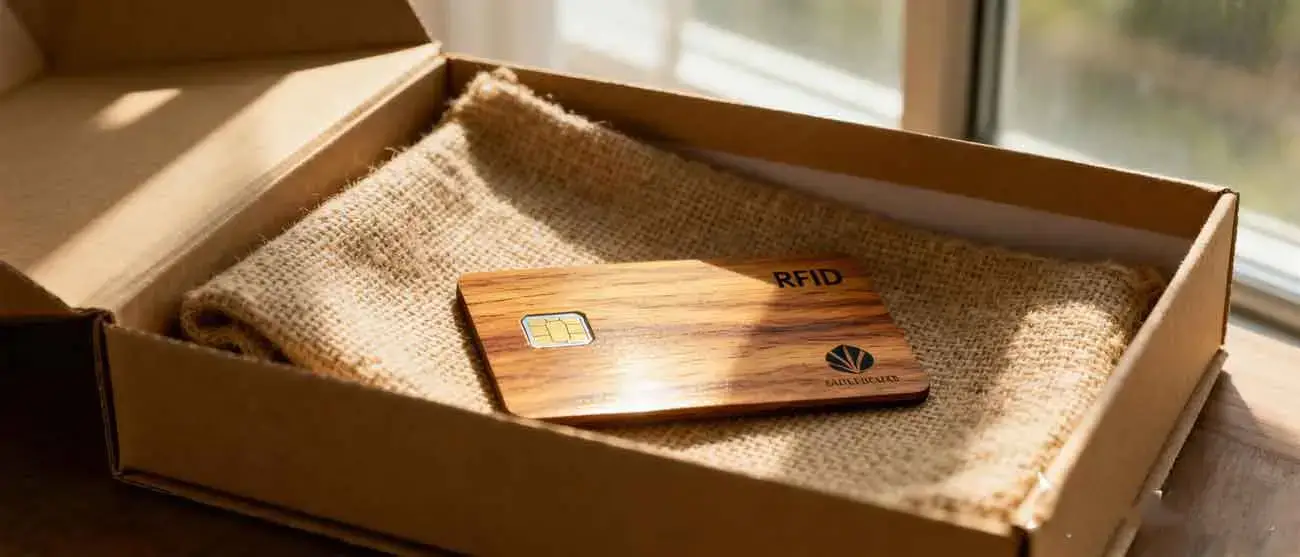
In recent years, global environmental protection awareness has been rising, and the concept of eco-friendly consumption has deeply rooted in the hearts of the people, driving a comprehensive green upgrade of brand loyalty systems. Consumers are no longer only concerned about the quality and price of products and services; they pay more attention to the environmental responsibility of brands, and sustainable development has become an important criterion for consumers to choose brands. Traditional loyalty programs often rely on plastic membership cards, which are difficult to degrade, consume a lot of non-renewable resources, and easily cause environmental pollution, which is increasingly inconsistent with the eco-friendly consumption concept of modern consumers. In response to this change, more and more brands are actively exploring green and sustainable loyalty program solutions, and RFID Wooden Cards have emerged as an ideal choice. RFID Wooden Cards are made of natural wood materials, which are environmentally friendly, renewable, and degradable, perfectly aligning with the concept of sustainable development. By introducing RFID Wooden Cards into loyalty programs, brands can not only reduce environmental pollution caused by plastic cards but also convey their environmental commitment to consumers, realize the green upgrade of the loyalty system, and gain the recognition and favor of eco-conscious consumers. This green upgrade is not only a response to global environmental protection calls but also an important measure for brands to enhance their core competitiveness in the new consumption era.
The Prominent Environmental Preferences of European and American Consumers: 72% Prioritize Brands with Eco-Friendly Packaging
European and American markets have always been at the forefront of global eco-consumption, and consumers’ environmental preferences are particularly prominent, which has a profound impact on the design of brand loyalty programs. According to a latest market research report released by a well-known international environmental organization, 72% of European and American consumers prioritize choosing brands with eco-friendly packaging and sustainable practices when making purchases. These consumers are willing to pay a premium of 15%-20% for eco-friendly products and services, and they are more likely to join the loyalty programs of brands that adhere to environmental concepts. In contrast, brands that still use traditional plastic membership cards are gradually losing the favor of these eco-conscious consumers. The research also shows that 85% of European and American consumers believe that a brand’s environmental practices directly affect their loyalty to the brand, and 78% of consumers said they would actively recommend brands with sustainable loyalty programs to their friends and family. This data fully reflects the strong demand of European and American consumers for eco-friendly brands and sustainable loyalty programs. For brands aiming to expand in the European and American markets, introducing eco-friendly solutions such as RFID Wooden Cards into loyalty programs has become an inevitable choice to attract consumers, enhance brand influence, and gain a competitive advantage in the market.
Plastic-Free Experience Becomes the Core Competitiveness for Brands to Attract Consumers
With the deepening of global environmental protection concepts, the plastic-free experience has gradually become a core competitiveness for brands to attract consumers and stand out in the fierce market competition. In the past, plastic products were widely used in various fields, including brand loyalty cards, but the environmental pollution caused by plastic waste has aroused widespread concern from the society and consumers. More and more consumers are advocating a plastic-free lifestyle and are more inclined to choose brands that can provide plastic-free products and services. For brand loyalty programs, replacing traditional plastic membership cards with RFID Wooden Cards is an important way to achieve a plastic-free experience. RFID Wooden Cards are made of natural wood, without any plastic components, which can completely avoid the environmental pollution caused by plastic card abandonment. This plastic-free experience not only meets the environmental needs of consumers but also helps brands establish a green and responsible brand image, which is difficult for competitors using plastic cards to replicate. In addition, the unique texture and natural beauty of RFID Wooden Cards can also bring a better user experience to consumers, making the loyalty program more attractive. Brands that take the lead in providing plastic-free loyalty experiences through RFID Wooden Cards can effectively attract eco-conscious consumers, enhance customer loyalty, and build a unique core competitiveness in the market.
Dual Guarantee of Craftsmanship and Durability of Maple and Walnut RFID Wooden Cards
Material Advantages and Chip Embedding Process Analysis of Maple RFID Wooden Cards
Maple RFID Wooden Cards are highly favored by brands due to their excellent material advantages and sophisticated chip embedding process, becoming a popular choice for sustainable loyalty programs. Maple wood, as a high-quality natural wood material, has the characteristics of fine texture, uniform grain, and light color, which not only has a natural and elegant appearance but also has good toughness and wear resistance. The surface of maple wood is smooth and easy to process, which can be carved, printed, and polished to meet the personalized design needs of different brands. In terms of the chip embedding process, maple RFID Wooden Cards adopt a professional precision embedding technology, which embeds the RFID chip into the wood without damaging the structure and integrity of the wood. The chip is placed in a pre-designed groove inside the wood, and then sealed with eco-friendly adhesive to ensure that the chip is firmly fixed and not easy to fall off. This embedding process not only ensures the stable operation of the RFID chip but also maintains the natural beauty of the maple wood, making the card both functional and aesthetic. In addition, maple wood is a renewable resource, and its production and processing process is environmentally friendly, which is in line with the concept of sustainable development. The material advantages and sophisticated craftsmanship of maple RFID Wooden Cards provide a solid guarantee for their application in long-term loyalty programs.
Texture Presentation and Craftsmanship Detail Control of Walnut RFID Wooden Cards
Walnut RFID Wooden Cards are known for their high-end texture and exquisite craftsmanship details, which are suitable for brands pursuing a high-end and eco-friendly image. Walnut wood is a precious hardwood material with a deep and rich color, clear and beautiful grain, and a strong sense of texture and weight, which can show the high-end taste of the brand. The surface of walnut RFID Wooden Cards is treated with a special eco-friendly polishing process, which makes the wood surface smooth and delicate, with a natural luster, without any chemical additives, ensuring environmental protection and safety. In terms of craftsmanship detail control, every link of walnut RFID Wooden Cards is strictly checked, from the selection of raw materials to the final finished product. Only high-quality walnut wood with uniform grain and no defects is selected as the raw material, and the cutting, polishing, and chip embedding processes are all completed by professional technicians to ensure the consistency and quality of each card. The edge of the card is polished smoothly to avoid burrs, ensuring comfortable hand feeling when held. In addition, the walnut wood has good corrosion resistance and durability, which can maintain its original texture and appearance even after long-term use. The texture presentation and strict craftsmanship detail control of walnut RFID Wooden Cards make them an ideal choice for high-end brands to build sustainable loyalty programs.
Professional Chip Embedding Technology Ensures the Stable Operation of RFID Wooden Cards
The stable operation of RFID Wooden Cards largely depends on the professional chip embedding technology, which is an important part of ensuring the functional reliability of the cards. To solve the problem that the wood material may affect the signal transmission of the RFID chip, we adopt a professional precision chip embedding technology, which has been repeatedly tested and optimized to ensure that the RFID Wooden Cards can operate stably in various scenarios. First, the chip is selected from high-quality RFID chips with strong signal penetration and stable performance, which can effectively avoid signal interference caused by wood materials. Second, the embedding position is carefully designed, usually in the middle of the card or a position with less wood density, to minimize the impact of wood on signal transmission. Third, the embedding process adopts a closed sealing technology, using eco-friendly and high-adhesion adhesive to fix the chip in the pre-designed groove, which not only ensures the firmness of the chip but also prevents moisture, dust, and other factors from affecting the chip’s operation. In addition, each RFID Wooden Card undergoes strict signal testing before leaving the factory, and only those that meet the signal stability standard can be put into use. This professional chip embedding technology ensures that RFID Wooden Cards can stably realize functions such as membership information reading, points accumulation, and rights verification, meeting the long-term use needs of brand loyalty programs.
Service Life of More Than 3 Years Meets the Long-Term Use Needs of Loyalty Programs
Brand loyalty programs usually require membership cards to have a long service life to ensure the continuity of the program and the stability of customer relations, and RFID Wooden Cards can fully meet this demand with a service life of more than 3 years. The long service life of RFID Wooden Cards is mainly due to the excellent durability of natural wood materials and the sophisticated production craftsmanship. Maple and walnut wood used in the cards have good toughness, wear resistance, and corrosion resistance, which can withstand daily wear and tear, such as friction, collision, and contact with water (to a certain extent). The professional chip embedding technology also ensures that the chip will not fall off or fail due to daily use, maintaining the stable operation of the card. In contrast, traditional plastic membership cards are easily damaged, discolored, or deformed, with an average service life of only 1-2 years, which often requires frequent replacement, increasing the cost of the brand and bringing inconvenience to consumers. The service life of RFID Wooden Cards of more than 3 years not only reduces the frequency of card replacement, saves brand costs, but also provides a more stable and convenient experience for consumers. For brands, this long service life also means that the environmental protection value of RFID Wooden Cards can be fully exerted, reducing the environmental burden caused by frequent card replacement, and further reflecting the brand’s commitment to sustainable development.
RFID Wooden Cards Adapt to Multi-Scenario Loyalty Systems with Distinctive Designs
The Design of Wooden Membership Cards for Organic Supermarkets Fits the Natural and Eco-Friendly Tone
Organic supermarkets, as carriers of eco-friendly consumption, their loyalty programs need to be consistent with their natural and eco-friendly brand tone, and RFID Wooden Cards are perfectly suitable for this scenario with their unique design. The design of wooden membership cards for organic supermarkets mainly focuses on natural and simple elements, fully reflecting the brand’s concept of environmental protection and health. The card surface is usually made of light-colored maple wood, retaining the natural grain of the wood, without excessive decoration, showing a simple and natural aesthetic. Some organic supermarkets will print their brand logos on the card surface with eco-friendly ink, which is non-toxic and pollution-free, and the font is simple and elegant, integrating with the natural texture of the wood. In addition, some cards will be carved with small eco-friendly patterns, such as leaves, fruits, or green plants, to further highlight the natural and eco-friendly tone. The size of the card is designed to be compact and portable, which is convenient for consumers to carry when shopping. The design of these wooden membership cards not only fits the brand positioning of organic supermarkets but also resonates with consumers who pursue eco-friendly and healthy lifestyles. When consumers use the RFID Wooden Cards to shop, they can not only enjoy membership rights but also feel the brand’s environmental commitment, enhancing their recognition and loyalty to the organic supermarket.
The Design of Wooden Annual Cards for Yoga Studios is Simple and Elegant, Consistent with the Health Concept
Yoga studios advocate a healthy, natural, and peaceful lifestyle, and their annual cards need to reflect this concept. RFID Wooden Cards, with their simple and elegant design, perfectly fit the brand tone of yoga studios and are widely used in their loyalty programs. The design of wooden annual cards for yoga studios is mainly simple and minimalist, usually using dark walnut wood or light maple wood, with a smooth surface and no redundant decoration, showing a sense of tranquility and elegance. The card surface is usually printed with the yoga studio’s logo and simple yoga poses, using light-colored ink to highlight the natural texture of the wood, which is consistent with the peaceful and healthy concept of yoga. Some yoga studios will also engrave the studio’s core philosophy on the card surface, such as “peace”, “balance”, or “harmony”, to convey the brand’s values to consumers. The size of the card is designed to be slim and lightweight, which is convenient for consumers to carry in their yoga bags or wallets. The simple and elegant design of these wooden annual cards not only meets the aesthetic needs of yoga practitioners but also integrates with the health concept of yoga studios, making the loyalty program more attractive. For yoga practitioners who pursue a healthy and natural lifestyle, the RFID Wooden Cards have become a symbol of their identity and a reflection of their lifestyle.
The Design of Wooden Point Cards for Coffee Shops is Exquisite and Convenient, Suitable for Daily Carrying
Coffee shops are a common daily consumption scenario for consumers, and their point cards need to be exquisite, convenient, and suitable for daily carrying. RFID Wooden Cards meet these needs with their exquisite design and portable size, becoming a popular choice for coffee shop loyalty programs. The design of wooden point cards for coffee shops is mainly exquisite and fashionable, combining the warm tone of wood with the stylish elements of coffee shops. The card surface is usually made of high-quality maple or walnut wood, with a smooth and delicate texture. Coffee shops will print their brand logos, coffee patterns, or point rules on the card surface with exquisite craftsmanship, which is both beautiful and practical. The size of the card is designed to be the same as that of a standard credit card, which can be easily put into a wallet, card holder, or pocket, convenient for consumers to carry and use when buying coffee. Some coffee shops will also add personalized designs, such as customizing the consumer’s name on the card or carving unique patterns, enhancing the sense of belonging of consumers. The exquisite and convenient design of these wooden point cards not only provides a good user experience for consumers but also helps coffee shops enhance their brand image, making the loyalty program more popular. When consumers use the RFID Wooden Cards to accumulate points and exchange gifts, they can also feel the warmth and taste of the coffee shop.
Customized Design of Wooden Cards for Different Scenarios Meets the Differentiated Needs of Brands
Different industries and brands have different positioning and needs, and RFID Wooden Cards can meet the differentiated needs of brands through customized design, helping brands build a unique loyalty program. The customized design of RFID Wooden Cards covers multiple aspects, including material selection, color matching, pattern design, and functional customization. For high-end brands such as luxury stores or high-end hotels, they can choose high-quality walnut wood to make RFID Wooden Cards, with exquisite carving and gold foil printing, showing a high-end and luxurious image. For young and fashionable brands such as fashion stores or creative studios, they can choose maple wood with bright colors, and design personalized patterns or slogans on the card surface to attract young consumers. For eco-friendly brands, they can retain the natural grain of the wood, use eco-friendly ink for printing, and highlight the environmental protection concept of the brand. In addition, functional customization is also an important part of the customized design. According to the needs of different brands, RFID Wooden Cards can be customized with functions such as point accumulation, rights verification, member information management, and even contactless payment. This customized design allows RFID Wooden Cards to be perfectly integrated with the brand’s positioning and loyalty program, helping brands stand out in the market and enhance their brand uniqueness and competitiveness.
Cost and Environmental Benefit Comparison Between RFID Wooden Cards and Plastic Cards
Detailed Cost Comparison of Purchasing 1000 RFID Wooden Cards and Plastic Cards
When brands choose membership cards for their loyalty programs, cost is an important consideration. Comparing the purchasing cost of 1000 RFID Wooden Cards and plastic cards in detail can help brands make more rational choices. In terms of the unit price, the unit price of a single RFID Wooden Card is usually between $2.5 and $3.5, so the total purchasing cost of 1000 cards is between $2500 and $3500. The unit price of a single traditional RFID plastic card is between $0.8 and $1.5, so the total purchasing cost of 1000 cards is between $800 and $1500. From the perspective of initial purchasing cost, plastic cards have a certain advantage. However, it is necessary to consider the service life of the cards: the average service life of plastic cards is 1-2 years, while the service life of RFID Wooden Cards is more than 3 years. If calculated based on a 3-year cycle, the number of plastic cards that need to be purchased is 2-3 times, and the total purchasing cost will reach $1600-$4500, which is even higher than the purchasing cost of 1000 RFID Wooden Cards. In addition, RFID Wooden Cards have higher added value, which can enhance the brand image and attract more eco-conscious consumers, bringing more long-term benefits to the brand. Therefore, although the initial purchasing cost of RFID Wooden Cards is higher, they have more cost advantages in the long run.
Cost Difference Analysis of Wooden Cards and Plastic Cards in the Recycling and Disposal Link
The cost difference between RFID Wooden Cards and plastic cards in the recycling and disposal link is another important factor that brands need to consider, and this difference further highlights the cost advantage of RFID Wooden Cards. Traditional plastic cards are difficult to degrade, and their recycling and disposal require a lot of manpower, material resources, and financial resources. For 1000 plastic cards, the recycling cost alone is about $100-$150, and the disposal cost (such as incineration or landfill) is about $80-$120. In addition, the incineration of plastic cards will produce harmful gases, causing environmental pollution, and brands may also face environmental fines or negative public opinion, which will bring additional hidden costs. In contrast, RFID Wooden Cards are made of natural wood materials, which are completely degradable and do not require complex recycling and disposal processes. After the service life ends, the wooden cards can be naturally degraded in the environment without causing any pollution, and the disposal cost is almost zero. Even if brands choose to recycle the wooden cards, the recycling cost is only about $20-$30, which is much lower than that of plastic cards. The huge cost difference in the recycling and disposal link makes RFID Wooden Cards more cost-effective in the long run, and also helps brands avoid environmental risks and reduce hidden costs.
The Comprehensive Cost Advantage of RFID Wooden Cards is Prominent Under Long-Term Use
When evaluating the cost of membership cards, it is necessary to consider the comprehensive cost under long-term use, rather than just the initial purchasing cost. Under long-term use, the comprehensive cost advantage of RFID Wooden Cards is very prominent. First, in terms of the service life, RFID Wooden Cards can be used for more than 3 years, while plastic cards need to be replaced 2-3 times in the same period, which greatly increases the purchasing cost of brands. Second, in the recycling and disposal link, RFID Wooden Cards have almost no disposal cost and low recycling cost, while plastic cards have high recycling and disposal costs, and may bring hidden costs such as environmental fines. Third, RFID Wooden Cards can help brands enhance their brand image, attract eco-conscious consumers, improve customer loyalty, and bring more sales revenue and long-term benefits. For example, a brand that uses RFID Wooden Cards may attract more eco-friendly consumers to join its loyalty program, increasing the purchase frequency and consumption amount of consumers, which can offset the initial higher purchasing cost. In addition, the use of RFID Wooden Cards can also help brands save the cost of public relations and marketing, as the environmental protection practice of the brand can attract positive public attention and media reports. Therefore, under long-term use, the comprehensive cost of RFID Wooden Cards is much lower than that of plastic cards, and the cost advantage is very prominent.
The Degradable Nature of Wooden Cards Reduces Environmental Burden and Realizes Environmental Value
In addition to cost advantages, the degradable nature of RFID Wooden Cards also brings significant environmental benefits, reducing the environmental burden and realizing important environmental value. Traditional plastic cards are made of non-degradable plastic materials, which can take hundreds of years to degrade in the natural environment, causing serious white pollution and threatening the ecological balance. Every year, millions of plastic membership cards are discarded around the world, which not only pollute the land and water sources but also harm the living environment of animals and plants. In contrast, RFID Wooden Cards are made of natural wood materials, which are completely degradable. After the service life ends, the wooden cards can be decomposed into organic substances in the soil under the action of microorganisms, without causing any environmental pollution, and can even be used as organic fertilizer to nourish the soil. This degradable nature not only reduces the environmental burden caused by plastic waste but also conforms to the global concept of sustainable development. For brands, using RFID Wooden Cards is not only a manifestation of environmental responsibility but also a way to realize environmental value. By reducing environmental pollution, brands can gain the recognition and support of the society and consumers, and build a positive and responsible brand image, which is conducive to the long-term development of the brand.
Convey Brand Environmental Concepts and Improve Customer Loyalty by Relying on RFID Wooden Cards
Integrate Environmental Concepts into Wooden Card Design to Strengthen Brand Image Transmission
RFID Wooden Cards are not only a tool for loyalty programs but also an important carrier for brands to convey environmental concepts and strengthen brand image transmission. By integrating environmental concepts into the design of wooden cards, brands can effectively convey their commitment to sustainable development to consumers, and enhance the recognition and trust of consumers in the brand. For example, brands can retain the natural grain of the wood on the card surface, without excessive processing and decoration, to show the concept of “returning to nature” and “environmental protection”. They can also print environmental slogans or eco-friendly patterns on the card surface, such as “Go Green, Save the Earth” or “Plastic-Free, Eco-Friendly”, to guide consumers to pay attention to environmental protection. In addition, brands can also use eco-friendly materials and processes in the production of wooden cards, such as using non-toxic and pollution-free eco-friendly ink, and adopting energy-saving and emission-reduction production technologies, to ensure that the entire production process of the cards is environmentally friendly. This integration of environmental concepts into the design and production of RFID Wooden Cards not only makes the cards more meaningful but also strengthens the brand’s environmental image, making consumers feel the brand’s environmental responsibility and enhancing their recognition and loyalty to the brand.
Enhance Customer Participation Through the Design of Wooden Card Membership Rights
The design of membership rights based on RFID Wooden Cards can effectively enhance customer participation, making consumers more actively involved in the brand’s loyalty program and improving customer loyalty. Brands can design unique membership rights combined with the environmental attributes of RFID Wooden Cards, such as giving extra points to consumers who use wooden cards to make purchases, or exchanging wooden cards for eco-friendly gifts (such as reusable shopping bags, bamboo tableware, etc.). For example, an organic supermarket can set up a rule that consumers who use RFID Wooden Cards to shop can get 10% extra points, and when the points reach a certain amount, they can exchange for eco-friendly products. This kind of right design not only encourages consumers to use wooden cards but also strengthens their awareness of environmental protection. In addition, brands can also launch interactive activities related to environmental protection, such as inviting members to participate in environmental volunteer activities, and using RFID Wooden Cards to record participation and give corresponding rewards. These interactive activities and right designs can enhance the participation of consumers, make them feel the value of being a member, and thus improve their loyalty to the brand.
Build an Emotional Connection Between Brands and Consumers with Environmental Attributes
The environmental attributes of RFID Wooden Cards can help brands build a deep emotional connection with consumers, which is an important foundation for improving customer loyalty. In the era of emotional consumption, consumers are not only purchasing products and services but also pursuing emotional resonance with brands. RFID Wooden Cards, as eco-friendly products, can resonate with consumers who pursue environmental protection and sustainable development. When consumers use RFID Wooden Cards, they can feel that they are participating in environmental protection together with the brand, which can enhance their sense of identity and belonging to the brand. For example, a consumer who advocates a plastic-free lifestyle will feel a strong emotional connection with a brand that uses RFID Wooden Cards, because the brand’s environmental practices are consistent with their own values. Brands can also strengthen this emotional connection through storytelling, such as sharing the production process of RFID Wooden Cards, the brand’s environmental initiatives, and the environmental impact brought by the use of wooden cards, to let consumers understand the brand’s environmental efforts and establish a positive brand image. This emotional connection can make consumers more loyal to the brand, and even become the brand’s loyal advocates, actively recommending the brand to others.
Multi-Dimensional Strategies to Improve Member Stickiness and Loyalty
Relying on RFID Wooden Cards, brands can adopt multi-dimensional strategies to improve member stickiness and loyalty, ensuring the long-term development of the loyalty program. First, brands can use the RFID technology of wooden cards to collect member consumption data, such as consumption frequency, consumption preferences, and purchase amount, and based on this data, provide personalized services and recommendations for members, making members feel valued. For example, a coffee shop can recommend favorite coffee flavors to members according to their consumption records, and give personalized discounts. Second, brands can regularly launch member-only activities, such as exclusive sales, environmental lectures, or member gatherings, and use RFID Wooden Cards as the entry凭证 for activities, enhancing the sense of exclusivity of members. Third, brands can establish a member feedback mechanism, inviting members to put forward suggestions on the loyalty program and RFID Wooden Cards, and adopt reasonable suggestions to improve the program and the card’s design, enhancing member satisfaction. Fourth, brands can cooperate with other eco-friendly brands to launch joint membership rights, allowing members to enjoy more benefits with RFID Wooden Cards, expanding the value of the card and improving member stickiness. These multi-dimensional strategies can effectively improve member stickiness and loyalty, making the brand’s loyalty program more sustainable and effective.
Practical Cases Confirm the Empowerment Effect of RFID Wooden Cards on Loyalty Programs
Implementation Background of the Sustainable Loyalty Program of a Swedish Organic Chain Supermarket
A well-known Swedish organic chain supermarket, which has always adhered to the concept of sustainable development, launched a sustainable loyalty program in 2023, with the core goal of reducing environmental pollution, enhancing customer loyalty, and further expanding its market influence. Before the launch of the program, the supermarket found that its traditional plastic membership cards were not only inconsistent with its eco-friendly brand positioning but also faced the problem of low member renewal rate and low participation. In addition, Swedish consumers have a strong sense of environmental protection, and 80% of consumers are willing to choose brands with sustainable practices. To solve these problems, the supermarket decided to replace traditional plastic membership cards with RFID Wooden Cards, integrating environmental protection into the loyalty program to meet the needs of consumers and enhance the brand’s competitive advantage. The supermarket has more than 50 stores in Sweden, with a large number of members, and the launch of the sustainable loyalty program with RFID Wooden Cards is an important measure for the supermarket to practice its environmental commitment and improve customer relations. The implementation background of this program fully reflects the needs of eco-friendly brands to upgrade their loyalty programs and the market demand for sustainable solutions.
Implementation Strategy of Combining RFID Wooden Cards with the Supermarket’s Loyalty System
The Swedish organic chain supermarket adopted a series of specific implementation strategies to combine RFID Wooden Cards with its loyalty system, ensuring the smooth implementation of the program and achieving good results. First, the supermarket chose high-quality maple wood to produce RFID Wooden Cards, retaining the natural grain of the wood, and printed the supermarket’s brand logo and environmental slogan on the card surface with eco-friendly ink, highlighting the eco-friendly positioning of the brand. Second, the supermarket integrated the RFID Wooden Cards with its existing loyalty system, realizing functions such as points accumulation, rights verification, and member information management. Members can use the wooden cards to accumulate points when shopping, and exchange points for eco-friendly products such as reusable shopping bags, organic food, and bamboo tableware. Third, the supermarket launched a series of promotional activities to encourage members to replace plastic cards with RFID Wooden Cards: existing members can exchange their plastic cards for wooden cards for free, and new members can get a wooden card for free when they join the loyalty program. In addition, the supermarket also set up a demonstration area in each store to introduce the environmental advantages and use methods of RFID Wooden Cards to consumers, guiding consumers to use the cards. These implementation strategies ensured that the RFID Wooden Cards were quickly accepted by members and effectively integrated into the supermarket’s loyalty system.
Case Data Shows That Wooden Cards Help Increase Member Renewal Rate by 28%
The data of the sustainable loyalty program of the Swedish organic chain supermarket clearly shows that the introduction of RFID Wooden Cards has achieved remarkable results in empowering the loyalty program, with the member renewal rate increasing by 28% compared to before. Specifically, one year after the launch of the program, the number of members of the supermarket increased by 35%, and the member renewal rate reached 82%, an increase of 28% compared to the 54% renewal rate before the use of RFID Wooden Cards. In addition, the data also shows that the average consumption frequency of members increased by 22%, and the average consumption amount per member increased by 18%, which brought significant economic benefits to the supermarket. Among the members, 93% of them said that the RFID Wooden Cards were the main reason for their renewal, because they recognized the supermarket’s environmental commitment and enjoyed the unique rights brought by the wooden cards. The use of RFID Wooden Cards also helped the supermarket reduce the environmental burden caused by plastic cards, with a reduction of 80% in plastic waste related to membership cards. This data fully confirms that RFID Wooden Cards can effectively improve the member renewal rate, enhance customer loyalty, and bring both economic and environmental benefits to brands.
Case Experience Can Be Replicated and Applied to Multi-Industry Sustainable Loyalty Programs
The successful practice of the Swedish organic chain supermarket has provided valuable experience for the application of RFID Wooden Cards in multi-industry sustainable loyalty programs, and these experiences can be replicated and promoted. First, the strategy of combining the environmental attributes of RFID Wooden Cards with the brand positioning is applicable to all eco-friendly brands, such as yoga studios, green restaurants, and eco-friendly fashion brands. These brands can introduce RFID Wooden Cards to convey their environmental concepts and enhance brand image. Second, the right design of combining points, eco-friendly gifts, and interactive activities can be flexibly adjusted according to the characteristics of different industries. For example, yoga studios can give extra class hours to members who use wooden cards, and coffee shops can give free eco-friendly cups to members. Third, the promotion strategy of free exchange and on-site demonstration is also applicable to other brands, helping consumers quickly accept RFID Wooden Cards and promote the smooth implementation of the loyalty program. In addition, the data analysis and optimization strategy based on RFID Wooden Cards can also be replicated. Brands can collect member data through wooden cards, optimize the loyalty program and right design, and further improve customer loyalty. Whether it is the retail industry, service industry, or catering industry, the experience of this case can be flexibly applied, helping more brands launch sustainable loyalty programs, achieve the dual goals of economic benefits and environmental benefits, and promote the development of the global sustainable consumption market.
Why Choose Mytopband?
- Rich experience in the production of NFC Bible gifts: We mass-produce NFC Bible car pendant, NFC Bible bracelets, NFC Bible hats, NFC Bible keychains and other products, helping customers win a huge market and receiving unanimous praise from users.
- Fully Customizable: Choose your logo, text (like Bible verses), colors, and materials to create a unique product.
- Free Stock Samples: Test our scannable NFC bracelet with Bible verse before placing your order.
- Low MOQ as 500pcs: Perfect for startups and small businesses.

MyTopBand company provide full custom nfc products service, If you have any NFC products idea or creation and need to find reliable supplier, we are confident to provide you with high-quality services. Please find us: www.mytopband.com, or send message to info@mytopband.com, we will reply you within 24 hours.